
(9) Saturday, August 7 –
. Image of the day –

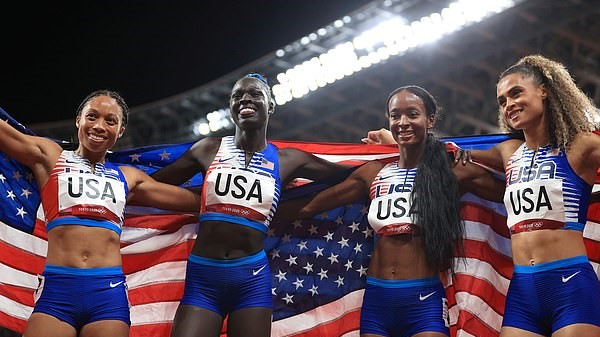
. The USA wins gold in the women’s 4x400m relay

Allyson Felix has become the United States’ most decorated track and field athlete in Olympics history after winning gold with her American team-mates in the 4x400m relay – her 11th medal in total.
The gold medal means Felix passes Carl Lewis as the USA’s most decorated athlete after a dominant race inside the Olympic Stadium.
Poland continued their impressive relay run in Tokyo, having won the inaugural 4×400 mixed race, with an excellent silver while Jamaica, who had won silver three times in a row, had to settle for bronze.
The USA could probably have fielded three teams and swept the podium such is their strength over the distance but their ‘first team’ was dripping with quality.
Alongside Felix they went for Sydney McLaughlin and Dalilah Muhammad, first and second in the 400m hurdles and both inside the old world record, and Mu Athing, winner of the 800 metres.
As expected, it was an unstoppable combination as their time of 3:16.85 brought them home almost four seconds ahead of the Poles, whose 3:20.53 was a national record.
Felix’s bronze in the 400m on Friday made her the most decorated woman in track and field history and this gold in her fifth Olympics took her tally to 11.
Paavo Nurmi of Finland holds the all-time mark in track with 12 medals from 1920-28.

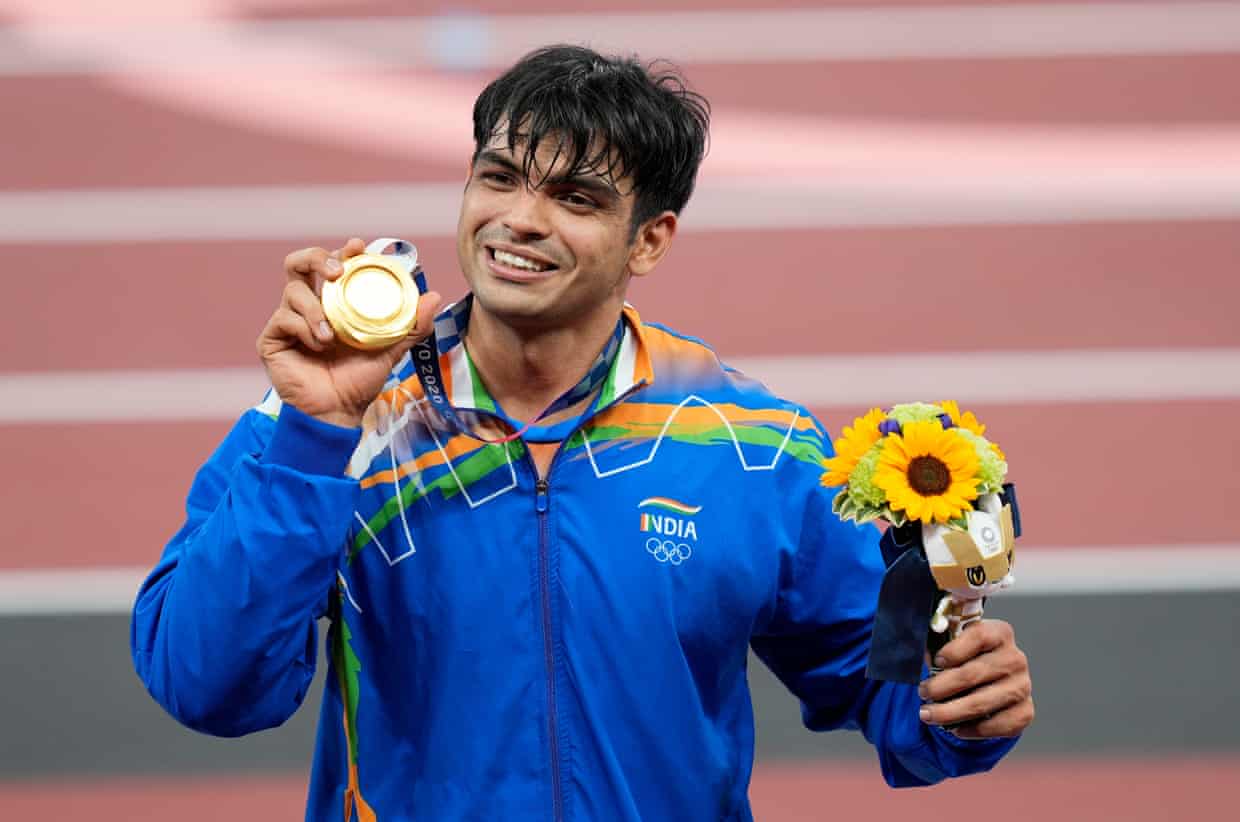
. Neeraj Chopra (India) wins Olympic gold in the men’s javelin
Chopra’s throw of 87.58m secured the top spot on the podium, as India also won its first gold medal at Tokyo 2020.
His gold medal success completes a remarkable journey for Chopra that began when he decided to lose some weight.
“I come from a farming background,” explained Chopra. “I was overweight and wanted to do some fitness training.
“Somehow I ended up in an academy, and picked up javelin throw. The love affair started and now I’m here with this medal standing in front of you.”
The Czech Republic’s Jakub Vadlejch and Vitezslav Vesely won silver and bronze respectively.
India has now taken home seven medals in total at Tokyo 2020 — one gold, two silver and four bronze.
Priyanka Gandhi Vadra, general secretary of India’s opposition Indian National Congress party, congratulated Chopra on Twitter: “What an outstanding performance. History has been made. India is so proud of you.”
India is the most successful hockey nation in Olympic history with eight men’s titles but has largely been starved of individual success. The sports fraternity also lavished praise on Chopra who was described by local media as the ‘man with the golden arm’.

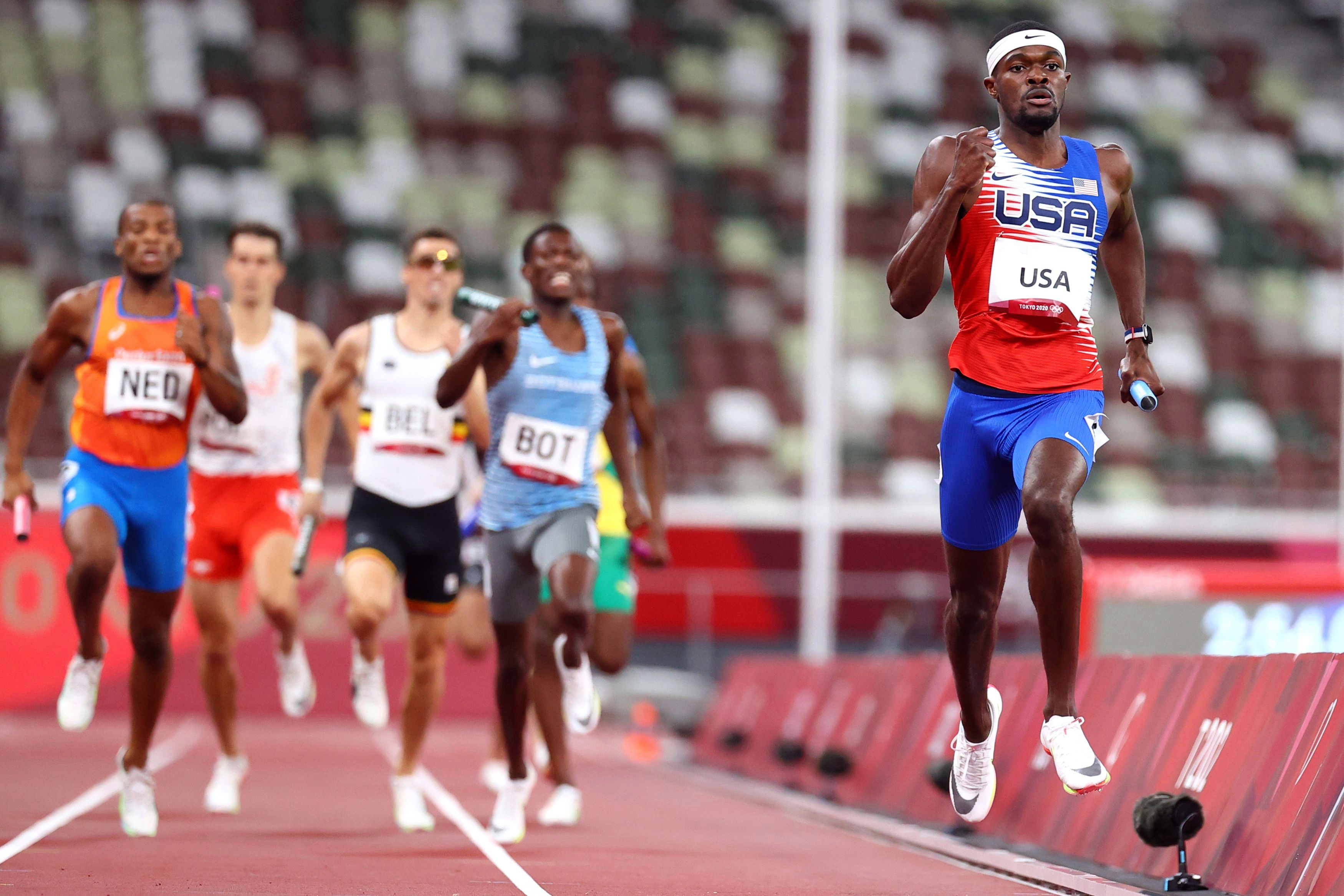
. The USA wins gold in the men’s 4x400m relay
The USA win easily, while the Netherlands nicked silver from Botswana in the closing stages. Rai Benjamin ran a brilliant anchor leg for the USA.
Mariya Lasitskene of the Russian Olympic Committee (ROC) has won gold in the women’s high jump clearing 2.04 metres after Australia’s Nicola McDermott fails with her three attempts at the same height. Ukraine’s teenage jumper Yaroslava Mahuchikh gets the bronze the medal. McDermott went tantalisingly close with her final attempt but couldn’t quite clear the bar.
It didn’t come easy. Lasitskene ran into trouble at 1.96 metres, missing her first two attempts before advancing. She smacked into the bar during her first jumps at 1.98 and 2.00 metres, too. Yet she persevered, setting up a duel with the vibrant McDermott.
The 28-year-old Lasitskene is the only jumper – male or female – to win three world championships. She was heavily favoured heading into Rio de Janeiro five years ago but wasn’t allowed to compete after World Athletics banned all but one Russian athlete in the sport as part of the fallout from a doping investigation.


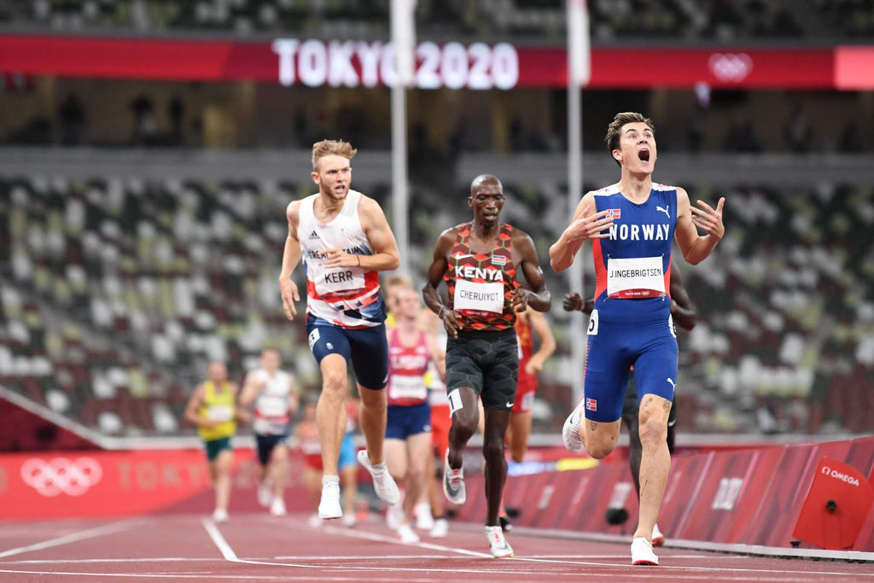
. Jakob Ingebrigtsen (Norway) wins men’s 1500m which saw Scot Josh Kerr claim a brilliant bronze
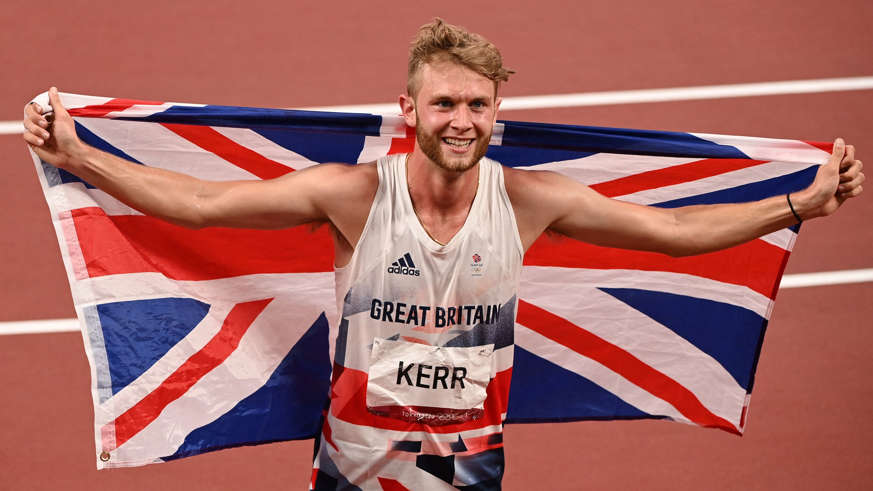
The 20-year-old Norwegian has spent a decade preparing for this moment, and he delivered on his prodigious talent with a flourish, powering around world champion Timothy Cheruiyot on the final bend before bounding on to his victory lap like he could run another 1500. Cheruiyot held on for silver in 3:29.01 and Britain’s Josh Kerr took a brilliant bronze in 3:29.05.
Ingebrigtsen ran a hard first 400m in 56.2sec, before Cheruiyot took over and kept the pace high. Britain’s Jake Wightman was one of those who began to slide backwards as the pace intensified further and a strong Kerr passed his teammate at the bell as the pack stretched.
But Ingebrigtsen always looked in control, with the air of a man who could choose his moment. He did it with 150m to go and then stretched away, while behind him Kerr passed Kenya’s Abel Kipsang and would have hunted down Cheruiyot’s silver medal too had the road been a couple of metres longer.
Josh Kerr’s bronze ends Team GB’s 33-year wait for an Olympic medal in the men’s 1500m.
It is the first British medal in the men’s event since Peter Elliott won silver in Seoul in 1988 and adds to Laura Muir’s second place in the women’s 1500m on Friday.
Team-mates Jake Heyward and Jake Wightman finished ninth and 10th respectively.
. Hassan (NED) wins Olympic gold in women’s 10,000m. The first runner ever to win a triple-medal haul.
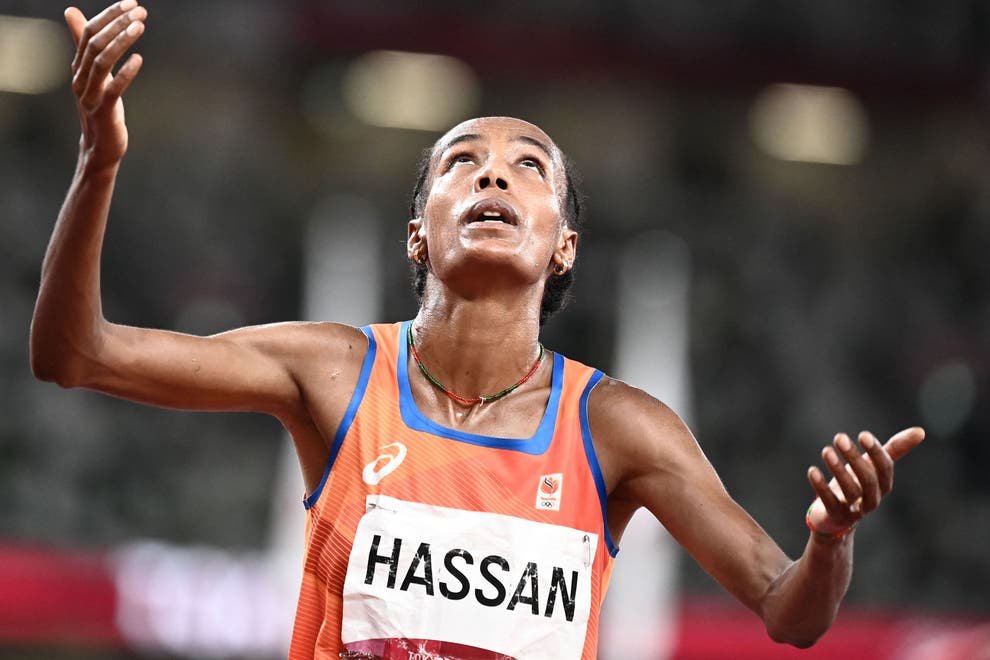
Dutchwoman Sifan Hassan secured a second title and third medal at the Tokyo Olympics, showing her blistering pace down the home straight to win the women’s 10,000 metres.
The 28-year-old Ethiopian-born Hassan, world champion over 1,500m and 10,000m, won the 5,000m title and picked up bronze in the 1,500m in her bid for an unprecedented treble in Tokyo.
“I’m so happy and I cried during the medal ceremony,” Hassan said. “I actually realised that I’m done, the Games are over.
“It’s not about how strong I am but how strong are the ladies I challenge. Now I’m happy, I’m done, it’s over.”
Bahrain’s Kalkidan Gezahegne clinched the silver medal while Ethiopia’s Letesenbet Gidey taking the bronze.
The women’s 10,000m was one of the most highly-anticipated events of the Games with the world’s all-time top two athletes – Hassan and Gidey – going head-to-head at the Olympic Stadium.
Hassan in June posted a time of 29:06.82 to take more than 10 seconds off the world 10,000m record in Hengelo.
Two days later, however, the 23-year-old Gidey chopped a further five seconds off the mark when she clocked 29:01.03 on the same track at the Ethiopian trials.
The pair had only clashed once before over the 25-lap race at the 2019 world championships where Hassan beat Gidey to gold.
Gidey, who also holds the world record in 5,000m, came into the race with fresh legs, having decided to only contest the 10,000m in Tokyo.
Japan’s Ririka Hironaka led for the first six laps before Gidey made her move followed by a pack of three Kenyans and the Ethiopian stayed ahead for most of the last seven kilometres.
Hassan tucked in behind the leaders and with about 3,000m remaining she increased her pace to move into second spot.
Despite running three races in Tokyo’s searing heat and humidity in the last few days, Hassan managed to find an even higher gear before the final turn to surge past Gidey and cross the line in 29:55.32.
“We women are very capable, we are a lot stronger,” she said. “If you want it, you are strong and you can do it. People can do it. It is for everyone.”
Gezahegne, also Ethiopian-born, held her pace in the closing stages as Gidey faded after trying to make her way past a back-marker.
Gezahegne clinched silver in 29:56.18 with Gidey finishing more than five seconds behind her to take the bronze medal.
“I want to move up to the marathon. At the next Olympics I will grab the gold medal at the marathon,” Gezahegne said.
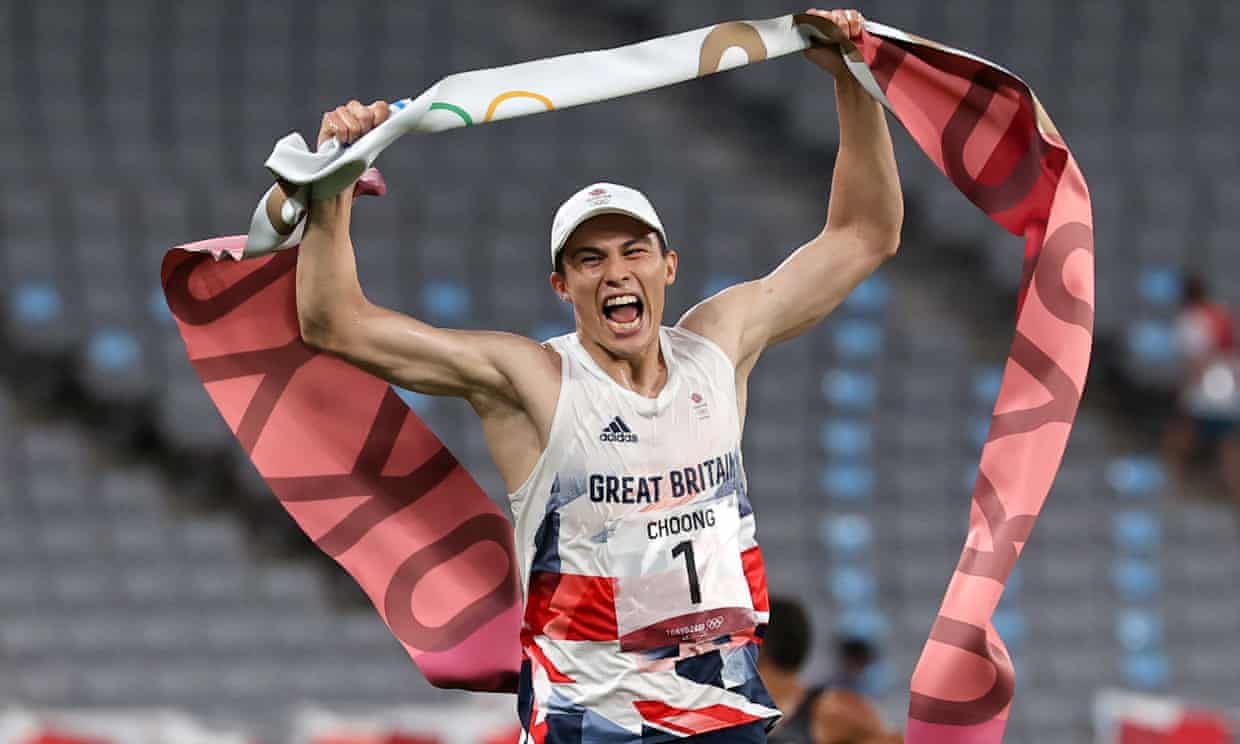
. Choong (GBR) wins gold and sets a new Olympic Record in the men’s modern pentathlon
Gold for Great Britain, as Choong wins the laser. Egypt’s Ahmed Elgendy really threatened. He actually took the lead in the running race on the last lap, only for Choong to dig deep enough to retake it, and kick on to leave clear air between him and second place.
1482 total points is also an Olympic record for Choong. Jun Woongtae gets bronze for Korea.
Joe Choong from Kent became Britain’s first winner of the men’s modern pentathlon as Team GB completed a clean sweep at the Tokyo Stadium.
Just 24 hours after Kate French claimed the women’s title, Choong led the multi-sport event from start to finish and eventually reached the tape five seconds ahead of Egyptian Ahmed Elgendy.
Choong had good reason to feel confident having won the World Cup Final, which doubled as the test event, in Tokyo in 2019, as well as a World Cup in Bulgaria earlier this year.
Choong is the first Team GB athlete to even win a medal in the men’s individual event since its inception in 1912 and Britain are the first country to do the double at one Games. It is Britain’s 20th gold medal at the Tokyo Games.
The world No 1 was in front from Friday’s fencing and kept his lead throughout today’s swimming and showjumping.
That meant Choong held a 12-second lead going into the laser run finale. And though he was briefly overtaken by Elgendy following the shooting on the final lap, he retook the lead in the final 200metres and won with a sprint finish.
Choong held a 12 second lead at the beginning of the laser run – a 3,000 metre combined with four visits to the shooting range where the target must be hit five times – and never looked like relinquishing that lead.
He held plenty of energy in reserve for the final part of the run, an insurance policy as his rivals shot with greater accuracy.
He missed three shots on his first trip to the range, allowing his rivals to eat into that 12-second advantage but he was faultless with his first five shots second time around.
Egypt’s Ahmed El Gendy surged up from 13th position to overtake Choong going into the final lap but the British athlete drew on his reserves of stamina in the last 800 metres and ultimately won comfortably.


. Lamont Marcell Jacobs, the shock winner of the gold medal for Italy in the 100m at the Olympics, has split from his sports nutritionist, who is under investigation by the police for allegedly illegally distributing anabolic steroids.
Jacobs clinched arguably the most coveted prize in Tokyo last weekend after coming home with a time of 9.80sec, a European record, and also added another gold to his collection in the 4×100 men’s relay team.
But it has now been revealed that Giacomo Spazzini, a professional bodybuilder who has looked to take credit for Jacobs’ success, is the subject of a probe into fraud allegations and other alleged offences.
Anabolic steroids can be used as performance-enhancing drugs that increase muscle mass and lower fat. Athletes, weightlifters and bodybuilders are known to use them regularly to improve their physique.
The investigation is probing allegations that the head of a group was able to get hold of a prescription pad and hospital doctor’s stamp, which were then used to obtain products for doping for himself and clients.
Police are investigating allegations that Spazzini was linked to this, and it is also alleged he committed fraud under Article 640 of the penal code in Italy because he did not have the necessary qualifications to identify himself as a nutritionist.
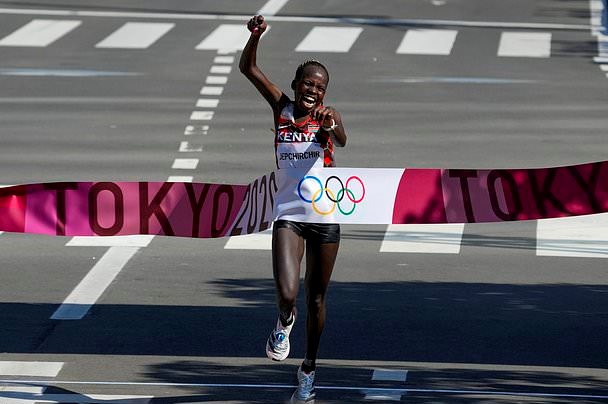
. Jepchirchir of Kenya beats heat to win the women’s Olympic marathon
There was an unfamiliar sight along the women’s marathon course at the Tokyo Olympics: actual fans. Cheering, too.
At the end, a more familiar view – a Kenyan racer leading the way.
Peres Jepchirchir led a 1-2 Kenyan finish in the women´s marathon, withstanding the heat and humidity while running through the streets of Sapporo, more than 500 miles (more than 800 kilometres) north of Tokyo.
Jepchirchir’s winning time of 2 hours, 27 minutes, 20 seconds on Saturday was not fast – 10 minutes off her personal best – but it was still sizzling considering the conditions.
The start was moved up an hour to avoid the heat and a smattering of spectators lining the course applauded as the Tokyo Games went north for the marathons and race walks. Jepchirchir’s teammate Brigid Kosgei was second and American Molly Seidel, a relative newcomer to the marathon stage, took home the bronze.
A race that was moved to Sapporo to avoid the extreme heat and humidity in Tokyo found little relief on a winding course through the city. The starter´s gun went off near 6 a.m. under a sunny sky and with a temperature reading of 77 degrees Fahrenheit (25 Celsius). It climbed to nearly 86 degrees (30) near the finish, with a humidity of around 65%.
“The weather was really hot and tough for a competition,” said Kosgei, the world record-holder in the event at 2:14.04. “We tried our best to finish.”
There were 88 runners entered in the field and 15 recorded a “did not finish.” That included world champion Ruth Chepngetich of Kenya.
The weather appeared to take its toll on Lonah Salpeter of Israel late in the race. Among the final four with around 4 kilometres to go, she suddenly stopped and walked to the side of the road. She still finished – 21 minutes behind.
The runners tried to stay cool any way possible. Aleksandra Lisowska of Poland grabbed an entire bag filled with water at one stop, quickly drinking one and then pouring another over her head. Andrea Deeltstra of the Netherlands had a bag of ice perched on top of her head.
Aliphine Tuliamuk of the United States was returning to racing after giving birth to her daughter in January. She didn’t finish due to a nagging hip ailment.
Some of these competitors got a taste of the furnace-type heat and humidity at the 2019 world championships in Doha. That race was run at midnight and the temperature still hit 88 degrees (31 C). It led to nearly 30 runners not reaching the finish line as Chepngetich captured gold.
Chepngetich was in the mix Saturday until late in the race when she began walking.
Working as a team, Jepchirchir and Kosgei were shoulder-to-shoulder late in the race until Jepchirchir made her move. Kenya’s two medals gave it a total of seven in the women´s Olympic marathon, the most of any country.
“I pushed on the pace (and when I opened the gap) it was like: `Wow, I´m going to make it. I´m going to win,'” Jepchirchir said.
 Arts, reviews & current affairs