

FICTIONAL ADVENTUROUS DRAMA STORY
SAVAGE was late. Raybould sipped the last of his Black Russian. He would give the man five more minutes, then depart. He had better things to do than sit in the bar of Grant’s restaurant waiting for some young chancer who couldn’t read a watch.
Two more minutes passed, then the door from the street opened and a man with close-cropped, almost white hair and striking pale, blue eyes emerged into the foyer. He looked around, a faint smile playing over his lips. Raybould recognised Bryan Savage at once from the photo he had sent. He raised a hand to draw his attention.
“Mr Raybould?”
“Mr Savage. You know you are over an hour late?”
“I’m sorry.” The man had a surprisingly deep, mellifluous voice. “I was researching in the library and lost track of time.”
“I trust you have no objection to dining straight away?”
“Of course not.”
Raybould stood. He nodded to the waiter who had appeared discreetly at the door to the restaurant. “Evening, Andre.”
“Good evening, Monsieur Raybould. Your usual table is ready for you.”
TWO
GRANT’S restaurant was large and genuinely old, with low ceilings and thick oak beams. As well as the main dining area, which was about half-full, there were several smaller rooms leading off. Raybould’s table was in an alcove in one of these. Privacy was guaranteed by thick drapes on three sides, and a curtain that could be pulled on the fourth.
Andre handed them two leather-bound menus. “An aperitif, Monsieur Raybould?”
“Have you any more of that excellent sherry – the Amontillado?”
“Bien sȗr, monsieur. And for your guest?”
“Whatever,” Savage said airily. Raybould frowned. Clearly this young man had little appreciation of the finer things. Still, no doubt he had more pressing concerns. Well, no time like the present, he thought.
“So, Mr Savage, perhaps you’d like to explain your proposition, and how it may be worth five million pounds to me.”
“Certainly.” Savage looked relieved to be getting down to business. “Three years ago, I was on a trekking holiday in Peru. A friend had told me about the Inca Trail, and I decided I must see it for myself. The trail follows the ancient road that originally linked Cuzco and Machu Picchu, the mysterious ruined city of the Incas.”
THREE
ANDRE arrived with the sherries. Savage remained silent till he had left, then he pulled the curtain shut. He took a large swig of sherry, then continued: “I followed the trail from Huayllabamba to the Pass, and onward into the jungle. And it was there, near an Inca ruin called Sayacmarca, that I was taken captive.” Savage paused dramatically, but the effect was marred by a cough from outside the alcove. Raybould pulled back the curtain.
“You are ready to order, Monsieur Raybould?”
“I am. Mr Savage?”
Savage stood up suddenly. “I must make a call,” he said. “Would you order for me?”
Raybould watched quizzically as Savage strode back to the foyer. He turned to Andre. “Young people today – always in such a rush. I’ll have your excellent brazil and cashew nut roast with chestnut stuffing and red wine sauce, accompanied by potato galette with baby vegetables.”
“Oui, monsieur. And for your guest?”
Raybould shrugged. “The same. And a bottle of your best Montrachet, please.”
Andre nodded and departed. Raybould smiled to himself. He hoped Savage enjoyed vegetarian food. Though on the evidence so far, Raybould wondered if he would even notice.
FOUR
SOME ten minutes passed before Savage returned. Seated again, he resumed his story. “I was alone in the ruins as night fell. Suddenly I was surrounded by six native tribesmen, naked apart from daubings on the face and body. Their leader indicated that I should go with them, and I wasn’t going to argue; they carried stone knives and axes which looked as though they could cause serious damage.
“We walked by moonlight for what seemed like hours. I was pretty shaken, of course, but I kept a mental note of our route. Though I say it myself, I have a good sense of direction. We eventually arrived at their village, deep in the heart of the jungle.”
Just then Andre arrived with the food. The aroma was delectable, and Raybould paused to savour it. Savage, however, simply piled in, filling his fork, and shovelling the fine ingredients down. If he noticed the absence of meat, he made no mention.
“Anyway,” he said, through a mouthful of potato, “I found out the tribe was called the Araka. They had no contact with civilisation, and their elders had made the decision to capture one of these strangers who passed through their territory. Supposedly to find out what made us tick. They kept me prisoner in a hut which was always guarded.”
Savage paused to cram more food into his mouth, then continued: “I was fed on a diet of nuts and berries. I must have lost about forty pounds in weight. But I survived, and after a while I began to take an interest in their customs and, in particular, their religion. Opposite my hut, you see, was a much grander one which I realised was their temple. Whatever was inside, the tribesmen treated it with the deepest respect.
“I found out the Araka worshipped a god called Manco Capac. Now, I’d done a bit of reading, and I knew that Manco Capac was the son of Inti, the Inca Sun God. The ancient records mentioned a fabulous golden statue of Manco Capac, but it was believed to be lost forever. Now, just possibly, I realised I might have stumbled upon it.”
Again, Savage paused, this time to attack the nut loaf. Still chewing, he raised his glass and downed most of the Montrachet in one. “After a few months,” he continued, “I’d learned some of their language, and I knew the next day was the festival of Manco Capac. I’d managed to bore a small hole in the wall of my hut, and through it I could see the temple door. I had to find out what was in there, to see if my suspicions were correct.
FIVE
“At sunrise I was woken by low chanting. I peered through the hole and saw the temple door open. Then, with great ceremony, a shimmering, life-sized gold statue was brought out on a golden carriage. It could only be the lost statue of Manco Capac. I reckoned it must be worth a million pounds, and since then I’ve discovered it’s at least ten times that. But, of course, it was no good to me unless I could escape.
“By now, though, I had a plan. Over the next few weeks, I saved some berries and crushed them in a pot to which I added water. As I hoped, the mixture started to ferment. It tasted revolting, but it sure had a kick to it. So, one night I invited the guard into my hut, to have a drink. Of course, to allay his suspicions I had to pretend to drink as well, but he had most of it. Finally, he finished the booze, belched loudly, and sank to the ground. Within a few minutes he was snoring loudly.
“That was my chance. I climbed over his sleeping body and out of the hut. There was no one around, so I headed into the jungle. I’d have taken the statue with me, but speed was essential. Nearly a year after I was captured, I found my way back to the main trail. There I joined up with a party of Germans who were walking back to Cuzco.”
Savage paused to clear his plate. “So that’s my story, Mr Raybould. The lost statue of Manco Capac is out there, but only I know where. It’s worth at least ten million, and I’ll split that with you fifty-fifty. All I need is a hundred thousand to assemble a small expedition. Write me a cheque, and I’ll start tomorrow.”
Raybould sipped his wine thoughtfully. Savage seemed genuine, and his story appeared plausible. Of course, the thought of stealing the statue from the natives was unpalatable: but did they really have any more right to it than he did? His mind made up, Raybould reached for the jacket pocket.
Savage suddenly started to cough. He put a hand to his throat. His eyes bulged. As Raybould watched, the young man’s face began to swell.
SIX
“ANDRE!” Raybould shouted. “Ambulance, quick!”
The ambulance arrived within five minutes. The paramedic administered adrenalin, and the swelling immediately started to subside. Savage was rushed to hospital, and it appeared he would survive.
Afterwards, Raybould shook his head. To think he had been about to write the man a cheque there and then. Well, he knew now that Bryan Savage was a liar and a con man. He wrote a cheque to the restaurant, including a good tip, and headed for the door.
– Raybould decided not to fund the project, having found out in the nick of time that the supposed adventurer was a con man – but how did he know?
. Appendage
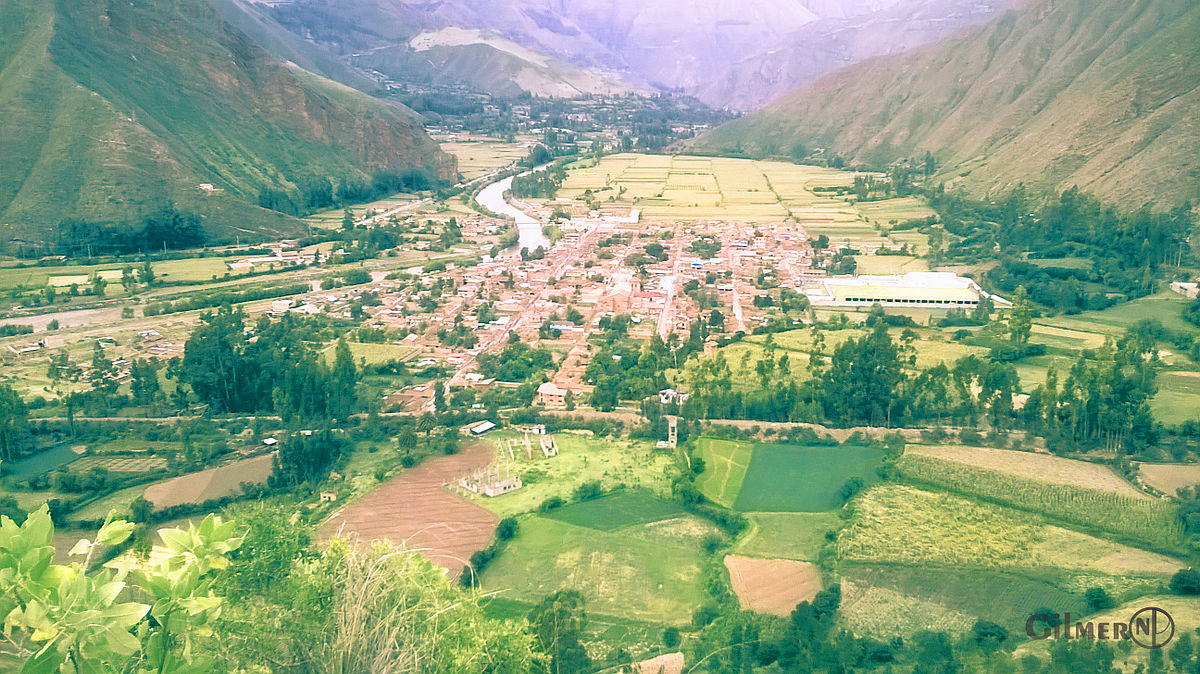
– Panoramic view of Huayllabamba and surrounding area. It was here that Bryan Savage followed the trail to the jungle

 Arts, reviews & current affairs