
Arts, Drama, Screenplay

Body of Evidence: ‘The Burning Question’

SERIES: CRIME FILE INVESTIGATIONS

. Intro & Preamble Note: ‘Body of Evidence’includes cast and personnel list/glossary of terms

A series of crime scenes that will require the reader to apply their forensic skills in solving the mysteries.

Burton walked into the restaurant’s kitchen; its stainless steel and tile surfaces were covered in soggy soot and burnt debris. The sprinklers had been shut off over an hour ago, but the overhead fixtures still dripped steadily. He brought head chef Nathan Olivo in with him, careful to keep the distraught man away from any evidence.

“I hope you like your steak well done,” said Mike Trellis, Burton’s CSI technician. He specialised in arson investigation and bad jokes. Burton laughed, the chef did not.

Trellis was using a fuel sniffer, which looked like a small cane attached to a lunch box, to check areas of the kitchen for traces of accelerant. Petrol and paraffin were the most common, but he had seen arsonists use everything from Silly String to hair spray to start a fire.

“What happened here?” Burton asked.

“It was about half an hour after we closed. We were all in the bar toasting the end of the night when the kitchen just blew up. I started the toast tradition a few weeks ago when we got a mediocre review in the local restaurant guide. The toast is supposed to build morale and create team atmosphere – everyone was pretty down after that review. But the bad food wasn’t our fault, it was the stove.”

“The stove?” Burton said. “Was there a problem with it?”

“Problem? It was a piece of garbage,” Olivo said. “Always burning entrées, scalding sauces and stinking of gas; the pilot light for one of the burners kept going out. I asked the manufacturers to replace it several times, but they refused, saying it was fine.”

Trellis walked over to the blackened stove, the sniffer leading the way.

“Thank you, Mr Olivo,” Burton said, leading him towards the door. “Please step outside with the other employees and we’ll finish up in here.”

Burton shined his flashlight around the kitchen. “The room looks like there was a sudden explosion rather than a slow burn,” he said. “And soot is covering just about every surface in here – walls, counters and especially the ceiling and ceiling fans – so whatever happened, it sent residue everywhere. But what burned in order to make the soot? Soot results from imperfect burning, and gas burns cleanly, with no residue. I can’t believe the kitchen had enough dust to cause this mess.” Burton looked again at the ceiling and the black film covering it. “Wait a minute. Were the ceiling fans on when the kitchen blew?”

Trellis checked his notes. “The fan switch was in the on position, but the explosion knocked out the electricity, so they weren’t spinning for long. The big exhaust ducts up there were off for the night.”

“Let’s try to get a fingerprint off that fan switch,” Burton said. He climbed onto the stainless-steel island in the middle of the kitchen and took a closer look at one of the ceiling fans. It was caked with black soot, as was the ceiling above it. He reached above the fan and ran his finger along the top side of one of the blades. It came back with a white substance on it. Burton smelled it once, then touched it to his tongue.

“Mmm. Tastes like arson,” he said.

How did he know?

– Author’s note: No solution to this case will be made public.
Standard
Arts, Drama, Screenplay

Body of Evidence: ‘The Defence Rests in Peace’

SERIES: CRIME FILE INVESTIGATIONS

Crime Scene

A series of crime scenes that will require the reader to apply their forensic skills in solving the mysteries.

CSI Wes Burton walked into the lawyer’s office and immediately bristled. It wasn’t seeing a corpse that disturbed him; it was the fact that he didn’t see one. The dozen or so people breathing in the room were obstructing his view.

“Which one of you is dead?” he asked. A stunned silence followed as the officers, emergency medical technicians and a short, shaken woman looked at him. “If it isn’t you, there’s no reason for you to be at the crime scene,” said Burton. Detective Erin Radley, who was used to his behaviour, tried to hide a smile.

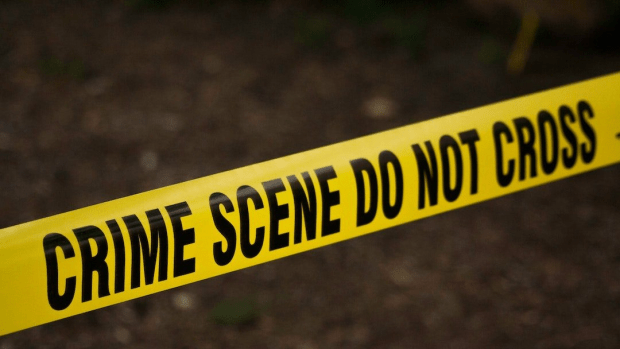
As everyone filed out of the office, Burton took his custom-made “CRIME SCENE – DO NOT CROSS/CRIME SEEN? STICK AROUND” yellow tape out of pocket 2 of the fly fisherman’s waistcoat he wore to every crime scene. The 30 or so other pockets on the waistcoat bulged and rattled with everything from latex gloves to a handheld ultraviolet light. He rarely came across a situation that required something that wasn’t in those pockets. Radley stayed where she was, as far from the body as possible, to avoid further contaminating the scene. She had on her usual black leather jacket, and its mid-thigh length made her look even taller than usual.

One of the EMTs helped the distressed woman through the doorway. “We’ll check your heart rate right away, Miss Porter. I’m sure it’s nothing serious.” To Burton, he said, “She has some heart attack symptoms. If they continue, we’ll have to take her to the ER within A&E.”

Burton nodded. “Just keep all of her clothes, and don’t let her have a shower.” He stretched the yellow tape across the doorway and secured it. To him, that thin piece of plastic represented a brick wall with armed sentries on top. Maybe even a helicopter or two.

“What do we have, Detective Radley?” Burton asked as he made his way to the other side of the room, careful not to disturb anything. The two client chairs in front of the desk seemed in place, but until photographs were taken, nothing could be moved. Not moving wouldn’t be a problem for Brent Cordova, former lawyer, who was face up on the floor behind his enormous desk.

“Dead lawyer,” she said, opening her notepad. “Only a few million suspects.”

“Shotgun to the chest?” Burton asked.

“Looks like it,” Radley said. “The legal assistant, Miss Porter, says that Cordova had been planning on closing his practice and retiring next month, and he was handing off all his defence cases on a first-come, first-served basis. She says the clients weren’t happy and have been calling with nasty messages.”

“He didn’t know making murder suspects angry can have bad side effects?” Burton asked. “Like getting murdered?”

“You’d think he would,” Radley said. “Only three of his current clients are on trial for murder, and they’re being tracked down right now. We’ll see how their alibis look.” Radley thought for a moment, then went on. “If one of them did it, I hope he’ll talk to me about why.”

“Are you still writing that book of yours?” Burton asked.

“Yes,” she said. “I’ve got some fascinating stuff so far.” Radley, who had a master’s degree in psychology, had been compiling case studies for years that focus on why criminals commit their crimes. She planned to publish them for the law enforcement community.

“I still don’t get it,” Burton said. “The why doesn’t prove anything. You can’t convict anyone on a reason or motive; you have to know how they did it.”

“True,” Radley said. “But if we find out why a murder took place, maybe we can prevent the next one from happening at all.”

“But people can lie about why they did something,” Burton said, “and you might not be able to prove that they’re lying. Evidence stands up in court. It does not lie.”

“So you’re always telling me,” said Radley.

Burton took a closer look at the entrance wound on the body. It was on Cordova’s upper left chest, with gunshot residue and small burns on his skin and the tatters of his shirt. There was no visible exit of pellets or slugs, but from the pattern and depth of the wound, he could see that the shot had entered at a 10-degree angle from Cordova’s left side, at about the height of his shoulder.

Burton also saw that Cordova’s chair, a highbacked leather throne, had gunshot residue on the upper left wing. “How tall are those three murder suspects?”

Radley pulled three folders from under her arm and checked through them. “Miss Porter pulled these for me. She’s pretty upset. She passed the bar exam a month ago and has helped with some of these cases. She thinks if the killer comes back, she’ll be next.”

“Did she witness anything?” Burton asked.

“No, she says she found him like this, called us right away. OK, here’s the last one. The suspects are six-foot-three, five-foot-ten and six foot. Is that helpful?”

“Not to the shooter’s case,” Burton said.

The EMT stuck his head in over the crime scene tape. “Miss Porter’s having some real trouble out here. Heart’s racing like a jack rabbit. We’re going to take her to the hospital for observation.”

“That’s fine,” Burton said. “But let Detective Radley read her her rights first.”

How did he know?

Solution The Defence Rests In Peace

CI2

Standard
Arts, Drama, Films

Film Review (Oscar nominee): Capernaum

REVIEW: 15 cert, 126 minutes

Zain

The plucky young boy Zain (Zain Al Rafeea) in Capernaum: an endless struggle to get by.

EVERY so often a film comes along which is difficult to comprehend and one in which is hard to figure out and wrap your head around. Not the ones you can’t believe were ever made (there’s no shortage of those) but the ones that simultaneously seem so real and so impossible that watching them is like witnessing a magic trick you’re unable ever to fathom. Nadine Labaki’s Capernaum – one of this year’s foreign-language Oscar nominees, and the Jury Prize winner at Cannes last year – is that kind of film. It is the story of a child surviving on the streets of Beirut, infused with the richness of great fiction and the heart-in-mouth power of front-line news footage.

The young survivor is Zain, played in an utterly disarming performance by Zain Al Rafeea, who, like his screenplay character, is about 12-years-old. He’s a newcomer to acting, but a Syrian refugee in real life. Zain flees his family’s dingy Beirut apartment in the wake of a decision by his parents that he sees, quite rightly, as an appalling betrayal, and is bounced around in the tumult of the Lebanese capital (the film’s title is a French term for chaos, and also a Biblical town cursed by Christ). Having lived with his poverty-stricken parents and numerous siblings, Zain was aghast when his father arranges for his sister, who he is especially close to, to be married off to a businessman. She is barely pubescent.

Bambi-eyed the boy may be, but he is no Disney innocent, and gets by on his considerable wits in a frenetic war-ravaged town. After fetching up at a decrepit theme park, he befriends an Ethiopian single mother called Rahil (Yordanos Shiferaw). She is a cleaner who starts to rely on him to look after her own toddler while she is at work. He becomes, in effect, a surrogate big brother to her similarly undocumented toddler Yonas – who is played by a one-year-old in what must be, without a sliver of exaggeration, one of the greatest infant performances in cinema history. When Rahil goes missing, Zain becomes Yonas’s guardian too, and the two children must fend for themselves in the direst of circumstances.

The irony is clear: Zain is much better at parenting than his own parents. In fact, the film is framed by a courtroom sequence in which Zain sues his mother and father for bringing him into this wretched world. This brings shape to a story that sprawls by nature.

For some, Zain’s legal challenge adds a discordant note of fantasy to a film that otherwise pulsates with realism. Others are likely to love every minute of this movie, which seems largely improvised, but which is brilliantly crafted and directed.

Capernaum is Labaki’s third and most ambitious film to date. It is close in both texture and spirit to the Brazilian crime epic City of God: it teems with the same excitement and danger as Fernando Meirelles’s film. To call it Dickensian would probably be too great a compliment. Whether Capernaum has the staying power of the great social-realist films remains to be seen. But, in its unbroken gaze and visionary sweep, it does feel like a landmark.

The list of films in this year’s Foreign Language category at the Academy Awards, which also includes Roma, the Netflix film that won a Bafta and is tipped for an Oscar, is considerably classier than the list of nominees for Best Picture.

Nadine Labaki probably won’t walk away from the Oscars with a gold statuette and the movie industry’s greatest bauble, but in most other years, she surely would have done.

Verdict: Social realism with a blockbuster spirit. A classy drama.

★★★★★

Standard