Health, Psychology, Science

Psychology: How can I improve my memory recall?

 MEMORY

Intro: Some people are gifted with an elephant-like memory, others with a Dory-like recall. The key to a better memory is to repeat, repeat, repeat, with a touch of emotion  

THE PHOTOGRAPHER of the “documentary” that is your life story is an inch-long, slug-shaped region in the brain called the hippocampus, nestled within the head of the coiling snake of the emotional limbic circuit. Your emotions – good and bad – are the gatekeeper of what makes it in, and what gets left on the cutting-room floor. You won’t remember what you ate for breakfast last Wednesday because it wasn’t exciting, but if your lover got down on one knee to propose to you that morning, the fact you were eating a bowl of oatmeal at the time will be forever remembered, as clear as day.

That’s why dry lectures and seminars, dreary news bulletins, and boring books leave your head almost as soon as they are over. You’ll forget an arbitrary fact – such as 1769 being the year French ruler Napoleon Bonaparte was born – by the time you turn the page because it has no significance to you. However, if you’re a lover of all things locomotive, then you may have noted to yourself that this was the same year that the steam engine was invented, making Napoleon’s birthday easier to remember. The frontal lobe pathways for new memories and information will sprout from your established memory patterns, much like a new branch budding from an old grape vine.

Crucially, memories are only packaged into long-term storage once you have brought them back to mind at least once. Everyone loves stories – they are the lynchpin of our understanding of the world, and many people often entertain friends with fond memories that begin with “remember the time when…” and reminisce with family over tales from childhood. Each time you recall the memory, its neural pathways become strengthened and thickened, and more likely to weather the passage of time.

Your memory is at its worst when your body clock is slumping, for most of us, this will be the late afternoon and early evening. However, for night owls this will be in the morning.       

Even though memories are famously fallible – where we are often left grasping at straws after a disagreement when both parties are adamant their version of events is true – there are various things we can do to improve memory recall. Keeping a diary is one such method which should be used to record memories as soon as possible after the event, before they are contaminated by emotions or misty recollections. Telling stories is another effective method because repeating anecdotes to others will help form very strong memories by tying positive emotions to them, making the memory more likely to be stored long-term. Another method to improve memory includes creating mind maps which help to make visual connections between pieces of information that you want to learn. The more connections you make within a topic, the more likely you’ll retain information.

Why can I still remember skills, even years later?

When it comes to learned skills, especially those involving repeated movements, your brain’s most primal regions are like a memory-foam mattress

TEN, TWENTY, THIRTY, or more years may have passed since you last mounted your childhood BMX, but you haven’t forgotten how to ride. Like writing, swimming, driving, or typing on a keyboard, the ability stays with you, long after the hours of learning are forgotten. Sometimes called “muscle memory” (correctly termed procedural memory), muscles themselves have little to do with it.

Rather, these skills are stored in the cerebellum, far from your conscious memories of events. A large-wrinkled region tucked under the back of the brain, the cerebellum is under the orchestration of a curved tadpole-shaped structure in the middle of the brain called the basal ganglia.

With each attempt at a skill, slowly but surely, a path of neural connections forms in the brain. Through repetition and practice, these abilities build a well-trodden walkway deep inside your brain’s circuitry. The weeds of time are slow to obscure this path, so you will be able to retrace your steps and get back into the saddle well into your old age, even if you’re a bit rusty. It takes an estimated 20 hours of deliberate, focused practice to gain basic skills in a new hobby. Expert craftspeople and athletes take somewhere in the region of 10,000 hours firming up brain pathways before they reach the top of their game.

It’s not only the highly skilled who rely on procedural memory: most of what you do everyday is executed on “autopilot”, such as brushing your teeth or getting dressed. These tasks require very little conscious thought because they run via the basal ganglia rather than being under the direct control of the frontal, decision-making brain regions, which are free to focus on other things. If we didn’t have these programs, we would have to concentrate every time we tie our shoelaces.

These “unthinking” skills become so well established that they actually outperform our conscious brain’s ability for that task. When we try to think too much about something we’re good at, we can “choke”, which has been an athlete’s undoing on the day of the big event.

The Unforgettable Brain of Molaison

In 1953, pioneering neurosurgeon Dr William Scoville performed neurosurgery on Henry Molaison. Henry was alert as his skull was opened and portions of his brain removed, but anaesthetised. At the time no one knew what the hippocampus did, but Dr Scoville had a misguided hunch that this structure was the reason for the epilepsy that had plagued Henry. Sadly, the operation left the 27-year-old unable to ever make a new conscious memory.

Henry’s epilepsy mercifully settled, and his personality and intellect were unaffected, but he would forget events after a few minutes. Incredibly though, his “habit hub” (basal ganglia) and procedural memory circuitry were intact. He was able to learn new skills even though he instantly forgot how he had learned them.

Through studying Henry’s brain, scientists found that our regular memory and our “muscle” memory are stored in separate areas. From what we’ve learnt from his brain, patients suffering memory loss can be rehabilitated faster by teaching them new techniques and skills.

. Appendage

Standard
Health, Medical, Science

Are we all really getting more stressed?

STRESS

Intro: Modern life’s pressures can feel like they are increasing, but science reveals that it’s the nature of the stress we suffer today, rather than the amount, that has changed

BEFORE the 1940s, the only people who talked about “stress” were engineers describing whether the struts of a bridge would hold up. Today, “stress” is a vague catchall term for all of the many challenges you might face in your life: you may have stress at home, be stressed out by work, and the anxiety you feel around hospitals or before exams can be “stressful”. If you believe the headlines, the world is the most stressed out it’s ever been – and we are fretting our way throughout life.

Pick up any stress-management book or tap into a healthy-living website and you will encounter the classic stress story that we all undergo, the “fight-or-flight” survival response and its accompanying deluge of hormones when stressed. However, the body is far more sophisticated than we give it credit for. No two “stresses” are the same: being punched in the gut triggers a different biological response to the turmoil of a feud with a neighbour or the worry over a delayed pay cheque. Each demand (or “stressor”) placed on you has its own survival response.

Different kinds of stressors cause the body’s defensive systems to react in different ways: for example, a brief stress response triggers helpful infection-fighting chemicals, whereas longer term trauma can cause virus-attacking white blood cells to stop multiplying. Your responses also vary with age, past experiences, general health, and any past or existing medical conditions. You will undergo the most drastic fight-or-flight responses if you’re threatened or physically injured.

“Stress” has become such a fuzzy term, it’s no wonder we think there’s more of it in the world. While it can be a useful way to understand our responses to mental and physical challenges, labelling every negative experience as “stress” risks impoverishing our experience of the richness of what it is to be human.

How can I deal with constant stress?

RECURRENT, relentless demands and uncertainties really can harm your health. The body’s fight-or-flight response is a primal sledgehammer reaction that was a lifesaver for fending off predators, but is now utterly out of proportion for cracking the small nuts of modern life’s trials. With your emergency systems primed for a catastrophe your body’s internal chemistry is stretched to its limits. When fight-or-flight and stress hormones surge repeatedly over many days and weeks, it can cause damage to your internal organs, and brain.

Coping strategies are often the go-to technique for dealing with repeated or long-term stress, and many of these are critical for quelling an overactive fight-or-flight response, offering you essential time to relax and reflect. They might include making to-do lists, exercise, yoga, meditation, breathing exercises, or even just “me time”. These techniques are, however, all just an ice pack for soothing the fever and are rarely the cure. The best solution to never-ending pressures is to uproot the source and reframe how you think about the underlying problem.

If relentless pressure is putting your body on high-alert then you won’t be able to see beyond the immediate crisis. By seeking advice from a trusted friend or family member, fresh perspectives and solutions often appear. There is also measureable evidence that working through problems with a professional health worker will let you unpick destructive thoughts and habits, as well as make practical steps to alleviate near-constant stress.

Can stress ever be good for me?

If you have ever felt the motivational push of stress, you’ll know it can have its benefits. There’s a fine balance, however, to be kept between “good” and “bad” stress.

THE natural “stress” hormones your body produces, and their effects on the body, are vital in providing you with the energy, strength, and single-mindedness to overcome physical and mental challenges. If your body can’t produce enough cortisol to sustain you, then you’ll be weak and fatigued. Without cortisol, your blood pressure and blood sugar will drop, you will be thirsty, and a sudden injury, infection, or bout of strenuous exercise could even lead to sudden death.

Not only is a stress response key to keeping your alive, but moderate pressure in daily life can do you good: regular pulses of adrenaline and cortisol when you’re excited, motivated, or exercising improve concentration and provide small boosts in your mind.

Constant and extreme demands will always be harmful, and if you’re always feeling ill when away from the stressor, then that stress is doing you no good at all.

Balanced demands

When life is manageable, the stress response is invigorating and sustaining. But when your demands seem to exceed your capacity, the stress response is ever-present and damaging.  

. Science Book

Standard
Health, Science

Do I need to drink eight glasses of water a day?

BODY HEALTH

Intro: Carrying around a bottle of water is a badge of healthy living and we’re told to drink at least 8 glasses a day – however, experts say this advice has more holes than a leaky bucket

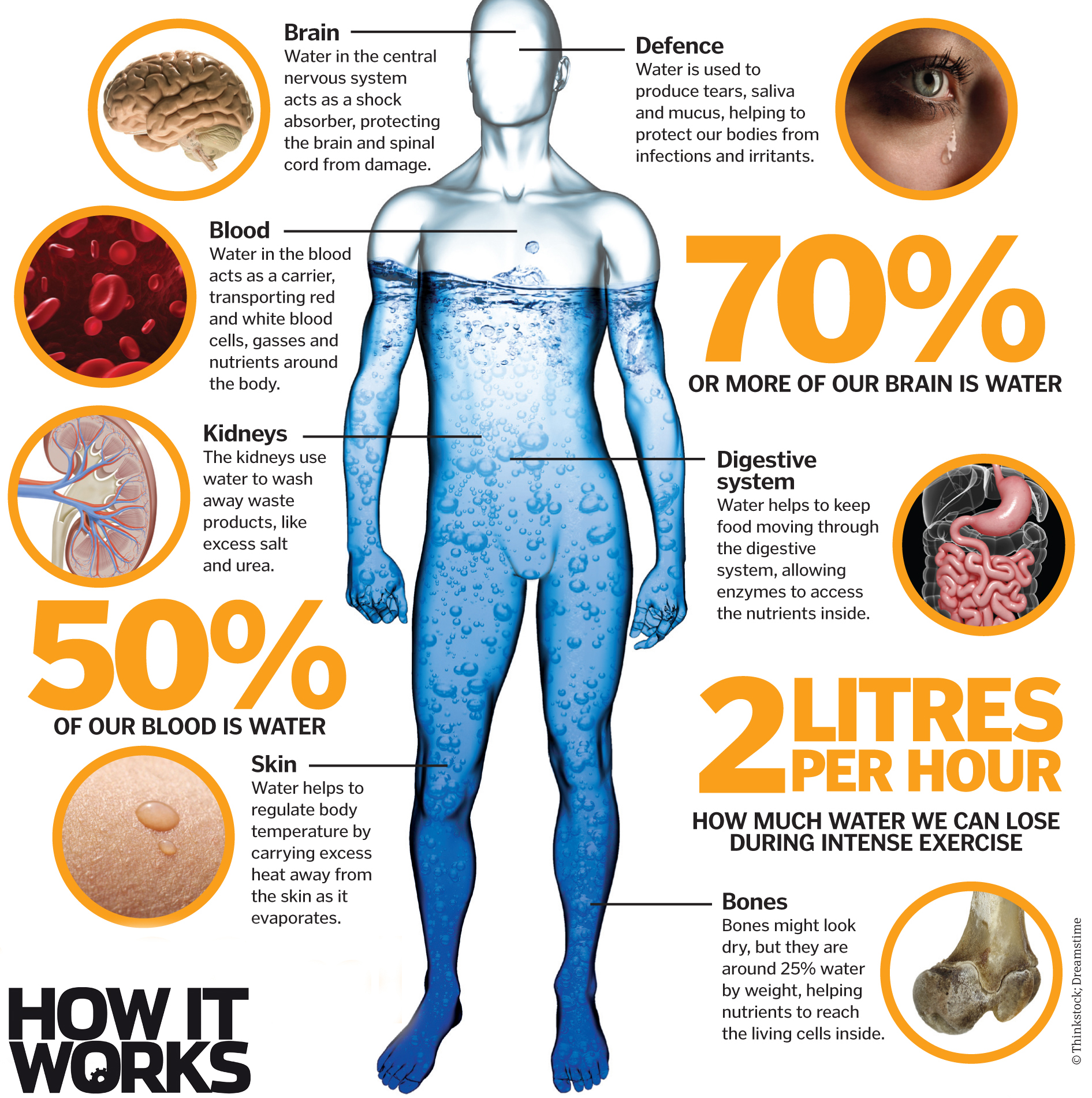
“EXPERTS” urge us to drink water to flush out toxins and combat the effect of ageing, but like so many health myths, the 8 glasses-a-day (or 2.5 litres) advice seems to have sprung from a misunderstanding. The US Food and Nutrition Board published advice in 1945 that a “suitable allowance of water for adults is 2.5 litres daily”. Had thirsty health-seekers not gulped down this snippet straight away, they would have read the next sentence, which stated that most of this will come from food. Healthy adults, they advised correctly, had no need to drink beyond their thirst. Nevertheless, the idea stuck, and the bottled water industry pours great efforts into continuing to persuade us to drink 2.5 litres a day.

On a day-to-day basis, forcing yourself to drink that much water is unnecessary and doesn’t give credit for the body’s highly attuned ability to keep you on an even keel. Your brain’s thirst centre continuously samples the blood to make you feel thirsty before you become dehydrated. Although over-drinking is rarely dangerous in normal circumstances, drinking large amounts of water during endurance sports may dilute body salts to perilously low levels, and can even be fatal.

Studies show there’s no health benefit to drinking more than the amount we need to satisfy our thirst (except perhaps the extra exercise from more trips to the toilet!)

Doctors recommend that adults living in a temperate climate and leading a sedentary lifestyle should drink 1.5 litres of water-based drinks to make up for water lost through sweating, urination, and even the water vapour in their breath – the rest of the water you need will be obtained by eating a balanced diet.

You need to up your water intake if you’re sweating from exercise, hot weather, or if unwell with a fever, diarrhoea, or vomiting. The elderly may need encouragement to drink, because the thirst centres in their brains become sluggish in old age; similarly, young children are less aware of their thirst drive, and need to have scheduled drink breaks through the day.

WATER IN AND OUT

Water in (typically):

. 60% of water comes from drinks

. 30% comes from food

. 10% comes from cells as a by-product of making energy

Water out (typically):

. 60% of the water you lose is from urine

. 25% is lost as water vapour as you breathe out

. 8% is lost through sweating

. 4% is lost in your faeces

. 3% is lost through saliva, tears, mucus, and blood

Appendage (how the body uses water)


. Should I drink until my pee is clear?

You may be familiar with the idea that the colour of your pee can tell if you are drinking enough. But don’t make the mistake of thinking that clearer is always better.

We may not know its name, but many of us are familiar with Armstrong charts from gym changing rooms or doctors’ surgeries. Named after their scientist creator, they are designed to tell you whether or not you are dehydrated by comparing the colour of your urine with yellowy-brown coloured stripes.

The chart suggests that you should drink more if your urine matches the darker stripes and stop when your pee matches the palest colours. These types of charts are very useful as an early warning of dehydration, especially in the elderly, infirm, or very young. But it’s a big mistake to think that paler is always better, and that you should drink until urine runs completely clear. By doing this, there’s a good chance that you’re putting yourself well on your way to fluid overload. If your urine is completely clear, it’s an ominous sign that your kidneys are having to work overtime to remove excess water from your system.

Totally clear urine is a signal that your body is trying to get rid of excess fluid.

Colour Matching Guide

– It’s healthiest for your pee to match the colours of the second or third colours down from the top of this chart (i.e. a pale straw yellow or translucent yellow).

Standard