

RESILIENCE
WHILE we can’t control exactly what happens in life, we can control what we tell ourselves about what’s happened. Emotionally robust people have the ability to reframe situations, even when they seem challenging or scary. By looking for value and meaning in stressful events they are able to see “bad” experiences in a positive light. For example, instead of seeing obstacles as stopping you from achieving your goals, you see them as opportunities to adapt and grow.
Instead of fearing failure, you see failure as a necessary stepping stone on the way to success. Reframing is a powerful way to transform your thinking and boost your mental toughness. It won’t change the situation, but it will put things into a healthier perspective and keep you motivated to keep going. Try it and see what a big difference it makes.
If at First You Don’t Succeed…
It is a continuous effort – not talent or intelligence – that holds the key to success in life. Successful people understand this. As a result, they are action-orientated. Of course, sometimes it makes sense to quit, but don’t make the mistake of giving up too early. Walt Disney’s first animation company went into liquidation and he was reputedly turned down 302 times before he got financing for creating Disneyland. Equally, J.K. Rowling was, in her own words, “as poor as possible” before she found success with Harry Potter, but only after 12 publishers rejected her manuscript.
Ask yourself, are you looking for a quick fix? Do you have a tendency to give up when things get tough? Or do you persevere and keep trying to find a way to make things work? Commit to keep going until you reach your goal.
LET IT OUT
HONOUR your feelings and recognise that difficult emotions such as anger, depression and loneliness are a natural part of the human experience. Let your emotions out by having a good cry if you need to. Crying can help you to regain your emotional balance as it releases toxins that have built up in the body due to stress. You should find that you feel calmer and less anxious afterward.
Another good way to express your feelings is through a creative outlet such as painting, blogging or playing a musical instrument. Creative activities can reduce stress and help you to process your experiences and feelings. The options for self-expression are endless. Whether you write poems, take photographs or draw sketches, creative pursuits offer you the space to deal with a range of emotions in a healthy and constructive way. Find something that gives you release.
(Podcast ends)
Acquiring Resilience
BEND BUT DON’T BREAK
NOBODY likes feeling stressed, but some people are particularly skilled at coping with upsetting events and carrying on. What is the secret to building resilience, and how can we develop it our ourselves?
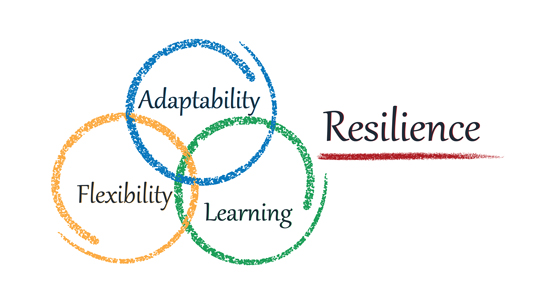
WHAT is resilience? The word comes from a Latin verb, resilire, meaning “to leap back”. A resilient person is not someone who never suffers, but one who can suffer and spring back again. It’s a quality that can help us to successfully endure stressful times: studies have confirmed that resilient individuals show a similar increase of the “stress hormone” cortisol when under pressure. We can all benefit from a more resilient attitude.
. A resilient personality?
If some people cope with stress particularly well, does that mean they were simply lucky to have a resilient personality – and if we weren’t born resilient, should we simply resign ourselves to unhappiness? In fact, the opposite is true. Resilience is not a personality trait, and no one is immune to the challenges of life. It is, rather, as a European team of psychologists put it in 2013, “a dynamic and adaptive process”. Essentially, we can learn to be resilient. How we choose to react to adversity can make a big difference. Rachel Dias, a renowned Latin American psychologist, describes it well: “Resilience is not invulnerability to stress, but, rather, the ability to recover from negative events.”
. The Power of Self-Efficacy
A major pillar of resiliency is what psychologists call “self-efficacy”: the belief that our actions have the power to affect our circumstances. There are four key-ways to build self-efficacy, so be alert to opportunities that can increases your sense of confidence and control in the face of stress:
. Persevering through failures
. Finding good role models
. Interpreting our feelings positively
. Social persuasion – for example, if someone says you’re resourceful, maybe they’re right
. Creating a buffer
When we face the stressors that are an inevitable part of life, resilience can limit its impact. A 2015 Brazilian study of people caring for family members with dementia – an unquestionably stressful role –identified a strong collection of traits, resources, and attitudes that built resilience and heightened the caregivers’ sense of wellbeing. These resources include building up good coping strategies, focusing on the positive, self-efficacy, being fully engaged in daily activities and having strong social support.
When we gain resilience we enjoy lower stress, improve our confidence, and have better mental health.

 Arts, reviews & current affairs