

MOTIVATION AND HABITS
Confucius once said, “It does not matter how slowly you go so long as you do not stop.”
Sometimes you want to undertake a new project because you are excited about the challenges it holds as well as the end result. At other times you would like to achieve the end result, but you are not stimulated by the steps you will have to take to get there. This is particularly true of goals based on self-improvement such as “getting fit”. We know the end result will be good, but if we enjoyed the process we would already be doing it!
In these situations it can be useful to add motivation to your process. This can be as simple as writing yourself a list of tasks that you can cross off as you go or awarding yourself intrinsically for each milestone you achieve. Perhaps, even, you could put a small amount of money to one side, to access only when you hit a target.
Forming habits is also a key factor in being motivated which will hopefully lead to the success you desire.
Research by University College London showed that it takes, on average, around 66 days for most routines to become habit. Crucially, however, the studies found that the harder the habit, the longer it took to form and that some people simply didn’t find habit-forming easy and therefore they would form habits over a longer timescale. Perseverance is the essential ingredient.
Take it easy on yourself. Don’t worry about missing one day here and there when establishing your new routine (the same research found that this did not materially affect the development of a habit) and don’t worry if it is taking you longer to get into your new routine than you think it should – the important thing to recognise is that you are on your way to building a new habit that will help in your drive to be more successful.
(Podcast ends)
. Add A Little Nothing Into Your Day
Adjusting your schedule to allow for the time you’re going to spend on your new project or adventure is one of the first steps. But so too is finding an extra ten minutes to do nothing. For that ten minutes just sit and be idle. Perhaps you could spend this time preparing yourself mentally for the challenge ahead, or just mulling over your project.
A study published in Psychological Science found that a daily dose of doing “nothing” actually increases your productivity and makes you more likely to commit to a certain goal or objective. Allowing yourself ten minutes of downtime to be mindful and restore your energy will make you more effective when you actually get down to work.
. Be Firm Yet Flexible
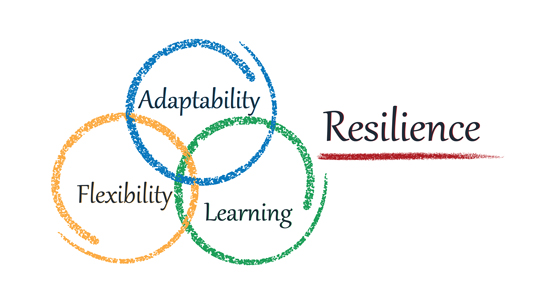
You will have good days and bad days, and discipline is finding a way to persevere regardless of what kind of day you are having. Set yourself an upper time budget and a lower time budget so that you can flex your schedule around the realities of your life.
The upper time budget is for the good days, so you can take advantage of days when you have plenty of energy and enthusiasm and do a little more without burning yourself out. Conversely, the lower time budget is for days when you are tired or down. It may be less time than you think you need, and it might not make a huge contribution to your project, but doing at least something, however little, toward your project will help you to form your routine.
Completing a task is much easier when it is a habit.
. Intrinsic and Extrinsic Motivation
Intrinsic motivation is internal motivation. It is when a person is driven to achieve a goal for its own sake and feels that the completion of the goal is its own reward.
Extrinsic motivation is motivation driven by an external reward. An example of this might be practising your baking in order to win a baking competition.
Research shows that extrinsic motivation works well to inspire shorter bursts of productivity, while intrinsic motivation is the most effective in driving your long-term goals.


 Arts, reviews & current affairs