
SERIES: CRIME FILE INVESTIGATIONS
- Intro & Preamble Note: ‘Body of Evidence’ – includes cast and personnel list/glossary of terms
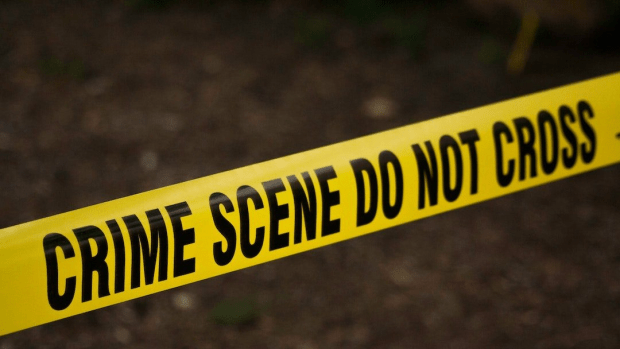
A series of crime scenes that will require the reader to apply their forensic skills in solving the mysteries.
CSI Wes Burton walked into the lawyer’s office and immediately bristled. It wasn’t seeing a corpse that disturbed him; it was the fact that he didn’t see one. The dozen or so people breathing in the room were obstructing his view.
“Which one of you is dead?” he asked. A stunned silence followed as the officers, emergency medical technicians and a short, shaken woman looked at him. “If it isn’t you, there’s no reason for you to be at the crime scene,” said Burton. Detective Erin Radley, who was used to his behaviour, tried to hide a smile.
As everyone filed out of the office, Burton took his custom-made “CRIME SCENE – DO NOT CROSS/CRIME SEEN? STICK AROUND” yellow tape out of pocket 2 of the fly fisherman’s waistcoat he wore to every crime scene. The 30 or so other pockets on the waistcoat bulged and rattled with everything from latex gloves to a handheld ultraviolet light. He rarely came across a situation that required something that wasn’t in those pockets. Radley stayed where she was, as far from the body as possible, to avoid further contaminating the scene. She had on her usual black leather jacket, and its mid-thigh length made her look even taller than usual.
One of the EMTs helped the distressed woman through the doorway. “We’ll check your heart rate right away, Miss Porter. I’m sure it’s nothing serious.” To Burton, he said, “She has some heart attack symptoms. If they continue, we’ll have to take her to the ER within A&E.”
Burton nodded. “Just keep all of her clothes, and don’t let her have a shower.” He stretched the yellow tape across the doorway and secured it. To him, that thin piece of plastic represented a brick wall with armed sentries on top. Maybe even a helicopter or two.
“What do we have, Detective Radley?” Burton asked as he made his way to the other side of the room, careful not to disturb anything. The two client chairs in front of the desk seemed in place, but until photographs were taken, nothing could be moved. Not moving wouldn’t be a problem for Brent Cordova, former lawyer, who was face up on the floor behind his enormous desk.
“Dead lawyer,” she said, opening her notepad. “Only a few million suspects.”
“Shotgun to the chest?” Burton asked.
“Looks like it,” Radley said. “The legal assistant, Miss Porter, says that Cordova had been planning on closing his practice and retiring next month, and he was handing off all his defence cases on a first-come, first-served basis. She says the clients weren’t happy and have been calling with nasty messages.”
“He didn’t know making murder suspects angry can have bad side effects?” Burton asked. “Like getting murdered?”
“You’d think he would,” Radley said. “Only three of his current clients are on trial for murder, and they’re being tracked down right now. We’ll see how their alibis look.” Radley thought for a moment, then went on. “If one of them did it, I hope he’ll talk to me about why.”
“Are you still writing that book of yours?” Burton asked.
“Yes,” she said. “I’ve got some fascinating stuff so far.” Radley, who had a master’s degree in psychology, had been compiling case studies for years that focus on why criminals commit their crimes. She planned to publish them for the law enforcement community.
“I still don’t get it,” Burton said. “The why doesn’t prove anything. You can’t convict anyone on a reason or motive; you have to know how they did it.”
“True,” Radley said. “But if we find out why a murder took place, maybe we can prevent the next one from happening at all.”
“But people can lie about why they did something,” Burton said, “and you might not be able to prove that they’re lying. Evidence stands up in court. It does not lie.”
“So you’re always telling me,” said Radley.
Burton took a closer look at the entrance wound on the body. It was on Cordova’s upper left chest, with gunshot residue and small burns on his skin and the tatters of his shirt. There was no visible exit of pellets or slugs, but from the pattern and depth of the wound, he could see that the shot had entered at a 10-degree angle from Cordova’s left side, at about the height of his shoulder.
Burton also saw that Cordova’s chair, a highbacked leather throne, had gunshot residue on the upper left wing. “How tall are those three murder suspects?”
Radley pulled three folders from under her arm and checked through them. “Miss Porter pulled these for me. She’s pretty upset. She passed the bar exam a month ago and has helped with some of these cases. She thinks if the killer comes back, she’ll be next.”
“Did she witness anything?” Burton asked.
“No, she says she found him like this, called us right away. OK, here’s the last one. The suspects are six-foot-three, five-foot-ten and six foot. Is that helpful?”
“Not to the shooter’s case,” Burton said.
The EMT stuck his head in over the crime scene tape. “Miss Porter’s having some real trouble out here. Heart’s racing like a jack rabbit. We’re going to take her to the hospital for observation.”
“That’s fine,” Burton said. “But let Detective Radley read her her rights first.”
How did he know?


 Arts, reviews & current affairs