
Arts, Drama

Lateral Thinking Drama: ‘Death on Kilimanjaro’…

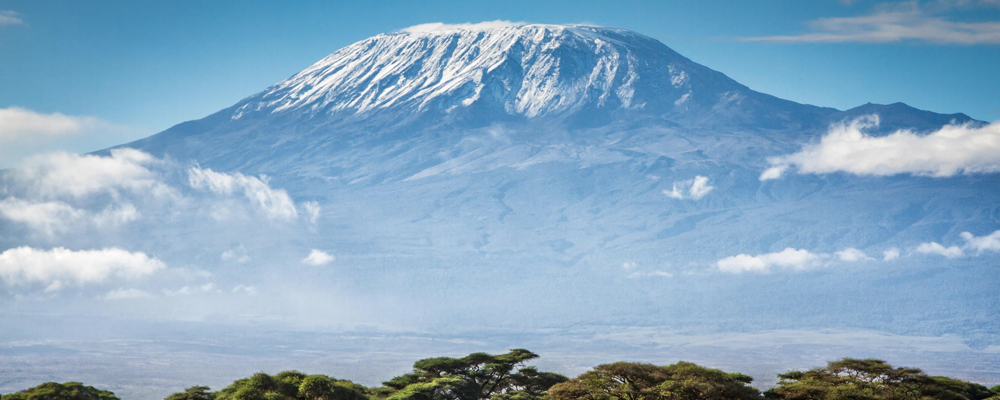
– ‘Death on Kilimanjaro’ is a Lateral Thinking Fictional Drama. Use your thinking and problem-solving skills to solve this conundrum

SCENARIO

FOR AT LEAST THE TENTH TIME THAT DAY, Kurt was vanishing out of sight. “For Chrissake, Kurt, slow down!” Joey shouted.

Ahead of him on the narrow track, Kurt paused in his stride. He turned up, lip curled in an expression of contempt. “Can’t hack it, Joey? You go back if you want. I’m heading for the summit.”

“I don’t want to turn back. I just gotta…get my breath.” Joey felt suddenly dizzy. He sank to his knees. Kurt looked on, making no attempt to help.

“Great adventurer,” he said, making it sound like an obscenity. “I always knew you were a loser, Joey. Can’t even make it up Kilimanjaro. It’s barely six thousand metres. Nothing to an experienced mountaineer.”

Like you, I suppose, Joey thought sardonically, but he didn’t have the strength to argue. He had quickly realised that Kurt had never climbed a mountain in his life. He had approached this whole project like a Sunday afternoon stroll. Yet, so far, anyway, he seemed immune to the altitude sickness that befell almost anyone who tried to climb too quickly. Feeling sick, Joey groped in his jacket pocket for his Diamox tablets.

Kurt reached into his pocket as well. He took out a cigarette. “I’ll smoke this, Joey boy, then I’m going on. You can come with me, or you can head back. It’s your choice.”

It had all been very different two days ago when they had arrived in Tanzania. Although hot and tired from their long journey, they had both been full of excitement at the prospect of the adventure ahead. They spent their first night at the Hotel Marangu, a faded but still-elegant establishment which was presided over by two matronly Englishwomen. Over a meal of ‘Chicken Marangu’, they planned their assault on the mountain.

“Of course, most first-timers take the tourist trail,” Joey pondered. “But that’s the least scenic route…”

“Tourist trail?” Kurt slammed his glass down on the table, spilling his Pilsner beer. “Don’t make me laugh, Joey. We’re adventurers, for God’s sake, not tourists! We take the toughest route available.”

They settled on the Machame Trail. It wasn’t actually the toughest, but privately Joey figured it would be more than challenging. The hotel owners arranged climbing permits and the hire of a jeep. They also provided trail maps, and recommended the services of two local porters. Kurt wasn’t having that, though.

“Porters are for train stations,” he said. The older woman peered at him over her lorgnette. She pursed her lips, but said nothing.

Once the necessary arrangements had been made, they journeyed by jeep to the base of Africa’s highest mountain. The road wound through coffee fields and small forests of ferns and flowers. The heat was stifling, and Joey was glad when they reached their destination and could at last get out of the vehicle. They parked beside two other off-roaders and strapped on their rucksacks. Then, watched by a chattering tribe of tree monkeys, they began the hot and dusty five-hour trek through the forest to Machame Hut, where they had arranged to spend the night.

The next day the climb began in earnest. Leaving the hut early in order to make good progress before the sun grew too strong, they crossed a small valley, covered with exotic spring flowers. Then the landscape changed from forest to scrubland, littered with wild cactus plants. They crossed a river gorge and arrived, according to the map, at the Shira Plateau. The heat was intense, and on top of it Joey had a splitting headache. He knew it to be the first symptom of altitude sickness. More symptoms had swiftly followed.

Kurt finished his cigarette and ground it under his heel. He stared at Joey. “Well?”

Joey climbed to his feet. He took a deep breath and exhaled slowly. He still felt lousy, but his head had cleared. The Diamox had done its work…this time, anyway. “I’m all right,” he said. “Let’s take it steady, shall we?”

They climbed on, up the track that led to the summit. Joey still felt pretty wasted, but thought he might just manage this last stretch, as long as they could descend straight afterwards. Kurt stopped suddenly. “Look,” he said.

Joey followed his pointing arm. Some way below, two other climbers were making their way down the mountain on another trail. One looked up and waved. At this distance, it was hard to tell whether it was a man or a woman. Joey watched till they disappeared behind some rocks.

“Looks like they made it,” Joey said. “That’ll be us in a few…” He stopped, staring at his partner.

Kurt was panting heavily. His face was covered in beads of sweat. “What are you looking at?” he snarled. He turned and took a few steps, then stumbled and fell. His rucksack flew open, scattering clothing and utensils. Joey rushed over to him.

Kurt lay on his back, mouth open. “My chest!” He gasped like a fish out of water. “Oh God, Joey, it feels like it’s being crushed.”

Joey didn’t like this at all. This was more than plain altitude sickness. He tried to remember what the book had said about High Altitude Pulmonary Oedema. He was positive the crushed chest sensation was a sign. Fluid was building up in Kurt’s lungs. Unless he got back to lower altitudes quickly, death would most certainly follow. They had to return to the hut where they had stayed last night. But there was no way that Joey could, in his present state, get Kurt back there on his own.

“I’ll get help,” he said. Kurt, still gasping, didn’t reply. Joey went back to the place where they had watched the other climbers descending; however, by now, there was no sign of them. He walked on a little way, shouting, but there was no reply. He hurried back to check on Kurt who was, by now, unconscious. His own heart pounding, Joey felt Kurt’s wrist. There was still a faint pulse.

There was no alternative. Quickly, Joey located and launched their emergency flare. There was a loud report as it erupted in a ball of magnesium light that momentarily rivalled the African sun.

Although others saw the emergency signal, they were unable to help and within two minutes of launching the flare, both Kurt and Joey were dead. Why?

– Detection level of difficulty: 9

Standard
Health, Medical, Science

Questions of Science: ‘Rubbing salt in to the wound’…

Health

Rubbing salt in the wound was a way of preventing infection. But how did it work?

Applying salt to a wound creates a highly saline environment, one in which it is difficult for microbes to grow. The high concentration gradient between the salt solution and the fluid inside bacterial cells makes it far more difficult for the microbes to extract water from the solution without using a lot more energy. As a result, the bacteria become placid and dehydrated and cannot function normally or proliferate.

Concentrated sugar solutions also have a dehydrating effect. This accounts for the extended shelf life of chutneys and preserves, and explains why honey can be used on wound dressings and, ironically, on bee stings as an antiseptic.

Blood is 83 per cent water. Because salt is hygroscopic, it absorbs water, accelerating the tendency for blood to clot and drying the wound. This helps deny microorganisms a favourable habitat. Saline solutions do generate osmotic pressure – it forces water out of microbes to equalise the salt concentration across their cell membranes. This can kill them, so salt acts as a disinfectant.

The stinging of the wound signals that salt does cause injury to the body. But in the absence of a better option at the time, killing a few healthy skin cells was deemed acceptable collateral damage when the alternative may have been a serious infection or possible death.

Standard
Arts, History, Science, Society

Quantum Leaps: Archimedes…

c. 287 – 212 BC

“Give me a place to stand on, and I will move the earth,” Archimedes is reputed to have declared to the people of Syracuse. The practicalities of an earth-bound life may have denied him that particular pedestal but arranging for his patron King Heiron to move a ship by pushing a small lever was considered only a slightly miraculous feat. With such audacious displays, along with his brilliance as an inventor, mechanical scientist and mathematician, it is no wonder Archimedes was so popular and highly regarded among his contemporaries.

The Mathematician

It was not only his peers, however, who benefited from Archimedes’ work. Many of his achievements are still with us today. First and foremost, Archimedes was an outstanding pure mathematician, “usually considered to be one of the greatest mathematicians of all time,’ according to the Oxford Dictionary of Scientists. He was, for example, the first to deduce that the volume of a sphere was 4πr³ x 3, where r is the radius. Other work in the same area, as outlined in his treatise On the Sphere and Cylinder, led him to deduce that a sphere’s surface area can be worked out by multiplying that of its greatest circle by four: or, similarly, a sphere’s volume is two-thirds that of its circumscribing cylinder. He calculated pi to be approximately 22/7, a figure that was widely used for the next 1500 years.

The Archimedes Principle

Archimedes also discovered the principle that an object immersed in a liquid is buoyed or thrust upwards by a force equal to the weight of the fluid it displaces. The volume of the displaced liquid is the same as the volume of the immersed object. Legend has it that he discovered this when set a challenge by King Heiron to find out whether one of his crowns was made of pure gold or was a fake. While contemplating the problem Archimedes took a bath and noticed that the more he immersed his body in the water, the more the water overflowed from the tub. He realised that if he immersed the crown in a container of water and measured the water that overflowed he would know the volume of the crown. By obtaining a volume of pure gold equivalent to the volume of water displaced by the crown and then weighing both the crown and the gold, he could answer the King’s question. On making this realisation, Archimedes is said to have leapt from his tub and run naked along the street shouting ‘Eureka!’, ‘I have found it!’

Levers and Pulleys

Indeed, it was the practical consequences of Archimedes’ work which mattered more to his contemporaries and for which he became famous.

One such practical demonstration allowed King Heiron to move a ship with a single small lever – which in turn was connected to a series of other levers. Mathematically, he understood the relationship between the lever length, fulcrum position, the weight to be lifted and the force required to move the weight. This meant he could successfully predict outcomes for any number of levers and objects to be lifted.

Likewise he came to understand and explain the principles behind the compound pulley, windless, wedge and screw, as well as finding ways to determine the centre of gravity in objects.

Archimedes goes to war

Perhaps the most important inventions to his peers, however, were the devices created during the Roman siege of Syracuse in the second Punic War. The Romans eventually seized Syracuse, due to neglect of the defences, and Archimedes was killed by a Roman soldier while hard at work on mathematical diagrams. His last words are reputed to have been, ‘Fellow, do not disturb my circles!’

Further achievements

Inventions

. Archimedes’ Screw: a device used to pump water out of ships, and also to irrigate fields.

. Archimedes’ Claw: a huge war machine designed to sink ships by grasping the prow and tipping them over, used in the defence of Syracuse.

. Compound pulley systems: enabled the lifting of enormous weights at a minimal expenditure of energy.

. The method of exhaustion: an integral-like limiting process used to compute the area and volume of two dimensional lamina and three-dimensional solids.

Discoveries

. Archimedes was responsible for the science of hydrostatics, the study of the displacement of bodies in water. He also discovered the principles of static mechanics and pycnometry (the measurement of the volume or density of an object).

. Known as the ‘father of integral calculus’, Archimedes’ reckonings were later used by, among others, Kepler, Fermat, Leibniz and Newton.

. Science Book

Standard