
Arts, Books, Environment, Nature

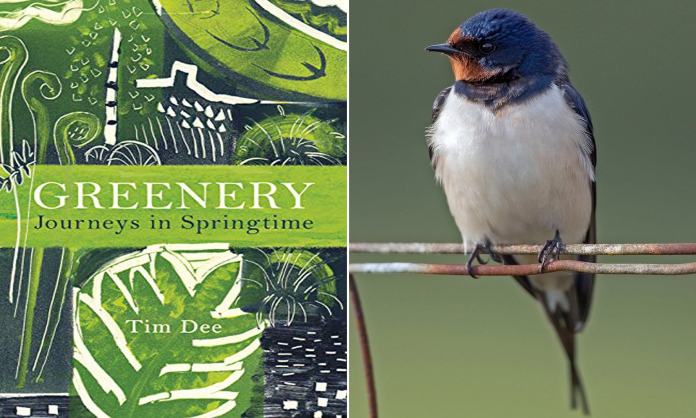
Book Review – ‘Greenery: Journeys In Springtime’

NATURE

Tim Dee

ONE of the most joyous sights of spring is the return of the swallows, swooping and diving in the air, their forked tails slicing through the sky.

Few of us give much thought to the journey that brings them back to Britain each year. Tim Dee, who lives part of the year in “the last-but-one house from the southwestern tip of Africa”, is watching swallows in January when it strikes him that these birds will soon set off on their epic migration across Africa to Europe.

Scientists have calculated that a swallow flies at about 50 kilometres a day.

Coincidentally, the isotherm – the line on a map connecting points with the same temperature – moves across Europe from the Mediterranean to the Arctic Ocean at roughly the same speed in the period between the winter and summer solstice. Swallows are, almost literally, travelling with spring. Dee, a writer and broadcaster, decides that he will follow the swallows’ progress north and reap the benefits of a prolonged spring.

“Buds, blossom, songs, nests and eggs… who wouldn’t, if they could, try a little time-travel in search of more of the right time, trading the notional middle of winter for some early spring?” he asks.

He starts his travels in the Sahara Desert, where the few trees he sees harbour birds pausing on their journey northwards – birds that will soon be in Europe. A few weeks after leaving the desert, in chilly Bristol, he is excited to spot a white wagtail, a species he last saw hopping around crocodiles in Chad, “as busy on the snow as it had been on the sand”.

He marvels: “Every migrant arriving in the spring is already a seasoned voyager, every one is already a survivor.”

Travelling to Gibraltar, he observes that the birds are exhausted by the desert crossing; some species have made the 2,000-km journey in one non-stop, 60-hour flight.

Like lazy tourists, they hang around Gibraltar gorging themselves and putting on weight before the next stage of their journey.

In Sicily, he and his wife Claire hike up a mountain and he notices that spring turns back to winter the higher they go: “As we climbed, we travelled against the season and back in time: to baby leaves unfolding, to blossom, to buds, to bare winter branches.” May Day finds him producing a radio broadcast from Somerset, spending the night crouched at the edge of a reedbed listening to the “stirring and throat-opening” of the birds as they wake up.

At this time of year, the dawn chorus moves rapidly across the northern hemisphere. “Every minute, about 21 more kilometres of the Earth’s surface are lit up and come alive with bird song.”

In June, close to the summer equinox, Dee travels to Iceland. Unable to sleep in the permanent daylight, he and his wife walk the hills at night.

“At one o’clock in the morning I came alongside an estuary and woke a sleeping red-necked phalarope – a bird I’d last seen at the other end of the Atlantic in Cape Town sewage works,” he writes.

Greenery’s genre is best classified as part memoir, part nature guide and part travel book – though annoyingly it doesn’t have a map. Tim Dee’s writing is suffused with literary allusions: rather too many, actually.

Readers might be inclined at times to shout, “Get on with the nature stuff, Tim!” Because, when it comes to chronicling the natural world, his writing and attention to detail is a delight, both elegant and evocative.

Watching a group of Bewick’s swans flying overhead, he comments memorably that they look like “a washing line of creamy sheets in the northern sky.”

This charming, meandering and occasionally frustrating book ends with a completely unexpected double whammy, one in which could have you wiping away tears and then smiling in delight.

It’s a reminder that, however grim things look, there is always the freshness and rebirth of spring to look forward to.

– Greenery: Journeys in Springtime by Tim Dee is published by Jonathan Cape, 355pp
Standard

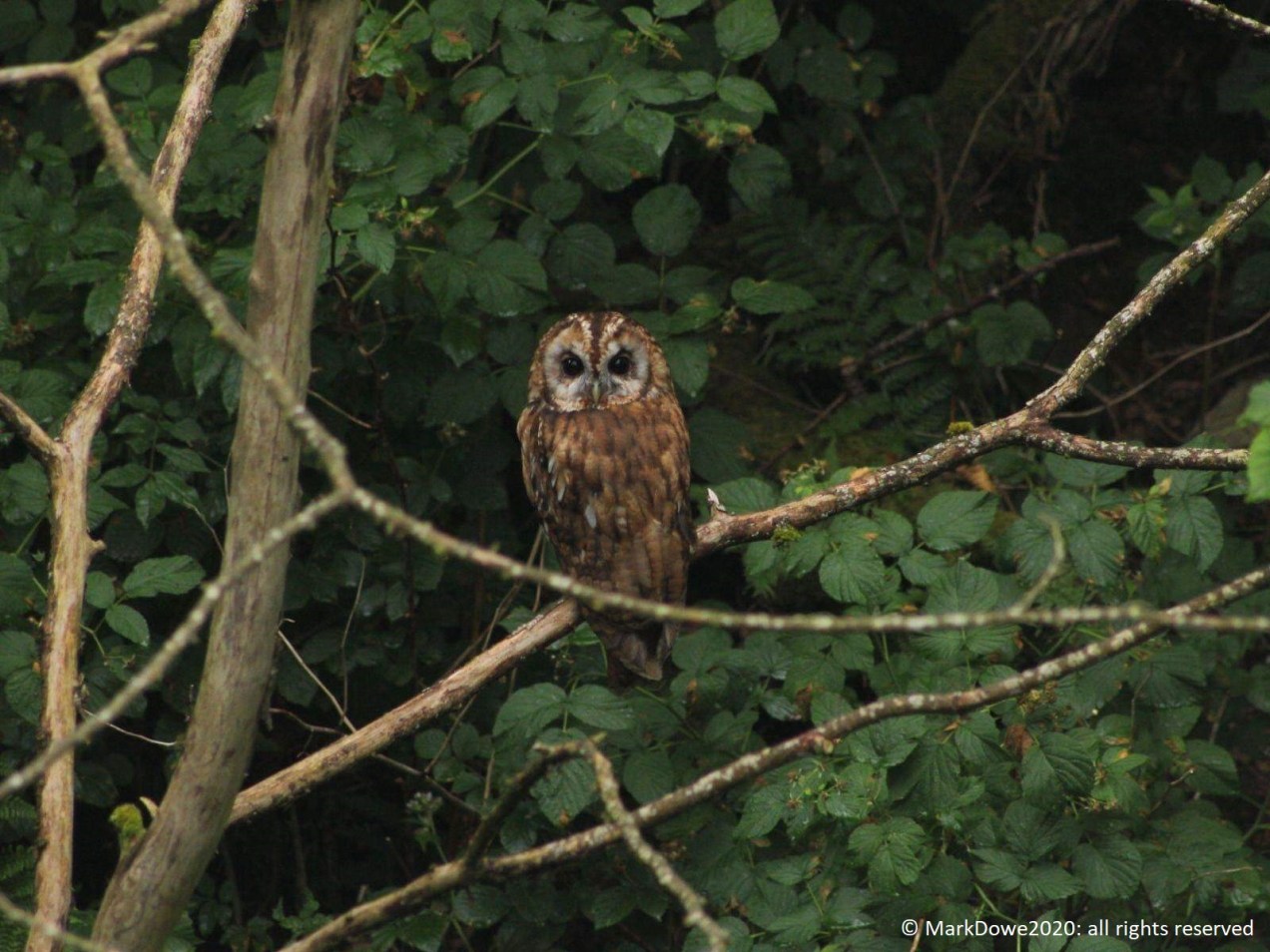
TAWNY OWL

Owl2

Tawny

Arts, Environment, Nature, Photography

MD Photography: Tawny (Woodland) Owl

Image
Climate Change, Environment, Global warming, Science, Society

Dimming the Sun: A project funded by Bill Gates

CLIMATE WARMING

BILL GATES, the philanthropist and founder of Microsoft, wants to spray millions of tonnes of dust into the stratosphere to stop global warming. Protagonists of his theory suggest that dimming the Sun could save the Earth.

The plan sounds like science fiction – but could become fact within a decade; every day more than 800 giant aircraft would lift millions of tonnes of chalk to a height of 12 miles above the Earth’s surface and then sprinkle the lot high around the stratosphere.

The hypothesis assumes that the airborne dust would create a gigantic sunshade, reflecting some of the Sun’s rays and heat back into space, dimming those that get through and so protecting the Earth from the worsening ravages of climate warming.

This is not the crackpot plan of a garden-shed inventor. The project is being funded by billionaire Mr Gates and pioneered by scientists at Harvard University.

Indeed, the plans are so well advanced that the initial “sky-clouding” experiments were meant to have begun several months ago.

The initial $3million test, known as Stratospheric Controlled Perturbation Experiment (SCoPEx) would use a high-altitude scientific balloon to raise around 2kg of calcium carbonate dust – the size of a bag of flour – into the atmosphere 12 miles above the desert of New Mexico.

It is calculated that this would seed a tube-shaped area of sky half a mile long and 100 yards in diameter. For the ensuing 24 hours, the balloon would be steered by propellers back through this artificial cloud, its onboard sensors monitoring both the dust’s sun-reflecting abilities and its effects on the thin surrounding air.

SCoPEx is, however, on hold, amid fears that it could trigger a disastrous series of chain reactions, creating climate havoc in the form of serious droughts and hurricanes, and bring death to millions of people around the world.

One of the Harvard team’s directors, Lizzie Burns, admits: “Our idea is terrifying… But so is climate change.” An advisory panel of independent experts is to assess all the possible risks associated with it.

One may wonder where the idea for such a mind-boggling scheme came from.

The inspiration was in part spawned by a natural disaster. When the volcano Mount Pinatubo in the Philippines exploded in 1991, it killed more than 700 people and left more than 200,000 displaced and homeless.


BUT it also gave scientists the chance to monitor the consequences of a vast chemical cloud in the stratosphere.

The volcano disgorged 20 million tonnes of sulphur dioxide high above the planet, where it formed droplets of sulphuric acid that floated around the globe for more than a year. These droplets acted like tiny mirrors to reflect sunlight.

As a result, global temperatures were reduced by 0.5c for around a year and a half.

This gave impetus to the idea of a dream “fix” of global warming – and has been the subject of at least 100 academic papers.

Creating what would amount to a gigantic sunshade for the Earth would likely come at a high price, posing even greater risks than climate change itself.

One fear is that spreading dust into the stratosphere may damage the ozone layer that protects us from hazardous ultraviolet radiation which can damage human DNA.

Climatologists are also concerned that such tinkering could unintentionally disrupt the circulation of ocean currents that regulate our weather.

This itself could unleash a global outbreak of extreme climatic events that might devastate farmland, wipe out entire species and foster disease epidemics.

The potential for disaster does not even end there. Trying to dim the Sun’s rays would likely create climate winners and losers.

Scientists may be able to set the perfect climatic conditions for farmers in America’s vast Midwest, but at the same time this setting might wreak drought havoc across Africa.

For it is not possible to change the temperature in one part of the world and not disturb the rest. Everything in the world’s climate is interconnected.

Furthermore, any change in global average temperature would in turn change the way in which heat is distributed around the globe, with some places warming more than others.

This, in turn, would affect rain levels. Heat drives the water cycle – in which water evaporates, forms clouds and drops as rain. Any heat alteration would cause an accompanying shift in rainfall patterns. But how and where exactly?

Thee is no way of predicting how the world’s long-term weather may respond to having a gigantic chemical sunshade plonked on top of it.

As one of the world’s leading climate experts Janos Pasztor – who advised at the UN’s Paris climate agreement and now works for New York’s highly respected Carnegie Climate Governance Initiative – has warned: “If you make use of this technology and do it badly or ungoverned, then you can have different kinds of global risks created that can have equal, if not even bigger, challenges to global society than climate change.”

The technology may even spark terrible wars. For tinkering with our climate could send sky-high the potential for international suspicion and armed conflict.

Say, for example, the Chinese government – which already has been experimenting with climate-altering technology – used its burgeoning space-age scientific know-how to try to dust the stratosphere to protect its own agricultural yields.

Then two years later the monsoons fail in neighbouring Asian giant India, causing widespread starvation and disease. Even if the Chinese move had not actually caused the monsoons to fail, billions would blame them.

There is a further peril. The technology involved is seductively cheap, perhaps less than $10billion a year. This means that an individual nation could use it for their own ends – perhaps as a weapon of war or blackmail.

What’s to stop a nation such as Russia interfering with our weather in the same way it has interfered with democratic elections and social media opinions?


NEVERTHELESS, Harvard scientists maintain that they can manage their brainchild safely.

For example, one of the SCoPEx team’s leaders, David Keith, a professor of applied physics, recently reported that by evenly seeding the entire global atmosphere with low levels of reflective dust, there should be a far lower risk of unexpected problems than is feared.

Professor Keith has also suggested that the world’s richer nations should club together to create a pooled global insurance fund to compensate poorer countries for any damage unintentionally caused by their sunshield experimentation.

Critics point out that the promise of a stratospheric sunshade could encourage politicians and industrialists to decide that there is no need to do the hard, unpopular and expensive work of reducing greenhouse gas emissions.

Mike Hulme, a Cambridge University professor of human geography and former scientist on the Intergovernmental Panel on Climate Change, says we could end up instead relying massively on technology to compensate for climate problems that our industries are causing.

He calls this spiralling problem “temperature debt”, because it is like amassing credit-card debts that can never be paid off. “It is a massive gamble,” Professor Hulme warns. “Far better not to build up this debt in the first place.”

Even greater questions arise. How do you switch such a global cooling system off? And what unforeseen consequences would arise if you suddenly did so.

This dream “fix” seems to have plenty of potential to become a global nightmare and outright catastrophe.

Standard