Arts, Books, China, History

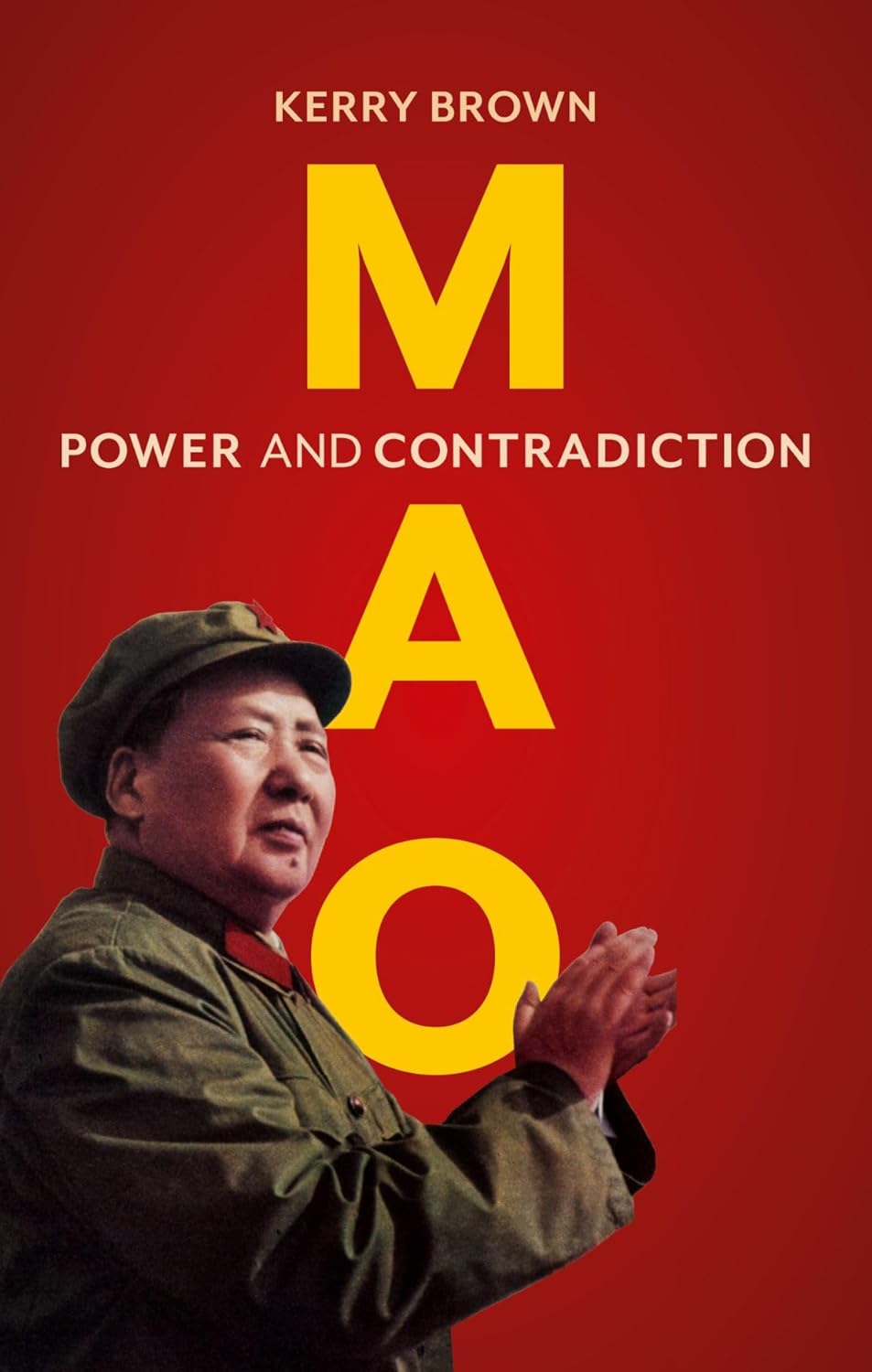
Book Review: Mao

LITERARY REVIEW

Intro: The central argument of Brown’s thesis is that Mao was a ‘moderniser through destruction’. He believed that for a new China to be born, the old one had to be violently uprooted. The book suggests that while Mao’s methods were often catastrophic, the unified, assertive China we see today is an inescapable result of his reign

Kerry Brown writes that “Mao’s provocations… would have suited the world of social media and Twitter/X”. That’s a fertile observation. One could well imagine an @Mao account, or a podcast – The Chairman Mao Experience – attracting a huge and hungry following.

Mao Zedong was, after all, a famed dispenser of earthy aphorisms. He told an astonished hall in 1959: “Comrades… if you have to s—, s—! If you have to fart, fart! You will feel much better for it.” He was obsessed not so much with state-building as with the more intimate endeavour of moulding minds. “Simple slogans, cartoons, and speeches”, he wrote, “have produced… a widespread and speedy effect among the peasants.” Social media would have been a central platform for his rhetoric.

Even in death, Mao trips us up. In the half a century since his passing in 1976, biographers and historians of China have failed to reach consensus on what drove him, what degree of responsibility he bears for the tragedies of the early People’s Republic, and what his contributions were to the wealthy and successful China of 2026. He ran the country for 27 years, yet remained an enigma – associated, at various times in his life, with violence and mercy, Confucianism, and techno-utopianism. In his new biography Mao, Brown, professor of Chinese studies at King’s College, London, all but emits a sigh, surveying the task ahead: “Getting a clear sight of who Mao was… presents a massive challenge.”

Some early signs provide pointers. Young Mao, born in imperial China in 1893, was fiercely opposed to the ruling “Simple slogans, cartoons, and speeches”; yet, he was schooled in the Confucian classics, and was impressed by the importance of self-cultivation. It was a short hop from self-cultivation to the cultivation of others’ selves – in particular those of the vast mass of China’s peasantry, whose loyalty and labour were required for revolution.

Mao came to believe that Marxism offered the best blueprint for achieving this. Russia’s Bolsheviks had shown that what Brown calls “an enlightened vanguard of activists” armed with a simple critique of present injustices could rally the masses to their cause. The people of Hunan province, where Mao built his early political base, possessed, in his estimation, “no brains, no ideals, and no basic plan”. Changing that required, in Brown’s words, “the framing of social relations in elemental terms as a struggle between… two great forces”. One only had to exchange Marxism’s “capitalists” with “landlords” for China’s peasants to raise their gaze beyond their own fields and throw themselves into collective action. Mao deployed night-schools and propaganda to this end, providing just enough education to create a biddable mass that would “rise like a mighty storm, like a hurricane, a force so swift and violent that no power… [would] be able to hold it back”.

Compromise was not in Mao’s DNA. In 1921, while still a marginal figure in the party, he attended the fabled first meeting of the Chinese Communist Party in Shanghai. The location, then in the city’s French concession, is today regarded in China as sacred ground, festooned (the author tells us) with TV screens and interactive guides. And yet: so disillusioned was Mao by the CCP’s pragmatic decision to forge a temporary alliance with the Chinese Nationalists that he boycotted its second congress in 1922. (In later years, he would pretend he’d done no such thing, and only failed to locate the address where the meeting was being held.)

Mao once declared that revolution is “not a dinner party, or writing an essay, or painting a picture, or doing embroidery . . . a revolution is an insurrection, an act of violence where one class overthrows another”. Brown takes the reader on the wild ride that was Mao’s life in the 1930s and 1940s: his quick return to the fold, the rise of the CCP, its fight against Japanese invaders, then all-out civil war with Chiang Kai-shek’s Nationalists – whom Mao had driven out of China and into Taiwan by the end of 1949, thus establishing Communist rule.

Then comes the perplexing mix of success and tragic failure that were the early years of the People’s Republic of China. Greatest of all disasters was the Great Leap Forward of 1958–62, during which a staggering 50 million people may have died (reliable statistics are impossible to come by). How to explain the gargantuan folly of setting up backyard steel furnaces in villages across the country, producing shoddy tools and utensils, while people were left eating tree bark and raw wheat?

Prof. Brown points us towards “Mao Zedong Thought”, the “philosophy” that seems to have turned on a terrifying sense of China’s population as an expendable means towards utopian ends. Those village furnaces might have claimed untold lives – consuming farmers’ tools and time when they should have been tending their fields – but for Mao they were a symbol of Chinese modernity. A nuclear exchange would be regrettable, but China had so many people that no enemy could possibly kill them all. Food aid was offered to China’s neighbours during the height of the famine, because you can’t put a price on projecting an air of progress. Brown wonders whether Mao understood economics at all – whether “capitalism” was, to him, little more than “a term of abuse or criticism for those he regarded as… enemies, rather than something [of which] he had a clear understanding”.

Brown is like a trustworthy tour guide, knowledgeable and clear, but not always sure which sights we most need to see. Digressions into the lives and thinking of other figures occasionally takes up space that might have been better used in rounding out our sense of the chairman himself. Writing about a figure like Mao isn’t easy; but readers may still find themselves hankering after a more vivid personal portrait, alongside answers to some of the questions thrown up by Mao and Maoism.

For instance, important aspects of Mao’s private life are passed over rather quickly. He was often consumed by what might now be described as anxiety and low mood, over fears of his rivals plotting and scheming against him. He withdrew from public life for long periods at a time before returning with fresh and deadly energy – most famously at the time of The Cultural Revolution of 1966-76. And while we must be wary of sensationalism, it seems clear that Mao had a fondness for young women, especially during his later life. All these things might be mined for insights about one of the pivotal figures of the 20th century.

Similarly, we read about the extraordinary violence of the Cultural Revolution without being helped to understand what could make people do such things. So-called “sent-down-youth” from urban China were forced out into the countryside “to seek lived experiences of the revolution”. The results extended to forced marriage, rape, and even murder at the hands of rural Chinese who were fearful that their food and resources were under threat. Mao was the prime instigator and orchestrator of this infamous episode in Chinese history, alluding at the outset to the utopian potential of “disorder” under heaven.

Were Mao’s pathologies poisoning a nation, or coaxing to the surface its darkest inclinations? Brown is surely correct when he says that “it is hard to work out the psychology of a man who was almost constantly calculating and balancing different forces around him”. Still, a tighter curating of key moments and insights plus some judicious speculation might have helped the analysis in this book be more cohesive and compelling. As it is – and in fairness, perhaps this is true to the nature of the chairman – Mao Zedong risks once again slipping through our fingers.

– Mao by Kerry Brown is published by Reaktion, 272pp

Standard
Arts, Books, Philosophy, Politics

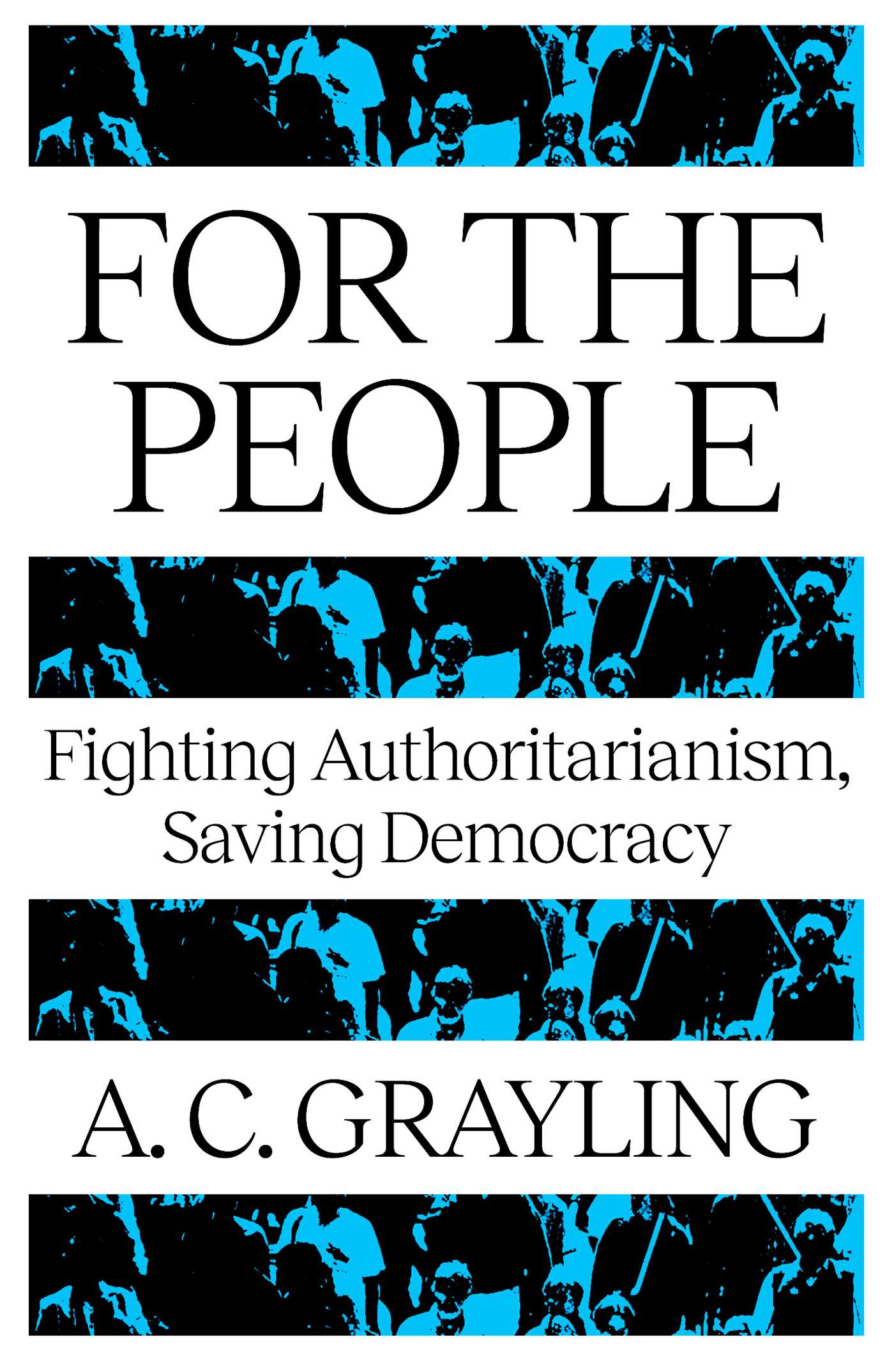
Book Review: For the People

LITERARY REVIEW

Intro: Democracy is in crisis – no thanks to arrogant liberals like AC Grayling. From Brexit to religion, this pompous and insulting philosopher has made a career out of telling the public why they’re wrong. His latest polemic’s a case in point

AC Grayling, a former professor of philosophy at Birkbeck, University of London, is a warhorse of progressive liberalism. He has campaigned for many years in favour of human rights, drug legislation, voting reform, euthanasia, and against war crimes. He is staunchly anti-Brexit and a militant atheist.

Like many people, Grayling is unhappy with the state of the world. Everywhere he looks, there are perils: war, inequality, democratic backsliding, Donald Trump. Things just aren’t going as he would like with authoritarians on the march and liberals in retreat. “Humanity is still at an infantile stage,” he laments. No one respects university professors anymore.

His latest book, For the People, sees Grayling writing in defence of liberal democracy, and in defiance of Vladimir Putin, Chinese communism, and even the populace of Clacton-on-Sea.

His basic contention is that democracy is under threat around the world. It’s losing ground at home to a cocktail of indifference and hostility, and overseas to actual authoritarianism. There are four basic issues: democracy is bleeding moral authority among its own citizens (by repeatedly disappointing voters); it’s too hospitable to big business and oligarchy (allowing “big companies and wealthy individuals… to have a vote equal to millions of other people’s votes”); it’s confronted by the rise of authoritarians in China and Russia (who make it seem like a loser’s doctrine); and it’s assailed from within by a wilfully anti-democratic new kind of politics (“populism”, which floods the minds of voters with fear and propaganda). The reader is left to contemplate the possibility of “the end of the democratic moment in history”.

There’s nothing immediately objectionable here. Grayling is correct that global democracy is in retreat and decline, and correct that this should concern all of us – and deeply. His own remedies, however, have serious flaws. The most immediate is that the publication is incredibly boring. The vision of liberal democracy that Grayling proffers is colourless and tedious. His ideal seems both to involve interminably hard work – “The price of liberty is eternal engagement,” he pens in his best schoolmasterly voice – and narrow in what it offers us. If one describable vision of a democratic commons is that of a boisterous public square full of dissent and babble, For the People proposes something more like a seminar of legal academics to which the voting public have been grudgingly invited in a non-speaking capacity.

Not coincidentally, the same is true of Grayling’s style: figureless, monochrome, and almost baroque in its repetition. One of the book’s two (rather odd) appendices comprises a report from the human rights group Council of Europe on the threat posed by the far-Right that runs to nearly 40 pages. Readers who enjoy this kind of ponderous document will find themselves very much at home among Grayling’s prose.

This brings us to the second major problem with Grayling’s book. The thrust of his title promises to save democracy, but it is with liberalism that he is truly concerned. For Grayling, the two are all but congruent; liberal democracy, we are told, is “a pleonasm: the two words in the phrase are practically synonyms”. This view is by no means the self-evident one Grayling pretends it is. There have been liberal states which were not really democracies – Britain before the Great Reform Act, for instance – and contemporary scholars often describe the rise of figures such as Trump as marking an abandonment of liberal norms via democratic mechanisms.

– Grayling argues that the current political systems in many Western nations have been hallowed out, leaving them vulnerable to populism, elite capture, and the ‘tyranny of the majority’

Where this book goes really off the rails, however, is in its insistence that rule of law, and thus liberalism, essentially exists on a higher plane than that of mere politics. The rule of law, for Grayling, is the “ethical” aspect of the state: it gives character to politics (voting, lawmaking), rather than politics giving character to law. What this means is not just that political actors shouldn’t break the law, but that the basic shape of that law is sacrosanct (and is not to be changed even by majority will). To make such a change, Grayling thinks, would be to fall for the “majoritarian fallacy”. It would injure both the minority who disagree and the majority who want the change; the law is what’s best for everyone, whether they like it or not.

There are shades here of Jean-Jacques Rousseau’s concept of the “general will”, described in The Social Contract of 1762. Rousseau’s general will is not the majority view of a state’s citizens; it is “not so much the number of voices, as it is the common interest which unites them”. If an individual has “a particular will contrary to or different from the general will”, Rousseau writes, the latter will overrule the former: “He will be forced to be free.”

Grayling makes much of this “common” or “best” interest, in contrast to majority opinion, by which he means the interests of those he considers stupid. “Too many,” he writes, “have a vote that can be manipulated by orchestrated misinformation and misdirection to make choices that are not in their best interests.” The public, alas, are still in that “infantile stage”. Grayling is no doubt thinking here of the Brexit referendum, the outcome of which he bitterly opposed and continues to insist should have been ignored. Yet, he campaigned enthusiastically for a “People’s Vote”, and presumably would have accepted any majority opting to rejoin the EU. The intellectual arrogance of this is ludicrous.

And it is here we have the third and greatest problem with Grayling’s position. Only a very strange form of democracy would insist that it can tell you your business, or that your own sense of your interests is wrong. When we read, then, that “the purpose of democratic government is to serve the best interests of all”, it sounds pleasant enough, until you ask the author: who will decide what my interests are? Grayling’s answer to this question is simple: AC Grayling. “The interests of the people are not hard to identify,” he declaims. But here’s the thing: they are. This is why politics exists.

At the same time, Grayling is suspiciously vague as to how your “best interests” and mine become known. There’s an appeal to JS Mill’s “harm principle” hidden away in an endnote, and a suggestion that Britain, just like Bhutan, should replace GDP with GNH (Gross National Happiness) when assessing social wellbeing; both actions suggest some utilitarian arithmetic. Suffice to say that this is not a new debate. Moral philosophers have for centuries sustained an endless back-and-forth argument about utilitarianism, the “hedonic calculus” – Jeremy Bentham’s 18th-century formula for working out how much happiness an action creates – and the plausibility of gauging happiness at the collective level and whether that is possible at all.

Grayling has an utterly blasé indifference to the fact that, for most people, most of the time, their “best interests” are not their only ones. They might not even be that important. Interests in love, in adventure, in faith, in simple curiosity: these may not reliably make us happy, but they’re central to the creatures we are. For the People dissolves this vitality into a tepid brew of committee-approved “best interests”, a safetyism of the soul. Grayling’s democracy is relentlessly boring. It lacks imagination.

Of course, liberal democracy needs defenders; but it needs better defenders than this. Grayling’s world would be a drab, antiseptic thing, where everyone gets just what the doctor ordered and your freedom would be so perfectly calibrated that you couldn’t really do anything with it. There’s no place here for despair or desire, for rebellion, ambivalence, or intrigue. Those things aren’t good for you, and Grayling has told you so. But what if the people want something else? Maybe some people just don’t want to be happy.

For the People is published by Oneworld, 288pp

Standard
Arts, Books, Christianity, Natural History, Philosophy, Religion

The beehive tells us much about the soul

THE COMPLETE BEEKEEPER

Intro: The beekeeper at Douai Abbey has applied the wisdom of bee care to living well

During the vigil on the eve of Easter Sunday, the dark church is lit only by the Paschal candle (representing Christ, “Light from Light”, as the Creed says) and by the candles lit from it and held by those present. Then an ancient chant is sung by the deacon towards the candle, and in praise of it.

This chant, the Exsultet (“Rejoice”), written between 1400 and 1600 years ago, is of an astonishing poetical character. Its text refers to Adam’s sin as felix culpa, “happy fault that earned for us so great, so glorious a Redeemer”.

It speaks of “this candle, a solemn offering, the work of bees and of your servants’ hands”. But there should be another mention of bees – of the candle flame being “fed by melting wax, drawn out by mother bees to build a torch so precious”. The natural history may be awry in calling the female workers “mother bees”, but it is good to see them given due praise. Alas, some choose an abbreviated form of the Exsultent and the mother bees perished. To make up for that shortfall, a delightful new book is being published by Gracewing: The Complete Beekeeper by Dom Gabriel Wilson, OSB (Order of Saint Benedict).  

He has been Prior of the Benedictine Abbey of Douai in Berkshire since 2022, but its beekeeper since 2015. His tenure was a turning point in beekeeping history. He was in charge during the devastating Isle of Wight disease (now known to be caused by the Acarine mite) in the early 20th century, which wiped out the native British Black Bee. His writings capture a pivotal moment when beekeeping shifted from old-world methods to more scientific, selective breeding.

The book’s title mirrors The Compleat Angler, first published by Isaac Walton in 1653, which made the angler symbolise the ideal human being living a balanced life. Similarly, Dom Gabriel feels that “within the hive lives and moves an allegory for the sacred mysteries not only of nature, but of the human soul”.

The beehive speaks to the human heart, he suggests, not by logical syllogisms but by symbol. As Pascal wrote: “The heart has its reasons which reason does not know.”

Dom Gabriel notes that the social virtues of bees were recognised in the pre-Christian world. Virgil devoted a quarter of his poem the Georgics to bees as a model of a structured, co-operative, and selfless society. Today we still wonder: “Who taught the bee to make its wax hexagons, those most perfect forms? Who instructed her to gather nectar and guard her queen, to sacrifice herself to relentless work without any thought of reward?”

Nonetheless, The Complete Beekeeper is more than natural history or self-help; it is a contemplation of spirituality. “To keep bees is … a form of devotion, akin to an intimate spiritual practice that mirrors the tending of one’s inner life.”

The author’s experience at the beehive informs this meta-science: which, governs the care of the faculty for living well – the soul. “Each hive is its own living universe. Within its wooden walls, thousands of bees work in miraculous harmony: foraging, building, cleaning, dancing, feeding the queen, and protecting the whole. So too is the soul made up of countless thoughts, memories, desires, and instincts.”

The Complete Beekeeper taps inherited wisdom. It quotes poets such as Coleridge and Hopkins, and masters of the spiritual life such as St John of the Cross, and, naturally, St Benedict. It critically considers philosophers such as Plato, Seneca, and Sartre – and of course cites beekeepers, in peace and war.

The work of making one’s soul is deadly serious, but it should not be anxious. “Bees are not tame creatures; nor is the moral life a safe one. But it is, in the end, very beautiful and full of joy.” Underneath is a confidence in the ultimate goodness of the world, which, like the garden where the beekeeper tends his hives, knows how to bud and mend, grow and yield again.

Throughout the text, Wilson weaves in the Benedictine philosophy of stewardship. He advocates for a “gentle hand,” suggesting that the best beekeeper is one who works with the bees’ instincts rather than fighting against them. This philosophy – known as the “Buckfast” philosophy – of breeding for docility and productivity became the hallmark of the Buckfast Bee.

Many associate Buckfast Abbey primarily with Brother Adam (the creator of the Buckfast Bee), but it was actually Dom Gabriel who served as the Abbey’s head beekeeper before him. The bigger picture of the book implies that if Brother Adam was the “architect” of the Buckfast Bee, then Dom Gabriel was the “master builder” who cleared the ground. The analogy should not be overlooked.


Standard