
Arts, Books, Philosophy, Politics

Book Review: For the People

LITERARY REVIEW

Intro: Democracy is in crisis – no thanks to arrogant liberals like AC Grayling. From Brexit to religion, this pompous and insulting philosopher has made a career out of telling the public why they’re wrong. His latest polemic’s a case in point

AC Grayling, a former professor of philosophy at Birkbeck, University of London, is a warhorse of progressive liberalism. He has campaigned for many years in favour of human rights, drug legislation, voting reform, euthanasia, and against war crimes. He is staunchly anti-Brexit and a militant atheist.

Like many people, Grayling is unhappy with the state of the world. Everywhere he looks, there are perils: war, inequality, democratic backsliding, Donald Trump. Things just aren’t going as he would like with authoritarians on the march and liberals in retreat. “Humanity is still at an infantile stage,” he laments. No one respects university professors anymore.

His latest book, For the People, sees Grayling writing in defence of liberal democracy, and in defiance of Vladimir Putin, Chinese communism, and even the populace of Clacton-on-Sea.

His basic contention is that democracy is under threat around the world. It’s losing ground at home to a cocktail of indifference and hostility, and overseas to actual authoritarianism. There are four basic issues: democracy is bleeding moral authority among its own citizens (by repeatedly disappointing voters); it’s too hospitable to big business and oligarchy (allowing “big companies and wealthy individuals… to have a vote equal to millions of other people’s votes”); it’s confronted by the rise of authoritarians in China and Russia (who make it seem like a loser’s doctrine); and it’s assailed from within by a wilfully anti-democratic new kind of politics (“populism”, which floods the minds of voters with fear and propaganda). The reader is left to contemplate the possibility of “the end of the democratic moment in history”.

There’s nothing immediately objectionable here. Grayling is correct that global democracy is in retreat and decline, and correct that this should concern all of us – and deeply. His own remedies, however, have serious flaws. The most immediate is that the publication is incredibly boring. The vision of liberal democracy that Grayling proffers is colourless and tedious. His ideal seems both to involve interminably hard work – “The price of liberty is eternal engagement,” he pens in his best schoolmasterly voice – and narrow in what it offers us. If one describable vision of a democratic commons is that of a boisterous public square full of dissent and babble, For the People proposes something more like a seminar of legal academics to which the voting public have been grudgingly invited in a non-speaking capacity.

Not coincidentally, the same is true of Grayling’s style: figureless, monochrome, and almost baroque in its repetition. One of the book’s two (rather odd) appendices comprises a report from the human rights group Council of Europe on the threat posed by the far-Right that runs to nearly 40 pages. Readers who enjoy this kind of ponderous document will find themselves very much at home among Grayling’s prose.

This brings us to the second major problem with Grayling’s book. The thrust of his title promises to save democracy, but it is with liberalism that he is truly concerned. For Grayling, the two are all but congruent; liberal democracy, we are told, is “a pleonasm: the two words in the phrase are practically synonyms”. This view is by no means the self-evident one Grayling pretends it is. There have been liberal states which were not really democracies – Britain before the Great Reform Act, for instance – and contemporary scholars often describe the rise of figures such as Trump as marking an abandonment of liberal norms via democratic mechanisms.
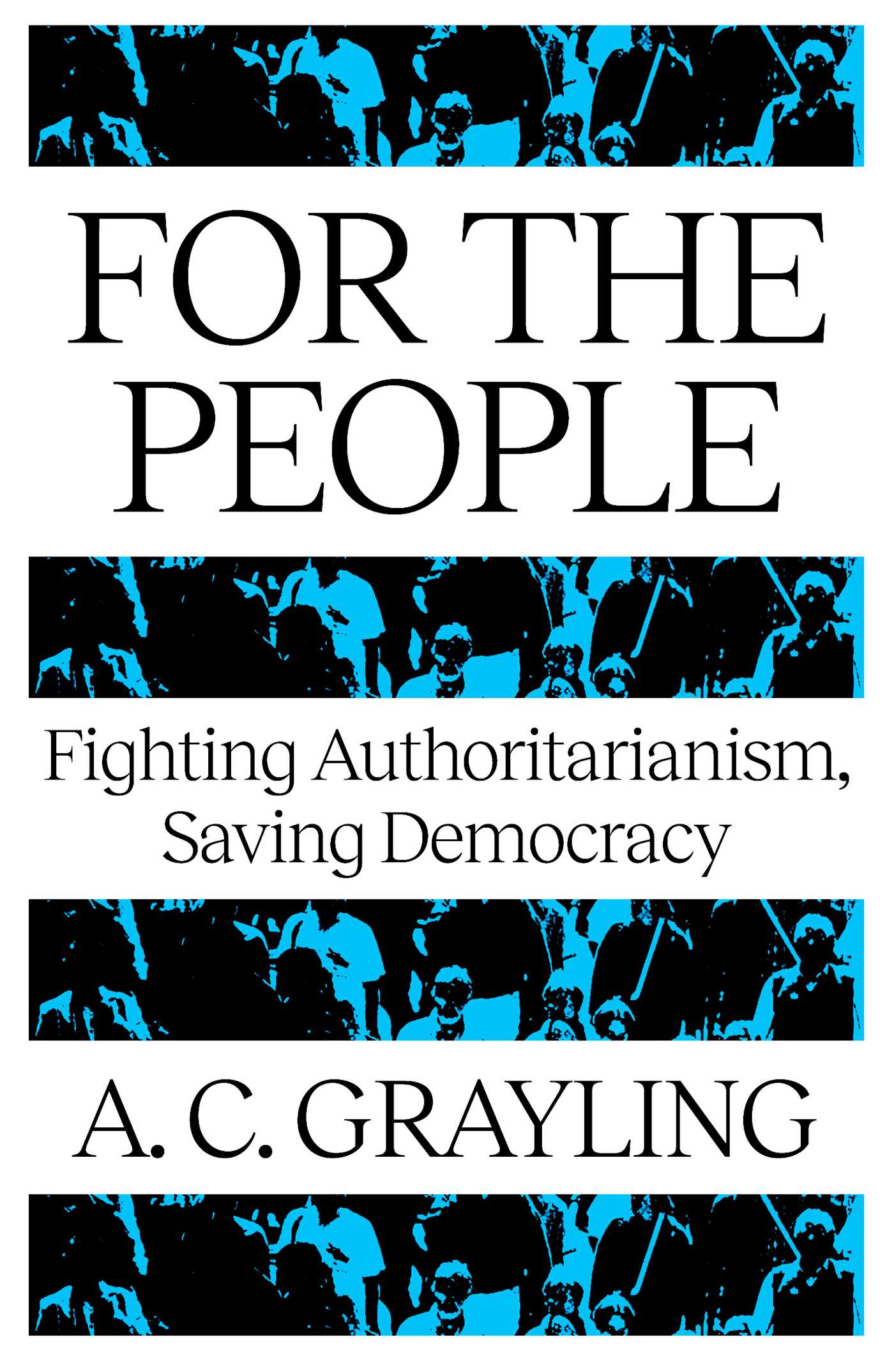
– Grayling argues that the current political systems in many Western nations have been hallowed out, leaving them vulnerable to populism, elite capture, and the ‘tyranny of the majority’

Where this book goes really off the rails, however, is in its insistence that rule of law, and thus liberalism, essentially exists on a higher plane than that of mere politics. The rule of law, for Grayling, is the “ethical” aspect of the state: it gives character to politics (voting, lawmaking), rather than politics giving character to law. What this means is not just that political actors shouldn’t break the law, but that the basic shape of that law is sacrosanct (and is not to be changed even by majority will). To make such a change, Grayling thinks, would be to fall for the “majoritarian fallacy”. It would injure both the minority who disagree and the majority who want the change; the law is what’s best for everyone, whether they like it or not.

There are shades here of Jean-Jacques Rousseau’s concept of the “general will”, described in The Social Contract of 1762. Rousseau’s general will is not the majority view of a state’s citizens; it is “not so much the number of voices, as it is the common interest which unites them”. If an individual has “a particular will contrary to or different from the general will”, Rousseau writes, the latter will overrule the former: “He will be forced to be free.”

Grayling makes much of this “common” or “best” interest, in contrast to majority opinion, by which he means the interests of those he considers stupid. “Too many,” he writes, “have a vote that can be manipulated by orchestrated misinformation and misdirection to make choices that are not in their best interests.” The public, alas, are still in that “infantile stage”. Grayling is no doubt thinking here of the Brexit referendum, the outcome of which he bitterly opposed and continues to insist should have been ignored. Yet, he campaigned enthusiastically for a “People’s Vote”, and presumably would have accepted any majority opting to rejoin the EU. The intellectual arrogance of this is ludicrous.

And it is here we have the third and greatest problem with Grayling’s position. Only a very strange form of democracy would insist that it can tell you your business, or that your own sense of your interests is wrong. When we read, then, that “the purpose of democratic government is to serve the best interests of all”, it sounds pleasant enough, until you ask the author: who will decide what my interests are? Grayling’s answer to this question is simple: AC Grayling. “The interests of the people are not hard to identify,” he declaims. But here’s the thing: they are. This is why politics exists.

At the same time, Grayling is suspiciously vague as to how your “best interests” and mine become known. There’s an appeal to JS Mill’s “harm principle” hidden away in an endnote, and a suggestion that Britain, just like Bhutan, should replace GDP with GNH (Gross National Happiness) when assessing social wellbeing; both actions suggest some utilitarian arithmetic. Suffice to say that this is not a new debate. Moral philosophers have for centuries sustained an endless back-and-forth argument about utilitarianism, the “hedonic calculus” – Jeremy Bentham’s 18th-century formula for working out how much happiness an action creates – and the plausibility of gauging happiness at the collective level and whether that is possible at all.

Grayling has an utterly blasé indifference to the fact that, for most people, most of the time, their “best interests” are not their only ones. They might not even be that important. Interests in love, in adventure, in faith, in simple curiosity: these may not reliably make us happy, but they’re central to the creatures we are. For the People dissolves this vitality into a tepid brew of committee-approved “best interests”, a safetyism of the soul. Grayling’s democracy is relentlessly boring. It lacks imagination.

Of course, liberal democracy needs defenders; but it needs better defenders than this. Grayling’s world would be a drab, antiseptic thing, where everyone gets just what the doctor ordered and your freedom would be so perfectly calibrated that you couldn’t really do anything with it. There’s no place here for despair or desire, for rebellion, ambivalence, or intrigue. Those things aren’t good for you, and Grayling has told you so. But what if the people want something else? Maybe some people just don’t want to be happy.

For the People is published by Oneworld, 288pp

Standard
Arts

Self-centred chaos

DOING THINGS FOR OTHERS

A STORY given by a professor to a class of students is well worth hearing about. To each of them he gave a yellow balloon and asked them to blow their happiness into the balloon and then tie their name tag on to it.

Then he told them to throw the balloons into the air and bat them around for a while.

“Now, find your happiness,” he said.

What followed was chaos. People got in each other’s way, they tripped over furniture and some balloons were burst. Very few students recovered their own balloon in the time allotted.

Then the professor suggested a different way.

“Pick up the balloon closest to you. Then give it to the person named on the tag.”

Two minutes later, everyone had their “happiness” back.

Do you see what he did? He taught his students that if we concentrate on ourselves, very few will end up happy. But if we all set out to do things for others, before too long everyone is happy!

Standard
Health, Psychology, Research, Science

Positive Psychology: Barriers to well-being

BARRIERS TO HAPPINESS AND WELLBEING

ON May 9, 2021, an entry was made on this site concerning ‘happiness’ and the factors that can affect it. You might like to refer back to it.

The article looked at various tried and tested pathways to happiness, such as the five components of Martin Seligman’s well-being theory: positive emotion, engagement, relationships, meaning and accomplishment.

But is happiness that easy to attain? Surely if it were that simple, we’d all feel pretty upbeat all the time. In practice, there are several psychological obstacles which stand in the way of us achieving long-lasting happiness and contentment, and it’s worth knowing what these are so that we can try to overcome them. This entry will explore the five main barriers to well-being.

Barrier 1: the negativity bias

The negativity bias refers to our tendency to pay more attention and give more weight to negative emotions, experiences, and information than to positive ones. This means that you’re more likely to remember (and take seriously) an insult, a criticism or a piece of negative information or feedback than a compliment or a piece of positive information or feedback. From an evolutionary perspective this makes perfect sense since we would not have survived as a species had we not been finely attuned to notice the actual dangers and possible risks all around us. But now that there are far fewer threats in our lives (whatever the media says), this in-built negativity bias can get in the way of our well-being.

Studies also show that positive and negative information of the same importance do not hold equal weight in our minds. If we are given two pieces of equally important information about a stranger, one positive and one negative, they don’t balance each other out – we’re more likely to form a negative view of the person than a neutral one. Similarly, if we have had a good experience and bad experience close together, we will feel worse than neutral, even if the two experiences are of a similar importance. The evidence suggests that positive and negative emotions are not equal, or, in other words, negative emotions reduce our level of well-being more than positive emotions increase it. This helps to explain why it is important to experience positive emotions frequently.

Psychologist Roy Baumeister and colleagues summed up the impact of the negativity bias in five words: “bad is stronger than good.”

Barrier 2: duration neglect

It seems logical that the duration of an experience should influence how we feel about it and how we remember it. A two-week holiday in the sunshine on a glorious tropical island should feel twice as good as exactly the same holiday in the same location lasting for one week. Likewise, undergoing a negative experience such as a 20-minute dental procedure should feel twice as bad as a 10-minute procedure, assuming we feel the same intensity of discomfort throughout both.

So, it may surprise you to discover that when we evaluate our positive and negative experiences, their duration hardly matters at all, which psychologists call duration neglect. Factors which are considered more important are, 1) the intensity of the peak positive or negative emotion, and 2) how the experience ends. So, if we undergo a painful medical procedure which lasts 20 minutes, as long as the pain we experience at the end is less severe than our worst experience of pain during the procedure, we’ll actually remember it more favourably than the same procedure in which the worst pain is the same, but which is only half as long.

In practice this means that if we want to increase our well-being, and that of other people, we should deliberately look for ways to end experiences on a high note. This might just be a simple thing such as when leaving work at the end of the week, you wish colleagues a good weekend. Or, if you have to do something like a presentation, make sure you end it on a high, and practise a positive ending until it comes naturally.

Barrier 3: social comparison

We use the expression “keeping up with the Joneses” to refer to the comparison we make with others – such as our neighbours – to determine how well we’re doing in life. If we buy things to keep up with the Joneses, it means we’re not doing it out of necessity, but as a way of maintaining social status. So, even if our standard of living is acceptable from an absolute perspective, if it’s lower than our peer group our well-being will be diminished.

If we see people around us (family, friends and colleagues) buying more or better things than us, it makes us feel worse about our lives. Thus, how much we earn or buy in comparison to others has an impact on our well-being. That others may be up to their eyeballs in debt to acquire all these new goods barely registers. If they’ve got it, we feel that we’ve got to have it too. This is all made much worse by celebrity lifestyles which are splashed across the internet, TV and magazines, plus the advertising and brand endorsements which accompany them. The problem occurs because, unbeknownst to many of us caught up in the endless must-have-more cycle, buying more things in an effort to keep up with the Joneses will never make us feel happier. The reason? It’s what positive psychologists have dubbed the hedonic treadmill.

Barrier 4: the hedonic treadmill

The bad news – Think of the last big purchase you made, the last time you were promoted or given a pay rise. Remember how excited and happy it made you feel? Now think how long you stayed excited and happy. A few days? A week? In all likelihood, it wasn’t very long. We adapt, we get used to things, whether it’s the things we buy or other positive events and experiences in our lives. When that happens, we start taking them for granted, quickly reverting to our usual happiness baseline (also called the “set-point”). This is what happens when “the novelty wears off”.

In reality, the hedonic treadmill means that there’s little point in expecting shopping and material goods to raise your well-being permanently. They may give you a little boost of positive emotion in the short term, but the bad news is that it won’t last, and you’ll soon feel exactly as you did before. Worse still, you may feel driven to buy something else in order to make yourself feel better again. And so, it goes on. And on.

Sadly, this adaptation principle also applies to other pleasant experiences or circumstances, such as getting married. In research, the average person does not experience a lasting boost to their satisfaction after marriage. Instead, they experience a short-term increase in happiness, followed by a return to their baseline level beyond the early years.

The potential good news – On the other hand, this process of psychological adaptation also applies to unfavourable circumstances, which means that if bad things happen, we will feel worse in the short or medium term before eventually coming back up to our baseline or set-point level of happiness. However, research suggests that we adapt much more quickly to positive events and experiences than we do to negative ones.

There are two take-away messages from the hedonic treadmill story. The first is that you should expect the boost you get from positive experiences like shopping to wear off pretty quickly. The second is that over the longer term it’s worthwhile investigating other, more sustainable routes to well-being. And if you’re married or contemplating getting married, remember that it’s not a guaranteed pathway to permanent happiness – you’ll have to continually work at your relationship if you wish happiness to be your priority.

Barrier 5: lack of self-control

The fifth barrier to well-being is lack of self-control. Self-control (often called self-regulation) refers to our ability to control our impulses and channel our effort in a way that will allow us to reach particular goals. You’re not alone if you think you have low self-control – one study of the 24 character strengths of over 83,000 adults found that self-regulation scored lowest. But self-control is important; according to psychologists Mark Muraven and Roy Baumeister, lack of self-regulation is at the heart of many of the social and personal problems that we suffer in the modern, developed world.

Contrary to the popular view that happiness results from giving in to our natural desires, psychology studies show that higher well-being is actually linked to higher self-control. So, it makes perfect sense to find ways to increase your self-control. Luckily, self-control is bit like a muscle, the more you practise it, the stronger it gets. Developing self-control in one life domain can help to strengthen your self-control in other areas.

THINGS TO REMEMBER

. We naturally give negative emotions, experiences, and information more attention than positive ones.

. Negative and positive experiences of roughly the same importance do not cancel each other out – generally the negative experience will affect you more.

. Shakespeare was right – it’s true that all’s well that ends well! Try to ensure that negative events and experiences end on a high note.

. Comparing yourself upwards is likely to reduce your well-being. Comparing yourself downwards is likely to increase it.

. The novelty almost always wears off.

. Self-control is like a muscle: it improves with practice.

Standard