
LITERARY REVIEW
Intro: Democracy is in crisis – no thanks to arrogant liberals like AC Grayling. From Brexit to religion, this pompous and insulting philosopher has made a career out of telling the public why they’re wrong. His latest polemic’s a case in point
AC Grayling, a former professor of philosophy at Birkbeck, University of London, is a warhorse of progressive liberalism. He has campaigned for many years in favour of human rights, drug legislation, voting reform, euthanasia, and against war crimes. He is staunchly anti-Brexit and a militant atheist.
Like many people, Grayling is unhappy with the state of the world. Everywhere he looks, there are perils: war, inequality, democratic backsliding, Donald Trump. Things just aren’t going as he would like with authoritarians on the march and liberals in retreat. “Humanity is still at an infantile stage,” he laments. No one respects university professors anymore.
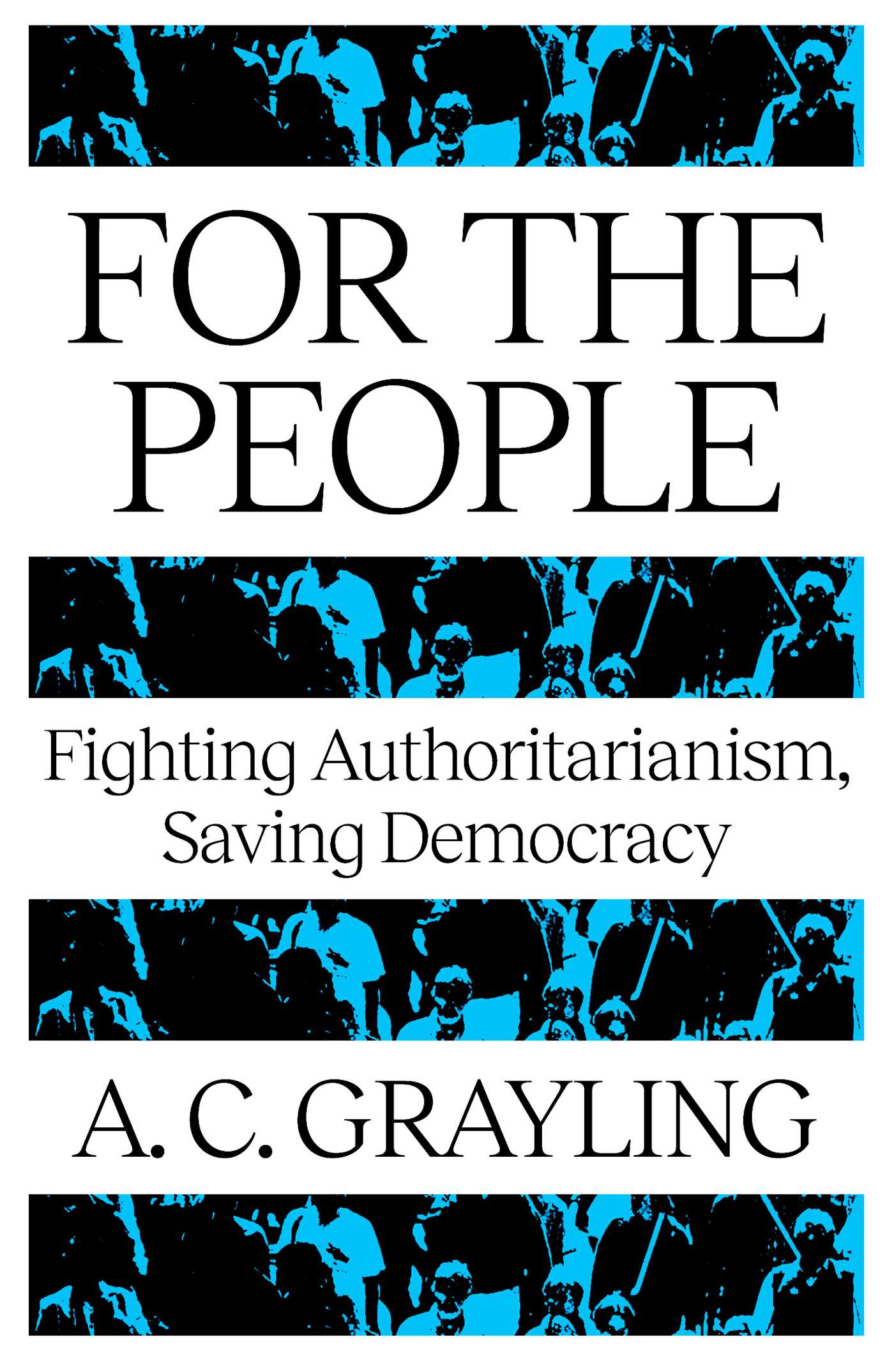
His latest book, For the People, sees Grayling writing in defence of liberal democracy, and in defiance of Vladimir Putin, Chinese communism, and even the populace of Clacton-on-Sea.
His basic contention is that democracy is under threat around the world. It’s losing ground at home to a cocktail of indifference and hostility, and overseas to actual authoritarianism. There are four basic issues: democracy is bleeding moral authority among its own citizens (by repeatedly disappointing voters); it’s too hospitable to big business and oligarchy (allowing “big companies and wealthy individuals… to have a vote equal to millions of other people’s votes”); it’s confronted by the rise of authoritarians in China and Russia (who make it seem like a loser’s doctrine); and it’s assailed from within by a wilfully anti-democratic new kind of politics (“populism”, which floods the minds of voters with fear and propaganda). The reader is left to contemplate the possibility of “the end of the democratic moment in history”.
There’s nothing immediately objectionable here. Grayling is correct that global democracy is in retreat and decline, and correct that this should concern all of us – and deeply. His own remedies, however, have serious flaws. The most immediate is that the publication is incredibly boring. The vision of liberal democracy that Grayling proffers is colourless and tedious. His ideal seems both to involve interminably hard work – “The price of liberty is eternal engagement,” he pens in his best schoolmasterly voice – and narrow in what it offers us. If one describable vision of a democratic commons is that of a boisterous public square full of dissent and babble, For the People proposes something more like a seminar of legal academics to which the voting public have been grudgingly invited in a non-speaking capacity.
Not coincidentally, the same is true of Grayling’s style: figureless, monochrome, and almost baroque in its repetition. One of the book’s two (rather odd) appendices comprises a report from the human rights group Council of Europe on the threat posed by the far-Right that runs to nearly 40 pages. Readers who enjoy this kind of ponderous document will find themselves very much at home among Grayling’s prose.
This brings us to the second major problem with Grayling’s book. The thrust of his title promises to save democracy, but it is with liberalism that he is truly concerned. For Grayling, the two are all but congruent; liberal democracy, we are told, is “a pleonasm: the two words in the phrase are practically synonyms”. This view is by no means the self-evident one Grayling pretends it is. There have been liberal states which were not really democracies – Britain before the Great Reform Act, for instance – and contemporary scholars often describe the rise of figures such as Trump as marking an abandonment of liberal norms via democratic mechanisms.
Where this book goes really off the rails, however, is in its insistence that rule of law, and thus liberalism, essentially exists on a higher plane than that of mere politics. The rule of law, for Grayling, is the “ethical” aspect of the state: it gives character to politics (voting, lawmaking), rather than politics giving character to law. What this means is not just that political actors shouldn’t break the law, but that the basic shape of that law is sacrosanct (and is not to be changed even by majority will). To make such a change, Grayling thinks, would be to fall for the “majoritarian fallacy”. It would injure both the minority who disagree and the majority who want the change; the law is what’s best for everyone, whether they like it or not.
There are shades here of Jean-Jacques Rousseau’s concept of the “general will”, described in The Social Contract of 1762. Rousseau’s general will is not the majority view of a state’s citizens; it is “not so much the number of voices, as it is the common interest which unites them”. If an individual has “a particular will contrary to or different from the general will”, Rousseau writes, the latter will overrule the former: “He will be forced to be free.”
Grayling makes much of this “common” or “best” interest, in contrast to majority opinion, by which he means the interests of those he considers stupid. “Too many,” he writes, “have a vote that can be manipulated by orchestrated misinformation and misdirection to make choices that are not in their best interests.” The public, alas, are still in that “infantile stage”. Grayling is no doubt thinking here of the Brexit referendum, the outcome of which he bitterly opposed and continues to insist should have been ignored. Yet, he campaigned enthusiastically for a “People’s Vote”, and presumably would have accepted any majority opting to rejoin the EU. The intellectual arrogance of this is ludicrous.
And it is here we have the third and greatest problem with Grayling’s position. Only a very strange form of democracy would insist that it can tell you your business, or that your own sense of your interests is wrong. When we read, then, that “the purpose of democratic government is to serve the best interests of all”, it sounds pleasant enough, until you ask the author: who will decide what my interests are? Grayling’s answer to this question is simple: AC Grayling. “The interests of the people are not hard to identify,” he declaims. But here’s the thing: they are. This is why politics exists.
At the same time, Grayling is suspiciously vague as to how your “best interests” and mine become known. There’s an appeal to JS Mill’s “harm principle” hidden away in an endnote, and a suggestion that Britain, just like Bhutan, should replace GDP with GNH (Gross National Happiness) when assessing social wellbeing; both actions suggest some utilitarian arithmetic. Suffice to say that this is not a new debate. Moral philosophers have for centuries sustained an endless back-and-forth argument about utilitarianism, the “hedonic calculus” – Jeremy Bentham’s 18th-century formula for working out how much happiness an action creates – and the plausibility of gauging happiness at the collective level and whether that is possible at all.
Grayling has an utterly blasé indifference to the fact that, for most people, most of the time, their “best interests” are not their only ones. They might not even be that important. Interests in love, in adventure, in faith, in simple curiosity: these may not reliably make us happy, but they’re central to the creatures we are. For the People dissolves this vitality into a tepid brew of committee-approved “best interests”, a safetyism of the soul. Grayling’s democracy is relentlessly boring. It lacks imagination.
Of course, liberal democracy needs defenders; but it needs better defenders than this. Grayling’s world would be a drab, antiseptic thing, where everyone gets just what the doctor ordered and your freedom would be so perfectly calibrated that you couldn’t really do anything with it. There’s no place here for despair or desire, for rebellion, ambivalence, or intrigue. Those things aren’t good for you, and Grayling has told you so. But what if the people want something else? Maybe some people just don’t want to be happy.
– For the People is published by Oneworld, 288pp

