
Arts, Books, Literature

Book Review: Land by Maggie O’Farrell

LITERARY REVIEW

Intro: Set in the decades after the Great Hunger, “Land” is a rich portrait of family life amid Ireland’s long struggle against British rule

Cartography has never been a neutral discipline. Maps offer a partial view of a landscape, informed by what the mapmaker wishes the reader to see. A colonising army will mark the features of the terrain that serves its purposes and exclude inconvenient signs of prior habitation. And they will do this in their own language.

“Land”, Maggie O’Farrell’s 10th novel, is set in Ireland in the 1860s. It has been more than a decade since the Great Hunger killed over a million people and forced an even higher number into exile, and the landscape is dotted with empty villages and over-full graves. Tomás – an Irish cartographer working for the British “redcoats” – and his young son, Liam, are charting a remote peninsula on the country’s west coast when Tomás has a sudden, revelatory experience at a pre-Christian holy spring.

What he encounters there inspires him to abandon his office job and counter the efforts of his erstwhile employers by drawing his own, dissident map of the area. It will reconstitute the terrain as its inhabitants understand it, in their language, honouring the communities that have been annihilated, the woods and waterways that rightly belong to them, and the old cultural landmarks the British have no use for.

The task, for Tomás, is personal: both he and his wife, Phina, were orphans of the Hunger, forced from their rural lives into urban workhouses. He moves his family from Dublin to the countryside as an act of reclamation and renewal. Phina, however, is more ambivalent. She worries about money now that her husband has foregone his regular salary, and about her daughters’ future prospects given that in their new village Catholic schooling is reserved for boys.

Like much of the author’s previous work, including her most famous, the 2020 book “Hamnet” – adapted into a 2025 film by Chloé Zhao – “Land” is a historical novel with O’Farrell’s signature interest in absorbing family relationships. The first half of the narrative sows the seeds of a defiant, multigenerational reckoning with the British Empire, and to an extent the Catholic Church. We encounter a windswept landscape; a menacing, nameless viscount; a kindly widow who represents all the grieving folk of the land; and a condescending priest. O’Farrell takes us on a lively deep dive into the land’s prehistory – a place of hill forts, druids, wanderers and wolfhounds, where virgins are ritually sacrificed to stave off bad weather.

Great period novels balance larger historical context with personal details and textures, and at first “Land” feels poised to do just that, deftly situating a rich portrait of family life amid Ireland’s centuries-long struggle against British rule.

But as the novel proceeds, this promise largely dissolves. Tomás’s cartographic ambitions, initially presented as the story’s engine, fall from focus as the story shifts to his children’s comings of age and their own varied relationships to the Irish diaspora across the British Empire.

Unfortunately, O’Farrell leaves these relationships and their wider ramifications mostly unexplored. Liam joins the Jesuits and travels as a missionary to South India, where he briefly considers the connection between his role and that of the British in Ireland, but ultimately loses his faith because of homesickness rather than any true engagement with the locals’ plight.
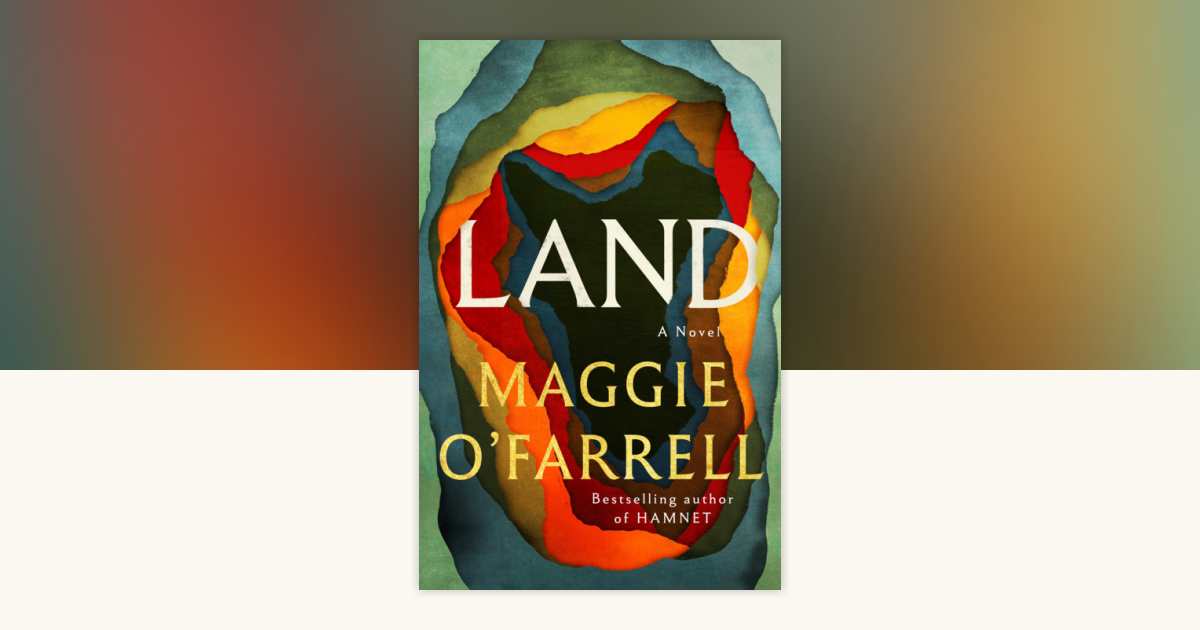
– A sweeping historical family saga set primarily in post-Famine Ireland. The novel blends themes of cartography, colonialism, family bonds, and the deep connection between people and the land

His sister Enda journeys to Quebec on an emigration permit she’s stolen from Liam, and struggles to make a living there as a domestic labourer and street musician. She meets her love interest in the immigration line: an Eastern European teacher turned cook who picks up work as a logger in the summers to make enough money to bring the rest of his family to Canada. But the novel pulls its punches when it comes to the parallels between deforestation in the Americas and that in Ireland.

Nonetheless, O’Farrell’s writing is propulsive and luscious throughout, and there are some emotive and moving passages told from the perspective of Phina’s nonverbal youngest child, Eugene. But the problems with “Land” stem from its reluctance to question the moral clarity of its core characters. They are all unimpeachably good. Tomás loses his grip on reality, and their other daughter, Rose, resents her siblings for leaving her behind on the peninsula; but the real darkness in the novel lies outside the family unit – with the redcoats, the viscount, and the church. The evils of imperialism do not require its victims, real or imagined, to be pure and incorruptible, especially when their own migrations make them the dominant presence in other colonies.

At its best, “Land” evokes weighty, time-slip novels like Alan Garner’s “Red Shift”, drawing associative lines across eras and grappling with the long afterlives of colonial violence. But there is no doubt it is deflated by characters whose confrontations with the forces around them are too shallow to constitute a serious reckoning with the moral dilemmas the novel poses at the start.

– Land by Maggie O’Farrell is published by Knopf (an imprint of Penguin), 384pp
Standard
Arts, Australia, Books, Literature

Book Review: A Far-flung Life

LITERARY REVIEW

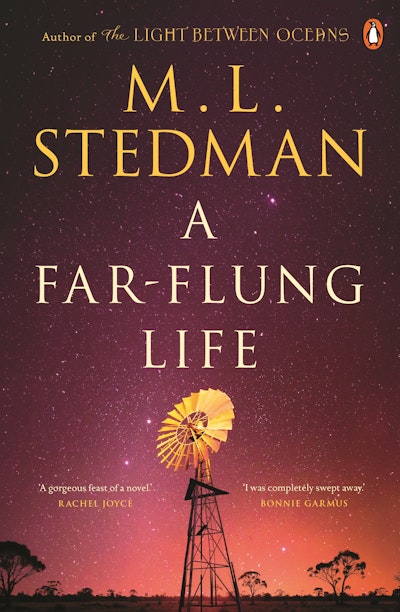
The story is a sweeping epic that follows the MacBride family on a million-acre sheep station in Western Australia, exploring themes of secrets, tragedy, and resilience across several generations

In ML Stedman’s immensely popular 2012 debut, The Light Between Oceans, moral ambiguity was the eddying undercurrent, in a story about a couple who discover a baby on the shores of their remote island home off the coast of Western Australia. That novel spurred an international bidding war and sparked a lacklustre film adaptation. In her second publication, A Far-flung Life, Stedman remains just as preoccupied by what governs our understanding of right and wrong, as well as how we define our sense of family and identity.

Also set in Western Australia, A Far-flung Life begins in 1958 and follows several generations of the MacBride family on their million-acre sheep ranch, Meredith Downs. Here, small decisions have vast consequences: when the patriarch, Phil, swerves to avoid a kangaroo while driving home from the market, he and his eldest son, Warren, are killed. Matt, the youngest son, only just survives. Lorna, suddenly a widow, takes over the reins of the ranch, now the sole parent not only of Matt, whose amnesia from his head injury forces him to redefine who he is and the life he had once hoped for, but also of her “fiery, mercurial” daughter, Rosie.

As the years pass, other figures drift in and out of the MacBride orbit: there’s the taciturn Pete Peachey, a former prisoner of war in Japan who culls the kangaroos on the family homestead; and Miles Beaumont, a dapper Englishman of noble blood who’s learning the ropes on the station. Everyone has their secrets, the albatross they carry. Rosie’s causes her to flee to the outback, though she returns not long after, with a newborn in tow. She, too, will make a decision that reverberates for the MacBrides over the decades – particularly for Matt, who must learn what it means to live a life indelibly marked by unfathomable events.

A recurring theme through this attentive novel is a “forgetment”, a Stedman coinage and idea not for a memory but for a “thing you forget”. The struggle of writing our own narrative when it is violently altered and the way we are shaped as much by conscious knowing as by unknowing (what we hope time will dissolve) – these richly human notions are handled with skilled care. Just as the unflinching land can “rearrange itself without warning or permission”, so can our lives, our sense of self. As Pete Peachey reflects, “’Us’ is an ever-changing thing.” Throughout A Far-flung Life, the at-times herculean labour of weathering that change is shown as not an interruption of life but a part of it.

Time and its fickle passing are insightfully examined. The nature of loss and its temporal warping – where “one minute didn’t have the same length as another” – stands in counterpoint to the indifferent, relentless passage of time on the land. Hours, days, weeks: these human-made creations, the contours of which seem to blur, are only one way we mark our passage. There’s also “the gradual curl of a ram’s horns”, “the stretching and the shrinking of the light”. Stedman elicits, too, how when dazed by grief, one can experience time as stasis: for Matt, forever tied to a cataclysmic single moment, “maybe the roo was always going to bound in front of the truck; was still bounding in some eternal present”.

As the MacBrides learn how to endure the challenges besetting them, it’s a testament to Stedman’s deftness and skill that A Far-flung Life, racked with calamity, only occasionally approaches the mawkish. Every loss feels earned, and what may have otherwise been a syrupy saga is instead a palpable examination of loss, memory, and identity. Her breadth of research is also fully alive in the novel’s expansive detail: the landscape is rendered with intimate familiarity, as is the quotidian minutiae of life on the station. Stedman’s masterful control of perspective, shifting between multiple characters as well as expanses of time and place, culminates in a remarkable, poignant tale.

The moral ambiguity animating the novel lies in things which are best left buried; which parts of a life are allowed to become “forgetments”. This isn’t a question of feigned ignorance but rather of what role forgetting plays in forgiveness – not only of others but of oneself. The author holds the inquiry up like a glimmering piece of quartz, illuminating its shadowed recesses and fractures. The answers, she suggests, aren’t important as the life lived in pursuit of them.

A Far-flung Life by ML Stedman is published by Penguin, 448pp

Standard
Arts, Books, Education, Literature, Poetry

Book Review: Look Closer

NATIONAL YEAR OF READING

Intro: Published in late 2025, ‘Look Closer: How To Get More Out of Reading’ is the latest work by Robert Douglas-Fairhurst, a Professor of English Literature at Oxford.

Part memoir, part masterclass, the book is a “love letter” to the act of reading. The author argues that in our age of digital distraction and short-form content, the art of “slow reading” is more vital than ever

In the era of the smart phone and other devices, reading has become a dying art. In 2024, 40 per cent of Britons did not read or listen to a book. More than a third of adults are known to have given up reading for pleasure. In this digital age, it’s easy to see why. Small, compact devices have changed how we read: skimming rather than lingering over language, and the need to look for a quick fix of information.

Today, for too many of us, reading books has become a means to an end. We need to look no further than the armada of self-help authors promising to help you do it more quickly and, by implication, to read more overall. “Read more than 300 pages in one hour,” pledges one. “Speed Reading Faster: Maximise Your Success in Business and Study,” urges another.

The advice from literary artists is simple: ditch the idea that reading faster is better. Various movements have emerged in recent years, trying to help us get more out of life by taking it at a less frenetic pace: slow food, slow work, slow travel, even slow sex. “Slow reading” may sound rather different – the sort of thing that might evoke pity or scorn – but it can help break the bad habits into which many of us have fallen.

As the National Year of Reading is now upon us, there are certain things we can do to reverse the drift.

. Look closer at familiar classics

Some literary works have become so familiar that our eyes slide over them without stopping. But if we slow down our reading, even these works retain the power to surprise us – and to make us look at the world around us in a new and refreshing way.

Take the most famous speech in Hamlet:

“To be, or not to be, that is the question: Whether ‘tis nobler in the mind to suffer

The slings and arrows of outrageous fortune,

Or to take arms against a sea of troubles,

And by opposing end them?”

Hamlet’s famous question isn’t carried only by what he says, but by how he says it. That’s because his speech is written in lines of blank verse, 10 syllables long, that repeatedly topple over with an extra 11th syllable – “To be or not to be, that is the quest… ion” – then start again. Over and over, it’s synonymous with someone peering over the edge of a cliff before drawing back. Listening carefully to Hamlet allows us to see life (and death) from his perspective: the rhythm represents the way he’s thinking.

. Linger on little details

Another approach is to look again at a poem that’s often reprinted or published in anthologies – appropriate, since “anthology” literally means “a collection of flowers”:

I wandered lonely as a Cloud

That floats on high o’er Vales and Hills,

When all at once I saw a crowd

A host of dancing Daffodils;

Along the Lake, beneath the trees,

Ten thousand dancing in the breeze.

Wordworth’s ambition was to awaken a more imaginative response to homely or neglected corners of the world, and that aim is captured in the smallest details of his verse. The present participle “dancing” shows how something that happened in the past is still happening in his memory. His line breaks work like double-takes, as he searches for exactly the right word for what he saw: “a crowd / A host”.

Finally, his choice of “host” reveals how he detects a divine presence hovering in the background (angels as the heavenly host), while also suggesting that the sight of all these laughing daffodils has somehow made him feel more at home in the world. It’s another piece of writing that doesn’t give us a set of finished thoughts, but instead introduces us to a different way of thinking.

. Embrace the suggestive and opaque

Some literary works are so brief they function as highly effective training aids for this much more measured approach. For example, there’s a famous short story, often erroneously attributed to Ernest Hemingway, that reads: “For sale: baby shoes, never worn.” That’s it – a tragedy in just six words. Written more than 30 years ago, it is still being thought about today.

Like all the best pieces of writing, it works like an imaginary dumdum bullet: it enters our minds and keeps on expanding. (If you want to discover who the original author was, you’re likely to be disappointed. Versions of this story date back to the early 1900s, and a classified ad reading “For sale: baby carriage, never used” can be found in an American newspaper published in 1883.)

. Ask yourself – or Sherlock – what a good reader is

Some books even contain helpful clues about how to read them. A character such as Sherlock Holmes is a model reader, for instance, because he notices every detail and shows how they combine into a meaningful whole. He sifts life for significance. Take The Boscombe Valley Mystery: Holmes assembles a whole series of tiny clues, including a bit of cigar ash that he establishes is from an Indian cigar, and a boot print that he deduces was made by someone with a limp.

At one point he says to Watson, “you see…”, and although it’s only a passing remark, it also works like a miniature version of the whole story. A literary detective makes us “see”, in the sense of showing us how to use our eyes more carefully, and then makes us “see” in the sense of understanding more about what we’ve just been reading (“Oh, I see!”).

In his 1881 book Daybreak (Morgenröthe), Friedrich Nietzsche explained that he was “a teacher of slow reading”. In an age of work, he wrote, “that is, of haste, of unseemly and immoderate hurry-scurry, which is so eager to ‘get things done’”, what was needed was an approach that would teach people “how to read well, that is, slowly, profoundly, attentively, prudently, with inner thoughts, with the mental doors ajar”.

Nearly half a century and a half later, slow reading is something we need more than ever. We need to break the habit of reading just for information, on the page as well as online; we must get out of that horrid, uneven rhythm of scanning and skipping.

For when we pick up a book, we aren’t only trying to lose ourselves in it. If we’re willing to look closely enough, and to leave our mental doors ajar, we might find ourselves there.

Look Closer by Robert Douglas-Fairhurst is published by Fern Press, 352pp

Standard