Arts, Books, China, Communism, Education, History, Society

Book Review: Mao

LITERARY REVIEW

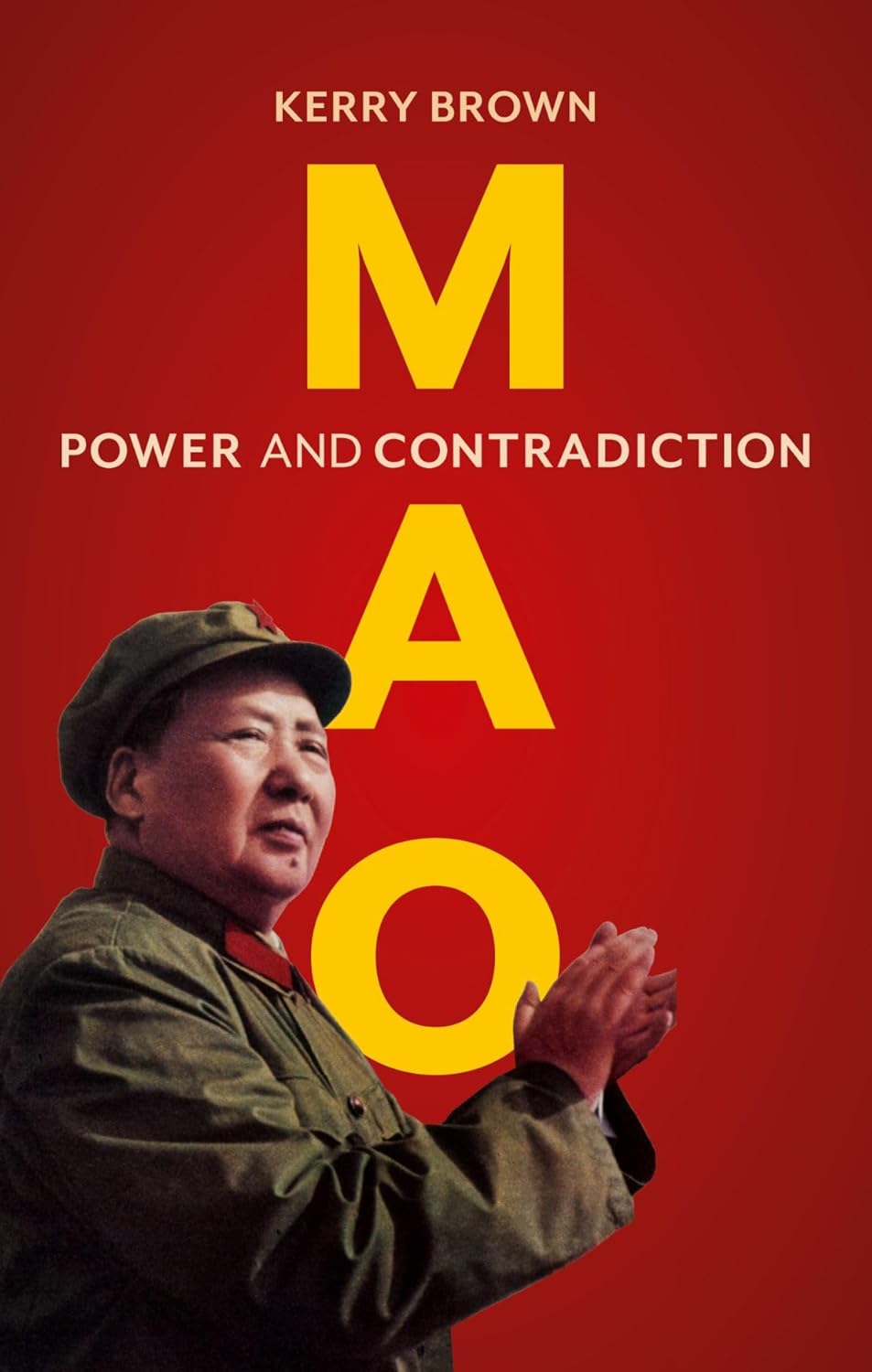
Intro: The central argument of Brown’s thesis is that Mao was a ‘moderniser through destruction’. He believed that for a new China to be born, the old one had to be violently uprooted. The book suggests that while Mao’s methods were often catastrophic, the unified, assertive China we see today is an inescapable result of his reign

Kerry Brown writes that “Mao’s provocations… would have suited the world of social media and Twitter/X”. That’s a fertile observation. One could well imagine an @Mao account, or a podcast – The Chairman Mao Experience – attracting a huge and hungry following.

Mao Zedong was, after all, a famed dispenser of earthy aphorisms. He told an astonished hall in 1959: “Comrades… if you have to s—, s—! If you have to fart, fart! You will feel much better for it.” He was obsessed not so much with state-building as with the more intimate endeavour of moulding minds. “Simple slogans, cartoons, and speeches”, he wrote, “have produced… a widespread and speedy effect among the peasants.” Social media would have been a central platform for his rhetoric.

Even in death, Mao trips us up. In the half a century since his passing in 1976, biographers and historians of China have failed to reach consensus on what drove him, what degree of responsibility he bears for the tragedies of the early People’s Republic, and what his contributions were to the wealthy and successful China of 2026. He ran the country for 27 years, yet remained an enigma – associated, at various times in his life, with violence and mercy, Confucianism, and techno-utopianism. In his new biography Mao, Brown, professor of Chinese studies at King’s College, London, all but emits a sigh, surveying the task ahead: “Getting a clear sight of who Mao was… presents a massive challenge.”

Some early signs provide pointers. Young Mao, born in imperial China in 1893, was fiercely opposed to the ruling “Simple slogans, cartoons, and speeches”; yet, he was schooled in the Confucian classics, and was impressed by the importance of self-cultivation. It was a short hop from self-cultivation to the cultivation of others’ selves – in particular those of the vast mass of China’s peasantry, whose loyalty and labour were required for revolution.

Mao came to believe that Marxism offered the best blueprint for achieving this. Russia’s Bolsheviks had shown that what Brown calls “an enlightened vanguard of activists” armed with a simple critique of present injustices could rally the masses to their cause. The people of Hunan province, where Mao built his early political base, possessed, in his estimation, “no brains, no ideals, and no basic plan”. Changing that required, in Brown’s words, “the framing of social relations in elemental terms as a struggle between… two great forces”. One only had to exchange Marxism’s “capitalists” with “landlords” for China’s peasants to raise their gaze beyond their own fields and throw themselves into collective action. Mao deployed night-schools and propaganda to this end, providing just enough education to create a biddable mass that would “rise like a mighty storm, like a hurricane, a force so swift and violent that no power… [would] be able to hold it back”.

Compromise was not in Mao’s DNA. In 1921, while still a marginal figure in the party, he attended the fabled first meeting of the Chinese Communist Party in Shanghai. The location, then in the city’s French concession, is today regarded in China as sacred ground, festooned (the author tells us) with TV screens and interactive guides. And yet: so disillusioned was Mao by the CCP’s pragmatic decision to forge a temporary alliance with the Chinese Nationalists that he boycotted its second congress in 1922. (In later years, he would pretend he’d done no such thing, and only failed to locate the address where the meeting was being held.)

Mao once declared that revolution is “not a dinner party, or writing an essay, or painting a picture, or doing embroidery . . . a revolution is an insurrection, an act of violence where one class overthrows another”. Brown takes the reader on the wild ride that was Mao’s life in the 1930s and 1940s: his quick return to the fold, the rise of the CCP, its fight against Japanese invaders, then all-out civil war with Chiang Kai-shek’s Nationalists – whom Mao had driven out of China and into Taiwan by the end of 1949, thus establishing Communist rule.

Then comes the perplexing mix of success and tragic failure that were the early years of the People’s Republic of China. Greatest of all disasters was the Great Leap Forward of 1958–62, during which a staggering 50 million people may have died (reliable statistics are impossible to come by). How to explain the gargantuan folly of setting up backyard steel furnaces in villages across the country, producing shoddy tools and utensils, while people were left eating tree bark and raw wheat?

Prof. Brown points us towards “Mao Zedong Thought”, the “philosophy” that seems to have turned on a terrifying sense of China’s population as an expendable means towards utopian ends. Those village furnaces might have claimed untold lives – consuming farmers’ tools and time when they should have been tending their fields – but for Mao they were a symbol of Chinese modernity. A nuclear exchange would be regrettable, but China had so many people that no enemy could possibly kill them all. Food aid was offered to China’s neighbours during the height of the famine, because you can’t put a price on projecting an air of progress. Brown wonders whether Mao understood economics at all – whether “capitalism” was, to him, little more than “a term of abuse or criticism for those he regarded as… enemies, rather than something [of which] he had a clear understanding”.

Brown is like a trustworthy tour guide, knowledgeable and clear, but not always sure which sights we most need to see. Digressions into the lives and thinking of other figures occasionally takes up space that might have been better used in rounding out our sense of the chairman himself. Writing about a figure like Mao isn’t easy; but readers may still find themselves hankering after a more vivid personal portrait, alongside answers to some of the questions thrown up by Mao and Maoism.

For instance, important aspects of Mao’s private life are passed over rather quickly. He was often consumed by what might now be described as anxiety and low mood, over fears of his rivals plotting and scheming against him. He withdrew from public life for long periods at a time before returning with fresh and deadly energy – most famously at the time of The Cultural Revolution of 1966-76. And while we must be wary of sensationalism, it seems clear that Mao had a fondness for young women, especially during his later life. All these things might be mined for insights about one of the pivotal figures of the 20th century.

Similarly, we read about the extraordinary violence of the Cultural Revolution without being helped to understand what could make people do such things. So-called “sent-down-youth” from urban China were forced out into the countryside “to seek lived experiences of the revolution”. The results extended to forced marriage, rape, and even murder at the hands of rural Chinese who were fearful that their food and resources were under threat. Mao was the prime instigator and orchestrator of this infamous episode in Chinese history, alluding at the outset to the utopian potential of “disorder” under heaven.

Were Mao’s pathologies poisoning a nation, or coaxing to the surface its darkest inclinations? Brown is surely correct when he says that “it is hard to work out the psychology of a man who was almost constantly calculating and balancing different forces around him”. Still, a tighter curating of key moments and insights plus some judicious speculation might have helped the analysis in this book be more cohesive and compelling. As it is – and in fairness, perhaps this is true to the nature of the chairman – Mao Zedong risks once again slipping through our fingers.

– Mao by Kerry Brown is published by Reaktion, 272pp

Standard
Arts, Books, Education, Literature, Poetry

Book Review: Look Closer

NATIONAL YEAR OF READING

Intro: Published in late 2025, ‘Look Closer: How To Get More Out of Reading’ is the latest work by Robert Douglas-Fairhurst, a Professor of English Literature at Oxford.

Part memoir, part masterclass, the book is a “love letter” to the act of reading. The author argues that in our age of digital distraction and short-form content, the art of “slow reading” is more vital than ever

In the era of the smart phone and other devices, reading has become a dying art. In 2024, 40 per cent of Britons did not read or listen to a book. More than a third of adults are known to have given up reading for pleasure. In this digital age, it’s easy to see why. Small, compact devices have changed how we read: skimming rather than lingering over language, and the need to look for a quick fix of information.

Today, for too many of us, reading books has become a means to an end. We need to look no further than the armada of self-help authors promising to help you do it more quickly and, by implication, to read more overall. “Read more than 300 pages in one hour,” pledges one. “Speed Reading Faster: Maximise Your Success in Business and Study,” urges another.

The advice from literary artists is simple: ditch the idea that reading faster is better. Various movements have emerged in recent years, trying to help us get more out of life by taking it at a less frenetic pace: slow food, slow work, slow travel, even slow sex. “Slow reading” may sound rather different – the sort of thing that might evoke pity or scorn – but it can help break the bad habits into which many of us have fallen.

As the National Year of Reading is now upon us, there are certain things we can do to reverse the drift.

. Look closer at familiar classics

Some literary works have become so familiar that our eyes slide over them without stopping. But if we slow down our reading, even these works retain the power to surprise us – and to make us look at the world around us in a new and refreshing way.

Take the most famous speech in Hamlet:

“To be, or not to be, that is the question: Whether ‘tis nobler in the mind to suffer

The slings and arrows of outrageous fortune,

Or to take arms against a sea of troubles,

And by opposing end them?”

Hamlet’s famous question isn’t carried only by what he says, but by how he says it. That’s because his speech is written in lines of blank verse, 10 syllables long, that repeatedly topple over with an extra 11th syllable – “To be or not to be, that is the quest… ion” – then start again. Over and over, it’s synonymous with someone peering over the edge of a cliff before drawing back. Listening carefully to Hamlet allows us to see life (and death) from his perspective: the rhythm represents the way he’s thinking.

. Linger on little details

Another approach is to look again at a poem that’s often reprinted or published in anthologies – appropriate, since “anthology” literally means “a collection of flowers”:

I wandered lonely as a Cloud

That floats on high o’er Vales and Hills,

When all at once I saw a crowd

A host of dancing Daffodils;

Along the Lake, beneath the trees,

Ten thousand dancing in the breeze.

Wordworth’s ambition was to awaken a more imaginative response to homely or neglected corners of the world, and that aim is captured in the smallest details of his verse. The present participle “dancing” shows how something that happened in the past is still happening in his memory. His line breaks work like double-takes, as he searches for exactly the right word for what he saw: “a crowd / A host”.

Finally, his choice of “host” reveals how he detects a divine presence hovering in the background (angels as the heavenly host), while also suggesting that the sight of all these laughing daffodils has somehow made him feel more at home in the world. It’s another piece of writing that doesn’t give us a set of finished thoughts, but instead introduces us to a different way of thinking.

. Embrace the suggestive and opaque

Some literary works are so brief they function as highly effective training aids for this much more measured approach. For example, there’s a famous short story, often erroneously attributed to Ernest Hemingway, that reads: “For sale: baby shoes, never worn.” That’s it – a tragedy in just six words. Written more than 30 years ago, it is still being thought about today.

Like all the best pieces of writing, it works like an imaginary dumdum bullet: it enters our minds and keeps on expanding. (If you want to discover who the original author was, you’re likely to be disappointed. Versions of this story date back to the early 1900s, and a classified ad reading “For sale: baby carriage, never used” can be found in an American newspaper published in 1883.)

. Ask yourself – or Sherlock – what a good reader is

Some books even contain helpful clues about how to read them. A character such as Sherlock Holmes is a model reader, for instance, because he notices every detail and shows how they combine into a meaningful whole. He sifts life for significance. Take The Boscombe Valley Mystery: Holmes assembles a whole series of tiny clues, including a bit of cigar ash that he establishes is from an Indian cigar, and a boot print that he deduces was made by someone with a limp.

At one point he says to Watson, “you see…”, and although it’s only a passing remark, it also works like a miniature version of the whole story. A literary detective makes us “see”, in the sense of showing us how to use our eyes more carefully, and then makes us “see” in the sense of understanding more about what we’ve just been reading (“Oh, I see!”).

In his 1881 book Daybreak (Morgenröthe), Friedrich Nietzsche explained that he was “a teacher of slow reading”. In an age of work, he wrote, “that is, of haste, of unseemly and immoderate hurry-scurry, which is so eager to ‘get things done’”, what was needed was an approach that would teach people “how to read well, that is, slowly, profoundly, attentively, prudently, with inner thoughts, with the mental doors ajar”.

Nearly half a century and a half later, slow reading is something we need more than ever. We need to break the habit of reading just for information, on the page as well as online; we must get out of that horrid, uneven rhythm of scanning and skipping.

For when we pick up a book, we aren’t only trying to lose ourselves in it. If we’re willing to look closely enough, and to leave our mental doors ajar, we might find ourselves there.

Look Closer by Robert Douglas-Fairhurst is published by Fern Press, 352pp

Standard
Education, Politics, United States

The US administration’s attack on universities is an affront to democracy

AMERICAN UNIVERSITIES

IN the authoritarian playbook, enfeebling universities is an early move in the state seizing control. It has been studied eagerly by the likes of Viktor Orbán in Hungary. Authoritarians and one-party states centrally target universities with the aim of restricting dissent. There are instances now, too, where scholars of influential universities in America, such as Yale, are leaving the US for other countries such as Canada because of the political climate and the battle that is escalating over higher education.

It is not merely because universities are often bastions of liberal attitudes and hotbeds for protest. They also constitute one of the critical institutions of civil society; they are a bulwark of democracy. The Trump administration is taking on judges, lawyers, NGOs, and the media: it would be highly surprising if universities were not on the list. They embody the importance of knowledge, rationality, and independent thought.

The evidence is now clear to see. In a typically brazen move, Donald Trump has accused Harvard of being a threat to democracy, and has become one of his administration’s top targets. The US government is attacking diversity, equity, and inclusion efforts, and says it is tackling the failure of universities to root out antisemitism – a claim that is widely challenged. While most Trump supporters are unlikely to take issue with cutting billions of dollars of public spending on wealthy elite institutions, it has to be recognised that much of that money goes to scientific and medical research that enriches the US as a nation and benefits vast numbers of people who have never ventured near an Ivy League university.

The administration’s shocking demands of Harvard include federal oversight of admissions, the dismantling of diversity programmes, the curtailment to recruitment of international students “hostile to American values”, and the compelled hiring of “viewpoint diverse” staff.

Harvard has commendably chosen to fight back. Its president, Alan Garber, insists the university will not surrender its independence or relinquish its constitutional rights. It is suing the government over the freeze on $2.2bn in federal funding, part of a threat to withhold $9bn. That is encouraging others to speak out. More than 150 university presidents have signed a joint letter denouncing “unprecedented government overreach and political interference”.

Many have pointed out that the world’s richest university can afford to stand firm thanks to its unrivalled $53bn endowment and sympathetic billionaire alumni. Nonetheless, that same prestige and power is what has made it the primary target: force it to fold, and weaker institutions will follow. It’s worth noting that Harvard toughened its position after faculty, students, and alumni pushed hard for it to do so, warning that concessions would only encourage the administration. Columbia acquiesced to an extraordinary list of demands but some $400m of withheld funding has yet to be restored, and the administration is reportedly seeking to extend control over the university.

Troubling, because whatever comes of Harvard’s lawsuit, this is an administration that has already chosen to ignore court rulings. It may step up its assault, by revoking charitable status and clamping down on international students. Still, Harvard is fighting back not just because it can, but because it must. In doing so, it is defending not only academic freedom, but democracy more broadly. It will inspire others to do the same.

Standard