Arts, Books, Environment, Nature

Book Review: Buzz

NATURE

Buzz

Bees are brilliant and a much-needed species. And it’s thanks to wasps from which they evolved.

DO you know what Aristotle, George Washington, Leo Tolstoy, Sherlock Holmes and Scarlett Johansson have in common?

If you didn’t you might be surprised to hear that they were (or are) all beekeepers.

This lively, engaging book shows the human fascination with bees has deep roots. Stone Age art, from Africa to Europe and further afield to Australia, depicts honey-hunting expeditions. People kept bees before they tamed horses. The Hittites imposed fines on anyone caught stealing from hives. The Greeks had honey taxes.

Bees have long been central to our eating habits. “It’s often said,” Hanson remarks, “that every third bite of food in the human diet relies upon bees.”

He includes a table of 150 crops which either need or benefit from pollination by bees. They range from apricots to tomatoes and turnips.

Mead, brewed from honey, is one of mankind’s oldest tipples. People have been drinking it for at least 9,000 years. The ancient Chinese downed a version laced with rice and hawthorn berries; the Celts preferred theirs flavoured with hazelnuts.

The Mayans of Central America went one better and produced hallucinogenic varieties, spiked with narcotic roots.

Bee products have also proved invaluable in traditional healing. Of 1,000 prescriptions in a 12th-century volume entitled The Book Of Medicines, more than 350 made use of them. Honey was thought to be a remedy for everything from hiccups to a low sperm count. Beeswax could be used to treat loose teeth, aching testicles and sword wounds.

It’s little wonder that bees figure prominently in various mythologies. In some Greek myths, the god Zeus was raised by wild bees who fed him on nectar and honey. In cultures across the world, the buzzing of bees was interpreted as the voices of departed souls.

Bees are certainly remarkable creatures. They evolved from wasps. The first unequivocal bees appear in the fossil record about 70 million years ago. There are now around 20,000 different species around the globe.

Their antennae tune into chemicals which signal everything from potential meals to potential mates. Their wings can flap more than 200 times a second. One species of bumblebee can hover at elevations higher than the peak of Everest.

Bees, of course, evolved in tandem with the flowers on which they feed and which in turn depend on them to spread their pollen. In one sense, the colours of flowers reflect the nature of bees’ eyesight.

The prevalence of blues and golds in flowers is no chance matter. These shades fall right in the middle of a bee’s visual spectrum. On remote islands where there are few, if any bees, flowers are drab and colourless.

The development of scented flowers is also interwoven with bees’ ability to sense them. As Hanson puts it, “The fact that bees prefer odours we find worthy of poetry, counts as one of nature’s happier accidents.”

Plants need to attract bees to help them pollinate. They have devised any number of cunning strategies to do so. Some include caffeine in their nectar to get bees addicted to visiting them.

There are varieties of orchids which mimic the body shapes and scents of female bees to lure lustful male bees towards them.

The behaviour was recorded in the 19th century but prudish naturalists, including Charles Darwin, were puzzled. They thought the bees were attacking the orchids. They didn’t realise that they were actually trying to have sex with them.


BEES are now big business, particularly in the U.S. For a price, honeybees are sent by truck around the country, so farmers can improve bee-dependent crops. More than 10 million bees can be on a single truck.

Much publicity has been given in recent years to the alarming decline in bee numbers – so-called Colony Collapse Disorder (CCD). Hanson acknowledges the concerns, but he is ultimately optimistic about the future. He is also a charmingly enthusiastic bee fanatic and his book is delightful to read.

Buzz by Thor Hanson is published by Icon for £16.99

Standard
Nature, Research, Science

Arthritis gene linked to colonisation and spread of mankind

SCIENTIFIC RESEARCH

Arthritis Gene

The arthritis gene responsible for the painful condition which manifests itself in worn down joints is being linked to the process of natural selection and evolution of mankind.

A single gene that made it easier for early humans to colonise Europe and Asia also causes arthritis, researchers claim.

The gene, which is known to cause people to be more compact, became more common when early humans moved out of Africa.

Being smaller helped humans cope with colder temperatures because it meant less body area to keep warm.

However, the down side is that someone with the gene is twice as likely to develop arthritis as someone without it.

The findings highlight the role that genetics plays in the painful condition – which is often thought of as a disease caused by ‘wear and tear’ on joints.

Around a half of all European and Asian people carry the gene, which is ‘relatively rare’ in most Africans.

Researchers at Stanford University School of Medicine and Harvard University said the gene ‘has been repeatedly favoured [by natural selection] as early humans migrated out of Africa and into colder northern climates.’

Dr David Kingsley, professor of developmental biology at Stanford, said: ‘Even though it only increases each person’s risk by less than twofold, it’s likely responsible for millions of cases of arthritis around the globe.

‘This study highlights the intersection between evolution and medicine in really interesting ways, and could help researchers learn more about the molecular causes of arthritis.’

A more compact body structure due to shorter bones could have helped our ancestors better withstand frostbite and reduce the risk of fracturing bones in falls while slipping on ice, the researchers speculate.

These advantages in dealing with chilly temperatures and icy surfaces may have outweighed the threat of osteoarthritis, which usually starts to occur after prime reproductive age.

Dr Kingsley added: ‘The gene we are studying shows strong signatures of positive selection in many human populations.’

The research was first published in the online journal Nature Genetics. The gene, known as GDF5, was first linked to the growth of bones in the early 1990s.

Researchers found a variant that is very common in Europeans and Asians but also rare in Africans.


Science in motion

Science-in-motion: a series of short articles following topics in science.

. Genetic modification  

This refers to the use of modern biotechnology techniques to change the genes of an organism, altering the DNA that instructs its cells how to build proteins. Many crop plants are genetically engineered to possess desirable traits such as resistance to pests or harsh environments.

In traditional breeding of crops and livestock, farmers pick plants or animals with desirable traits and crossbreed them to create commercially valuable offspring. Genetic modification allows the traits of organisms to be altered in ways that are not possible through traditional breeding.

For example, some cotton plants are modified to carry a gene from soil bacteria. This makes them produce a chemical that kills insect pests, reducing the need for pesticides. Sometimes, genetic modification turns down or ‘silences’ the activity of genes that an organism already has. This can prevent oilseed rape crops producing unhealthy oils, for instance. Genetically modified animals are often used in experiments to study gene functions, but are not yet bred for commercial agriculture.

Standard
Arts, Environment, Nature, Photography

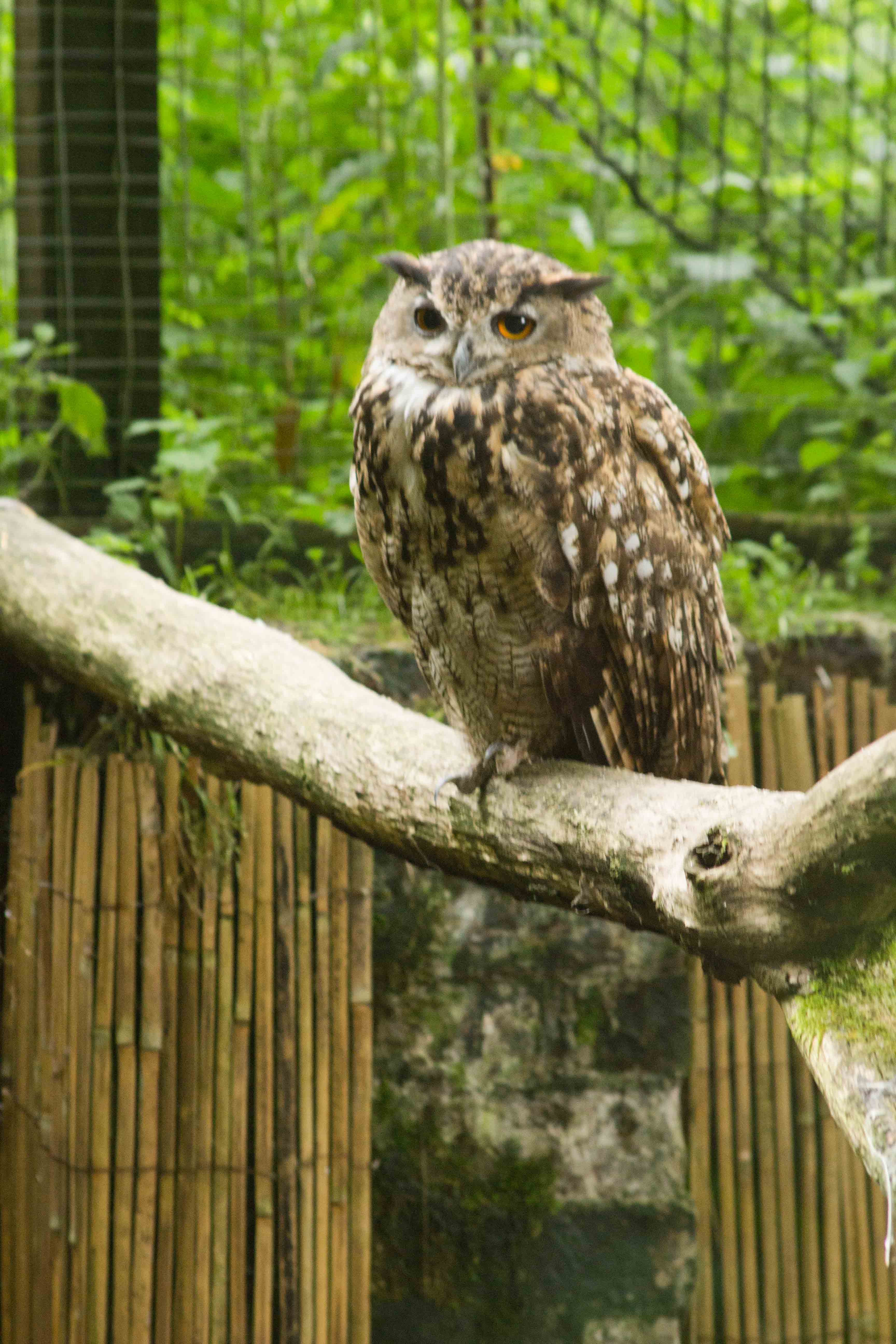
MD Photography: Eurasian Eagle-Owl…

Eurasian eagle-owl, south-west Scotland. Photograph: © Mark Dowe 2013: all rights reserved

ABOUT THE EURASIAN EAGLE-OWL

Eagle Owls occupy a variety of habitats, from coniferous forests to warm deserts. Rocky landscapes are often favoured. Adequate food supply and nesting sites seem to be the most important prerequisites.

Usually most active at dawn and dusk, the Eurasian eagle-owl has a powerful, fast flight, which is somewhat reminiscent of that of a buzzard. Hunting occurs from an open perch or in flight, and the owl may also search rock crevices for roosting birds, take both adult and young birds from nests, or even plunge into water to capture fish. The diet mainly consists of mammals, up to the size of adult hares or even young deer, as well as birds up to the size of herons and buzzards, and occasionally amphibians, reptiles, fish and insects.

The Eurasian eagle-owl usually begins breeding from late winter. The nest might be located on a sheltered cliff ledge, in a cave or crevice, in the old nest of another species (such as storks or large birds of prey), or occasionally in a tree hole or on the ground. The species has always been considered to be monogamous, but some cases of bigamy have been recorded recently. A breeding pair may use the same nest site over several years. Between one and five eggs are laid, and are incubated by the female for 34 to 36 days, during which time the male brings food to the nest. The young owls first leave the nest at around five weeks, but cannot fly until about seven weeks old, and remain dependent on the adults for a further three to four months, not generally starting to disperse until approximately 170 days old. The Eurasian eagle-owl reaches sexually maturity at 1 year, and may live up to 21 years or more in the wild, or to an impressive 60 years in captivity.

The Eurasian eagle-owl has one of the largest ranges of any eagle-owl, being found across much of Europe, through the Middle East, Russia and Asia, and as far east as China, Korea and Japan. Although generally absent from Britain and Ireland, small numbers are now beginning to breed in Britain.

This owl usually inhabits natural rocky areas with cliffs and ravines, as well as quarries and buildings, patches of woodland or scattered trees. It also occurs in open forest, taiga, wooded steppe, semi-desert, and farmland with suitable rocky areas, and can be found at elevations of up to about 2,000 metres in Europe and 4,500 metres in Central Asia and the Himalayas. More recently, this species has started to colonise urban habitats and is now breeding in several towns in Europe.

Standard