
Books, Science

Books: The Best of Science

BRIEF SUMMARIES

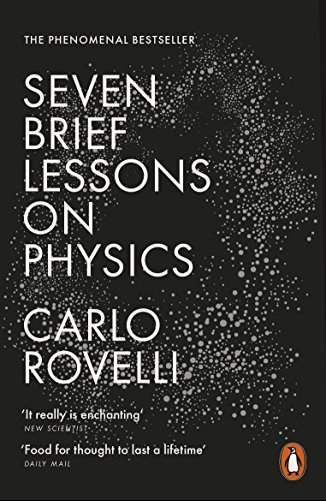
. Seven Brief Lessons On Physics by Carlo Rovelli
Carlo Rovelli

TIME is an illusion and has no real existence. Sub-atomic particles interact instantly with one another over vast distances. Black holes are places in space where gravity is so strong, not even light can escape them.

The theories of modern physics undermine our notions of common sense. In his 2014 bestseller, Carlo Rovelli provides non-scientists with an elegant exposition of the most mind-bending ideas about the universe from the last 100 years.

A short book, but with some of the most exhilarating and thought-provoking concepts you will ever encounter.

. The Gene: An Intimate History by Siddhartha Mukherjee

The Gene

AN OBSCURE 19th-century monk undertakes a series of ground-breaking experiments with peas in his monastery garden. Two young scientists burst into a Cambridge pub and announce to the startled drinkers assembled there that they have discovered “the secret of life”. Nazi doctors inflict the horrors of eugenic experiments on subject peoples.

In his 2016 book, Siddhartha Mukherjee chronicles what he calls “one of the most powerful and dangerous ideas in the history of science”. Genetics has transformed our understanding of what it is to be human. Mukherjee examines its past, present and potential future in an enlightening work.

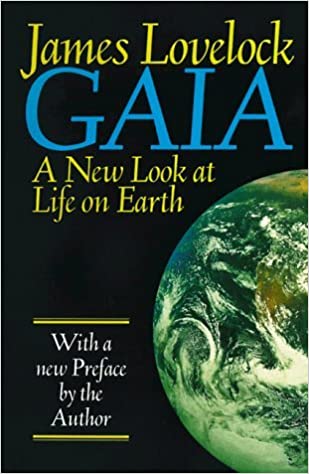
. Gaia by James Lovelock
Gaia

DOES the entire Earth function as a single organism? Can it self-regulate to ensure that life on it is sustained? James Lovelock’s “Gaia” hypothesis, first brought to public attention in this trailblazing book of 1979, suggests that the answer to both these questions is “yes”.

Professor Lovelock, who turned 100 last year, has never been afraid of thinking the unthinkable. Naming his theory after the Greek goddess of the earth, he put forward ideas that have remained controversial.

His daring model of the world provides powerful support for anyone appalled by our more reckless assaults on the planet and the environment.

. A Brief History Of Time by Stephen Hawking

Stephen Hawking

MILLIONS of people bought it. But how many succeeded in finishing it?

A Brief History Of Time, first published in 1988, has an unfair-reputation as being impossibly difficult to understand. In truth, it takes readers on a comprehensive but comprehensible journey from the tiniest particles of the quantum world to the vastness of the universe in just 200 pages.

Before his death in 2018, Hawking became the most famous scientist since Einstein. His body was twisted and confined to a wheelchair, but his imagination roamed free. His book is a fascinating account of our search, in Hawking’s own metaphor, “to know the mind of God”.

. Silent Spring by Rachel Carson

Rachel Carson

“THOSE who contemplate the beauty of the earth,” Rachel Carson wrote in 1962, “find reserves of strength that will endure as long as life lasts.”

As she looked at the world around her, she saw that beauty under threat. Her particular target in Silent Spring was the irresponsible, indiscriminate use of pesticides.

Many of these she attacked, such as DDT, are now banned. But her general point about Man’s impact on the natural world remains only too valid.

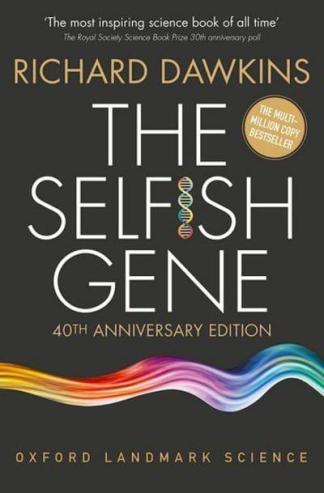
. The Selfish Gene by Richard Dawkins
Richard Dawkins

“WE ARE survival machines,” Richard Dawkins wrote in this 1976 book, “…blindly programmed to preserve the selfish molecules known as genes.”

Today, Dawkins is most famous as a militant atheist, but his lasting legacy is likely to be his work as an evolutionist.

Genes, he argued, are on a quest for immortality and, like all other living creatures, we are the vehicles they are using for the journey.

In the past 40 years, genetics has taken remarkable leaps, such as the completion of the Human Genome Project. Yet Dawkins’s book remains a landmark work and one which first introduced the word “meme”.

md_logo

Standard
Climate Change, Environment, Global warming, Science, Society

Dimming the Sun: A project funded by Bill Gates

CLIMATE WARMING

BILL GATES, the philanthropist and founder of Microsoft, wants to spray millions of tonnes of dust into the stratosphere to stop global warming. Protagonists of his theory suggest that dimming the Sun could save the Earth.

The plan sounds like science fiction – but could become fact within a decade; every day more than 800 giant aircraft would lift millions of tonnes of chalk to a height of 12 miles above the Earth’s surface and then sprinkle the lot high around the stratosphere.

The hypothesis assumes that the airborne dust would create a gigantic sunshade, reflecting some of the Sun’s rays and heat back into space, dimming those that get through and so protecting the Earth from the worsening ravages of climate warming.

This is not the crackpot plan of a garden-shed inventor. The project is being funded by billionaire Mr Gates and pioneered by scientists at Harvard University.

Indeed, the plans are so well advanced that the initial “sky-clouding” experiments were meant to have begun several months ago.

The initial $3million test, known as Stratospheric Controlled Perturbation Experiment (SCoPEx) would use a high-altitude scientific balloon to raise around 2kg of calcium carbonate dust – the size of a bag of flour – into the atmosphere 12 miles above the desert of New Mexico.

It is calculated that this would seed a tube-shaped area of sky half a mile long and 100 yards in diameter. For the ensuing 24 hours, the balloon would be steered by propellers back through this artificial cloud, its onboard sensors monitoring both the dust’s sun-reflecting abilities and its effects on the thin surrounding air.

SCoPEx is, however, on hold, amid fears that it could trigger a disastrous series of chain reactions, creating climate havoc in the form of serious droughts and hurricanes, and bring death to millions of people around the world.

One of the Harvard team’s directors, Lizzie Burns, admits: “Our idea is terrifying… But so is climate change.” An advisory panel of independent experts is to assess all the possible risks associated with it.

One may wonder where the idea for such a mind-boggling scheme came from.

The inspiration was in part spawned by a natural disaster. When the volcano Mount Pinatubo in the Philippines exploded in 1991, it killed more than 700 people and left more than 200,000 displaced and homeless.


BUT it also gave scientists the chance to monitor the consequences of a vast chemical cloud in the stratosphere.

The volcano disgorged 20 million tonnes of sulphur dioxide high above the planet, where it formed droplets of sulphuric acid that floated around the globe for more than a year. These droplets acted like tiny mirrors to reflect sunlight.

As a result, global temperatures were reduced by 0.5c for around a year and a half.

This gave impetus to the idea of a dream “fix” of global warming – and has been the subject of at least 100 academic papers.

Creating what would amount to a gigantic sunshade for the Earth would likely come at a high price, posing even greater risks than climate change itself.

One fear is that spreading dust into the stratosphere may damage the ozone layer that protects us from hazardous ultraviolet radiation which can damage human DNA.

Climatologists are also concerned that such tinkering could unintentionally disrupt the circulation of ocean currents that regulate our weather.

This itself could unleash a global outbreak of extreme climatic events that might devastate farmland, wipe out entire species and foster disease epidemics.

The potential for disaster does not even end there. Trying to dim the Sun’s rays would likely create climate winners and losers.

Scientists may be able to set the perfect climatic conditions for farmers in America’s vast Midwest, but at the same time this setting might wreak drought havoc across Africa.

For it is not possible to change the temperature in one part of the world and not disturb the rest. Everything in the world’s climate is interconnected.

Furthermore, any change in global average temperature would in turn change the way in which heat is distributed around the globe, with some places warming more than others.

This, in turn, would affect rain levels. Heat drives the water cycle – in which water evaporates, forms clouds and drops as rain. Any heat alteration would cause an accompanying shift in rainfall patterns. But how and where exactly?

Thee is no way of predicting how the world’s long-term weather may respond to having a gigantic chemical sunshade plonked on top of it.

As one of the world’s leading climate experts Janos Pasztor – who advised at the UN’s Paris climate agreement and now works for New York’s highly respected Carnegie Climate Governance Initiative – has warned: “If you make use of this technology and do it badly or ungoverned, then you can have different kinds of global risks created that can have equal, if not even bigger, challenges to global society than climate change.”

The technology may even spark terrible wars. For tinkering with our climate could send sky-high the potential for international suspicion and armed conflict.

Say, for example, the Chinese government – which already has been experimenting with climate-altering technology – used its burgeoning space-age scientific know-how to try to dust the stratosphere to protect its own agricultural yields.

Then two years later the monsoons fail in neighbouring Asian giant India, causing widespread starvation and disease. Even if the Chinese move had not actually caused the monsoons to fail, billions would blame them.

There is a further peril. The technology involved is seductively cheap, perhaps less than $10billion a year. This means that an individual nation could use it for their own ends – perhaps as a weapon of war or blackmail.

What’s to stop a nation such as Russia interfering with our weather in the same way it has interfered with democratic elections and social media opinions?


NEVERTHELESS, Harvard scientists maintain that they can manage their brainchild safely.

For example, one of the SCoPEx team’s leaders, David Keith, a professor of applied physics, recently reported that by evenly seeding the entire global atmosphere with low levels of reflective dust, there should be a far lower risk of unexpected problems than is feared.

Professor Keith has also suggested that the world’s richer nations should club together to create a pooled global insurance fund to compensate poorer countries for any damage unintentionally caused by their sunshield experimentation.

Critics point out that the promise of a stratospheric sunshade could encourage politicians and industrialists to decide that there is no need to do the hard, unpopular and expensive work of reducing greenhouse gas emissions.

Mike Hulme, a Cambridge University professor of human geography and former scientist on the Intergovernmental Panel on Climate Change, says we could end up instead relying massively on technology to compensate for climate problems that our industries are causing.

He calls this spiralling problem “temperature debt”, because it is like amassing credit-card debts that can never be paid off. “It is a massive gamble,” Professor Hulme warns. “Far better not to build up this debt in the first place.”

Even greater questions arise. How do you switch such a global cooling system off? And what unforeseen consequences would arise if you suddenly did so.

This dream “fix” seems to have plenty of potential to become a global nightmare and outright catastrophe.

Standard
Health, Medical, Research, Science, World Health Organisation

Coronavirus: How much of a risk are we facing?

CORONAVIRUS

CORONAVIRUSES are a type of virus that can trigger respiratory infections, from bad colds to lethal pneumonia. Seven strains are currently known to circulate among humans. These include SARS (Severe Acute Respiratory Syndrome) and MERS (Middle East Respiratory Syndrome). The Wuhan novel coronavirus is a previously unseen strain that originated in central China last month.

The more serious symptoms are typically a fever, cough and breathing problems. Some patients have developed pneumonia, which involves inflammation of the small air sacs in the lungs. Severe lung disease is believed to the cause of at least 25 deaths so far.

Scientists do not yet know if the new virus is as severe or as contagious as SARS. Statistics suggest it kills around 2 per cent of those infected, significantly lower than SARS (10 per cent). If it mutates into a more infectious or lethal strain, the death rate could rise.

Analysis also suggests it may have emerged after viruses found in bats and snakes combined. It is believed that snakes have acted as a ‘reservoir’ that have passed the new virus to humans.

Common sense and basic hygiene, such as washing hands in hot soapy water, will help to protect yourself. Anyone who believes they have been exposed is advised to clean all high-touch surfaces around them, such as counters, doorknobs and phones with a disinfectant. Disinfectants will kill the virus.

Experts are, in general, sceptical about the effectiveness of standard face masks against airborne viruses. But there is evidence they can help people avoid transmitting infection from their hands to their mouths.

The US National Institute of Health has announced it is in the “very preliminary stages” of research to develop a vaccine for the virus.

Standard