
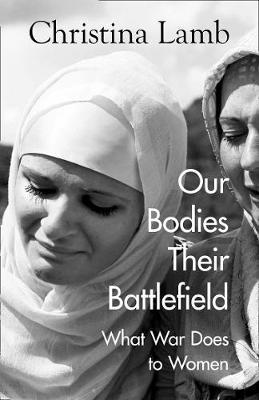
From award-winning war reporter and co-author of I Am Malala, this is the first major account to address the scale of rape and sexual violence in modern conflict.
WAR
IN this devastating book, foreign correspondent Christina Lamb stares into the face of one of the world’s great hidden evils.
Deeply unsettling to read – and no-doubt traumatic to write – it is a global chronicle of mass-rape in war: a brutal and shocking indictment of man’s inhumanity to woman in the frenzied aftermath of battle. The most dreadful thing about it – apart from the physical injuries and the ruining of hundreds of thousands of women’s lives – is that all too often it happens with impunity.
Deeply embedded in the human psyche there seems to be a belief that rape is an acceptable side-effect of conflict, permissible because the circumstances of war are extraordinary. Some perpetrators have even talked as if by committing rapes they were being chivalrous, because they were not killing the women. Heinous. The horrific accounts from the survivors to whom Lamb interviews are clearly there to see.
With the violence done to their bodies, and the lack of justice for the perpetrators to bring closure, these women feel as good as dead.
Even by speaking out, they are being heroic. Once the secret is out, these people are in danger of becoming outcasts. But in order for anything to change, the stories need to be told. The reader should brace themselves for a profoundly distressing tour of war-torn countries and refugee camps, and for ordeals you will not be able to forget.
Naima was an 18-year-old Yazidi girl in Iraq when ISIS came to her town in 2014. The women and girls were herded into the Galaxy Cinema and sorted into “ugly” and “beautiful”. Their ISIS captors then “passed us around like sweets”, she said. They put the girls’ names in a bottle, almost like a lucky dip. Naima was sold on and on as a sex slave to 12 men, each of whom raped her several times a day.
Lamb was shown a typical ISIS “Certificate of Ownership”, with two thumb prints of seller and buyer, date, and a price of $1,500. No name for this “product”. Just “Age 20, with hazel green eyes, thin and short, height 1.3m”.
“They took something from me I can’t get back,” says Turko, who was traded on the internet forum called “Caliphate Market”, along with PlayStation consoles. She was raped three times a day by her “owners”.
This male rape-lust has nothing to do with desire, apparently. It’s all about total power: “pure violence”, as Anthony Beevor describes it.
In the Spanish Civil War, Fascist troops were given two hours after the capture of any village to “enjoy” the women.
Lamb meets a pair of elderly ladies from the Philippines who were two of the 200,000 “comfort women” (dreadful euphemism) for Japanese soldiers during World War II. They didn’t dare speak out about it until the 1990s and were rejected by their own families when they did.
Rape, Lamb writes, is the only crime in which society is more likely to stigmatise the victim than punish the perpetrator. There are some glimmers of light in this appalling story. The brave Tutsi rape victims who did dare to speak out, helped to bring the first conviction for rape as a war crime: in 1988 Rwandan Mayor, Jean-Paul Akayesu, was sentenced to life imprisonment for atrocities against the Tutsi ethnic group, including rape.
Heroes shine out of Lamb’s journey: she meets Dr Mukwege, who has treated 35,000 rape victims in his hospital in the Democratic Republic of Congo, where he’s a virtual prisoner in fear of his life; Christine Schuler Deschryver, who runs a haven of rescue and help for rape victims in that country; and Abdullah Shrim (“the Beekeeper of Aleppo”), who rescued 265 Yazidi girls captured by ISIS.
But the real heroes are the women who have experienced unfathomable cruelty and dared to speak out.
– Our Bodies Their Battlefield by Christina Lamb is published by William Collins, 432pp
 Arts, reviews & current affairs