
BRIEF SUMMARIES
. Seven Brief Lessons On Physics by Carlo Rovelli
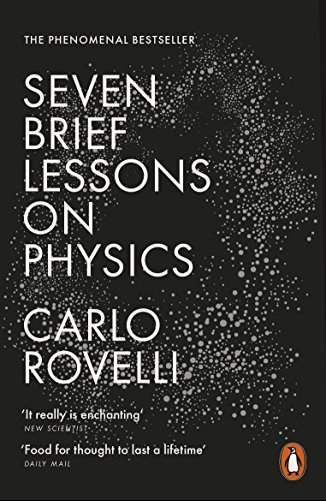
TIME is an illusion and has no real existence. Sub-atomic particles interact instantly with one another over vast distances. Black holes are places in space where gravity is so strong, not even light can escape them.
The theories of modern physics undermine our notions of common sense. In his 2014 bestseller, Carlo Rovelli provides non-scientists with an elegant exposition of the most mind-bending ideas about the universe from the last 100 years.
A short book, but with some of the most exhilarating and thought-provoking concepts you will ever encounter.
. The Gene: An Intimate History by Siddhartha Mukherjee

AN OBSCURE 19th-century monk undertakes a series of ground-breaking experiments with peas in his monastery garden. Two young scientists burst into a Cambridge pub and announce to the startled drinkers assembled there that they have discovered “the secret of life”. Nazi doctors inflict the horrors of eugenic experiments on subject peoples.
In his 2016 book, Siddhartha Mukherjee chronicles what he calls “one of the most powerful and dangerous ideas in the history of science”. Genetics has transformed our understanding of what it is to be human. Mukherjee examines its past, present and potential future in an enlightening work.
. Gaia by James Lovelock
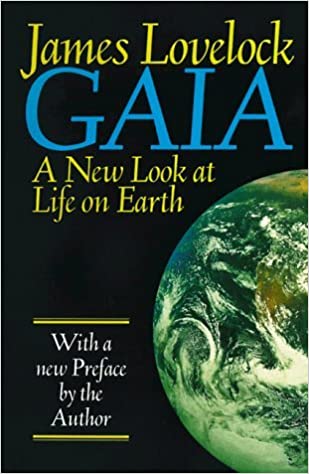
DOES the entire Earth function as a single organism? Can it self-regulate to ensure that life on it is sustained? James Lovelock’s “Gaia” hypothesis, first brought to public attention in this trailblazing book of 1979, suggests that the answer to both these questions is “yes”.
Professor Lovelock, who turned 100 last year, has never been afraid of thinking the unthinkable. Naming his theory after the Greek goddess of the earth, he put forward ideas that have remained controversial.
His daring model of the world provides powerful support for anyone appalled by our more reckless assaults on the planet and the environment.
. A Brief History Of Time by Stephen Hawking

MILLIONS of people bought it. But how many succeeded in finishing it?
A Brief History Of Time, first published in 1988, has an unfair-reputation as being impossibly difficult to understand. In truth, it takes readers on a comprehensive but comprehensible journey from the tiniest particles of the quantum world to the vastness of the universe in just 200 pages.
Before his death in 2018, Hawking became the most famous scientist since Einstein. His body was twisted and confined to a wheelchair, but his imagination roamed free. His book is a fascinating account of our search, in Hawking’s own metaphor, “to know the mind of God”.
. Silent Spring by Rachel Carson

“THOSE who contemplate the beauty of the earth,” Rachel Carson wrote in 1962, “find reserves of strength that will endure as long as life lasts.”
As she looked at the world around her, she saw that beauty under threat. Her particular target in Silent Spring was the irresponsible, indiscriminate use of pesticides.
Many of these she attacked, such as DDT, are now banned. But her general point about Man’s impact on the natural world remains only too valid.
. The Selfish Gene by Richard Dawkins
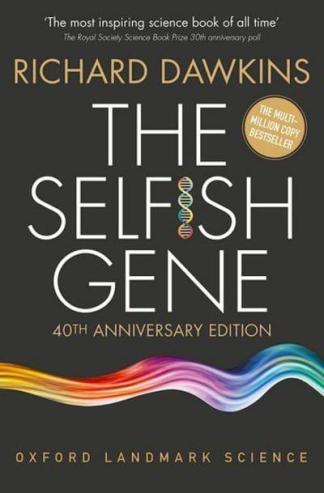
“WE ARE survival machines,” Richard Dawkins wrote in this 1976 book, “…blindly programmed to preserve the selfish molecules known as genes.”
Today, Dawkins is most famous as a militant atheist, but his lasting legacy is likely to be his work as an evolutionist.
Genes, he argued, are on a quest for immortality and, like all other living creatures, we are the vehicles they are using for the journey.
In the past 40 years, genetics has taken remarkable leaps, such as the completion of the Human Genome Project. Yet Dawkins’s book remains a landmark work and one which first introduced the word “meme”.

 Arts, reviews & current affairs