

LITERARY REVIEW

HEGEMONY
IN Russia, the national referendum to extend Vladimir Putin’s stay in office for another 12 years has been postponed.
The proposal that he was to continue for two more six-year terms after his present mandate ends in 2024 was due to be put to the people on Wednesday, 22 April. But due to coronavirus, or Covid-19, the vote was deferred.
Given his vice-like grip on the levers of power of that vast country and the muted opposition to him, there can be little doubt which way it would have gone. He would effectively have been endorsed as president for life.
But now there is a pause – if a brief one – in his relentless pursuit of an unchallenged and supreme autocracy.
That even tough gut Vlad – “The Papa” or “The Number One” as his cronies call him – must bow to the virus is almost a relief. Because in the twenty years since he grabbed the presidency, no one at home has managed to stand in his way without being rolled over, removed, imprisoned, killed, cowed or bribed into submission.
At the same time, he has turned a clapped-out post-communist nation going nowhere into an aggressive and much feared international power. Putin’s Russia now has its insidious fingers in every political, diplomatic, military and financial pie around the world – with deeply worrying implications for all of us.
How this man seemingly from nowhere managed his Napoleonic rise from mere deputy mayor of St Petersburg to absolute power is arguably the biggest story of the 21st century so far.
In forensically unravelling it, journalist Catherine Belton, former Moscow correspondent of the Financial Times, has done a great service, producing a book that western experts on modern Russia acknowledge as vital to our understanding of the Putin phenomenon.
Her study and thesis is chilling indeed. When the Soviet Union disintegrated in 1991 and communism gave way to a makeshift form of democracy, the KGB, Moscow’s underground army of spies, crooks and secret policemen, disappeared from the radar. But they hadn’t gone for good. They weren’t defeated, only biding their time.
Their moment came when the oligarchs, who in effect ran Russia after making vast fortunes from oil, gas and mineral rights amid the economic and political chaos of the Yeltsin years, catapulted the seemingly pliable Putin into the presidency.
They promoted him as their man to sort the country out and bring it to some semblance of liberal democracy. They didn’t expect him to last more than one four-year term.
What they didn’t reckon on was that Putin was KGB to the core. He’d cut his teeth spying on the West in the old communist days, subverting Western businessmen, stealing industrial secrets, and smuggling. And it was with his old pals that his true allegiance lay.
With Putin in the driving seat, Belton argues, the KGB was back in control of Russia and its grip on the country is as strong now as it ever was in the Soviet days.
His agenda – eagerly taken up by the so-called siloviki (the word means “strongmen”) he recruited from the old ranks – was to make the nation all-powerful again, a top-down, state-run force not to be trifled with at home or abroad.
Along the way they would feather their own nests, through money-laundering, bribery, fraud, rake-offs, slush funds and theft. Putin’s Russia would become not just an autocracy but a kleptocracy.
He turned the tables on the oligarchs who’d sponsored him, strong-arming them into acquiescence. They worked for him now, not the other way round.
What emerged, writes Belton, was “a system in which all businesses of any scale were dependent on the Kremlin. Tycoons had to serve the state in order to preserve their standing and wealth”.
Those who resisted found the police knocking on their doors with arrest warrants for tax evasion, fraud or other serious crime. Backed by the state, he had them at his mercy.
Some ran – like media magnate Boris Berezovsky, only to end up dying mysteriously in England. Some went to prison – Russia’s richest man, oil tycoon Mikhail Khodorkovsky, said to be worth £12 billion, was boarding his private jet in Siberia when commandos arrested him. Most caved in and did as they were told – Roman Abramovich, says Belton, purchased Chelsea FC on Putin’s instructions, as a way of enhancing Russian prestige in the West.
CROOKED
EVEN those closest to him weren’t safe, especially if they got too big for their boots. Sergei Pugachev made billions as Putin’s favourite banker before “Papa” turned on him and looted his vast assets.
In exile, Moscow mafia thugs turned up, took him out to a yacht in the Mediterranean and demanded £280 million to guarantee the “safety” of his family.
Belton draws on published sources and deep-throat contacts to plot a course through the maze of crooked financial manoeuvres – the sleights of hand, the backroom deals, the “loans” from state banks, the kick-backs on contracts – that Putin and his courtiers got up to as they systematically drew the wealth to themselves as inexorably as iron fillings to a magnet.
They stashed their ill-gotten gains overseas, their so-called “black cash” amounting to a staggering £640 billion in all, according to one estimate, while at home they flaunted their riches, kitting themselves out with yachts and private planes and vast palaces. One of these had a garage for 15 cars and a storeroom for fur coats.
All the while, human rights, freedom and the rule of law went increasingly by the board. Local governors were stripped of their authority. Dissent was suppressed. The courts acted as an arm of the Kremlin. Judges toed the line.
Though Russia was ostensibly a democracy, the reality was that power emanated from the top down, with Putin as a feudal monarch, a tyrant, a tsar like Peter the Great, surrounded by his henchmen, his boyars, who owed their fealty and their vast riches to him.
Belton finds it shameful that the West – which had worked for and then welcomed the demise of communist rule in Russia – connived in this return to autocracy.
Bankers and brokers in London, in particular, fell over themselves to get a slice of the financial action, happy to look the other way as fortunes were hidden in offshore havens.
Peers of the realm lined up to lend their apparent respectability to the boardrooms of Russian ventures. Russian money swirling around London earned the capital the nickname of “Londongrad” or Moskva-na-Thames. In the United States, Donald Trump, before he became president, did deals with the Russians to bail out and expand his property empire.CROOKED
WEALTHY POWER-BROKER
GREED triumphed over principle, with the result that the West, by slavishly following its own money-making instincts, has allowed itself to be infiltrated. Belton warns: “The weakness of the Western capitalist system, in which money ultimately outweighs all other considerations, has left it wide open for the Kremlin to manipulate.”
Making matters worse is that the siloviki were on a mission, not just to get very rich, but to use that wealth to undermine the West. Under communism, the KGB had seen the West as its enemy. Its successors, led by Putin, feel the same way.
Under him, Russia, once a busted flush on the world stage, has become the world’s power broker again, whether openly, as in Ukraine and the Middle East, or covertly.
In its new guise, the KGB has adopted the tricks of the old KGB, causing disruption in the West wherever it can.
Its money backs political extremists, Right or Left – the cause isn’t important, only the confusion they cause. It gets up to all sorts of mischief to drive a wedge between the U.S. and Europe. It encourages unrest and dissension just to stir the pot.
In the eyes of Putin and his cronies, the Cold War has never ended, just moved into a new phase. We have clearly been warned.
– Putin’s People by Catherine Belton is published by William Collins, 640pp
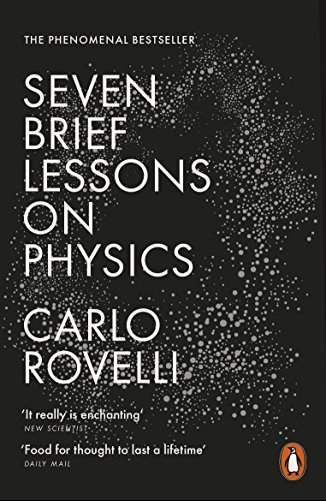
TIME is an illusion and has no real existence. Sub-atomic particles interact instantly with one another over vast distances. Black holes are places in space where gravity is so strong, not even light can escape them.
The theories of modern physics undermine our notions of common sense. In his 2014 bestseller, Carlo Rovelli provides non-scientists with an elegant exposition of the most mind-bending ideas about the universe from the last 100 years.
A short book, but with some of the most exhilarating and thought-provoking concepts you will ever encounter.

AN OBSCURE 19th-century monk undertakes a series of ground-breaking experiments with peas in his monastery garden. Two young scientists burst into a Cambridge pub and announce to the startled drinkers assembled there that they have discovered “the secret of life”. Nazi doctors inflict the horrors of eugenic experiments on subject peoples.
In his 2016 book, Siddhartha Mukherjee chronicles what he calls “one of the most powerful and dangerous ideas in the history of science”. Genetics has transformed our understanding of what it is to be human. Mukherjee examines its past, present and potential future in an enlightening work.
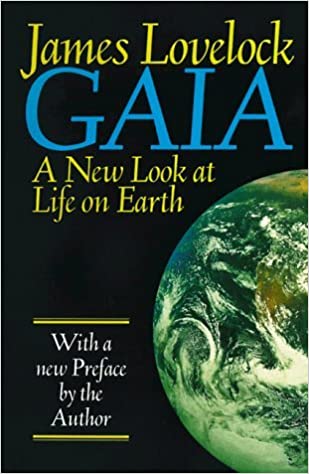
DOES the entire Earth function as a single organism? Can it self-regulate to ensure that life on it is sustained? James Lovelock’s “Gaia” hypothesis, first brought to public attention in this trailblazing book of 1979, suggests that the answer to both these questions is “yes”.
Professor Lovelock, who turned 100 last year, has never been afraid of thinking the unthinkable. Naming his theory after the Greek goddess of the earth, he put forward ideas that have remained controversial.
His daring model of the world provides powerful support for anyone appalled by our more reckless assaults on the planet and the environment.

MILLIONS of people bought it. But how many succeeded in finishing it?
A Brief History Of Time, first published in 1988, has an unfair-reputation as being impossibly difficult to understand. In truth, it takes readers on a comprehensive but comprehensible journey from the tiniest particles of the quantum world to the vastness of the universe in just 200 pages.
Before his death in 2018, Hawking became the most famous scientist since Einstein. His body was twisted and confined to a wheelchair, but his imagination roamed free. His book is a fascinating account of our search, in Hawking’s own metaphor, “to know the mind of God”.

“THOSE who contemplate the beauty of the earth,” Rachel Carson wrote in 1962, “find reserves of strength that will endure as long as life lasts.”
As she looked at the world around her, she saw that beauty under threat. Her particular target in Silent Spring was the irresponsible, indiscriminate use of pesticides.
Many of these she attacked, such as DDT, are now banned. But her general point about Man’s impact on the natural world remains only too valid.
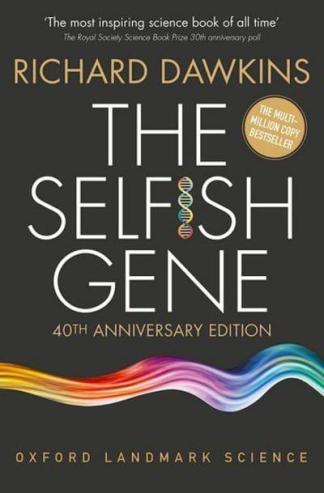
“WE ARE survival machines,” Richard Dawkins wrote in this 1976 book, “…blindly programmed to preserve the selfish molecules known as genes.”
Today, Dawkins is most famous as a militant atheist, but his lasting legacy is likely to be his work as an evolutionist.
Genes, he argued, are on a quest for immortality and, like all other living creatures, we are the vehicles they are using for the journey.
In the past 40 years, genetics has taken remarkable leaps, such as the completion of the Human Genome Project. Yet Dawkins’s book remains a landmark work and one which first introduced the word “meme”.

 Arts, reviews & current affairs