
Britain, Government, India, Society

Britain could send ventilators to virus-stricken India

COVID SURGE

BRITAIN has pledged to support India in its battle against the devastating Covid surge which has brought the country to its knees.

The UK Government said it is “looking at what we can do to help” after India recorded 332,000 new cases in a single day.

Hospitals across the nation are buckling under the strain of a ferocious second wave, with some running out of oxygen and turning away patients due to overcrowding.

Reports have indicated that 2,263 deaths were recorded in India yesterday, although limited testing capacity means this is likely to significantly underestimate the total.

The Prime Minister, Boris Johnson, said: “We’re looking at what we can do to help and support the people of India, possibly with ventilators. Thanks to the ventilator challenge, the huge efforts of British manufacturers, we’re better able now to deliver ventilators to other countries. But also possibly with therapeutics, Dexamethasone, other things, we’ll look at what we can do to help.”

Yesterday, India recorded 332,730 new infections – the highest one-day tally of any country since the beginning of the pandemic. It was the second day running the country of around 1.4billion people broke the record.

India is now recording one in three of all worldwide Covid 19 cases. Ministers declared victory against the virus two months ago when there were around 11,000 cases a day.

The surge has been fuelled by a “double mutant” variant, thought to be more infectious.

So far 132 cases of the Indian variant have been detected in Britain, around half of which are in London. The variant contains two mutations in the virus’s spike protein, which could help it spread more easily and evade vaccines. India has been added to the UK’s travel “red list”, prompting a last minute scramble for flights to Heathrow. The Prime Minister has also cancelled a trip to Delhi which was scheduled to go ahead this weekend where he had hoped to secure millions of vaccine doses.

Government scientists have said that the current border measures in place are not enough to prevent the spread of new variants, but they can delay it. One senior scientist said there were likely to be “many more” cases of the Indian variant in the UK than the 132 detected so far. It is acknowledged that the Indian variant is more transmissible than the base virus although it isn’t known if it’s more transmissible than the Kent variant due to lack of data on vaccine efficacy.

Desperate families in India have been begging for oxygen or medical help on social media, and crowds have gathered outside hospitals with some dying on stretchers as they wait.

Three days ago, 22 patients died at a hospital in Maharashtra when their oxygen supply ran out after a leak in the tank. Yesterday, 13 Covid patients died when a fire broke out at a Mumbai hospital.

Dr Atul Gogia, who works at a hospital in Delhi, said: “We do have oxygen but it’s now on a day-to-day basis. We got some oxygen last night, so we have some oxygen now.” He also added: “We do not have enough oxygen points, patients are coming in with their own oxygen, others without, we want to help them but there are not enough beds or oxygen points, and not enough oxygen to supply them.”

Max Healthcare, which runs hospitals in northern and western India, has appealed on Twitter for oxygen at its facility in Delhi. The company said, “We regret to inform that we are suspending any new patient admissions in all our hospitals in Delhi until oxygen supplies stabilise.”

The government has started shuttling trains containing tanks of oxygen across the country to hotspots. Crematoriums are also overwhelmed, with one in Delhi resorting to building pyres in its car park.
Standard
Arts, Britain, History

The Life of Prince Phillip, Duke of Edinburgh

1921–2021

PRINCE Phillip, whose name has been synonymous with royal duty and public service since his marriage to the Queen 74 years ago, has been such a constant and colourful feature of British life, it’s almost impossible to believe he’s no longer with us.

Loved and admired in equal measure, his sad passing, nine weeks before his 100th birthday, marks the end of a cherished chapter in our national story. He was of the Greatest Generation, and he will be written into the history books as one of the best.

Doughty and irrepressible to the very end, the Duke of Edinburgh was said to have died peacefully at Windsor Castle on, fittingly, what was a beautiful spring morning.

In a moving statement on his passing, Buckingham Palace expressed “deep sorrow” – a sentiment echoing the profound sense of loss felt across Britain, the Commonwealth, and many other countries.

Prince Phillip was a distinguished and decorated war veteran. He unselfishly eschewed personal ambition – he was tipped for the Royal Navy’s top job – for royal duty.

In public, he has walked a discreet step behind throughout the 69 years of Her Majesty’s reign, content to play the supporting role which the Queen came to depend on. In private, though, this was unquestionably a partnership of equals.

He has been her confidant, adviser, comforter, morale-booster and, above all, as the Sovereign put it, her “strength and stay”.

His job “first, second and last”, he would say, was “never to let her down”. That Her Majesty has reigned so successfully, calmly and without blemish for such a remarkable span of time is proof he never did.

It would be wholly wrong and recklessly incomplete to characterise and pigeonhole Phillip as merely the longest-serving royal consort in British history. His life deserves far more accreditation than a monarchical footnote.

He was a brilliant man in his own right, possessing many gifts and talents. He could fly a jet as well as command a ship, was a talented sportsman, a skilled artist and painter, and had an excellent grasp of science.

Like so many of his generation, the duke didn’t suffer fools gladly and had little truck with political correctness. His plain speaking could be curt and would often cause controversy.

Beyond his brusque exterior, however, he was a deep thinker and an innovator. Possessing a core of steel and courage in spades, he embodied resilience and fortitude. As a young naval officer, he was praised for his actions in the decisive sea battle against the Italian fleet.

These self-same values not only helped Britain navigate the hardship of the Second World War – they spurred, to a very striking degree, our subsequent economic and social renaissance.

Yes, a man who lived a life of incredible privilege, but his personal legacy to the nation is impossible to exaggerate.

One of the last connections to an era which included the Victorians, he – like a sculptor with clay – helped mould the monarchy to modernity, shoring it up during times of turbulence.

Without Phillip’s and the Queen’s steady hand, the shape of Britain today might be inexpressibly different – and not for the better. This 1,000-year-old institution, as Prime Minister Boris Johnson says, “remains indisputably vital to the balance and happiness of our national life”.

Not content to be a mere appendage or footnote after his wife came to the throne, the duke carved a niche from which he could help transform our planet and change the lives of individuals.

He paved the way for environmental groups such as Greenpeace, played a central role in the creation of the World Wildlife Fund, and the Duke of Edinburgh’s Award scheme remains a torch of achievement for younger people in many countries.

His stewardship of the National Playing Fields Association has given millions of children somewhere to play organised sport. As a patron to nearly 800 organisations, his sense of obligation has been unmatched.

Quite apart from his royal role, which he stepped back from only four years ago at the age of 96, this was a man of vision and substance.

Despite his advancing years, the duke remained a totemic member of the Royal Family. Not just a national treasure, but also a towering father figure to the country. How else to explain the tsunami of affection and sadness following his passing? The floral tributes laid in his memory have come from members of all generations.

As an invaluable asset to the monarchy, there will be a sadness that he didn’t reach his centenary – although the duke would doubtlessly have been nonplussed by such fuss. But his shadow will cast a positive influence lasting well beyond his years.

Prince Phillip embodied self-sacrifice, family values and devotion to duty. He stands as a font of inspiration. Not just to younger royals, but the whole nation and millions worldwide.

A salute to his extraordinary life.

Standard
Arts, Britain, Broadcasting, History, Society, United States

The Beginning of Radio Broadcasting

SHORT ESSAY

THE FIRST EXPERIMENTAL radio broadcasts were made in Britain in 1921. They led to the formation a few months later of the British Broadcasting Company (later Corporation). This was at the instigation of the General Post Office (GPO), who wanted to see the formation of a single consortium of wireless equipment manufacturers and broadcasters, specifically to avoid the major confusion that had arisen in America, where there were 500 rival stations. The new Company worked under John Reith, an engineer from Aberdeen who was the company’s general manager for its first 16 years. Under Reith’s leadership, the BBC became a major national institution. The broadcasts were entirely live, and Reith insisted on a high level of formality, in spoken English, behaviour and dress, traditions which have unfortunately been thrown to the four winds in recent years.

The London broadcasting station, known as 2LO, went on the air on 14 November 1922 as the British Broadcasting Company. A news bulletin was read by Arthur Burrows of the Marconi Company. The initial broadcasts were fairly short, but soon lengthened to four hours a day of news, talks and concerts.

The BBC was supported financially by licence fees paid for by the users. They had to pay ten shillings a year (50 pence) for the privilege of operating a receiver. The same system was used when television was introduced, also by the BBC.

At the same time in America, the first commercial radio was being broadcast. The New York Station, WEAF, broadcast the first radio commercials. This different approach to broadcasting was to become the set pattern in America – private control of the airwaves and programmes dominated by sponsors. The radio pioneer Lee Dee Forest asked, “What have you done with my child? You have sent him out on the street in rags of ragtime to collect money from all and sundry. You have made of him a laughing stock of intelligence, surely a stench in the nostrils of the gods of the ionosphere.”

In 1923, the BBC began publishing its magazine, the Radio Times, so that listeners would know in advance what programmes were to be broadcast; this too became a long-continuing practice.

By 1926, radio ownership in the United States reached 3 million; most of these radios required listeners to wear earphones. In 1926, NBC (the National Broadcasting Company) was founded by David Sarnoff; this ambitious project had nine stations.

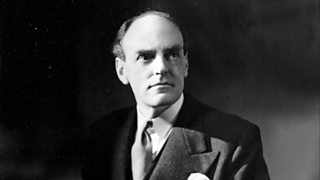
John Reith

Sir John Reith, Lord Reith of Stonehaven (1889-1971) was General Manager/ Managing Director, British Broadcasting Company 1922-1927 and then the first Director-General of the newly-incorporated British Broadcasting Corporation.

The first experiments with television followed hard on the heels of radio. It was in 1926 that John Logie Baird gave his first public demonstration of television, but the system he used was based on the rotating disc invented by van Nipkov in 1886 and had serious limitations. Television had its first American demonstration in 1927 in the auditorium of New York’s Bell Telephone Laboratories. Walter Gifford showed a large audience commerce secretary Herbert Hoover while at work in his Washington office while Hoover’s voice was transmitted over telephone wires. The development of television was seriously inhibited by the fact that it needed a frequency band of 4 million cycles compared with only 400 for a radio. This was because of the need to transmit 250,000 elements required to build a clear picture on the screen.

The first regularly scheduled TV programmes started on 11 May 1928. General Electric’s station in New York broadcast the first programmes.

Another contributing development was the invention of the first tape recorder. The Blattnerphone designed by the German film producer Louis Blattner used magnetised steel tape. Blattner himself used his invention to supply synchronised soundtracks to the films he was making at Elstree Studios. The BBC saw straight away that the tape recorder was going to be invaluable to them, not least for making recorded programmes, and acquired the first commercially produced Blattnerphone in 1931.

Both radio and television continued to develop. In America, 75,000 radio sets were sold in 1921; by the end of the decade sales had increased to over 13 million. It had become a major communicator. It had also become big business. US advertisers were spending an incredible 60 million dollars on radio commercials alone.

Standard