MIDDLE-AGED women should check their blood pressure to see if they are at risk of heart attacks, new research suggests.
Women with slightly raised blood pressure in their 40s have double the risk of heart attacks in their 50s compared with women of the same age who have normal blood pressure, a study has found.
The researchers from the University of Bergen in Norway measured blood pressure in 6,381 women and 5,948 men. They were all aged 41.
Heart attacks were recorded over the next 16 years and the results revealed they were linked to higher blood pressure – but only for women.
Dr Ester Kringeland, author of the study published in the European Journal of Preventive Cardiology, said the findings probably reflect differences in how small arteries in men and women respond to high blood pressure.
Weight, diet and exercise all play a role in maintaining a normal blood pressure.
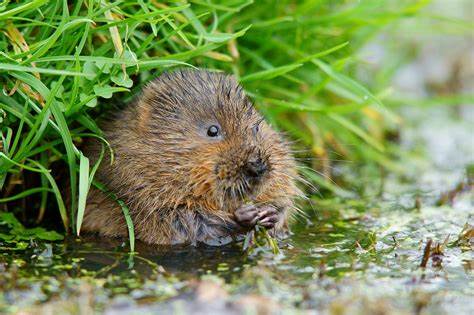
The water vole inspired one of the best loved characters of Wind In The Willows, but in real life they are as vicious as they are cunning. They’re also in danger of vanishing for ever.
IN Evelyn Waugh’s novel Scoop, William Boot is the hapless hero, who famously observed in his nature notes column for the fictional Daily Beast: “Feather footed through the plashy fen passes the questing vole.”
Such sentiments show how little Mr Boot really knew about voles. They are not feather footed and they do not quest but move with a sort of rapid waddle, says Tom Moorhouse, who knows a great deal more about the behaviour of the water vole.
Mr Moorhouse, a researcher at Oxford University’s zoology department, was offered the chance to study voles for a doctorate in 1999. His first discovery was that catching voles from a rowing boat is nobody’s idea of having a good time.
Motorboats sped past and threatened to overturn him; he was heckled by jeering champagne drinkers idling on narrow boats; and was bitten by voles in their fury at being caught.
On one trip he was rowing home through torrents of rain when one of his rowlocks snapped so that he had to punt, using his oar as a makeshift pole. It was at this moment that he passed a tourist, sitting on the embankment under an umbrella. His recollection: “I was sodden, chilled, late, tired, aggravated, filthy and smelt strongly of vole urine. The tourist took a photograph.”
Despite this, he writes very affectionately – even wittily – about voles and their nature, a model even for the sensible, kindly Ratty of Wind In The Willows. They have been living on our riverbanks for at least 14,800 years, although numbers dropped by an astonishing 99 per cent in the years between 1939 and 1998. And all because of the demand and fashion for fur coats.
In the 1920s, American mink were imported into Britain. Some of these minks, understandably reluctant to be turned into fashionable items, escaped.
For a while, their numbers were kept down by otters, who not only kill mink but are known to chew off certain parts of their anatomy to teach these incomers a lesson they won’t forget. But when otters were killed off in turn by farm pesticides washing into rivers, the mink had a free hand.
It was the author’s job to breed voles in captivity and then introduce them to 12 rivers in Oxfordshire. He did this with some success, not that everything ran entirely smoothly.
To keep track of the voles, researchers fitted the little creatures with tiny radio collars. This had an extraordinary consequence – the number of female babies dropped by half.
It seems that the collars were causing stress in the mothers, and a natural hormonal mechanism kicked in which raised the male birth rate. Female voles occupy distinct territories, while male voles roam widely in search of a good time. In times of crisis – a food shortage or, as we now know, when a zoologist fits a radio collar – it makes sense to give birth to more males, who will spread far and wide without amassing or building territory. Such is the wonder and cleverness of nature.
After such a discovery, Mr Moorhouse found himself lambasted in the media. “Scientists studying the causes of the water vole’s decline are to blame,” said one accusing newspaper headline.
Moorhouse concluded that the vole population will never truly recover until American mink are largely eradicated.
He then turns his attention to another weedy British native under threat from a brash American rival.
The white-clawed crayfish has been almost wiped out by the burly and aggressive signal crayfish, imported in 1976 for a scheme to harvest home-grown crayfish.
This idea could not have been more damaging. According to Moorhouse, there are now probably billions of signal crayfish in our rivers and streams, and they have ferocious appetites.
They eat small invertebrates, fish eggs, frog and toad spawn. They churn-up river beds, which is why rivers are not as clear as they used to be. “Signal crayfish have made rivers emptier of everything except signal crayfish,” he says.
And, yet, was this all for nothing? There is no thriving trade in British crayfish. We actually import crayfish from China, where it is cheaper to prepare them for sale in supermarkets.
What’s particularly enjoyable about this book is its upbeat tone. The author clearly enjoyed his research work, even when he was being bitten, jeered at, and sunburned.
Up to his waders in the rivers of Oxfordshire and beyond, it’s only towards the end of his cheerful journey that he strikes a gloomy note. What, he wonders, has all the effort been for?
“For all the real-world, on-the-ground, species-saving impact that my research has had, I could pretty much have just spent my time bumbling amiably around the British countryside,” he says. “My research achieved almost nothing of practical value.”
The problem is money. As it always is. He estimates that adequate conservation measures would cost around £71.2billion ($100 billion) a year worldwide. It sounds a lot, but he claims that America spends double that annually on fizzy drinks.
Moorhouse suggest that, if insurance agencies invested £7.1billion a year on coastal habitats, it would save them an annual bill of £37billion in claims for flood damage. If the seafood industry invested a similar amount, their profits would rise by £37.8billion.
Expressed in such terms the case is very convincing, but will government and big business really be persuaded in the current economic (Covid-19 pandemic) circumstances?
ONE of the criticisms often levelled at positive psychology is that it’s all about the “big H”: happiness. Some may argue that happiness is a frivolous topic and certainly not one worthy of serious scientific endeavour. Yet, when you start digging deeper, it becomes clear that happiness is not at all straightforward. In fact, it’s a pretty complex concept. This article explores some of the components of happiness (or well-being as it’s often called), how they’re measured and why they matter.
Probably the simplest way to get a handle on happiness is to divide it initially into two basic components:
. Hedonic well-being
. Eudaimonic well-being
The distinction between these two aspects of happiness dates to the ancient Greek philosophers Aristippus (c. 435–356 BCE), who championed hedonism, and Aristotle (384–322 BCE), who advocated eudaimonism.
According to Aristippus, the goal of life is to maximise pleasure and minimise displeasure or pain. In positive psychology hedonic well-being is often used to refer to the happiness you get from feeling pleasure in the moment; it is the variety of happiness which usually springs to mind when you’re asked what happiness is. It is, though, typically short-lived. We must keep topping up our reserves in order to maintain its effects. One of the problems with defining happiness solely in terms of sensory pleasure is that, paradoxically, some human desires, even if they are pleasure-producing in the short term, are not good for you in the long term.
And what about eudaimonic well-being? If happiness can ever have a serious side, this is certainly it. As suggested, some people believe that pleasure on its own isn’t sufficient to describe the totality of human well-being. According to Aristotle, merely pursuing pleasure is vulgar; he advocated eudaimonism because he believed that true happiness is found in doing what is worth doing, not in just having a good time. Eudaimonic well-being is a broad term used by positive psychologists to refer to the happiness we gain from having meaning and purpose in our lives, fulfilling our potential and feeling that we are part of something bigger than ourselves.
But even eudaimonic well-being is not problem-free. Some psychologists dislike its moral overtones; they argue that it isn’t psychology’s job to prescribe what is good for people. And, as a matter of fact, eudaimonic well-being may not provide any pleasurable feelings at all: it may involve considerable personal hardship and effort over the longer term. Yet, it is suggested that eudaimonia leads to greater life satisfaction than pure pleasure alone (Huta, V., Park, N., Peterson, C. & Seligman, M. [2003]).
In practice, positive psychologists do not agree on the definition of eudaimonic well-being – terms which include “self-actualisation”, “personal expressiveness”, “meaning”, “personal growth”, and “engagement and flow”. Nor do they agree on how it should be measured, and often the term eudaimonic well-being is used as a catch-all for any type of happiness that isn’t hedonic. But even if we’re not yet sure how to define eudaimonic well-being, most people would acknowledge that there’s more to true happiness than a game or round of 9-hole golf at the weekend. Psychology research concurs with this: a recent study of over 13,000 people suggests that pursuing engagement or meaning is more strongly related to well-being than pursuing pleasure (Schueller, S. M., & Seligman, M. P. [2010]).
Another area of disagreement for positive psychologists is whether happiness is a subjective or an objective phenomenon. Some definitions of eudaimonic well-being suggest that there is an objective standard against which people’s lives can be judged. On the other hand, there are psychologists who insist that happiness is a subjective phenomenon. They argue that it can only be measured by asking people to rate their own happiness. This leads us to another definition of happiness often used in positive psychology – Subjective Well-Being (SWB) – which is expressed in the following formula:
Satisfaction with Life + Positive Emotion – Negative Emotion
In simple terms this means that subjective happiness consists of three elements, one cognitive (or evaluative) and two affective.
Using Subjective Well-Being as the measure suggests that to increase our level of happiness overall, we should focus on minimising our negative mood and maximising our life satisfaction and positive mood.
. A positive psychology model of well-being
In his most recent book, Flourish, Martin Seligman, one of the founding fathers of the positive psychology movement, describes his new theory of well-being. His model (PERMA), which consists of five separate elements, draws on aspects of both hedonic and eudaimonic well-being:
P (Positive emotion) is exactly what it says – the experience of positive mood and feelings which are uplifting. Psychologists use various types of questionnaire which can be used to measure positive (and negative) emotional states.
E (Engagement) or ‘flow’ as it’s often called, refers to the well-being you get from being totally absorbed in the task in hand, so much so that you lose track of time and feel completely at one with what you’re doing. When sports people talk about “being in the zone”, they’re referring to their experience of flow. Flow is usually measured by asking people to reflect back on their day and record flow experiences or by having them carry an electronic beeper which randomly prompts them to think about and record what they’re doing at that moment in time.
R (Relationships) are included in Seligman’s model because research suggests that good, caring and supportive interpersonal connections are essential to your well-being at any age in life.
M (Meaning) is important because it provides both a stable foundation and a sense of direction in life. Pursuing meaningful activities has been found to be more strongly related to happiness than pursuing pleasurable ones. There are many different measures of meaning, although it’s still a relatively under-researched area. The Sources of Meaning and Meaning in Life Questionnaire (SoMe) measures 26 different sources, including self-transcendence (such as spirituality), self-actualisation (such as challenge and knowledge), order (such as tradition and holding on to values), and well-being and caring for others (such as community and love).
A (Accomplishment) is the latest psychological component in Seligman’s well-being model. It’s another broad category which includes everything from achievement, success and mastery at the highest level possible to progress towards goals and competence.


 Arts, reviews & current affairs