Afghanistan, Britain, Iraq, Society, United States

20 years after the ‘War on Terror’, abandonment leaves a bitter legacy

ESSAY

THE scene is a familiar one. On the dusty and sandy plains of Afghanistan, a trail of refugees’ head for the beleaguered capital. On the streets of Kabul itself, frequent car bombs are killing members of the government along with innocent bystanders.

In the western city of Herat, people huddle in their homes as enemy rockets pound down. And in the southern province of Helmand – where hundreds of British servicemen lost their lives in recent years – dozens of civilian bodies lie rotting on the country roads.

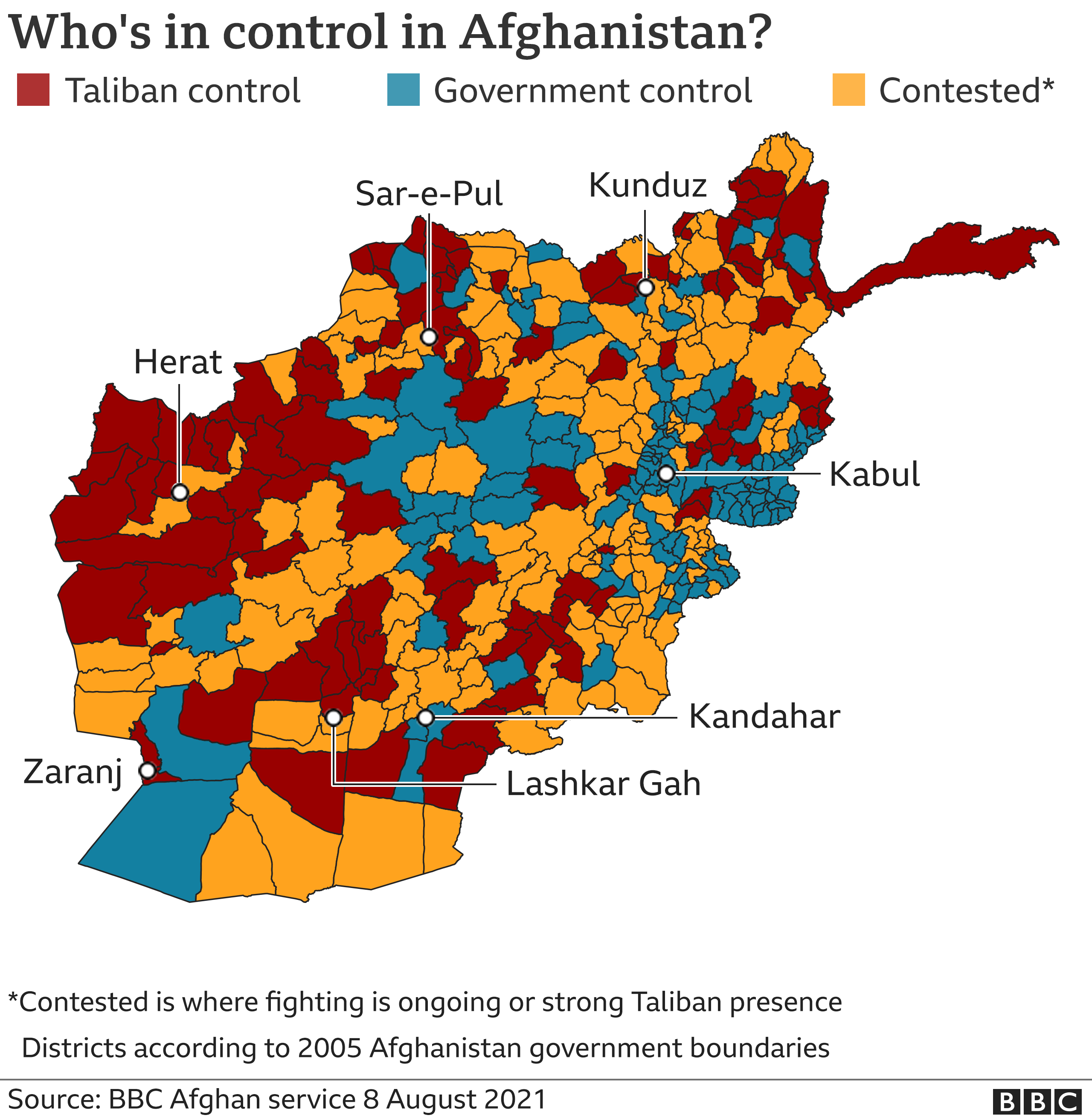
Such is the lawless state in Afghanistan, where the resurgent Taliban have made extraordinary territorial gains in recent days. Across much of the country, their white flag now flies unchecked.

The situation in Afghanistan now is as serious as it has ever been. It’s a quarter of a century since the Taliban swept to power claiming vast swathes of land, imposing a hideously oppressive Islamist regime that treated women as slaves and banned films, TV, music and dancing.

Perhaps more significantly, in just a few weeks it will be exactly 20 years since the terrorist attacks of September 11, 2001, in New York and Washington.

It was in reaction to these atrocities that Tony Blair and George W. Bush launched Operation Enduring Freedom, promising to dismantle the al-Qaeda training camps, overthrow the Taliban and usher the Afghan people into a brave new world of democracy.

‘Operation Enduring Freedom’. How darkly ironic that mission sounds today.

For the Afghan people, the cause of freedom now hangs by a thread. Ever since the spring, when President Joe Biden announced that the last U.S. personnel would leave at the end of this month, the Taliban have swept across much of the country again.

Only a few weeks ago, U.S. intelligence analysts reportedly warned that without Western intervention, the government in Kabul might have just six months left. And now, with an estimated 85,000 Taliban fighters pressing towards the capital, that bleak prognosis looks decidedly optimistic.

Yet this is merely part of a bigger picture.

Twenty years after the War on Terror began, it’s time that we took a long, unsparing look at what it really achieved.

To revisit reports from 2001 feels like entering a different world. At the Labour Party conference, Tony Blair tells his delegates and party members that he intends to fight for freedom “from the deserts of Northern Africa to the slums of Gaza, to the mountain ranges of Afghanistan.”

“Let us re-order this world around us,” he says grandly, as if there are no limits to his ambitions. A few weeks later, his close friend Bush appears before the U.S. Congress, pledging to dismantle an “Axis of Evil” that threatens the peace of the world. He names three regimes in particular: Iran, Iraq and North Korea.

How arrogant, how criminally naïve this sounds today. The regime in Iran is more hard-line, its position apparently as secure as ever. North Korea, too, remains stubbornly defiant, having built an estimated stockpile of some 40 nuclear weapons.

As for Iraq, that desperately sad story has become only too familiar. However you measure it, the carnage since the Anglo-American invasion of 2003 has cost at least 150,000 lives, and perhaps more than a million according to some estimates.

I say ‘has cost’, rather than ‘cost’, because Iraq is still not at peace. It has never been at peace. Even now, the Baghdad government and its Western sponsors are fighting a low-level Islamist insurgency, with bombings and killings almost every single day. What, then, is the verdict on the so-called War on Terror?

There’s no doubt that some of its progenitors, at least, had noble motives. When Blair says he genuinely wanted to export Western freedoms to Afghanistan and Iraq, it’s not hard to disbelieve.

But the verdict must be utterly damning.

How can this naïve, undefined, unachievable crusade go down in history as anything other than a catastrophic failure?

Take the cost in lives first. Some 456 British servicemen and MoD civilians were killed in Afghanistan, and a further 179 in Iraq. And for what?

As the Taliban surge towards Kabul, many of the bereaved must be asking themselves: was it all in vain?

Then there’s the financial cost. In June this year, the Ministry of Defence admitted that the war in Afghanistan cost British taxpayers a staggering £22 billion, with the campaign in Iraq estimated to have cost a further £10 billion.

The grim irony, of course, is that our politicians blew all that money just before the financial crisis of 2007-08, from which the Western economy has never fully recovered. And given that Britain was about to be plunged into a long period of economic austerity, many will argue that we should have saved it for other things.

One of the greatest costs of all, though, is much harder to measure. It’s the price in moral capital and political credibility, which Britain and the U.S. are still paying to this day.

Remarkably, the invasion of Afghanistan was much closer in time to the end of the Cold War than it is to us today. The U.S. was the world’s unchallenged “hyper-power”, the march of democracy seemed unstoppable, and some American thinkers were even proclaiming the “end of history”.

The events of the last two decades, however, turned that story on its head. For the Iraqi people, the Allied invasion brought a living nightmare. For the people of Afghanistan, meanwhile, it brought a gruelling, apparently interminable campaign, which now seems likely to end as it began – with the Taliban as masters of their native land.

No wonder, then, that America’s image abroad has plummeted over the last 20 years. According to the respected Pew Research Centre, people in almost ever major Western country now have an unfavourable impression of the U.S.

In Japan, its popularity has dropped by 30 per cent since 2001. In France, too, it has fallen by 30 per cent, in Germany by almost 50 per cent. And what of faith in democracy – the one thing for which Blair and Bush claimed they were fighting?

According to an extensive international study by Cambridge University, satisfaction with democracy has never been lower. In almost every country on earth, faith in the Western capitalist model has plummeted in the last 20 years – especially among the young, to whom the wars in Afghanistan and Iraq are simply incomprehensible.

And here’s another brutal irony. At the very point when Britain and the U.S. were wasting huge sums of money and with so many lives expended on their Middle Eastern misadventures, the real threats to Western democracy were hauling themselves off the canvas and preparing to rebuild.

The winners of the War on Terror were not the British and American people, and still less the natives of Afghanistan and Iraq. They were Vladimir Putin and Xi Jinping, the authoritarian strongmen of Russia and China, who watched with undisguised satisfaction as the Western powers discredited their own values.

That is the real legacy of the past 20 years: a shattering reversal of Western progress, for which we will be paying – quite literally – for the rest of our lives.

But perhaps it would be wrong to end by talking about ourselves. After all, the greatest casualties of the last two decades came among the people of Afghanistan and Iraq themselves, who have never known a single day of peace since the War on Terror began.

Nobody can say how their lives would have turned out if we had left well alone. No doubt they would have endured more than their fair share of tragedies anyway. Afghanistan has always been a turbulent and war-torn country.

What can be said, however, is that they have paid a terrible price for our politicians’ hubris and folly. And if we fail to learn that lesson, it would be the greatest betrayal of all.

. Appendage

Map highlighting who controls Afghanistan. Map Source: BBC
Standard
Britain, Government, Politics, Society, United States

The New Atlantic Charter

US-UK ALLIANCE

EARLIER this month, Britain and the United States agreed a new “Atlantic Charter”, committing both countries to building a renewed alliance to meet the challenges posed by China, Russia, and climate change.

In what was seen as a highly symbolic act, the Prime Minister and the US President revived the original charter signed by Winston Churchill and Franklin Roosevelt in 1941, which is credited with laying the foundations for the post-war settlement.

President Biden said the world was at “an inflection point in history”, adding: “A moment where it falls to us to prove that democracies will not just endure – they will excel as we rise to seize the enormous opportunities of this new age.”

He said the charter would address the “key challenges of this century – cybersecurity, emerging technologies, global health and climate change”.

Following the symposium between the two leaders, the Prime Minister said: “I don’t think it is any exaggeration to say that the relationship between the UK and the US is – the relationship between North America and Europe – incarnated in that Atlantic Charter of 1941, which we’ve renewed, is of massive strategic importance for the prosperity, the security of the world, for all the things we believe in together – democracy, human rights, the rule of law – the US and the UK stick up for those things together. It’s incredibly important that we should affirm that.”

The eight-point charter commits the two nations to pursuing broad aims to defend and promote democracy around the world, while combating challenges such as climate change and the pandemic.

It was accompanied by a lengthy joint statement in which the two leaders pledged a range of actions to push back against the growing power of the world’s authoritarian regimes, including “practical efforts to support open societies and democracy across the globe.”

On defence, the two powers agreed to not only step up conventional military co-operation, but also on cybersecurity, an area where Russia and China are seen as major threats.

The agreement says the two countries should work together to tackle a range of new threats, including those associated with “cyberspace, foreign interference, harmful influence, illicit finance, violent conflict and extremism, and terrorism in all its forms”.

Mr Biden paid tribute to the UK’s military role in joint operations around the world over decades. Commenting on the two countries’ withdrawal from the 20-year war in Afghanistan, the President said: “The UK was with us from the start – they always are.”

The agreement also binds both nations to striking a “technology partnership”, including efforts to build up stronger capabilities in areas currently dominated by China, such as batteries.

Trade talks have taken a back seat since the departure of Donald Trump from the White House six months ago.

But No10 has said the two leaders had agreed to work towards a free trade deal “which would create jobs and bring new opportunities to both of our countries”.

The joint statement also commits both sides to strengthening trade ties, including settling a long running dispute over aerospace subsidies, which has led to tit-for-tat tariffs.

The new charter warned that climate change had reached a “critical point” and committed both countries to decarbonising their economies and helping others around the world do the same.

The declaration also included a lengthy section on tackling the Covid crisis and creating a “Global Pandemic Radar” early-warning system. The agreement will see increased co-operation on accelerating scientific research into vaccines capable of fighting dangerous variants.

The PM hopes to secure agreement among other leading nations to donate one billion doses to poorer countries in the hope of “vaccinating the world” by the end of next year.

The two men also agreed to create a “travel taskforce” aimed at restoring UK-US travel “as soon as possible”. Government sources said the unit, led in Britain by Transport Secretary Grant Shapps, would “help accelerate” the resumption of flights between two of the world’s best-connected countries.

HOPE FOR THE FUTURE

Hope For The Future, the title of the document released in updating the original 1941 Atlantic Charter, contains the following eight provisos:

. President Joe Biden and Prime Minister Boris Johnson vowed to defend the institutions of open societies, including upholding the rule of law and an independent media.

. They will strengthen international bodies to tackle threats such as “the peril of emerging technologies” and to encourage trade.

. In an apparent rebuke to Russia, the US and UK declared nations must have a right to self-governance and should resolve disputes peacefully. They also stated their opposition to interference in elections.

. Technology will be used to improve security and deliver jobs, while investment will aid research into the biggest challenges facing the world.

. The importance of the NATO alliance in a nuclear world was highlighted. The two nations said they remained committed to countering terrorists and cyber threats.

. The leaders said they wanted the global economy to be “inclusive, fair, climate-friendly and sustainable”. They will fight corruption and seek high labour standards.

. On the climate, they warned the world has reached a “critical point” where urgent and ambitious action is needed.

. They recognised the “catastrophic impact of health crises” following Covid and the need for strong collective defences.

Standard
Arts, Britain, Broadcasting, History, Society, United States

The Beginning of Radio Broadcasting

SHORT ESSAY

THE FIRST EXPERIMENTAL radio broadcasts were made in Britain in 1921. They led to the formation a few months later of the British Broadcasting Company (later Corporation). This was at the instigation of the General Post Office (GPO), who wanted to see the formation of a single consortium of wireless equipment manufacturers and broadcasters, specifically to avoid the major confusion that had arisen in America, where there were 500 rival stations. The new Company worked under John Reith, an engineer from Aberdeen who was the company’s general manager for its first 16 years. Under Reith’s leadership, the BBC became a major national institution. The broadcasts were entirely live, and Reith insisted on a high level of formality, in spoken English, behaviour and dress, traditions which have unfortunately been thrown to the four winds in recent years.

The London broadcasting station, known as 2LO, went on the air on 14 November 1922 as the British Broadcasting Company. A news bulletin was read by Arthur Burrows of the Marconi Company. The initial broadcasts were fairly short, but soon lengthened to four hours a day of news, talks and concerts.

The BBC was supported financially by licence fees paid for by the users. They had to pay ten shillings a year (50 pence) for the privilege of operating a receiver. The same system was used when television was introduced, also by the BBC.

At the same time in America, the first commercial radio was being broadcast. The New York Station, WEAF, broadcast the first radio commercials. This different approach to broadcasting was to become the set pattern in America – private control of the airwaves and programmes dominated by sponsors. The radio pioneer Lee Dee Forest asked, “What have you done with my child? You have sent him out on the street in rags of ragtime to collect money from all and sundry. You have made of him a laughing stock of intelligence, surely a stench in the nostrils of the gods of the ionosphere.”

In 1923, the BBC began publishing its magazine, the Radio Times, so that listeners would know in advance what programmes were to be broadcast; this too became a long-continuing practice.

By 1926, radio ownership in the United States reached 3 million; most of these radios required listeners to wear earphones. In 1926, NBC (the National Broadcasting Company) was founded by David Sarnoff; this ambitious project had nine stations.

John Reith

Sir John Reith, Lord Reith of Stonehaven (1889-1971) was General Manager/ Managing Director, British Broadcasting Company 1922-1927 and then the first Director-General of the newly-incorporated British Broadcasting Corporation.

The first experiments with television followed hard on the heels of radio. It was in 1926 that John Logie Baird gave his first public demonstration of television, but the system he used was based on the rotating disc invented by van Nipkov in 1886 and had serious limitations. Television had its first American demonstration in 1927 in the auditorium of New York’s Bell Telephone Laboratories. Walter Gifford showed a large audience commerce secretary Herbert Hoover while at work in his Washington office while Hoover’s voice was transmitted over telephone wires. The development of television was seriously inhibited by the fact that it needed a frequency band of 4 million cycles compared with only 400 for a radio. This was because of the need to transmit 250,000 elements required to build a clear picture on the screen.

The first regularly scheduled TV programmes started on 11 May 1928. General Electric’s station in New York broadcast the first programmes.

Another contributing development was the invention of the first tape recorder. The Blattnerphone designed by the German film producer Louis Blattner used magnetised steel tape. Blattner himself used his invention to supply synchronised soundtracks to the films he was making at Elstree Studios. The BBC saw straight away that the tape recorder was going to be invaluable to them, not least for making recorded programmes, and acquired the first commercially produced Blattnerphone in 1931.

Both radio and television continued to develop. In America, 75,000 radio sets were sold in 1921; by the end of the decade sales had increased to over 13 million. It had become a major communicator. It had also become big business. US advertisers were spending an incredible 60 million dollars on radio commercials alone.

Standard