
Arts, Britain, Broadcasting, History, Society, United States

The Beginning of Radio Broadcasting

SHORT ESSAY

THE FIRST EXPERIMENTAL radio broadcasts were made in Britain in 1921. They led to the formation a few months later of the British Broadcasting Company (later Corporation). This was at the instigation of the General Post Office (GPO), who wanted to see the formation of a single consortium of wireless equipment manufacturers and broadcasters, specifically to avoid the major confusion that had arisen in America, where there were 500 rival stations. The new Company worked under John Reith, an engineer from Aberdeen who was the company’s general manager for its first 16 years. Under Reith’s leadership, the BBC became a major national institution. The broadcasts were entirely live, and Reith insisted on a high level of formality, in spoken English, behaviour and dress, traditions which have unfortunately been thrown to the four winds in recent years.

The London broadcasting station, known as 2LO, went on the air on 14 November 1922 as the British Broadcasting Company. A news bulletin was read by Arthur Burrows of the Marconi Company. The initial broadcasts were fairly short, but soon lengthened to four hours a day of news, talks and concerts.

The BBC was supported financially by licence fees paid for by the users. They had to pay ten shillings a year (50 pence) for the privilege of operating a receiver. The same system was used when television was introduced, also by the BBC.

At the same time in America, the first commercial radio was being broadcast. The New York Station, WEAF, broadcast the first radio commercials. This different approach to broadcasting was to become the set pattern in America – private control of the airwaves and programmes dominated by sponsors. The radio pioneer Lee Dee Forest asked, “What have you done with my child? You have sent him out on the street in rags of ragtime to collect money from all and sundry. You have made of him a laughing stock of intelligence, surely a stench in the nostrils of the gods of the ionosphere.”

In 1923, the BBC began publishing its magazine, the Radio Times, so that listeners would know in advance what programmes were to be broadcast; this too became a long-continuing practice.

By 1926, radio ownership in the United States reached 3 million; most of these radios required listeners to wear earphones. In 1926, NBC (the National Broadcasting Company) was founded by David Sarnoff; this ambitious project had nine stations.
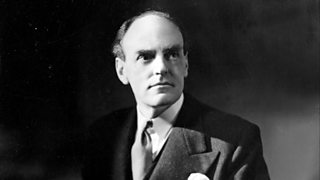
John Reith

Sir John Reith, Lord Reith of Stonehaven (1889-1971) was General Manager/ Managing Director, British Broadcasting Company 1922-1927 and then the first Director-General of the newly-incorporated British Broadcasting Corporation.

The first experiments with television followed hard on the heels of radio. It was in 1926 that John Logie Baird gave his first public demonstration of television, but the system he used was based on the rotating disc invented by van Nipkov in 1886 and had serious limitations. Television had its first American demonstration in 1927 in the auditorium of New York’s Bell Telephone Laboratories. Walter Gifford showed a large audience commerce secretary Herbert Hoover while at work in his Washington office while Hoover’s voice was transmitted over telephone wires. The development of television was seriously inhibited by the fact that it needed a frequency band of 4 million cycles compared with only 400 for a radio. This was because of the need to transmit 250,000 elements required to build a clear picture on the screen.

The first regularly scheduled TV programmes started on 11 May 1928. General Electric’s station in New York broadcast the first programmes.

Another contributing development was the invention of the first tape recorder. The Blattnerphone designed by the German film producer Louis Blattner used magnetised steel tape. Blattner himself used his invention to supply synchronised soundtracks to the films he was making at Elstree Studios. The BBC saw straight away that the tape recorder was going to be invaluable to them, not least for making recorded programmes, and acquired the first commercially produced Blattnerphone in 1931.

Both radio and television continued to develop. In America, 75,000 radio sets were sold in 1921; by the end of the decade sales had increased to over 13 million. It had become a major communicator. It had also become big business. US advertisers were spending an incredible 60 million dollars on radio commercials alone.

Standard
Britain, Economic, Iran, Society, United States

Gulf of Oman: The stakes could not be higher

US-IRANIAN TENSIONS

THE attacks on the Japanese and Norwegian oil tankers in the Gulf of Oman have brought the simmering tensions between the United States and Iran to a new incendiary level.

Even before last week’s incident, President Trump demonstrated his hostile approach by imposing heavy sanctions on Iranian oil exports and withdrawing from the conciliatory nuclear deal negotiated by President Barack Obama in 2015.

Washington has directly blamed Tehran for the tanker explosions, backing up the claim with the release of video evidence which appears to show members of the Iranian Revolutionary Guard handling what looks like an unexploded Iranian mine on the side of one of the damaged vessels.

It should be acknowledged that Iran has “categorically” denied any responsibility, arguing that the attacks were perpetrated by someone who wants to damage the country’s international reputation.

It certainly came at an awkward time for the Iranian government, which was hosting talks with the Japanese prime minister Shinzo Abe, whose nation is dependent on Iranian oil imports. In theory, at least, it seems irrational that Iran would damage the interests of its own fragile economy with an assault on one of the biggest customers of its oil supply. But economic rationality is not always paramount. And there are several reasons why certain figures in the Iranian regime might actually welcome an escalating crisis in the US.

Outsiders tend to regard the Tehran government as a theocratic monolith, but in reality, there is a division between the pragmatists, led by president Hassan Rouhani, and the fundamentalists who follow the head of state, supreme leader Ayatollah Ali Khamenei.

Iran’s hawkish hardliners, who are growing in confidence, contend that a more aggressive diplomatic policy would have a number of advantages. A coalition with America would serve as a distraction from Iran’s economic woes, which have left the country plagued by public discontent. Posing as the patriot saviour in a national emergency, the hardliners could rally the people against the US, crackdown on dissent and strengthen their grip on power.

According to this narrative, ruthlessness, not diplomacy, is the best way to force Washington to back down on sanctions.

And if things do escalate, the disturbing reality is that these Iranian hardliners certainly have the capability to wage war against America. For if war does break out, the US will find defeating Iran much more costly than Saddam Hussein’s Iraqi regime during the two Gulf war campaigns.

Iran is three times the size of Iraq and the Revolutionary Guards which make up the special forces are well-equipped and battle-hardened. The Iranian military possesses an array of sophisticated armaments, including stocks of ballistic missiles.

But even low-tech equipment could cause severe damage to the US if it came to war in the Gulf. If only one Iranian torpedo boat from a swarm of 40 or 50 managed to break through the US defensive screen, it could still sink or cripple an American ship. And it would only need a few drones to reach a target for the results to be devastating.

Nevertheless, it is unlikely the US will back down. Given its colossal military power, it is rightly still regarded as the world’s military guardian.

In Washington, an anti-Iranian sentiment prevails, a legacy of the hostage crisis of the 1970s. America’s anti-Iranian allies such as Saudi Arabia and Bahrain will also be ramping up demands for action.


BRITAIN will be left in an awkward position if conflict does erupt. It is unlikely that the UK will have any direct military involvement, but diplomatically – as Foreign Secretary Jeremy Hunt has said – it would be unthinkable if Britain does not tacitly support the US.

If that does happen, British expats and commercial interests in the Gulf would be in a vulnerable situation. And in Britain itself, our stuttering economy – like the rest of the western world – would be severely hit by an oil crisis arising from a war.

It came as no surprise that, following the tanker attacks, oil prices in global markets became extremely volatile. After all, 30 per cent of the world’s crude oil passes through the Strait of Hormuz which borders Iran.

In this combustible situation, the stakes could not be higher. We can only hope that a mood of restraint and common sense will ultimately prevail.

Standard
Britain, Europe, France, Government, History, Military, Society, United States

75th Normandy Commemoration

NORMANDY

SEVENTY-FIVE years ago, Britain had embarked on its most momentous military mission. Upon the outcome of D-Day, June 6 – the largest seaborne invasion the world has ever seen – hinged the very freedom of all Europe. Events this week in Normandy have been an impassioned reminder of the huge sacrifice and human cost of liberating Europe from the tyranny of Hitler and the Nazis.

Codenamed Operation Overlord, it was an endeavour of mind-blowing scale and complexity. Some 156,000 British, American and Canadian troops landed on French soil in a heroic push to prise Hitler’s choking grip from the Continent.

Few were highly experienced, meticulously trained military men. Most were plucked from loving families and ordinary jobs: Insurance clerks, shopkeepers, postmen.

Displaying unimaginable courage, they stormed the chaotic Normandy beaches. It was, undoubtedly, hell on Earth – wading ashore into a hail of bullets, with shells exploding, the sea red with human blood, and the piercing screams of the dying.

Quite easily, the enterprise could have foundered – leaving Europe caught in the death roll of Nazi dictatorship. But thanks to the tenacity and sacrifice of the selfless men who fought that tumultuous day in 1944, the attack succeeded – altering the course of the Second World War.

Yes, the human price paid was huge. On D-Day alone, around 4,400 Allied troops paid the ultimate sacrifice. But tyranny was conquered, and the Continent liberated.

This week, a dwindling band of military veterans were joined by royalty and world leaders in Portsmouth – an embarkation point for the battle – to commemorate the anniversary. To witness the intrepid warriors – all aged over 90 – wiping away tears for fallen comrades was moving and humbling.

Her Majesty the Queen commended the resilience of the “wartime generation”. The bravery of those who fought – and died – would never be forgotten, she said. They deserved the thanks of the whole free world.

Truly, the debt our heroes are owed cannot be repaid.


YET, what would these exemplary men, who stoically stared death in the face when barely out of short trousers, make of today’s intemperance and bigotry?

In attendance was Jeremy Corbyn, who aspires to be prime minister, but who invariably fraternises with our enemies. His contempt at President Trump being an honoured guest at the anniversary was visceral – even though American GIs died to preserve our liberty. The US, via NATO, has ensured peace in Europe ever since.

Earlier, he whipped his Marxist acolytes into such a frenzy of hate an NHS worker ignorantly shrieked “Nazi scum” in the face of a Trump supporter.

Welcome, then, to the new intolerance of the hard-Left. Anyone failing to share their bigoted and hateful views is branded racist or fascist – even at events celebrating freedom.

Since these buffoons have clearly never read a history book, here’s a lesson: The Nazis murdered six million Jewish people, and stamped the evil of fascism across Europe. Someone who merely proffers a different opinion is not a Nazi.

Each time these screeching fanatics resort to such disgusting slanders, they cheapen the very ideals the veterans fought for.

250 giants of D-Day, now frail but burning with the valour that carried them to victory, returned to Normandy in an act of pilgrimage. They witnessed the inauguration of the first British monument on the coast of France to honour the 22,442 members of our Armed Forces killed there.

Seventy-five years ago, Britain had far more to worry about than the present political turmoil of Brexit. The future of the world was in the balance.

But even after we have untangled ourselves from the EU, Europe will remain our historical and geographical kin. In times of danger, Britain will resolutely defend the freedoms given to us by the band of brothers on D-Day.

Standard