Arts, Books, Economic, History, Society

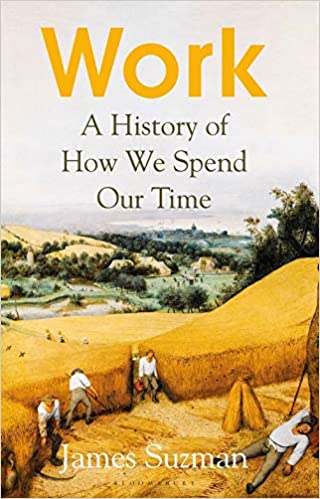
Book Review – ‘Work: A History of How We Spend Our Time’

REVIEW

IN 1776, Economist Adam Smith predicted that one day machines would “abridge labour”. We were meant to be able “to lie on the grass under trees on a summer’s day . . . watching the clouds float by”.

John Maynard Keynes, in the 1930s, thought that by now robots would be doing the donkey work, and food, water, warmth and safety would be “universal… and experienced equally by everyone”.

To which the only reasonable rejoinder or retort is: pig’s bottom. In 2020, owing to what James Suzman, a Cambridge professor, calls “cyber-physical systems animated by machine-learning algorithms”, i.e., computers, people are spending much longer staring at screens. In Britain in 2018, there were 600,000 work-related mental health issues reported to doctors.

In Professor Suzman’s reading of human history, nothing ever runs smoothly for long. For primitive peoples, life was “a constant battle”. When agriculture was developed, there were always droughts, floods and frost. What characterised us, however, was persistence. With the herding of animals came settlements and barns for grain, thence the need for carpenters, blacksmiths, merchants, stonemasons – eventually doctors, teachers and lawyers. Literacy enabled the keeping of accounts and the creation of banks.

The fatal paradox, though, is that gains in productivity are cancelled by population growth – more mouths to feed. Britain’s population in 1750 was 5.7 million, in 1851 21.1 million. Today it is nearly 70 million.

The Industrial Revolution behind the boom had little to recommend it: in the mines, children toiled like slaves. Women worked 14-hour shifts in mills. The working class were nothing but “a pin in a big machine”. Creativity was not wanted, only “target-driven, repetitive work”.

It has not been the proletariat, however, who benefit. Suzman quotes the alarming statistic that between 1978 and 2016, while the average pay increases were 11.7 per cent, the remuneration of CEOs went up by a staggering 937 per cent.

Clearly, we are victims of our ingenuity: we clear rainforests and generate greenhouse gases in the name of cheap food. Each year, 66 billion chickens are reared – triple the number of all wild birds.

Greed is the key to modern problems, what Suzman calls “the malady of infinite aspiration” – more microwave ovens, cars, phones. Nor is there a proportional correspondence between human labour and reward. What really counts if you want good prospects, are family connections, inheritance and “getting lucky”.

When order is under threat from human folly, Suzman says famines, wars and pandemics are the usual “imminent and severe correction” – so coronavirus should not be a surprise.

‘Work: A History of How We Spend Our time’ is published by Bloomsbury, 447pp

Standard
Arts, Books, Medical, Science

Book Review: Cured

SCIENCE: SPONTANEOUS REMISSION

Rediger

Intro: Can hope and happiness cure the incurable? 

Jeffrey Rediger, a psychiatrist at Harvard Medical School, could hardly have imagined that his compelling book about illness and wellness, would have been published in the middle of a virulent and catastrophic pandemic.

Dr Rediger offers many clinically documented examples of patients stricken with terrible, often terminal, diseases and sometimes given just weeks to live, who then confounded medical science and got better. He tells us how they did it, or at least how they appeared to do it.

In one way, the coronavirus makes these stories less than timely. Nobody is suggesting that changes in diet, exercise, eliminating stress, or finding love (all of which are used to explain various cases of “spontaneous remission”), can overwhelm the dreaded and deadly Covid-19.

Yet in many other ways, Cured couldn’t be timelier. In this crisis, we are all thinking about our health like never before and the notion that we might, in some circumstances, be able to chase away life-threatening diseases ourselves, feels more resonant than ever.

Rediger introduces us to Claire Haser, who was 63 when, in 2008, she was diagnosed with the most aggressive form of pancreatic cancer. Told to expect no more than 12 months, she declined dangerous surgery in favour of letting “nature take its course”. But she resolved to focus not on dying, but on living “with as much zest and happiness as I could for however long I had left”. The year passed. Then another.

In 2013, she was hospitalised for a scan of her abdomen, unrelated to her illness. Doctors were astonished to find the tumour had vanished.

Nobody knows for sure what made the tumour disappear. Diet was perhaps part of it; Claire had started eating much more healthily, but she’d altered her mindset, too, confronting certain fears and obstacles that had always held her back in life. All these factors, Rediger argues, allowed her immune system to do its job again.

Rediger has spent 17 years examining cases of spontaneous remission all over the world, looking for common ground. Many of these people he met, whose remarkable stories are explained by science as “flukes” and by religion as “miracles”, had radically changed their lifestyles. This connection between mind and body has never been encouraged by Western cultures, but it is at the heart of Eastern medicine.

Physical, mental, emotional and spiritual health are all irrevocably entwined and, just as they can combine to make us ill, so they can sometimes combine to make us better.

If you’re unconvinced by how powerful the mind can be in generating physical wellbeing, consider the placebo effect. Rediger recalls the case of a Mr Wright in 1957, who, dying from cancer of the lymph nodes, begged his doctors to try experimental drug Krebiozen.

As soon as they did, his astonished doctor reported that his tumours “melted like snowballs on a hot stove”. Two months later, reports circulated that this supposed miracle drug was a fake.

Mr Wright immediately relapsed, but as he lay close to death, his doctor told him the reports were wrong and he had a double-strength version of the serum. He injected it. The tumours vanished again. But the doctor had injected only water.

Rediger wants Western clinicians to embrace the “medicine of hope”.

He isn’t trying to dissuade us from seeking medical intervention. He accepts that, more often than not, there is no simple, non-medical equation; that “eat right” plus “fall in love” does not usually add up to a cure for aggressive diseases.

But how reassuring it is, especially in these horribly uncertain times, to know that sometimes it does.

– Cured by Jeffrey Rediger is published by Penguin, 400pp

Standard
Arts, Books, Society

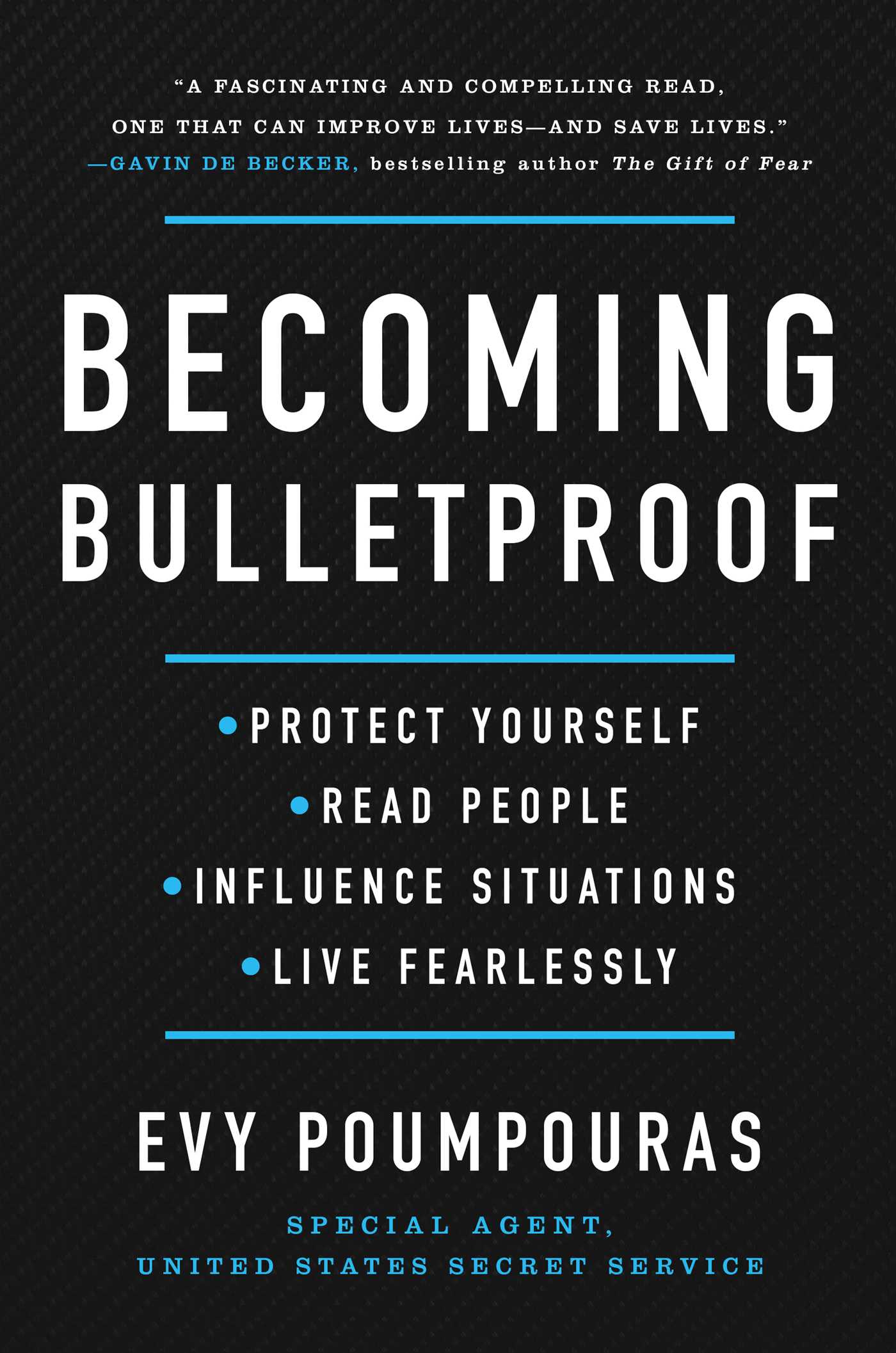
Book Review: Becoming Bulletproof

LITERARY REVIEW

Poumpouras

How to beat fear. She’s protected four U.S. presidents and risked her own life by rescuing people on 9/11. Now this fierce former Secret Service agent is teaching the rest of us how to take on the world.

Evy Poumpouras, a former U.S. Secret Service Agent, is not a woman to mess with. Blessed with spectacular looks, she has worked in the security details of four former American presidents. She knows the subject of what she speaks.

This formidable lady was on duty at the Secret Service’s New York HQ at the World Trade Centre during the 9/11 attacks and became one of only five women to receive the Medal of Valor. She risked her own life – almost dying – dragging people to safety as the towers came down. Her own account of the September 11 attack makes a heart-stopping opening.

This is a diverting book, part memoir, part self-help manual for tough times. The narrative is packed with gripping anecdotes from her many years in the service.

Readers’ of this review may remember the Clint Eastwood character in the movie In The Line Of Fire – the only secret service official who could save the President, running alongside the limo in suit and shades? Ms Poumpouras provides insight into what that’s really like.

Aside from the punishing shifts and the ever-present threat of danger, it would seem there’s an element of fun that such operatives enjoy.

Ms Poumpouras was on protection duty for the First Lady Hillary Clinton when she decided to join the Gay Pride March in New York. As Ms Poumpouras follows behind, the crowd catch sight of her in her dark suit, white shirt, and impenetrable sunglasses (an outfit specifically designed to intimidate, readers are told) and begin to cheer: “Ooooh girl! You go with your bad self, Miss Secret Service thing. You keep our girl Hillary safe.”


MS Poumpouras was secretly pleased: “I couldn’t help smiling on the inside. I was proud to be there, to be part of what she was doing.”

Evy is a very likeable person. Agreeably prone to the odd four-letter-word (she is, after all, a Greek-American New Yorker brought up in Queens), and as a former specialist in the polygraph unit for the service, she is very smart on the many subtle verbal clues that should make the antennae twitch of all listeners.

They range from what she refers to as the emphatic denial: “I would never do such a thing” via the catastrophic event: “I’m sorry I couldn’t finish that: my aunt died” – to a matter of trust. “Whenever you hear someone saying ‘Trust me, I know what I’m doing’ – that is usually the last thing you should do.” Her book began with an idea: “How to create inner strength and mental resilience. How to become powerful when we feel powerless. How to protect ourselves mentally and physically. How to harness fear and prevent panic.”

And this is a girl who, as a teenager arriving back at home with her mother, saw there was an intruder inside their house and set off after him. The intruder didn’t stand a chance.

Many readers of this book might feel it is aimed towards a U.S. audience rather than a British one. In America, being quite literally bulletproof might seem sensible; less so in the UK, surely. Do we really need to know how to plan an exit from a restaurant in the event of an attack? (Make sure you know where another entrance is, sit with your back to the wall, and be willing to go against the herd if there’s a rush to the doors: that’s what to do).

Then you remember the recent terrorist attacks on restaurants and bars at London Bridge. So maybe we aren’t so immune after all.

And the lessons are universal: don’t let yourself be bullied – predators (whether on the streets, at work, or even in relationships) like to pick on someone they think they can beat. So make sure they won’t. The predators are usually the ones full of self-doubt and fear.

When we’re out in the world, she advises us, “Present yourself with an air of vigilance and assurance. Walk with your shoulders back and head up. Don’t be afraid to make eye contact with people. And if something doesn’t feel right, don’t neglect it.”

Then if all else fails, learn how to fight, with “a few moves designed to distract or injure an attacker long enough to give a person time to escape. A violent strike to the groin. A swift kick to the shin. A hard punch to the throat. Or jamming a finger in the eye. Swift, violent and fierce – using elbows and knees when possible. Move and strike and run.”

The best advice she can give, she says, is to sign up for a martial arts or boxing class. As I mentioned, she’s not a woman to mess with.

Don’t worry about fear, she says. Fear is a healthy and natural response to a perceived threat. It’s panic that is the danger: panic causes us to lose control of our faculties. “When we panic, we can’t think, reason, process or plan.”

Some fears are natural. “The fear of falling is hard-wired into us from birth; loud noises we equate with danger . . . that’s why we jump when a car backfires.”

Most other fears are learned: in the U.S. more than half of all teenagers were concerned that a shooting would happen at their school.


THIS is despite the fact that, remarkably, even in America, the chance of a student being killed by a shooter is about one in 614 million – less likely than the chances of being struck by lightning (one in 1.2 million).

In the same way, people are afraid of flying, though the chances of dying in a plane crash are one in 5.4 million. The chances of dying in a road accident in the U.S. are just over one in 102, but nobody thinks twice about driving to the airport for their flight.

So work out what you are afraid of and deal with it. Above all be aware of the 3Fs of fear – Fight, Flight or Freeze.

This is the body’s physiological response to an unexpected situation. It’s you – but a heightened version of you, more aware and alert.

Ms Poumpouras’s go-to response is, she cheerfully admits, to fight; to run towards danger rather than away.

One of the incidental pleasures of this book is that like all good Greeks, Ms Poumpouras is immensely proud of her heritage.

“Of course I was groomed from birth to believe that everything in the world originated from Greece,” she says, only partly tongue in cheek – and decorates each chapter with a punchy homily from one of her ancestral homeland’s ancient big shots.

Typical is this from Plato: “Courage is knowing what not to fear.” But whether it is advice from ancient philosophers or a modern Secret Service woman, there’s plenty in this book to stiffen the sinews in what I am afraid is becoming an over-fearful and risk-averse world.

– Becoming Bulletproof by Evy Poumpouras is published by Icon, 336pp

Standard