Arts, History, Science

Quantum Leaps: Albert Einstein

1879–1955

OF the essays written by Einstein in 1905, arguably the most influential was his enunciation of a “special” theory of relativity, which advanced the idea that the laws of physics are actually identical to different spectators, regardless of their position, as long as they are moving at a constant speed in relation to each other. Above all, the speed of light is constant. It is simply that the classical laws of mechanics appear to be obeyed in our normal lives because the speeds involved are insignificant.

The Speed of Light

But the implications of this principle if the observers are moving at very different speeds are bizarre and normal indicators of velocity such as distance and time become warped. Indeed, absolute space and time do not exist. Therefore, if a person were to theoretically to travel in a vehicle in space close to the speed of light, everything would look normal to them, but another person standing on earth waiting for them to return would notice something very unusual. The space ship would appear to be getting shorter in the direction of travel. Moreover, whilst time would continue as “normal” on earth, a watch telling the time in the ship would be going slower from the earth’s perspective even though it would seem correct to the traveller (because the faster an object is moving the slower time moves). This difference would only become apparent when the vessel returned to earth and clocks were compared.

If the observer on earth were able to measure the mass of the ship as it moved, he would also notice it getting heavier too.

Ultimately, nothing could move faster than or equal to the speed of light because at that point it would have infinite mass, no length, and time would stand still.

A General Theory of Relativity

From 1907 to 1915, Einstein developed his special theory into a “general” theory of relativity which included equating accelerating forces and gravitational forces. Implications of this extension of his special theory suggested light rays would be bent by gravitational attraction and electromagnetic radiation wavelengths would be increased under gravity. Moreover, mass, and the resultant gravity, warps space and time, which would otherwise be “flat”, are turned into curved paths which other masses (for example, the moons of planets) caught within the field of the distortion follow.

Amazingly, Einstein’s predictions for special and general relativity were gradually proven by experimental evidence. The most celebrated of these was the measurement taken during a solar eclipse in 1919 which proved the sun’s gravitational field really did bend the light emitted from stars behind it on its way to earth. It was the verification which led to Einstein’s world fame and wide acceptance of his new definition of physics.

Einstein spent much of the rest of his life trying to create a unified theory of electromagnetic, gravitational and nuclear fields but failed. It was at least in keeping with his own remark of 1921 that “discovery in the grand manner is for young people and hence for me is a thing of the past.”

E=MC²

Fortunately, then, he had completed three other papers in his youth (in 1905) in addition to his one on the special theory of relativity! One of these included the now famous deduction which equated energy to mass in the formula E=mc² [where E=energy, m=mass and c=the speed of light]. This understanding was vital in the development of nuclear energy and weapons, where only a small amount of atomic mass (when released to multiply by a factor of the speed of light squared under appropriate conditions) could unleash huge amounts of energy.

The third paper described Brownian motion, and the final paper made use of Planck’s quantum theory in explaining the phenomenon of the “photoelectric” effect, helping to confirm quantum theory in the process.

Further Achievements

Almost inevitably, Einstein was also drawn into the atomic bomb race. He was asked by fellow scientists in 1939 to warn the US President of the danger of Germany creating an atomic bomb. Einstein himself had been a German citizen, but had renounced his citizenship in favour of Switzerland, and ultimately America, having moved there in 1933 following the elevation of Hitler to power in his home country. Roosevelt’s response to Einstein’s warning was to initiate the Manhattan project to create an American bomb first.

After the war Einstein spent time trying to encourage nuclear disarmament.

In 1922, Albert Einstein was awarded the Nobel Prize for Physics.

. Science Book

Standard
Arts, History, Science

Quantum Leaps: Henry Cavendish

1731–1810

Cavendish

Henry Cavendish was a British natural philosopher, scientist, and an important experimental and theoretical chemist and physicist. Cavendish is noted for his discovery of hydrogen or what he called “inflammable air”.

BIOGRAPHICAL NARRATIVE

IF ever a person were to fit the stereotypical image of a wacky, eccentric scientist, Henry Cavendish would be that man. Born of the English aristocracy and inheritor of a huge sum of money mid-way through his life, Cavendish used his wealth to indulge his unusual behaviour. He built private staircases and entrances to his homes in London so he would not have to interact with his servants, and only communicated with them through written notes. He never spoke to women, doing all he could to avoid having to look at them, and only usually appeared in public for the purposes of attending scientific meetings. His love of solitude did, however, offer him plenty of time to work on the experiments which would advance science, despite his equally eccentric approach to the publication of his work.

Prompted by curiosity

Cavendish’s main motivation was not scientific acclaim, but curiosity, and it is because of this that he failed to put many of his discoveries into print. He conducted meticulous experiments in both physics and chemistry, but it is largely for his work in chemistry that he is best remembered, since he did publish several papers in this field.

Of the most famous were his 1766 Three papers Containing Experiments on Factitious Airs (gases made from reactions between liquids and solids). In these he demonstrated how hydrogen (inflammable air) and carbon dioxide (fixed air) were gases distinct from “atmospheric air”.

Joseph Black is credited with making similar discoveries with fixed air, but it is Cavendish who is acknowledged as being a pioneer in distinguishing and understanding inflammable air. He managed to develop reliable techniques for weighing gases and, in further experiments undertaken around 1781, he discovered that inflammable air, mixed with what we know as oxygen (from atmospheric air) in quantities of two to one respectively, formed water. In other words, water was not a distinct element, but a compound made from two parts hydrogen to one part oxygen (as now famously expressed as H₂O).

Due to his typical tardiness in publication – he did not declare his findings until 1784 – his claim to this discovery became confused with similar observations subsequently made by Antoine Lavoisier (1743–94) and James Watt (1736–1819). The important point is that water was proved not be a distinct element – a view held since the time of Aristotle.

In the same paper, Cavendish also explained his discovery that air (whose composition remained constant from wherever it was sampled in the atmosphere) was composed of approximately one part oxygen to four parts nitrogen. In these experiments – performed to decompose air by “exploding” it with electrical sparks – he also found that there was always a residue of about one per cent of the original mass which could not be broken down further. This “inert” gas would not be studied again for a century, when it was named argon. In the same series of experiments, Cavendish also discovered nitric acid, by dissolving nitrogen oxide in water.

Ahead of his time

Potentially, Cavendish could have been remembered as a great physicist as well, since some of his experiments and discoveries were considered to be more than half a century ahead of their time. Almost all his work in this arena remained unpublished until the late nineteenth century however, when his notes were found.

The scientist James Clerk Maxwell (1831–79) dedicated himself to publishing Cavendish’s work, a task he completed in 1879. But by then, Cavendish’s potential breakthroughs, significant at the time, had been surpassed by history. Cavendish had undertaken significant work with electricity, anticipating laws later named after their “discoverers” Charles Coulomb (1736–1806) and Georg Ohm (1749–1854), as well as some of Michael Faraday’s (1791–1867) later conclusions. In the absence of any other appropriate device and in keeping with his eccentric tendencies, he even resorted to measuring electrical current by grabbing electrodes and estimating the degree of pain it caused him!

The density of the earth

One physical experiment for which Cavendish was acclaimed in his time (and which is now named after him) was working out the density of the earth. The experiments involved a torsion balance and the application of Newton’s theories of gravity. In 1798 he concluded that the earth’s density was 5.5 times that of water, a figure almost identical to modern estimates.

Timeline

1731 – Cavendish is born in Nice, France, to an English aristocratic family

1753 – Leaves Cambridge University without taking a degree

1798 – Publishes his estimate of the density of the earth, an estimate almost precisely what it is now believed to be

1871 – The endowment of the famous Cavendish Laboratory was made to Cambridge University, by Cavendish legatees.

Standard
Philosophy, Science

Quantum Leaps: René Descartes

1596–1650

Descartes

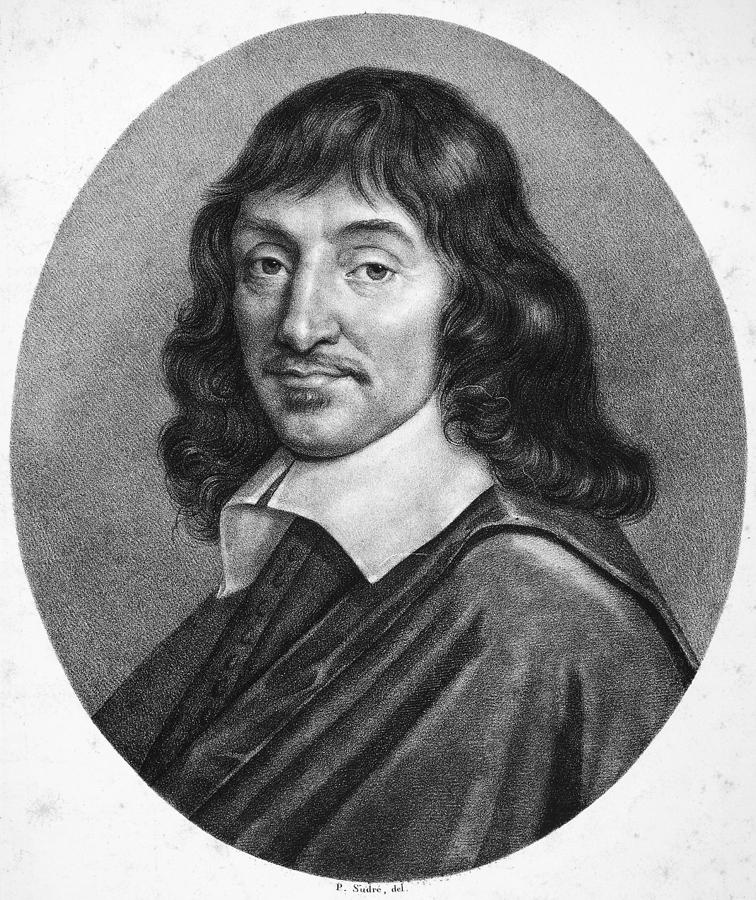
Painting of René Descartes, French philosopher and mathematician

René Descartes has been described as the first truly “modern” mathematician and philosopher. Certainly, his systematic, logical approach to knowledge was revolutionary, dominating philosophy for the next three centuries. Even more importantly, from the perspective of this article at least, it led to a new breakthrough which would greatly impact the future of mathematics and science.

Descartes initially gained a degree in law and spent several years in the military before eventually settling in Holland in 1628 where he composed all his great works. In 1649 he accepted a post as personal tutor to Queen Christina of Sweden. A lifelong late riser and lover of a warm bed – where Descartes claimed to have undertaken his most profound thinking – he succumbed to the harsh Swedish weather. Within months he had contracted pneumonia and died.

A Revelation of Philosophy

Three decades earlier, on the night of 10 November 1619, while campaigning with the army on the Danube, Descartes’ life had changed for forever when his influential journey began. He later claimed to have had several dreams on that date which formulated the principles behind his later work. It left him certain that he should pursue the theory that all knowledge could be gathered in a single, complete science and set about putting in place a system of thought by which this could be achieved. In turn, this left him to speculate on the source and truth of all existing knowledge. He began rejecting much of what was commonly accepted and vowed only to recognise facts which could be intuitively taken to be true beyond any doubt.

The full articulation of these processes came in Descartes’ 1641 work Meditations on First Philosophy. The book is centred around his famous maxim “Cogito, ergo sum” or “I think, therefore I am,” from which he pursued all “certainties” via a method of systematic, detailed mental analysis. This ultimately led him to a very detached, mechanistic interpretation of the natural world, reinforced in his 1644 metaphysical text the Principia Philosophiae or Principles of Philosophy. It is here in which he attempted to explain the universe according to the single system of logical, mechanical laws he had earlier envisaged and, although largely inaccurate, would have an important influence even after Newton’s more convincing explanations later in the century.

Descartes also regarded the human body as subject to the same mechanical laws as all matter, distinguished only by the mind which operated as a distinct, separate entity.

Mathematical Certainties

Descartes2

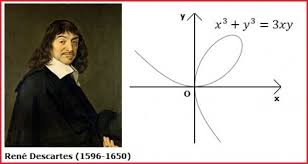
Descartes passionately believed in the logical certainty of mathematics and felt the subject could be applied to give a superior interpretation of the universe. It is through this reasoning that his greatest legacy to mathematics and science came. In his 1637 appendix to the Discourse, entitled La Geométrie, Descartes sought to describe the application of mathematics to the plotting of a single point in space. This led him to the invention of what are now known as Cartesian Coordinates, the ability to plot a position according to x and y (that is, perpendicular) axes (and in a 3D environment by adding in a third “depth” axis). Moreover, this method allowed geometric expressions such as curves to be written for the first time as algebraic equations (using the x, y and other elements from the graph).

The bringing together of geometry and algebra was a significant breakthrough and could, in theory at least, predict the future course of any object in space, given enough initial knowledge of its physical properties and movement. It is from his mathematical interpretation of the cosmos that Descartes would later claim, “Give me matter and motion and I will construct the universe.”

The “Cogito”

Perhaps the most famous of philosophical maxims, Cogito, ergo sum, was the result of a form of a thought experiment by Descartes, in which he resolved to cast doubt on any and all of his beliefs. This was done in order to discover that to which he was logically justified in holding. He argued that although all his experience could be the product of deception by an evil demon, the demon could not deceive him if he did not exist. That he can doubt his existence proves that he in fact exists.

Chronology

1596 – Descartes born in La Haye, France

1616 – Graduated in law from the University of Poitiers

1637 – Discours de la Méthode (Discourse on Method) published. La Geométrie (Geometry) also published as an appendix to Discours de la Méthode

1641 – Meditations on First Philosophy published

Descartes4

Standard