Arts, Books, History

Book Review – Icebound: Shipwrecked At The Edge Of The World

LITERARY REVIEW

Intro: Thought your lockdown was tough? William Barents and his crew were stranded in the Arctic for nine agonising months, with barely any food and at the mercy of ravenous polar bears. Ice-olation as opposed to isolation

THE name of William Barents isn’t that familiar to us these days beyond perhaps a line of type on your atlas, marking a patch of blue north of Norway and Russia – the Barents Sea.

But this enthralling, elemental and (literally) spine-chilling epic of courage and endurance certainly deserves to change all that.

Barents was an energetic businessman and seafarer in the early days of the new-born Dutch republic at the end of the 16th century, a tiny country that would soon become the world’s leading economic and naval power.

It was an age of adventure and exploration, of burgeoning science and medicine, and of great art – Vermeer and Rembrandt would soon be along. It was also an era of limitless promise, as the undiscovered parts of the world opened-up their great and vast treasures.

Barents was the outstanding navigator of his age, and when the traders and merchants of the thriving port city of Amsterdam saw the chance to make a pile of money in the new world to the east, it was to him that they turned.

Barents hatched a plan to sail north to Nova Zembla (“New Land” in Dutch), an unmapped and infinitely desolate finger of rock and ice stretching hundreds of miles into the Arctic seas north of Russia.

If his little fleet could round that finger of rock, then maybe he could confirm the long-held (and very mistaken) view that there was a warm sea at the North Pole.

TWO

REACHING China would then be achieved much faster, and safer, than across the southern oceans and so bring untold wealth to the prosperous burghers of the fledgling Dutch republic.

It was, in today’s language, a no-brainer. And in William Barents, then in his 40s, the investors had just the man. An inveterate explorer, he had sailed all the shores of Western Europe and pioneered map-making and cartography in the region. This voyage was a chance to remake the geography of the world. It was too good to resist.

At the heart of this magnificent story – using two contemporary accounts from crewmen – is Barents’s third voyage, after a couple of early recces.

His ship was 60-odd feet long, about the length of a cricket pitch, and the crew numbered just 17.

In August 1597, they rounded the tip of Nova Zembla hoping to reach open seas, but they found themselves surrounded by icebergs – vast frozen cliffs moving dangerously around the boat, while the winds grew stronger, and the currents drove them into shore.

The icebergs began to tilt the vessel backwards and smashed parts of the stern. As the huge ice floes surged and withdrew like the ebbing of the tide, Barents realised the ship was finished and they would have to winter on dry land until the spring.

What an extraordinary decision it was: these bold, resourceful Dutchmen towed the contents of the ship by sled across the ice on to Nova Zembla, where they used driftwood to build a log cabin.

As the blizzards raged and the temperature dropped to -30C, it wasn’t just the devastating cold the men had to contend with. Food from the ship was limited so they hunted and cooked the marauding foxes. These were fortuitously a limited source of Vitamin C, but still the men fell ill with scurvy, which wrecked their bodies and loosened their teeth.

Besides the weather, their main enemy was the countless polar bears which were far from the loveable creatures to which they are often portrayed.

We might think of them floating, anxious and hungry, on a passing ice floe; for Barents and his men they were vast, cunning and savage enemies always ready to attack.

They were also a source of fuel: that is, if the sailors could kill the bears before they were killed themselves.

For the long winter, it was a matter of survival, with life on the very edge of mortality. These boundless and courageous Dutchmen did, however, find a way to celebrate Twelfth Night in January 1597, with the last of the wine from the boat, fox meat and ship’s biscuit. The blubber from a slaughtered polar bear fuelled their lights as they caroused.

When, after nine months imprisoned in their makeshift hut, the weather changed, the crew set sail in the little boats they had saved from the ship.

They went south in an epic of physical stamina, battling ice and foul weather before being rescued by Dutch traders near the Russian coast. On the way, even Barents’s endurance gave out and he could last no longer. His body may have been left to float away on a piece of ice, before he finally slipped below the freezing oceans that he had tried to conquer.

THREE

BACK in Amsterdam, the crew’s exploits were wildly celebrated, and chronicles of their ordeal were translated all over Europe. The voyage became a symbol of suffering: Shakespeare, writing about another Twelfth Night, has Sir Andrew Aguecheek dismissed thus: “You are now sailed into the north of my lady’s opinion, where you will hang like an icicle on a Dutchman’s beard.”

More than 400 years later, the remains of Barents’s little hut that kept his men alive through the long, frozen days can still be seen on Nova Zembla, as Ms Pitzer, a Washington-based journalist and historian who sailed Barents’s route, describes in a moving epilogue.

In exploration voyages today, every step of the journey becomes part of a daily Twitter blog or an Instagram update. But back then there was nothing; and after a while Barents and his band of crewmen were to all intents and purposes presumed dead.

As Ms Pitzer writes, he set the scale for a new kind of hero, based on knowledge, immense skill and endless endurance.

Barents may have been wrong about the warm Polar Sea, and his dream of an open trading route across the roof of the world wouldn’t arrive for centuries, but his heroism and the endurance of his small band of sailors became a shining example at that point in time. Perhaps it should be even now, especially at a time when many people are bellyaching about not being able to do exactly as they please.

. Appendage
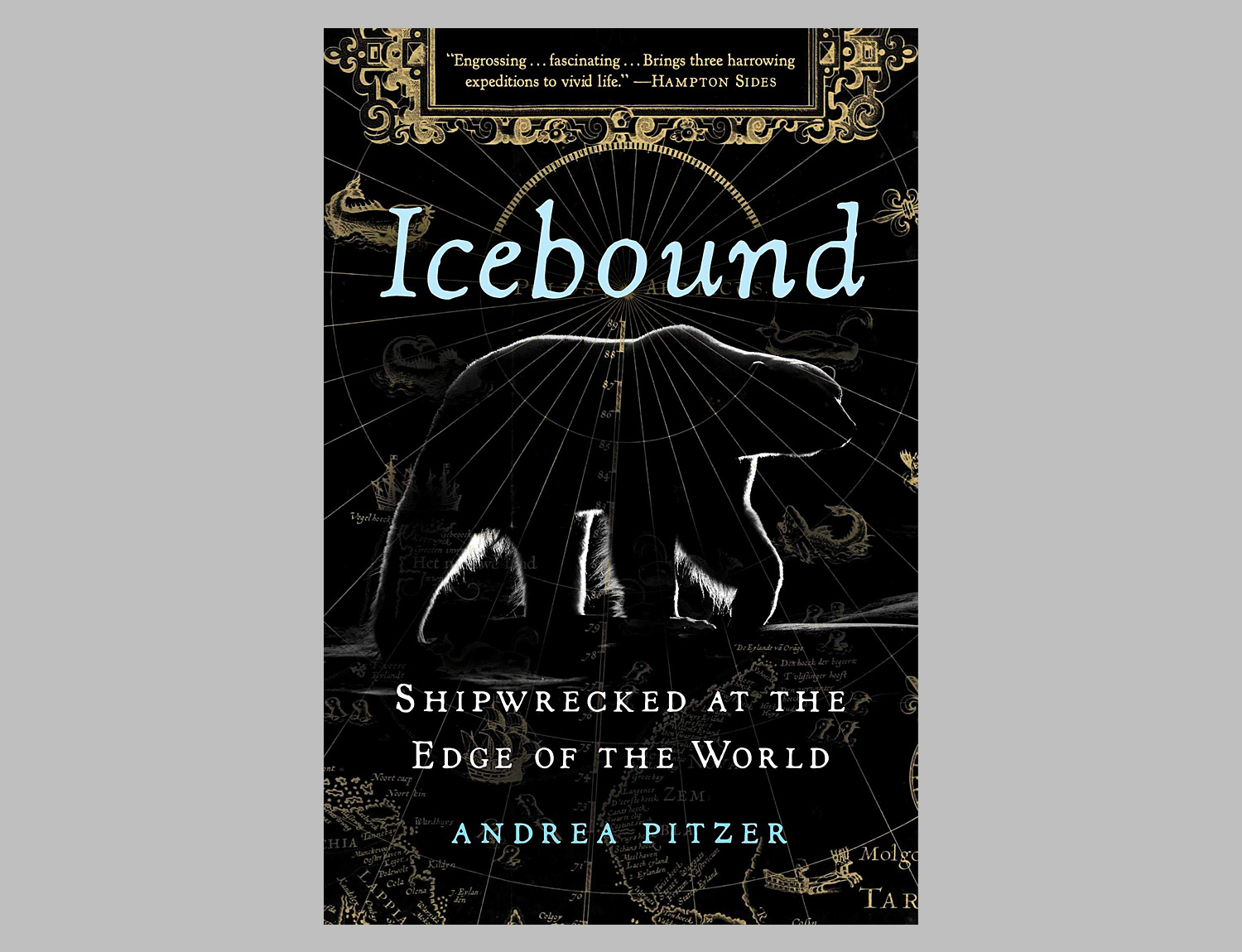
– Long before Bering or Amundsen, long before Franklin or Shackleton, there was William Barents, in many ways the greatest polar explorer of them all. In this engrossing narrative of the Far North, enriched by her own adventurous sojourns in the Arctic, Andrea Pitzer brings Barents’ three harrowing expeditions to vivid life, while giving us fascinating insights into one of history’s most intrepid navigators.

Standard
Afghanistan, Britain, Iraq, Society, United States

20 years after the ‘War on Terror’, abandonment leaves a bitter legacy

ESSAY

THE scene is a familiar one. On the dusty and sandy plains of Afghanistan, a trail of refugees’ head for the beleaguered capital. On the streets of Kabul itself, frequent car bombs are killing members of the government along with innocent bystanders.

In the western city of Herat, people huddle in their homes as enemy rockets pound down. And in the southern province of Helmand – where hundreds of British servicemen lost their lives in recent years – dozens of civilian bodies lie rotting on the country roads.

Such is the lawless state in Afghanistan, where the resurgent Taliban have made extraordinary territorial gains in recent days. Across much of the country, their white flag now flies unchecked.

The situation in Afghanistan now is as serious as it has ever been. It’s a quarter of a century since the Taliban swept to power claiming vast swathes of land, imposing a hideously oppressive Islamist regime that treated women as slaves and banned films, TV, music and dancing.

Perhaps more significantly, in just a few weeks it will be exactly 20 years since the terrorist attacks of September 11, 2001, in New York and Washington.

It was in reaction to these atrocities that Tony Blair and George W. Bush launched Operation Enduring Freedom, promising to dismantle the al-Qaeda training camps, overthrow the Taliban and usher the Afghan people into a brave new world of democracy.

‘Operation Enduring Freedom’. How darkly ironic that mission sounds today.

For the Afghan people, the cause of freedom now hangs by a thread. Ever since the spring, when President Joe Biden announced that the last U.S. personnel would leave at the end of this month, the Taliban have swept across much of the country again.

Only a few weeks ago, U.S. intelligence analysts reportedly warned that without Western intervention, the government in Kabul might have just six months left. And now, with an estimated 85,000 Taliban fighters pressing towards the capital, that bleak prognosis looks decidedly optimistic.

Yet this is merely part of a bigger picture.

Twenty years after the War on Terror began, it’s time that we took a long, unsparing look at what it really achieved.

To revisit reports from 2001 feels like entering a different world. At the Labour Party conference, Tony Blair tells his delegates and party members that he intends to fight for freedom “from the deserts of Northern Africa to the slums of Gaza, to the mountain ranges of Afghanistan.”

“Let us re-order this world around us,” he says grandly, as if there are no limits to his ambitions. A few weeks later, his close friend Bush appears before the U.S. Congress, pledging to dismantle an “Axis of Evil” that threatens the peace of the world. He names three regimes in particular: Iran, Iraq and North Korea.

How arrogant, how criminally naïve this sounds today. The regime in Iran is more hard-line, its position apparently as secure as ever. North Korea, too, remains stubbornly defiant, having built an estimated stockpile of some 40 nuclear weapons.

As for Iraq, that desperately sad story has become only too familiar. However you measure it, the carnage since the Anglo-American invasion of 2003 has cost at least 150,000 lives, and perhaps more than a million according to some estimates.

I say ‘has cost’, rather than ‘cost’, because Iraq is still not at peace. It has never been at peace. Even now, the Baghdad government and its Western sponsors are fighting a low-level Islamist insurgency, with bombings and killings almost every single day. What, then, is the verdict on the so-called War on Terror?

There’s no doubt that some of its progenitors, at least, had noble motives. When Blair says he genuinely wanted to export Western freedoms to Afghanistan and Iraq, it’s not hard to disbelieve.

But the verdict must be utterly damning.

How can this naïve, undefined, unachievable crusade go down in history as anything other than a catastrophic failure?

Take the cost in lives first. Some 456 British servicemen and MoD civilians were killed in Afghanistan, and a further 179 in Iraq. And for what?

As the Taliban surge towards Kabul, many of the bereaved must be asking themselves: was it all in vain?

Then there’s the financial cost. In June this year, the Ministry of Defence admitted that the war in Afghanistan cost British taxpayers a staggering £22 billion, with the campaign in Iraq estimated to have cost a further £10 billion.

The grim irony, of course, is that our politicians blew all that money just before the financial crisis of 2007-08, from which the Western economy has never fully recovered. And given that Britain was about to be plunged into a long period of economic austerity, many will argue that we should have saved it for other things.

One of the greatest costs of all, though, is much harder to measure. It’s the price in moral capital and political credibility, which Britain and the U.S. are still paying to this day.

Remarkably, the invasion of Afghanistan was much closer in time to the end of the Cold War than it is to us today. The U.S. was the world’s unchallenged “hyper-power”, the march of democracy seemed unstoppable, and some American thinkers were even proclaiming the “end of history”.

The events of the last two decades, however, turned that story on its head. For the Iraqi people, the Allied invasion brought a living nightmare. For the people of Afghanistan, meanwhile, it brought a gruelling, apparently interminable campaign, which now seems likely to end as it began – with the Taliban as masters of their native land.

No wonder, then, that America’s image abroad has plummeted over the last 20 years. According to the respected Pew Research Centre, people in almost ever major Western country now have an unfavourable impression of the U.S.

In Japan, its popularity has dropped by 30 per cent since 2001. In France, too, it has fallen by 30 per cent, in Germany by almost 50 per cent. And what of faith in democracy – the one thing for which Blair and Bush claimed they were fighting?

According to an extensive international study by Cambridge University, satisfaction with democracy has never been lower. In almost every country on earth, faith in the Western capitalist model has plummeted in the last 20 years – especially among the young, to whom the wars in Afghanistan and Iraq are simply incomprehensible.

And here’s another brutal irony. At the very point when Britain and the U.S. were wasting huge sums of money and with so many lives expended on their Middle Eastern misadventures, the real threats to Western democracy were hauling themselves off the canvas and preparing to rebuild.

The winners of the War on Terror were not the British and American people, and still less the natives of Afghanistan and Iraq. They were Vladimir Putin and Xi Jinping, the authoritarian strongmen of Russia and China, who watched with undisguised satisfaction as the Western powers discredited their own values.

That is the real legacy of the past 20 years: a shattering reversal of Western progress, for which we will be paying – quite literally – for the rest of our lives.

But perhaps it would be wrong to end by talking about ourselves. After all, the greatest casualties of the last two decades came among the people of Afghanistan and Iraq themselves, who have never known a single day of peace since the War on Terror began.

Nobody can say how their lives would have turned out if we had left well alone. No doubt they would have endured more than their fair share of tragedies anyway. Afghanistan has always been a turbulent and war-torn country.

What can be said, however, is that they have paid a terrible price for our politicians’ hubris and folly. And if we fail to learn that lesson, it would be the greatest betrayal of all.

. Appendage

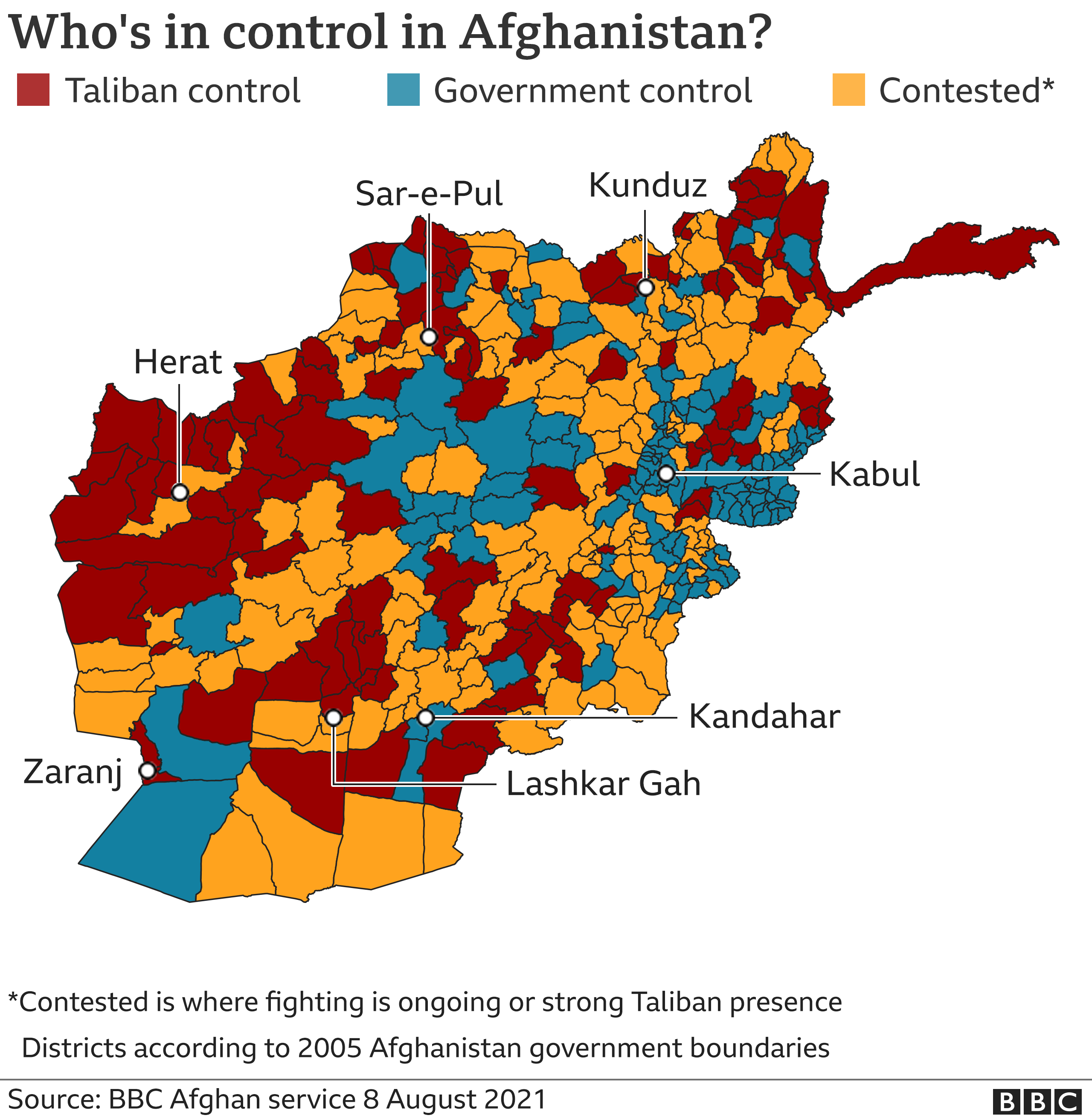
Map highlighting who controls Afghanistan. Map Source: BBC

Standard
Britain, Climate Change, Environment, Government, Politics, Society

The urgency of the IPCC climate report

CLIMATE

AGAINST a backdrop of orange skies, as vast wildfires sweep through Greece and California, the sixth report of the Intergovernmental Panel on Climate Change (IPCC) was published. In western Germany, thousands of homes remain without running water or other vital utilities following the devastating floods of July. In the Siberian city of Yakutsk, deemed the coldest winter city on earth, residents were warned last month to stay indoors as forest fires filled the air with acrid and toxic smoke, following extraordinary heat waves that began in the spring.

The IPCC’s report which took eight years to compile, and which was authored by the world’s leading climate scientists and approved by 195 national governments, confirmed the meaning of the evidence before our eyes: the cumulative impact of human activity since the Industrial Revolution is “unequivocally” causing rapid and potentially catastrophic changes to the climate. The predictions that environmental scientists foresaw with such alarm when the IPCC produced its first report three decades ago has arrived.

Without an accelerated reduction in greenhouse gases during the next decade, the ambition of the 2015 Paris climate agreement to limit global heating to 1.5C will not be met. The price of failure will be a world vulnerable to irreversible and exponential effects of global heating: there will be worse floods more often, more frequent heatwaves, devastating and repeated droughts, and an increase in mortality through disease.

The science is irrefutable. Less certain is the political will to act upon it. The burden of responsibility upon this generation of world leaders as humanity finds itself at a fork in the road is immense. The decisions and actions taken or foregone during the next 10 years will define the parameters of what is possible for future generations. A step-change is required, but across the world green rhetoric continues to translate into policymaking at a pace which is fatally slow. China has committed to the target of net zero emissions by 2050, but it continues to build coal-fired power stations both at home and abroad. Along with the top carbon-emitters such as Russia and India, it refused to endorse the 1.5C goal at an April summit convened by the American president, Joe Biden. As Mr Biden’s special envoy for climate, John Kerry, has said, if countries such as these cannot be persuaded to enact faster reductions over the next decade, the target looks unachievable.

Whilst this treacherous turning point in history must be dealt with, Britain finds itself both uniquely placed and unprepared to host the crucial Cop26 climate summit in Glasgow. The government’s climate minister and Cop26 president, Alok Sharma, has tried to use the IPCC report as a means of concentrating minds. Speaking in the last few days, he said that the world was almost “out of time” in dealing with the effects of global heating. Yet, ahead of arguably the most important summit held on British soil since the second world war, delay and equivocation have become the government’s trademark response to the greatest challenge of our times. The publication of a net zero strategy, which had been due in the spring, has been delayed until the autumn amid fears over the possible cost. Some backbenchers have also begun to lobby for a slower transition, based on the false presumption that poorer families will disproportionately bear the burden of change.

It is imperative that a fair transition to net zero is set. With the right forms of intervention and subsidies, it is eminently achievable. The experience of the Covid-19 pandemic has taught us that the most daunting challenges can be met by political leaders who recognise that exceptional times require exceptional measures. Thus far, though, there is little sign that Boris Johnson’s government is willing to treat the climate crisis in the same way. The stark conclusions of the IPCC study, and Britain’s vital convening role at Cop26, make that position untenable. The science is unequivocal. The verdict is clear. There is no more room for political manoeuvring, delay or prevarication in dealing with an emergency which is this generation’s responsibility to address.

Standard