
Britain, Defence, Government

Colonel facing dismissal after failing drugs test

DRUGS MISUSE

A LIEUTENANT colonel is facing dismissal after becoming the most senior British Army officer known to have failed a drugs test.

The disgraced officer, who is paid round £80,000 a year, was caught at a British military base in Cyprus.

The vast majority of troops who fail Compulsory Drugs Tests (CDTs) are young private soldiers, lance corporals and corporals.

Most commonly these inexperienced junior rank soldiers are caught having been persuaded to take cocaine or a cocktail of banned substances on a night out.

If officers suspect they have taken illegal drugs, tests are arranged as quickly as possible, reducing their chance to flush the narcotics out of their system by drinking water.

For any officer to be caught taking an illicit substance is rare but it is unheard of for a lieutenant colonel who has served in the Armed Forces for decades to fail a drugs test.

The senior officer is now fighting to save his career. The recent test is said to have proved he was taking an illegal steroid with a Class C categorisation under the UK’s Misuse of Drugs Act.

He is apparently claiming that he requires the drug as a painkiller. But, according to defence sources, the drug had not been approved by a registered British medical doctor and he is understood not to have declared he was taking it before the test.

The Ministry of Defence confirmed that administrative action was being taken against the lieutenant colonel, who is contesting the most likely sanction against him – dismissed with disgrace and loss of pension.

Soldiers who fail CDTs may be granted waivers but only if they are particularly young or inexperienced, or there are significant mitigating circumstances and commanders are convinced they made a one-off mis-judgment that will not be repeated.

While in recent years waiver protocols have been massaged to reprieve soldiers who the Army is eager to keep – for example, when they possess certain skills and experience that are in short supply – it is considered highly unlikely that any exception would be made for a soldier holding the rank of lieutenant colonel.

A serving soldier said: ‘Junior ranks have been kicked out for taking Class C substances so officers should be too. Really committed soldiers were booted out for taking performance-enhancing “gym drugs” in recent years. They should have been retained.’

The soldier added: ‘An officer with his rank and experience should definitely have known better. It can’t be one rule for him and another for everyone else.’

The Ministry of Defence said: ‘Administrative action for this case is ongoing and as such it would be inappropriate to comment further at this stage.

‘The Army does not tolerate drugs misuse by service personnel. Those found to have fallen short of the Army’s high standards face being discharged from service.’

Earlier this year, it emerged that ten elite soldiers are facing dismissal from the Army’s new £120million high-tech unit, the Experimentation Battlegroup, after being caught taking cocaine in Cyprus. They failed drugs tests at their base.

Standard
Competition and Markets, Government, Legal, NHS, Society

Price-hiking pharmaceutical firms fined £260m

CMA RULING

PHARMACEUTICAL companies have been fined £260million after overcharging the NHS for life-saving drugs for almost a decade.

UK firms increased the price of hydrocortisone by more than 12,000 per cent and paid would-be rivals to stay out of the market, the Competition and Markets Authority (CMA) found.

The watchdog said Auden Mckenzie and Actavis UK, now known as Accord-UK, charged “excessively high prices” for the pills, used to treat adrenal insufficiency. The cost of a pack rose from 70p in 2008 to £88 by 2016 – a 12,471 per cent increase.

Meanwhile, NHS spending on the drug, which is taken by tens of thousands – including for the life-threatening condition Addison’s disease – rose from £500,000 a year to £80million.

Andrea Coscelli, chief executive of the CMA, said: “These are without doubt some of the most serious abuses we have uncovered in recent years. The actions of these firms cost the NHS – and therefore taxpayers – hundreds of millions of pounds.” The firms exploited the fact that de-branded drugs are not subject to NHS price regulation, enabling them to increase their prices without constraint.

Auden Mckenzie bought the licences for hydrocortisone and launched generic versions in 2008. It paid off rivals AMCo, now Advanz Pharma, and Waymade. Actavis UK took over the business in 2015 and continued paying off AMCo to stay out of the market.

The CMA said: “Auden Mckenzie’s decision to raise prices for de-branded drugs meant that the NHS had no choice but to pay huge sums of taxpayers’ money for life-saving medicines. These were egregious breaches of the law that artificially inflated the costs faced by the NHS, reducing the money available for patient care.

“Our fine serves as a warning to any other drug firm planning to exploit the NHS.”

The regulator said that Accord-UK will be liable for £65.6million of the fine, while former parent company Allergan is solely liable for £109.1million. The pair are also jointly liable for £2million.

Accord-UK, Accord Healthcare and the current parent company Intas are jointly and severally liable for £44.4million, the CMA said. There is a total fine of £42.8million for AMCo, while Waymade will be required to pay £2.5million.

The CMA’s decision also means the NHS will be able to seek damages for the firms’ behaviour. Accord said it is “disappointed” by the ruling and intends to appeal.

Standard
Arts, Books, Education

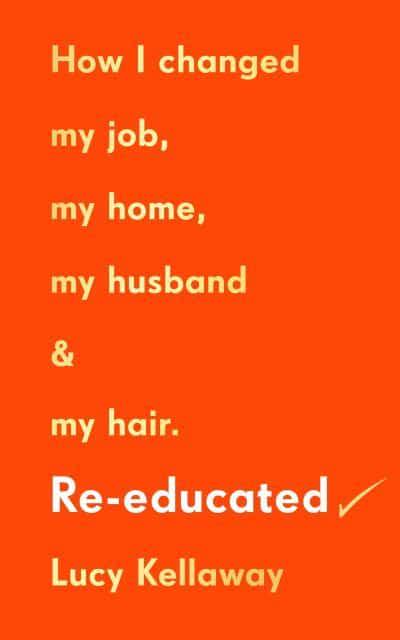
Book Club: ‘Re-Educated’ by Lucy Kellaway

SYNOPSIS

IF YOU’VE come to a certain point in your life where you realise something is missing, then this dazzling, life-affirming book is for you.

Lucy was a celebrated columnist and frequent broadcaster, when at 57 – and to all appearances happy and successful – she decided she wanted something else.

With four grown-up children she gave up her job, her marriage, and a six-figure salary to retrain as a maths teacher in a tough inner-city comprehensive. And, on the way, she co-founded the educational charity Now Teach for those wishing to change career.

Many did. This wonderful, at times funny book, is a celebration of the power of education, as well as the ability of any of us to transform our lives and start out again.

It also proves that if you are well-off, well-educated, well-connected and middle class you can do more or less anything you set your mind to.

– Re-Educated is a beautifully told story of courage, determination and magnificent human resilience. It is bracing, inspirational and life affirming. Published by Ebury, 256pp
Standard