

Category Archives: Arts
(Philosophy) The Stoic: The Enemy of Happiness
PASSIONS & EMOTIONS
“It is quite impossible to unite happiness with a yearning for what we don’t have. Happiness has all that it wants, and resembling the well-fed, there shouldn’t be hunger or thirst.” – Epictetus, Discourses, 3.24.17
I’ll be happy when I graduate, we tell ourselves. I’ll be happy when I get this promotion, when this diet pays off, when I have the money that my parents never had. Conditional happiness is what psychologists call this kind of thinking. Like the horizon, you can walk for miles and miles and never reach it. You won’t even get any closer.
Eagerly anticipating some future event, passionately imagining something you desire, looking forward to some happy scenario – as pleasurable as these activities might seem, they ruin your chance at happiness here and now. Locate that yearning for more, better, someday and see it for what it is: the enemy of your contentment. Choose it or your happiness. As Epictetus says, the two are not compatible.
Book Review: The Mastermind
REVIEW
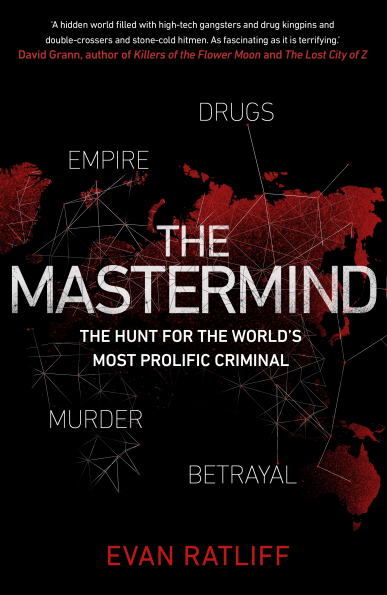
Intro: The extraordinary story of Paul Le Roux – one of the world’s most prolific criminals, and the embodiment of a new generation of internet-enabled kingpins – and the US government’s clandestine efforts to bring him down.
To even the most avid and ardent fan of true crime, the name of Zimbabwean-born Paul Le Roux will probably be unfamiliar. Thanks to this book, however, on one of the most prodigious criminal masterminds of recent times, that is about to change.
Award-winning investigative journalist Evan Ratliff spent four years piecing together the intricate and highly fragmented puzzle of Le Roux’s vast digital empire.
It straddled continents and exploited both the criminal underworld and the man on the street, all of them attracted by the prospect of unimaginable wealth. The result is a book that is compelling, if at times a tad relentless.
Despite Le Roux’s murderous sensibilities and odious personal traits, it’s difficult not to feel a sneaking admiration for this modern Moriarty. He was no mere gangster, but a gifted computer programmer who cut his teeth playing computer games during a troubled childhood.
By his early 20s he had used these skills to set up a network of call centres for the sale of prescription painkillers to online customers. Using FedEx as his unknowing courier, the business was soon drowning in cash.
The eye-watering profits Le Roux made from this scheme only fuelled his greed and ambition.
Within just a few years he’d become the centre of a vast, highly secretive criminal cartel, always one step ahead of the U.S. law enforcement agencies.
Soon Le Roux was laundering hundreds of millions of dollars a year, as he extended his criminal interests into mining, logging and gun-running.
Ratliff’s breathless narrative and fine writing chronicles a life of luxury yachts, houses full of gold bars, weapons-dealing with Iran, and even an attempt by Le Roux to set up his own personal mini-state in the lawless badlands of Somalia (he briefly contemplated a paramilitary coup to overrun the Seychelles).
As one associate observed: “He wanted to make roomfuls of money, to be king of his country, the big man, sitting behind a giant desk in his palace.”
His personal life reflected his grandiose ego. Driven by “greed, impatience and a sense of superiority”, he paid scores of women to become pregnant by him, with the aim of creating a dynasty of loyal offspring he could one day rely upon to carry on his business interests. And everywhere there was violence and murder. Opponents were despatched without qualms or any sense of compunction, while any subordinate suspected of disloyalty was punished without hesitation.
“There is no such thing as done,” he once told an employee. “You work for me until I fire you, or something else.” In one disturbing incident, an unfortunate employee was dumped off a yacht into the sea, with Le Roux’s henchmen firing at him as he struggled in the water.
When Le Roux was finally apprehended and arrested in a hotel in Liberia by U.S. agents, he announced calmly: “I apologise, but I do not want to get on your plane,” before going limp and having to be carried on board like a sack of potatoes.
Faced with the prospect of serving life in an American prison, he immediately agreed to give evidence against his subordinates in an attempt to reduce his own sentence – a sickening prospect for those who’d spent years of their lives bringing him to justice. But as one federal agent put it, “At least he’s in jail, not killing people”.
Ratliff’s book is meticulously researched and written with feverish intensity. And while, at nearly 500 pages, it would have benefited from editing, The Mastermind is undoubtedly a masterwork of investigative journalism.
– The Mastermind by Evan Ratliff is published by Bantam for £20, 480pp

