Arts, Books, History, Russia, Ukraine

Book Review: Overreach

RUSSIA-UKRAINE

Intro: Owen Matthews is a writer with close family ties to Russia, but a disturbing portrait of the Russian president’s propaganda is swallowed whole by his own people. The Russian despot’s lies are working. Overreach is the inside story of Putin’s war against Ukraine

READERS of foreign affairs’ news will know the name of Owen Matthews, a veteran Moscow correspondent, from articles and pieces he has written about Russia and Ukraine.

But his book on the war now raging between those two countries – an act of pure and vicious choice by President Putin – reveals for the first time the depth of his own family’s involvement in the complex background of conflicting national identities.

Or as he puts it: “We all like to believe that we think with our rational minds. But a little bit of us, a deep bit, thinks with our blood.” For Matthews’ mother, Lyudmila Bibikova, was born in Kharkiv, a predominately Russian-speaking city, at the heart of the Ukrainian territories Putin is determined to annex; and her own parents were both born in what is now, legally, Ukrainian land.

Yet as Matthews goes on to explain: “The Bibikov family did not consider themselves Ukrainian. For two centuries the Bibikovs played a significant role in Russia’s imperial role in Ukraine, first as servants of the Tsars and later as loyal lieutenants of Soviet power. Whether I like it or not my family history – my blood – is intimately linked not only to Ukraine and Russia but to the history of the Russian Empire.”

Although Putin is widely regarded as being highly motivated by a desire to reassemble the Soviet Union – and the secession of Ukraine in 1991 marked the end for the USSR – the Russian president sees himself as the heir to Catherine the Great, who brought most of Ukraine under the Kremlin’s rule.

And, as Matthews recounts, his ancestor, Captain Aleksandr Aleksandrovich Bibikov, was “one of the Russian officers who accompanied the empress on her first imperial progress through the newly conquered lands of south and west Ukraine”.

Click on page 2 to continue reading
Standard
Books, Literature, Science

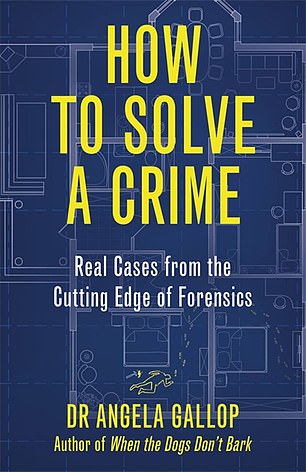
Book Club: How To Solve A Crime

SYNOPSIS

FORENSIC SCIENCE has long exerted a fascination on TV audiences in shows like CSI and Silent Witness, but Angela Gallop’s book reveals that the facts are even more interesting than the fiction.

With a career spanning more than four decades, which includes involvement in high-profile murders like those of Stephen Lawrence and Rachel Nickell, she has much experience on which to draw.

Bite marks, fingerprints and even ear prints can identify the perpetrators of crimes. And who knew there were such people as forensic knot experts? A platoon of pundits with unlikely knowledge assist in bringing criminals to justice.

Dr Gallop provides eye-opening insights into what she modestly calls a ‘strange but important little corner of scientific endeavour’.

– How To Solve A Crime by Dr Angela Gallop is published by Hodder, 272pp

. Recommended reading Gaby Hinsliff: Ignore the purists – listening to a book instead of reading it isn’t skiving or cheating

The Guardian columnist writes: “From audiobooks to podcasts and voice notes, there’s a steady generational shift in the way we understand the world.”

Standard
Arts, Books, Literature, Poetry

Poetic gifts of comfort and joy

POETRY COLLECTIONS

A TIME of “comfort and joy” doesn’t always deliver either, which is why some people (more than one might expect) turn to poetry for consolation and confirmation. You may ask why that is the case. It is because many discover that our longings are universal, and our pain is not unique. A poetry book can be a gift of healing.

Rachel Kelly’s anthology You’ll Never Walk Alone: Poems For Life’s Ups And Downs (published by Yellow Kite), is the perfect guide. A true evangelist for poetry as an aid to emotional wellbeing, the mental health campaigner begins, “Words can be a way to make sense of our feelings”. She divides her choices into the four seasons – representing moods of sadness, hope, joy and reflection. The range is engaging, offering old favourites such as Keats and Derek Walcott, as well as songs and new writers.

Kelly follows each poem with a beautifully concise explanation which will be welcomed by anyone unaccustomed to reading poetry. Fresh delight is also brought to those who encounter familiar poems anew. The whole book is an essential companion.

Padraig O Tuama has a similar idea with his anthology Poetry Unbound: 50 Poems To Open Your World (published by Canongate). His choices are “sometimes exploring common ground, sometimes not”, and are drawn from a very wide range of nationalities and cultures.

Based on the popular podcast of the same name, this collection is more for the experienced poetry lover, although O Tuama’s expansive and deeply personal essays about each poem are very helpful. As he explains, “The poems have become like friends I turn to and return to.”

He doesn’t really structure his choices and most of the poems offered will not be familiar. It is a journey of discovery; an anthology that provides a challenge on every page as well as a wealth of frank autobiographical material from the Irish poet, teacher and theologian.

Either of these books is a gift from all the poets to each individual reader. They reassure us that there is nothing strange in our feelings, and that joy can flicker when you are least expecting it.


Book Review and Synopsis Berlin by Sinclair McKay (published by Viking, 464pp)

IF THERE was a focal point for the history of the twentieth century, then Berlin was it. The city had a central role in all of the country’s defining conflicts: both World Wars and the Cold War. Its citizens endured, in the words of Sinclair McKay, “an unending series of revolutions, a maelstrom of turmoil and insecurity”. And yet it survives.

It didn’t look that way in 1945 as Allied bombs reduced it to rubble and Soviet soldiers raped, slaughtered and pillaged, exacting revenge on the ordinary people of Hitler’s Germany for their years of complicity.

With unburied bodies strewn through its streets and mass suicides by Berliners who saw no future for themselves, its fate seemed to encapsulate “all the nihilist horror of that sad century – mass death without meaning on an unimaginable scale”.

And then, split in two, it became the pressure point for a new confrontation between Moscow and the West. If the world was going to end with a bang, the first sparks might well be here.

McKay, a stylish and elegant writer, tells all this with great panache and understanding, his research extensive, and his observations profound.

Standard