
Arts, Books, Society

Book Review – Manual For Survival: A Chernobyl Guide To The Future

LITERARY REVIEW

Intro: Thirty-three years on, the radiation from Chernobyl continues to affect us. Four-times deadlier than Hiroshima, it may even be responsible for the rise in cancers and auto-immune diseases. Chernobyl could still be killing us.

AT A BORDER CHECKPOINT between the U.S. and Canada in 2017, American homeland security agents stopped an articulated lorry for a vehicle routine check.

Running a Geiger counter over its trailer, they were alarmed to discover a “radiating mass” was pulsing inside. This could be the border patrol’s worst nightmare: a “dirty” nuclear terrorist bomb.

But when they inspected the contents, all they found was fruit. The emitting radiation stemmed from a crateload of blueberries, picked in Ukraine.

Since official U.S. government thresholds for permissible radiation in fruit are surprisingly high, the cargo was deemed safe and the lorry was waved on its way. Yet, some of the blueberries were in fact way above official levels and therefore not safe at all.

To understand why is to discover that 70 years of atomic tests and nuclear accidents have flooded markets around the world with toxic food.

Kate Brown’s painstaking investigation into the Chernobyl disaster and its aftermath might be the most plausible conspiracy theory you’ll ever read.

Manual For Survival argues that presidents, military chiefs, government mandarins and official scientists have all failed to face a basic truth for decades: nuclear radiation is really poisonous.


THAT ought to be obvious to anyone, but, rather than deal with the facts, those in charge have buried their heads in the sand and refused to take any responsibility.

The pretence began with Hiroshima, and the first of two atomic bombs dropped on Japan at the end of World War II.

Concerned that nuclear radiation would be condemned as a type of chemical warfare, and thus morally repugnant, American General Leslie Groves, head of the Manhattan Project, which developed the atomic bomb, told journalists that it was simply a very powerful conventional weapon which inflicted serious burns over a wide area.

Even U.S. army medics were fed this lie. They were baffled that American troops doing reconstruction work in Japan’s devastated cities continued to suffer unexplained burns – symptoms, we now know, of radiation poisoning.

The explosion at the Chernobyl nuclear power plant near the city of Pripyat, in Ukraine, on April 26, 1986, was the worst atomic disaster in human history, equivalent to four Hiroshimas.

The book describes it vividly – “the thick concrete walls wobbled” . . . “the blast tossed up a concrete lid the size of a cruise ship” . . . “plant worker Sasha Yuvchenko watched a blue stream of ionising radiation careening towards the heavens”.

According to official Soviet figures at the time, the death toll was 54 – a gross underestimate – made up of mostly firemen and soldiers who sacrificed their lives to get the blaze under control.

The author reveals that Soviet doctors advised workers on nuclear clean-up duty at Chernobyl to drink vodka throughout the day. It stimulated the liver to cleanse the body of radiation, they said.

Brown’s research, conducted over a period of four years and drawing on 27 archives in Europe, the U.S. and the former Soviet Union, estimates the actual death toll at up to 150,000 in Ukraine alone over the past 30 years.

Even today, the Russian government does not acknowledge this, and there have been no official investigations.

Many were children. Thyroid cancer in young people was rife after Chernobyl, a medical fact that even the Politburo in Moscow could not fully explain away (though the official version was that fewer than 100 children were affected and they were easily cured).

Very high levels of radioactive iodine were among the toxins released in the blast. The human body craves iodine, which is absorbed through the thyroid gland; children process it especially quickly if their levels are low.

So, one simple remedy, effective if not failsafe, would have been for the government to issue safe iodine supplements to everyone at risk. This wasn’t done, partly because almost no one in the Soviet Union, from the Kremlin down to the local hospitals, had any idea how to deal with radiation poisoning.

After all, its effects had always been downplayed, ever since Hiroshima.

And they still are downplayed. When the Fukushima Daiichi nuclear power plant was hit by a tsunami in 2011, causing a meltdown in three reactors, the Japanese response was as inadequate as the Soviet government’s 25 years earlier. Safe iodine, for example, was not distributed.

The leaves that fell in Ukraine’s capital Kiev in autumn 1986 ought to have been treated as hazardous nuclear waste and buried.

The soil had absorbed so much radiation that a government pamphlet suggested, in a low-key way, that mushrooms should not be eaten.

The meat from cattle, sheep and pigs fed on local vegetable produce was also dangerously radioactive. But rather than waste so much food, the Soviet ministry decided to send it off across the USSR, so that every citizen shared in the tribulations of Chernobyl by consuming a small, “safe” amount of irradiated meat. That’s Communism in action.

It might seem so callous as to be unthinkable. But Brown warns that the same thing still happens with much food that reaches the West. After Chernobyl, radiation spread on the wind. It was quickly detected as far away as Sweden. And it lingered.

Today, much agricultural land in Ukraine and beyond is still affected. And so is the produce. But why waste it? If a batch of fruit is “hot”, it can be mixed with other fruit until the overall radiation reading is within so-called safe limits. That’s how a consignment of blueberries could be mistaken for a dirty bomb.

Brown speculates that radiation poisoning, not only from Chernobyl but from numerous other nuclear leaks and many hundreds of atomic explosions, may be responsible for the rising incidence of cancers and autoimmune diseases.

“Few people on earth have escaped those exposures,” she concludes.

Whilst this book doesn’t have all the answers, it does, without doubt, ask the right questions.

The biggest of all, is: why does no one want to face the lessons of Chernobyl?

– Manual For Survival: A Chernobyl Guide To The Future by Kate Brown is published by Allen Lane for £20, 432pp
Standard
Arts, Books

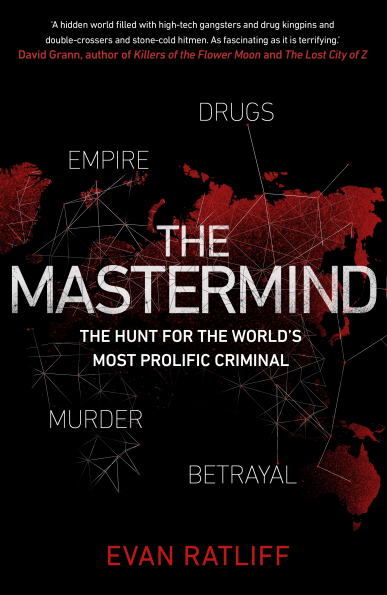
Book Review: The Mastermind

REVIEW

Intro: The extraordinary story of Paul Le Roux – one of the world’s most prolific criminals, and the embodiment of a new generation of internet-enabled kingpins – and the US government’s clandestine efforts to bring him down.

To even the most avid and ardent fan of true crime, the name of Zimbabwean-born Paul Le Roux will probably be unfamiliar. Thanks to this book, however, on one of the most prodigious criminal masterminds of recent times, that is about to change.

Award-winning investigative journalist Evan Ratliff spent four years piecing together the intricate and highly fragmented puzzle of Le Roux’s vast digital empire.

It straddled continents and exploited both the criminal underworld and the man on the street, all of them attracted by the prospect of unimaginable wealth. The result is a book that is compelling, if at times a tad relentless.

Despite Le Roux’s murderous sensibilities and odious personal traits, it’s difficult not to feel a sneaking admiration for this modern Moriarty. He was no mere gangster, but a gifted computer programmer who cut his teeth playing computer games during a troubled childhood.

By his early 20s he had used these skills to set up a network of call centres for the sale of prescription painkillers to online customers. Using FedEx as his unknowing courier, the business was soon drowning in cash.

The eye-watering profits Le Roux made from this scheme only fuelled his greed and ambition.

Within just a few years he’d become the centre of a vast, highly secretive criminal cartel, always one step ahead of the U.S. law enforcement agencies.

Soon Le Roux was laundering hundreds of millions of dollars a year, as he extended his criminal interests into mining, logging and gun-running.

Ratliff’s breathless narrative and fine writing chronicles a life of luxury yachts, houses full of gold bars, weapons-dealing with Iran, and even an attempt by Le Roux to set up his own personal mini-state in the lawless badlands of Somalia (he briefly contemplated a paramilitary coup to overrun the Seychelles).

As one associate observed: “He wanted to make roomfuls of money, to be king of his country, the big man, sitting behind a giant desk in his palace.”

His personal life reflected his grandiose ego. Driven by “greed, impatience and a sense of superiority”, he paid scores of women to become pregnant by him, with the aim of creating a dynasty of loyal offspring he could one day rely upon to carry on his business interests. And everywhere there was violence and murder. Opponents were despatched without qualms or any sense of compunction, while any subordinate suspected of disloyalty was punished without hesitation.

“There is no such thing as done,” he once told an employee. “You work for me until I fire you, or something else.” In one disturbing incident, an unfortunate employee was dumped off a yacht into the sea, with Le Roux’s henchmen firing at him as he struggled in the water.

When Le Roux was finally apprehended and arrested in a hotel in Liberia by U.S. agents, he announced calmly: “I apologise, but I do not want to get on your plane,” before going limp and having to be carried on board like a sack of potatoes.

Faced with the prospect of serving life in an American prison, he immediately agreed to give evidence against his subordinates in an attempt to reduce his own sentence – a sickening prospect for those who’d spent years of their lives bringing him to justice. But as one federal agent put it, “At least he’s in jail, not killing people”.

Ratliff’s book is meticulously researched and written with feverish intensity. And while, at nearly 500 pages, it would have benefited from editing, The Mastermind is undoubtedly a masterwork of investigative journalism.

– The Mastermind by Evan Ratliff is published by Bantam for £20, 480pp

Standard
Arts, Books, Britain, History

Book Review – ‘1919: A Land Fit For Heroes’

REVIEW

During July 1919, the Mayor of Luton planned a lavish banquet to celebrate peace after the end of the First World War the previous year. His invitations extended to friends and cronies, but deliberately excluded the ex-servicemen who had fought in the war.

A riot ensued. Luton Town Hall was torched. With bitter irony, onlookers sang Ivor Novello’s wartime song “Keep The Home Fires Burning” as the flames consumed the building.

In his wide-ranging survey of the 12 months after the Armistice, Mike Hutton reveals the turbulence that spread throughout Britain during 1919. It was not the “land fit for heroes” returning soldiers had been promised. Many were unemployed, unemployable or were forced to beg on the streets.

Resentments festered. Civil unrest rocked cities throughout Britain. In Glasgow, strikers were faced by troops armed with machine guns, backed up by tanks.

In Liverpool, even the police came out on strike. For four days, there was what one local newspaper called “an orgy of looting and rioting”. Soldiers opened fire in an attempt to restore order. Hundreds were arrested.

Social disorder and anarchy were not the only problems the country faced. The Spanish flu was at its height. As Hutton notes: “Someone who was feeling perfectly healthy at breakfast could be dead by teatime”. More than 200,000 people perished. Coffins made for the war dead were used for victims of the influenza pandemic.

At the same time, fear of crime was high. In the aftermath of the war, many unlicensed firearms were in circulation. A spate of robberies was carried out by men “grown callous after four years’ experience of killing”. More than a dozen murderers were sent to the scaffold. Several were former soldiers who had returned home to discover their wives had found other lovers.

Hutton’s book is not all despair, though. With the war over, people were out to enjoy themselves. Sport resumed: the cricket County Championship was reinstated and won by Yorkshire.

Professional football began a new season in August. The American golfer Walter Hagen, who had just won the U.S. Open, arrived in London to stay at the Savoy. He celebrated his visit by going up to the roof of the hotel and driving a ball across the Thames.

Hagen was not the only famous visitor from the United States. Londoners were given a taste of a new music when the Original Dixieland Jazz Band opened their UK tour at the London Hippodrome in April 1919. The band members were all white, but, the jazz craze soon spread and other, black musicians began to cross the Atlantic.

One newspaper critic was appalled by “the jungle elements of the dance” and wrote of the primitive rituals and orgies that were detected. The younger generation loved the music.

With Europe no longer a war zone, continental travel was possible for those who could afford it, although the tours of the Flanders battlefields advertised for 16 guineas may not have been to everyone’s taste. The aerodrome on Hounslow Heath inaugurated the first international air service with regular flights to Le Bourget, near Paris.

Hutton describes Britain in 1919 as, “like a boxer who, despite being declared the winner, has been punched to the point of exhaustion”.

This is an entertaining book that delivers a vivid portrait of a country poised between war and peace.

1919: A Land Fit For Heroes by Mike Hutton is published by Amberley for £20, 320pp

Standard