Arts, Books, Economic, History, Society

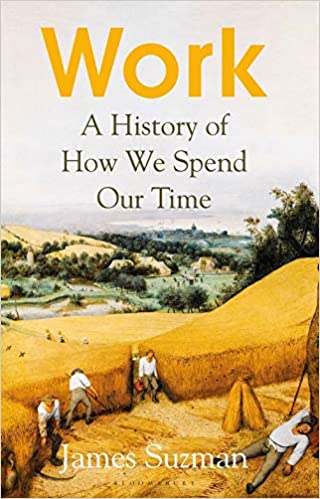
Book Review – ‘Work: A History of How We Spend Our Time’

REVIEW

IN 1776, Economist Adam Smith predicted that one day machines would “abridge labour”. We were meant to be able “to lie on the grass under trees on a summer’s day . . . watching the clouds float by”.

John Maynard Keynes, in the 1930s, thought that by now robots would be doing the donkey work, and food, water, warmth and safety would be “universal… and experienced equally by everyone”.

To which the only reasonable rejoinder or retort is: pig’s bottom. In 2020, owing to what James Suzman, a Cambridge professor, calls “cyber-physical systems animated by machine-learning algorithms”, i.e., computers, people are spending much longer staring at screens. In Britain in 2018, there were 600,000 work-related mental health issues reported to doctors.

In Professor Suzman’s reading of human history, nothing ever runs smoothly for long. For primitive peoples, life was “a constant battle”. When agriculture was developed, there were always droughts, floods and frost. What characterised us, however, was persistence. With the herding of animals came settlements and barns for grain, thence the need for carpenters, blacksmiths, merchants, stonemasons – eventually doctors, teachers and lawyers. Literacy enabled the keeping of accounts and the creation of banks.

The fatal paradox, though, is that gains in productivity are cancelled by population growth – more mouths to feed. Britain’s population in 1750 was 5.7 million, in 1851 21.1 million. Today it is nearly 70 million.

The Industrial Revolution behind the boom had little to recommend it: in the mines, children toiled like slaves. Women worked 14-hour shifts in mills. The working class were nothing but “a pin in a big machine”. Creativity was not wanted, only “target-driven, repetitive work”.

It has not been the proletariat, however, who benefit. Suzman quotes the alarming statistic that between 1978 and 2016, while the average pay increases were 11.7 per cent, the remuneration of CEOs went up by a staggering 937 per cent.

Clearly, we are victims of our ingenuity: we clear rainforests and generate greenhouse gases in the name of cheap food. Each year, 66 billion chickens are reared – triple the number of all wild birds.

Greed is the key to modern problems, what Suzman calls “the malady of infinite aspiration” – more microwave ovens, cars, phones. Nor is there a proportional correspondence between human labour and reward. What really counts if you want good prospects, are family connections, inheritance and “getting lucky”.

When order is under threat from human folly, Suzman says famines, wars and pandemics are the usual “imminent and severe correction” – so coronavirus should not be a surprise.

– ‘Work: A History of How We Spend Our time’ is published by Bloomsbury, 447pp

Standard
Arts, Books, History

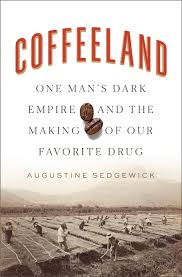
Book Review – Coffeeland: A History

LITERARY REVIEW

Coffeeland

IF you’ve ever been to your nearest Costa and scanned the blizzard of drinks on offer, I wonder if your immediate thoughts were “I just want a cup of coffee”? If so, then maybe this book – in excess of 350 pages of dense political history of the erogenous little coffee bean – isn’t really for you.

But on second thoughts, perhaps we should know the extraordinary story behind our morning cortado. Where would we be without coffee, the wonder drug of the world?

Honore de Balzac, the great French writer, was a manic consumer. He worked relentlessly through the night, kept going by a continual stream of strong black coffee, often up to 50 cups. He died at just 51, not unsurprisingly of caffeine poisoning.

The best sitcoms on TV would certainly be lost without it. Curb Your Enthusiasm’s Larry David opened his own coffee shop, called Latte Larry’s, naturally; the cappuccino-sluicing twenty somethings of Friends lived on the stuff on the sofa at Central Perk (Phoebe drank the most which might explain her general excitability). As for Frasier and all the Cranes, they were regulars at the Café Nervosa, ordering pretentious macchiatos.

The theme of Augustine Sedgewick’s hugely detailed book is, however, considerably darker than all of that. A Leftist New York historian, Sedgewick wants to portray the coffee industry as a metaphor for worldwide exploitation. Coffee, he writes, “is one of the most important commodities in the history of global inequality”.

But is that true?


THE story of this book is largely focused on one plantation owner in El Salvador and his family since 1889, and it certainly has its fair share of exploitation and brutality. But that doesn’t mean that globalisation is the universal evil Sedgewick implies. We enjoy our morning coffee; the Brazilian coffee farmers grow it because they want to build a decent life for their families.

Billions of cups of coffee are drunk around the world each year, bringing in vast amounts of money in exports. The word itself is one of the most widely used on the planet. In the American Civil War, soldiers’ diaries referred to coffee far more frequently than bullets or rifles.

Coffee was native to Ethiopia, then took root in Yemen and was exported to the world from the port of Mocha. The first recorded coffee shop was in Constantinople in 1554.

In the middle of the next century it took off in Europe, where its medicinal qualities – giving the consumer a massive pick-up – were quickly appreciated. By the 1660s, hundreds of coffee houses were emerging and growing all over London, places were men could escape their wives and put the world to rights – and wrongs.

But it was more than two centuries later that coffee started to spread across the world – and it was James Hill from Manchester who was behind it. Hill was born in 1871 to a textile family and brought up in the teeming heart of the Industrial Revolution.

By the time he was 18 he was on a boat to Central America and made his way to the tiny country of El Salvador, arriving in 1889.

The coffee industry was beginning to take root and Hill, in marrying a local girl, inherited some plantations. El Salvador was a stable farming community, with its rich soil perfect for growing guavas, papayas, avocados, mangoes, tomatoes and much else.

But if Hill was going to get his coffee plantations to operate at full steam, he had to make sure that the local Indians needed work. Which meant making sure they couldn’t eat for free. Which in turn meant taking over common land and removing all the fecund trees and bushes.

Hill’s workers were required to turn up at 5.30am for a 6am start. He knew that, by being hungry, they would work in order to eat, so a breakfast of tortillas and beans with coffee was delivered as part of the pay.

Brutal capitalism, yes, and very effective in the short term. Within decades Hill had built up a vast coffee empire that had made him a colossal fortune.

The hard labour was backbreaking and the workers’ conditions were dreadful. In 1932, the inevitable explosion came: a few thousand Indian farmers revolted, equipped with just machetes, and were swiftly put down by the National Guard armed with machine guns. The death toll may have been as high as 50,000. A coffee house had become a charnel house.


THE decades after were a period of growing instability in Central America. Tens of thousands died in the Salvadoran civil war of the 1970s and 1980s and, in 1979, Hill’s grandson Jaime Hill was kidnapped by guerrillas.

He was freed after a $4 million ransom was paid. Now there is relative peace and Salvadoran coffee is a high-end product.

It’s a rich and complex story and the book is full of historical glances of the times, including the movement that legalised your morning coffee break, which has been enshrined in U.S. law since the mid-1950s after a difficult legal tussle.

Phil Greinetz owned a weaving business in Denver, Colorado, employing young men to work his looms in what was a very draining job.

When the men went off the war, Greinetz hired some middle-aged women who were quickly exhausted by the “primitive” looms. Eventually, broken by fatigue, they suggested a couple of 15-minute breaks twice a day. With coffee.

Greinetz agreed and quickly noticed a rapid improvement in his workers, but he deducted 30 minutes a day from their pay.

In the ensuing legal actions Greinetz argued it was free time and he shouldn’t pay for it. Eventually, after protracted legal arguments the Court of Appeal said that was wrong: coffee breaks counted as work time and should be regarded as such. Which became good news for all employees everywhere in any place of employment.

Sedgewick delivers a staggeringly well-researched piece of work. You might well suspect that it started life as a dissertation: the Bibliography alone is nearly 20 closely printed pages.

Some illustrations would have helped: the story is peopled with vivid characters and scenes, but it would have been good to see them at various stages throughout the book in what is a serious story.

‘Coffeeland: A History’ by Augustine Sedgewick is published by Allen Lane, 448pp

Standard
Arts, Britain, Broadcasting, History, Society, United States

The Beginning of Radio Broadcasting

SHORT ESSAY

THE FIRST EXPERIMENTAL radio broadcasts were made in Britain in 1921. They led to the formation a few months later of the British Broadcasting Company (later Corporation). This was at the instigation of the General Post Office (GPO), who wanted to see the formation of a single consortium of wireless equipment manufacturers and broadcasters, specifically to avoid the major confusion that had arisen in America, where there were 500 rival stations. The new Company worked under John Reith, an engineer from Aberdeen who was the company’s general manager for its first 16 years. Under Reith’s leadership, the BBC became a major national institution. The broadcasts were entirely live, and Reith insisted on a high level of formality, in spoken English, behaviour and dress, traditions which have unfortunately been thrown to the four winds in recent years.

The London broadcasting station, known as 2LO, went on the air on 14 November 1922 as the British Broadcasting Company. A news bulletin was read by Arthur Burrows of the Marconi Company. The initial broadcasts were fairly short, but soon lengthened to four hours a day of news, talks and concerts.

The BBC was supported financially by licence fees paid for by the users. They had to pay ten shillings a year (50 pence) for the privilege of operating a receiver. The same system was used when television was introduced, also by the BBC.

At the same time in America, the first commercial radio was being broadcast. The New York Station, WEAF, broadcast the first radio commercials. This different approach to broadcasting was to become the set pattern in America – private control of the airwaves and programmes dominated by sponsors. The radio pioneer Lee Dee Forest asked, “What have you done with my child? You have sent him out on the street in rags of ragtime to collect money from all and sundry. You have made of him a laughing stock of intelligence, surely a stench in the nostrils of the gods of the ionosphere.”

In 1923, the BBC began publishing its magazine, the Radio Times, so that listeners would know in advance what programmes were to be broadcast; this too became a long-continuing practice.

By 1926, radio ownership in the United States reached 3 million; most of these radios required listeners to wear earphones. In 1926, NBC (the National Broadcasting Company) was founded by David Sarnoff; this ambitious project had nine stations.

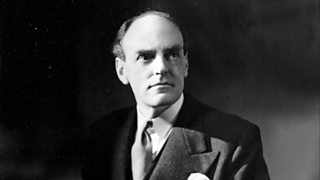
John Reith

Sir John Reith, Lord Reith of Stonehaven (1889-1971) was General Manager/ Managing Director, British Broadcasting Company 1922-1927 and then the first Director-General of the newly-incorporated British Broadcasting Corporation.

The first experiments with television followed hard on the heels of radio. It was in 1926 that John Logie Baird gave his first public demonstration of television, but the system he used was based on the rotating disc invented by van Nipkov in 1886 and had serious limitations. Television had its first American demonstration in 1927 in the auditorium of New York’s Bell Telephone Laboratories. Walter Gifford showed a large audience commerce secretary Herbert Hoover while at work in his Washington office while Hoover’s voice was transmitted over telephone wires. The development of television was seriously inhibited by the fact that it needed a frequency band of 4 million cycles compared with only 400 for a radio. This was because of the need to transmit 250,000 elements required to build a clear picture on the screen.

The first regularly scheduled TV programmes started on 11 May 1928. General Electric’s station in New York broadcast the first programmes.

Another contributing development was the invention of the first tape recorder. The Blattnerphone designed by the German film producer Louis Blattner used magnetised steel tape. Blattner himself used his invention to supply synchronised soundtracks to the films he was making at Elstree Studios. The BBC saw straight away that the tape recorder was going to be invaluable to them, not least for making recorded programmes, and acquired the first commercially produced Blattnerphone in 1931.

Both radio and television continued to develop. In America, 75,000 radio sets were sold in 1921; by the end of the decade sales had increased to over 13 million. It had become a major communicator. It had also become big business. US advertisers were spending an incredible 60 million dollars on radio commercials alone.

Standard