
Arts, Literature, Philosophy

(Philosophy) The Stoic: Don’t Make Things Harder Than They Need To Be

PASSIONS & EMOTIONS

“If someone asks you how to write your name, would you bark out each letter? And if they get angry, would you then return the anger? Wouldn’t you rather gently spell out each letter for them? So then, remember in life that your duties are the sum of individual acts. Pay attention to each of these as you do your duty . . . just methodically complete your task.” – Marcus Aurelius, Meditations, 6.26

Here’s a common scenario. You’re working with a frustrating co-worker or a difficult boss. They ask you to do something and, because you dislike the messenger, you immediately object. There’s this problem or that one, or their request is obnoxious and rude. So you tell them, “No, I’m not going to do it.” Then they retaliate by not doing something that you had previously asked of them. And so the conflict escalates.

Meanwhile, if you could step back and see it objectively, you’d probably see that not everything they’re asking for is unreasonable. In fact, some of it is pretty easy to do or is, at least, agreeable. And if you did it, it might make the rest of the tasks a bit more tolerable too. Pretty soon, you’ve done the entire thing.

Life (and our job) is difficult enough. Let’s not make it harder by getting emotional about insignificant matters or digging in for battles we don’t actually care about. Let’s not let emotion get in the way of kathêkon, the simple, appropriate actions on the path to virtue.

Standard
Arts, Philosophy, Society

(Philosophy) ‘Republic’ and ‘Politics’

CONSTITUTION

BOTH Plato and Aristotle extended their theories into political philosophy, examining how best society could be organised. Each took a different approach and methodology in their examination and, unsurprisingly, reached a different conclusion. Plato’s Republic described his vision of a somewhat authoritarian city-state governed by specially educated philosopher-kings, whose knowledge of the Forms of virtue made them uniquely qualified to rule.

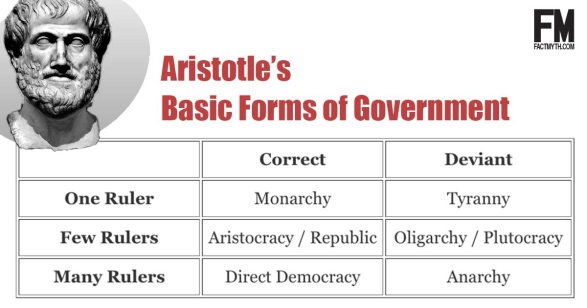
Aristotle applied a more systematic approach in his Politics. He analysed the possible forms of government, categorising them by criteria of “Who rules?” (a single autocratic person, a select few or the people?) and “On whose behalf?” (themselves, or the state?) He identified three forms of true constitution: monarchy, aristocracy and polity (or constitutional government). These all ruled for the common good, but when perverted, became tyranny, oligarchy and democracy. Given a choice, Aristotle believed that polity was the optimal form of government, with democracy the least harmful of the perverted forms.

Appendage:Forms Of Government

Standard
Arts, Philosophy

(Philosophy) The Stoic: ‘Accurate Self-Assessment’

AWARENESS

“Above all, it is necessary for a person to have a true self-estimate, for we commonly think that we can do more than we really can.” – Seneca, On Tranquillity of Mind, 5.2

Most people resist the idea of a true self-estimate, probably because they fear it might mean downgrading some of their beliefs about who they are and what they’re capable of. As Goethe’s maxim goes, it is a great failing “to see yourself as more than you are.” How could you really be considered self-aware if you refuse to consider your weaknesses?

Don’t fear self-assessment because you’re worried you might have to admit some things about yourself. The second half of Goethe’s maxim is important too. He states that it is equally damaging to “value yourself at less than your true worth.” Is it not equally common to be surprised at how well we’re able to handle a previously feared scenario? The way that we’re able to put aside grief, say, and care for others – though we always thought we’d be wrecked if any attempt was made. The way we’re able to rise to the occasion in a stressful situation or a life-changing opportunity.

We underestimate our capabilities just as much and just as dangerously as we overestimate other abilities. Cultivate the ability to judge yourself accurately and honestly. Look inward to discern what you’re capable of and what it will take to unlock that potential.

Standard