Britain, Economic, Energy, Europe, Government, Politics, Russia, Society

Energy crisis: We’re at the mercy of Putin. It’s all our fault

ENERGY

THE Berlin Wall may have been brought down more than three decades ago, but the grim politics of the Cold War are in danger of returning to Europe.

With characteristic ruthlessness, Russian president Vladimir Putin is exploiting the energy crisis to bully his neighbours, strengthen his autocracy and intimidate the West.

His chosen weapon in this renewed campaign of hostility is Russia’s control of gas supplies: the vast gas-fields and the export pipelines that bring them directly to market.

This infrastructure, often legacy assets from the Soviet empire, give the Russian president enormous political and economic leverage in his quest for ever-greater domination of the region.

Russia’s capacity to manipulate the British and European energy markets for geopolitical ends has been dramatically illustrated during the turmoil of recent days and weeks. As the price of gas contracts soared by 40 per cent in just 24 hours last week, Gazprom, Russia’s state-backed monopoly exporter of pipeline gas, was accused of flexing its muscles by both restricting supplies to Europe and keeping its European underground storage facilities at deliberately low levels.

The sense of Russian control was further reinforced when it took just a few words from Putin himself to bring an immediate fall in gas prices.

Revelling in his position as the ultimate ringmaster and wire-puller, he said with a hint of blackmail that supplies could be increased. “This speculative craze doesn’t do us any good,” he said, adding that Europe’s leaders should “settle with Gazprom and talk it over”.

RELIANCE

PUTIN might be behaving like a mafia boss in charge of a protection racket, but British and European governments have for years disastrously played into his hands with misguided, short-term policy decisions.

To be fair, the EU has taken some steps to break the Russian stranglehold, by building new international pipelines, breaking the Kremlin’s east-west transit monopoly, and by introducing drastic reforms of the energy market that have unravelled the corrupt, exploitative business model.

Europe has also pioneered the import of liquified natural gas (LNG) from destinations such as Qatar.

Yet Europe has been increasing its reliance on supplies from outside the continent by running down its own domestic energy industries. So far, renewables have not made up the gap, especially in recent months when the wind has not been blowing.

In Britain, the problem is particularly acute because we are one of Europe’s largest gas users, while we have massively reduced gas production from the rich fields of the North Sea and Irish Sea over the past 20 years.

Nor have we made use of the vast reserves of shale gas that exist across the country, even though such resources have recently made America “energy independent” once more.

Instead, Britain has exacerbated its energy vulnerability by depending on just-in-time imports from pipelines and seaborne cargoes.

In a particular act of folly, the Tory Government in 2017 decided to close the huge storage facility on the Yorkshire coast connected to the Rough gas field, believing both that supplies of LNG would always be plentiful and also because the energy companies believed that limiting storage would boost prices and thereby profits.

Some four years later, the step has backfired catastrophically, leaving us at the mercy of Putin.

Indeed, our entire energy strategy has been marked by stinginess, wishful thinking and downright complacency.

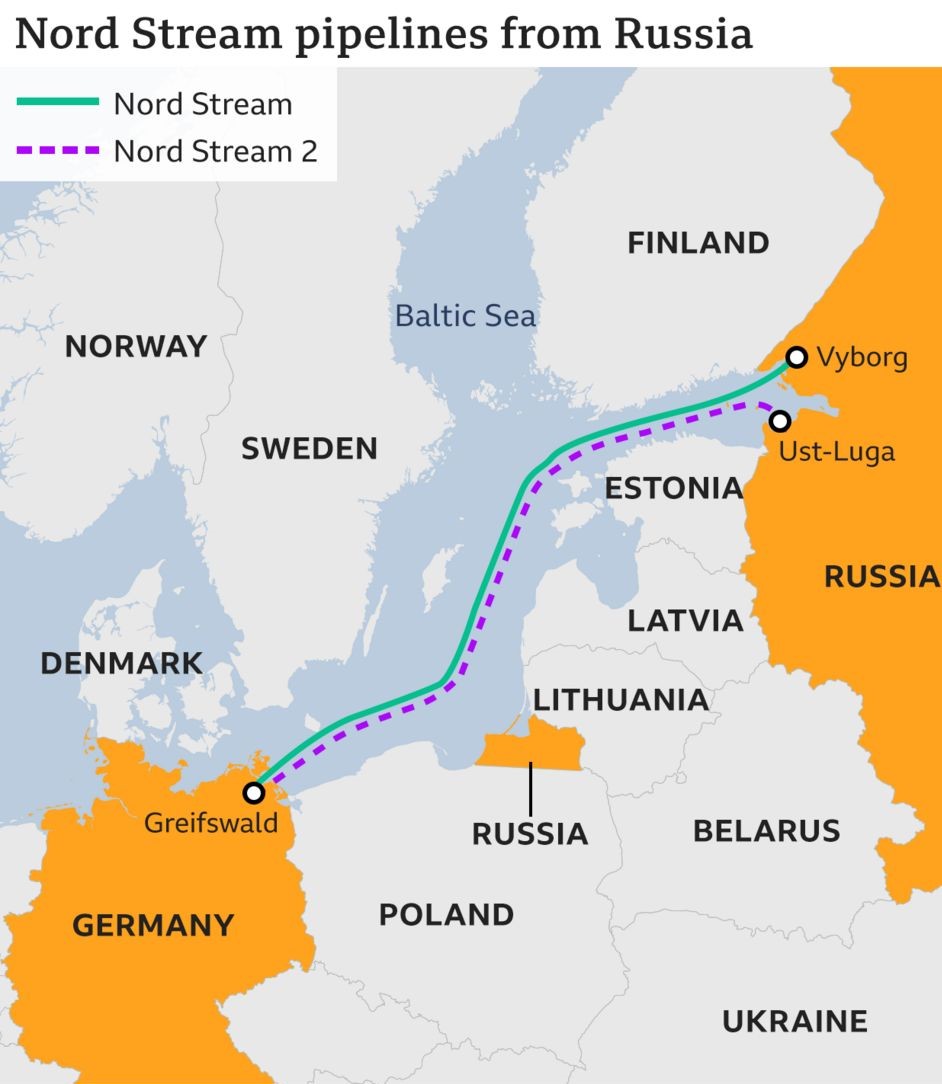
By manipulating energy markets, Putin’s immediate objective could not be clearer: he wants to pressurise Europe into approving immediately the operation of Gazprom’s controversial £8.1 billion Nord Stream 2 pipeline.

Now completed, this runs into Germany along the seabed of the Baltic Sea and bypasses Ukraine, in whose eastern regions Russia has been fighting a proxy war since 2014.

Critics say Nord Stream 2 will give too much influence to Russia over regional supplies and their prices.

But crucially, the project is backed by Germany, which puts cheap reliable supplies of Russian gas ahead of the security interests of its east European neighbours. US President Joe Biden’s administration, desperate to repair the damage done to relations with Europe under Donald Trump, has dropped American objections to the scheme.

The result is that Russia can now hold Ukraine and other Eastern European states to ransom. The Kremlin could shut down their gas without having to cut off the rest of Europe. In effect, one group of nations will be played off against the other in a fearful system of divide and rule, with Russia in command.

As Yuriy Vitrenko, the chief executive of Ukrainian energy giant Naftogaz, put it last week: “Moscow is withholding gas supplies in order to coerce Europe into accepting Nord Stream 2. Russia’s actions are the epitome of gas weaponisation. Anyone who refuses to acknowledge what Moscow is doing, especially when it does this so blatantly, is sending a dangerous message to the Russians that they can use gas to blackmail Europe and get away with it.”

TRAGEDY

GIVEN all this, it is almost inevitable that Ukraine will soon be plunged into another security crisis, perhaps even greater than the one that led to the annexation of Crimea in 2014. The fallout would be disastrous, especially in view of the fragility of Europe’s post-Covid economies.

The implications of Russia’s energy strength are brutal, leaving us relentlessly on the defensive. If, for example, Russia invaded Estonia, would NATO respond if Putin threatened to cut off Europe’s gas? The only way to break free from the shackles of energy dependency is to develop our own resources and means of storage.

In the 1970s, Western reliance on Middle Eastern oil created an era of regional conflict and economic crisis.

If today, the same were to happen because of our reliance on Russian gas, that too would be a tragedy.

. Appendage

Standard
Arts, Books, Russia, Society

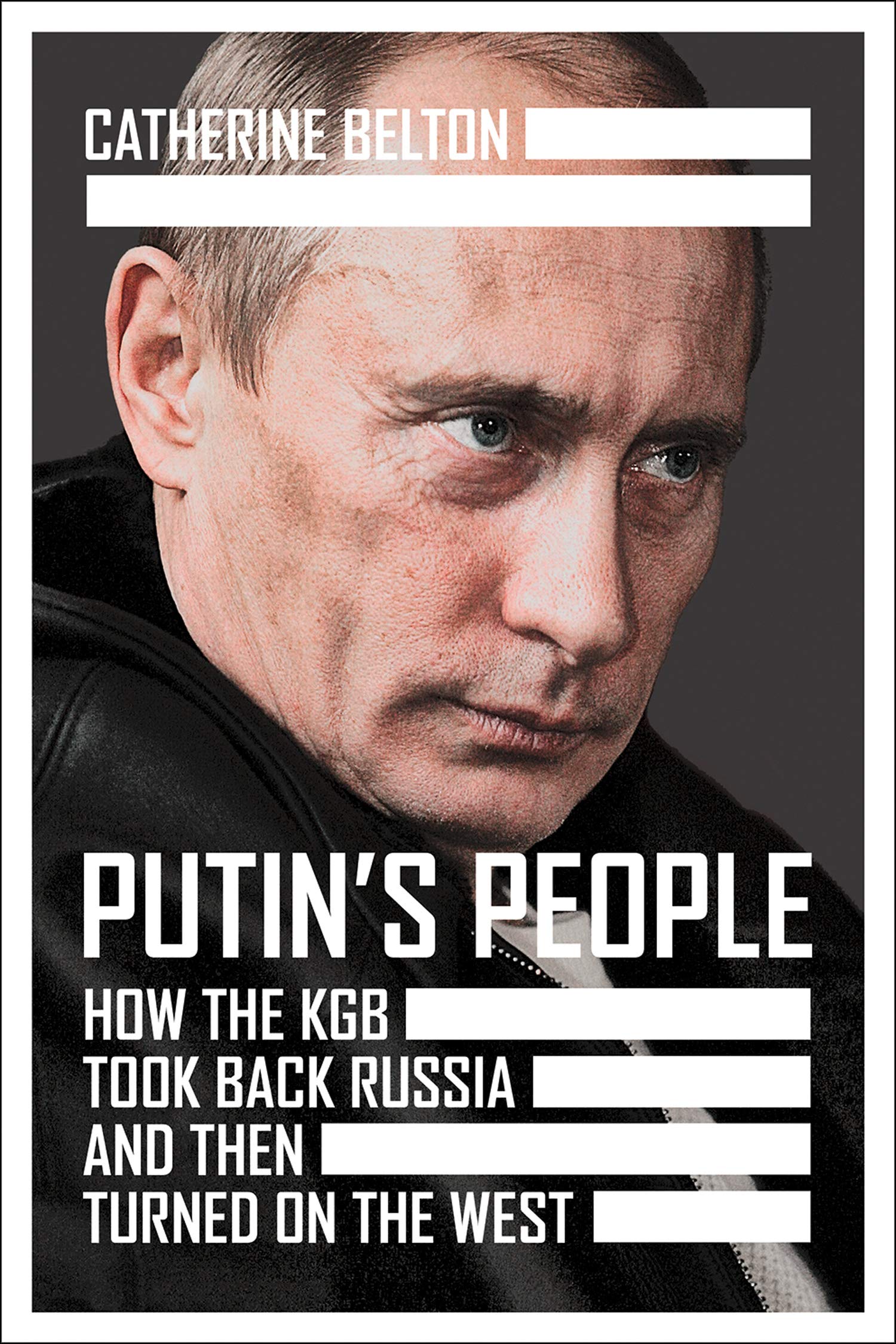
Book Review: Putin’s People

LITERARY REVIEW

Belton

HEGEMONY

IN Russia, the national referendum to extend Vladimir Putin’s stay in office for another 12 years has been postponed.

The proposal that he was to continue for two more six-year terms after his present mandate ends in 2024 was due to be put to the people on Wednesday, 22 April. But due to coronavirus, or Covid-19, the vote was deferred.

Given his vice-like grip on the levers of power of that vast country and the muted opposition to him, there can be little doubt which way it would have gone. He would effectively have been endorsed as president for life.

But now there is a pause – if a brief one – in his relentless pursuit of an unchallenged and supreme autocracy.

That even tough gut Vlad – “The Papa” or “The Number One” as his cronies call him – must bow to the virus is almost a relief. Because in the twenty years since he grabbed the presidency, no one at home has managed to stand in his way without being rolled over, removed, imprisoned, killed, cowed or bribed into submission.

At the same time, he has turned a clapped-out post-communist nation going nowhere into an aggressive and much feared international power. Putin’s Russia now has its insidious fingers in every political, diplomatic, military and financial pie around the world – with deeply worrying implications for all of us.

How this man seemingly from nowhere managed his Napoleonic rise from mere deputy mayor of St Petersburg to absolute power is arguably the biggest story of the 21st century so far.

In forensically unravelling it, journalist Catherine Belton, former Moscow correspondent of the Financial Times, has done a great service, producing a book that western experts on modern Russia acknowledge as vital to our understanding of the Putin phenomenon.

Her study and thesis is chilling indeed. When the Soviet Union disintegrated in 1991 and communism gave way to a makeshift form of democracy, the KGB, Moscow’s underground army of spies, crooks and secret policemen, disappeared from the radar. But they hadn’t gone for good. They weren’t defeated, only biding their time.

Their moment came when the oligarchs, who in effect ran Russia after making vast fortunes from oil, gas and mineral rights amid the economic and political chaos of the Yeltsin years, catapulted the seemingly pliable Putin into the presidency.

They promoted him as their man to sort the country out and bring it to some semblance of liberal democracy. They didn’t expect him to last more than one four-year term.

What they didn’t reckon on was that Putin was KGB to the core. He’d cut his teeth spying on the West in the old communist days, subverting Western businessmen, stealing industrial secrets, and smuggling. And it was with his old pals that his true allegiance lay.

With Putin in the driving seat, Belton argues, the KGB was back in control of Russia and its grip on the country is as strong now as it ever was in the Soviet days.

His agenda – eagerly taken up by the so-called siloviki (the word means “strongmen”) he recruited from the old ranks – was to make the nation all-powerful again, a top-down, state-run force not to be trifled with at home or abroad.

Along the way they would feather their own nests, through money-laundering, bribery, fraud, rake-offs, slush funds and theft. Putin’s Russia would become not just an autocracy but a kleptocracy.

He turned the tables on the oligarchs who’d sponsored him, strong-arming them into acquiescence. They worked for him now, not the other way round.

What emerged, writes Belton, was “a system in which all businesses of any scale were dependent on the Kremlin. Tycoons had to serve the state in order to preserve their standing and wealth”.

Those who resisted found the police knocking on their doors with arrest warrants for tax evasion, fraud or other serious crime. Backed by the state, he had them at his mercy.

Some ran – like media magnate Boris Berezovsky, only to end up dying mysteriously in England. Some went to prison – Russia’s richest man, oil tycoon Mikhail Khodorkovsky, said to be worth £12 billion, was boarding his private jet in Siberia when commandos arrested him. Most caved in and did as they were told – Roman Abramovich, says Belton, purchased Chelsea FC on Putin’s instructions, as a way of enhancing Russian prestige in the West.

CROOKED

EVEN those closest to him weren’t safe, especially if they got too big for their boots. Sergei Pugachev made billions as Putin’s favourite banker before “Papa” turned on him and looted his vast assets.

In exile, Moscow mafia thugs turned up, took him out to a yacht in the Mediterranean and demanded £280 million to guarantee the “safety” of his family.

Belton draws on published sources and deep-throat contacts to plot a course through the maze of crooked financial manoeuvres – the sleights of hand, the backroom deals, the “loans” from state banks, the kick-backs on contracts – that Putin and his courtiers got up to as they systematically drew the wealth to themselves as inexorably as iron fillings to a magnet.

They stashed their ill-gotten gains overseas, their so-called “black cash” amounting to a staggering £640 billion in all, according to one estimate, while at home they flaunted their riches, kitting themselves out with yachts and private planes and vast palaces. One of these had a garage for 15 cars and a storeroom for fur coats.

All the while, human rights, freedom and the rule of law went increasingly by the board. Local governors were stripped of their authority. Dissent was suppressed. The courts acted as an arm of the Kremlin. Judges toed the line.

Though Russia was ostensibly a democracy, the reality was that power emanated from the top down, with Putin as a feudal monarch, a tyrant, a tsar like Peter the Great, surrounded by his henchmen, his boyars, who owed their fealty and their vast riches to him.

Belton finds it shameful that the West – which had worked for and then welcomed the demise of communist rule in Russia – connived in this return to autocracy.

Bankers and brokers in London, in particular, fell over themselves to get a slice of the financial action, happy to look the other way as fortunes were hidden in offshore havens.

Peers of the realm lined up to lend their apparent respectability to the boardrooms of Russian ventures. Russian money swirling around London earned the capital the nickname of “Londongrad” or Moskva-na-Thames. In the United States, Donald Trump, before he became president, did deals with the Russians to bail out and expand his property empire.CROOKED

WEALTHY POWER-BROKER

GREED triumphed over principle, with the result that the West, by slavishly following its own money-making instincts, has allowed itself to be infiltrated. Belton warns: “The weakness of the Western capitalist system, in which money ultimately outweighs all other considerations, has left it wide open for the Kremlin to manipulate.”

Making matters worse is that the siloviki were on a mission, not just to get very rich, but to use that wealth to undermine the West. Under communism, the KGB had seen the West as its enemy. Its successors, led by Putin, feel the same way.

Under him, Russia, once a busted flush on the world stage, has become the world’s power broker again, whether openly, as in Ukraine and the Middle East, or covertly.

In its new guise, the KGB has adopted the tricks of the old KGB, causing disruption in the West wherever it can.

Its money backs political extremists, Right or Left – the cause isn’t important, only the confusion they cause. It gets up to all sorts of mischief to drive a wedge between the U.S. and Europe. It encourages unrest and dissension just to stir the pot.

In the eyes of Putin and his cronies, the Cold War has never ended, just moved into a new phase. We have clearly been warned.

– Putin’s People by Catherine Belton is published by William Collins, 640pp

Standard
Britain, Europe, NATO, Nuclear Weapons, Russia, United States

The nuclear détente withdrawal makes the world far more dangerous

ARMS CONTROL TREATY

TENSIONS between the world’s two nuclear superpowers have reached a level not seen since the early 1980s.

During an election rally in Nevada, President Trump said that Russia was cheating on the 1987 arms control treaty. The treaty banned land-based cruise missiles in Europe.

An agreement had been made back in 1987 between Ronald Reagan and Mikhail Gorbachev – leaders who trusted each other enough to take a decisive step in ending the arms race which had been a key feature of the Cold War for the previous four decades.

Now Trump, in response to Putin’s cheating, is saying he will pull out of the treaty altogether. And the world is back to the hair-trigger situation faced before détente introduced arms control between East and West.

The fact is that the new highly-mobile missiles which Russia have developed undoubtedly make the world a far more dangerous place. And Donald Trump’s aggressive chest-beating response risks making an already fraught situation worse.

To understand why, we must look at how Putin has broken his treaty obligations.

The Intermediate Nuclear Forces (INF) treaty banned Russia from having any land-based intermediate nuclear missiles with a range of more than 300 miles. Sea-launched missiles were allowed, however – the theory being that they were more difficult for Russia to hide because the submarines and warships from which they were launched could be tracked and monitored by the West.

As a result, instead of the lumbering land-based SS20 missiles which worried the West so much in the 1980s, Russia has concentrated over the decades on developing much smaller missiles that can be launched from the sea. Such missiles, albeit without nuclear warheads, were used to devastating effect against rebels in Aleppo in Syria.

What Putin’s technicians have now done is to adapt these Kalibr sea-launched systems to make land-based cruise missiles capable of being transported by small trucks. They can be moved across country at 50mph and it would be impossible to track every one of them – making a surprise attack technically possible.

And the missiles, which fly under the radar, have been fitted with supersonic boosters which makes them practically impossible to intercept. This puts a vast swathe of NATO countries, including Britain, theoretically in the firing line.


WHY this is so disturbing is that it fits into Putin’s tactical strategy. Today’s Kremlin chief is ruthless, but worse he runs a Russia much less moribund than the wheezing Communist colossus of the 1980s. Putin’s armed forces are much leaner and meaner than in those days.

War in the 21st century has been practised already from Syria to Ukraine and in cyberspace. Putin knows he doesn’t need two million badly trained soldiers to be sacrificed in the trenches.

If it comes to war, he’ll need the best cyber-sabotage, the most effective special forces and, crucially, unstoppable medium-range nuclear missiles. Which he now seems to have acquired, despite the treaty.

This is why Trump has reacted so vigorously. Playing the tough guy also plays well to his core supporters, and he faces mid-term elections in two weeks’ times.

The trouble is that by dropping the Intermediate Nuclear Forces (INF) treaty now might suit Russia better in the coming years than the US. While for America the INF treaty has been a useful bulwark against nuclear escalation and proliferation, Putin’s strategists have chafed at the restrictions INF imposed on them.

By ripping it up, Trump will be criticised by European leaders – Germany was the first US ally to do so, with foreign minister Heiko Maas urging Washington to consider the consequences both for Europe and for future disarmament efforts.

All of this will delight Putin because it plays into his divide-and-rule approach to Europe.

More worryingly, if Trump does dump the INF agreement, there will be nothing to stop Putin’s generals from building and refining as many of these new faster-than-sound land-based nuclear missiles as possible.

Other nuclear powers, especially China and probably India and Pakistan, will want to buy them if they can’t build their own.

This technology is so easy to hide, swift to deploy and difficult to stop that it steeply increases the chances of a successful surprise nuclear attack. Worse still, without the trust between the US and Russian leaders that existed in Reagan and Gorbachev’s day, diplomacy is on a hair trigger – as in the worst days of the Cold War.

President Trump has declared he wants to make America safer, but we should fear he has made the world an even more dangerous and tense place. According to Mikhail Gorbachev, pulling out of the historic US-Russia arms treaty now “endangers life on Earth”.

Standard