Health, Medical, Science

Health: Blood Pressure

HYPERTENSION

high-blood-pressure-stat-2019

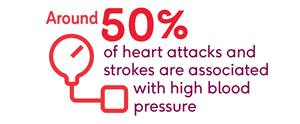
As blood circulates through the body, it exerts varying degrees of force on artery walls; this is known as blood pressure. According to the World Health Organisation, between 10 and 30 per cent of people throughout the world have blood pressure that is too high – or hypertension. In its early stages, high blood pressure is symptomless, so many people do not realise they have a potentially life-threatening disease. If the condition goes unchecked, it will damage the heart and blood vessels and can lead to a stroke, heart attack and other serious consequences.

In about 5 per cent of cases, there’s an underlying cause for high blood pressure; for example, a narrowed kidney artery, pregnancy, an adrenal gland disorder or a drug side effect. Most often, however, there is no identifiable cause, and this is referred to as primary, or essential, hypertension.

Blood pressure rises when the body’s smallest arteries, narrow or constrict, requiring the heart to beat more forcefully in order to pump blood through them. Increased blood volume, often caused by the body’s tendency to retain excessive salt and fluids, raises blood pressure; so do high levels of adrenaline and other hormones that constrict blood vessels.

With age, blood pressure rises somewhat; no one fully understands precisely what leads to hypertension, although a combination of factors, especially salt intake, seems to be involved. It tends to run in families, so inherited susceptibility is suspected. Obesity is known to increase risk. Stress prompts a surge in adrenal hormones and a temporary rise in blood pressure; some researchers believe that constant stress may play a role in developing hypertension. Other contributors include smoking, excessive alcohol and a generally sedentary lifestyle.

Proper control of high blood pressure and cholesterol can halve the risk of heart attacks. It seems that the death rates from different forms of cardiovascular disease, have been steadily declining since the 1960s, thanks largely to lifestyle changes and improvements in hypertension treatment.

Diet and hypertension

Diet plays a role in both prevention and treatment of high blood pressure. Simple things can help to keep your blood pressure in check.

Limit your salt intake. A high-salt diet also contributes to the condition in people who have a genetic tendency to retain sodium. In these individuals, restriction of salt, from an early age, reduces the risk of developing hypertension. A portion of the population, including older people and people with diabetes, appear to be particularly sensitive to sodium and may benefit significantly from eating low-salt foods. Experts agree that most people should aim to consume no more than 6g of salt each day. The best way to reduce intake is to avoid adding salt, and to avoid processed foods, which are usually loaded with sodium. Check labels carefully – look for the term ‘sodium’ to find hidden salt. It may be a good idea to switch to a potassium-based salt substitute, as potassium lowers blood pressure.

Keep your weight down. Being even slightly overweight contributes to hypertension; losing excess weight is often all that is needed to return blood pressure to normal. Even a modest weight loss will cause a drop in blood pressure.

Eat less fat. A high-fat diet not only leads to weight gain but may also contribute to high blood pressure. Limit fat intake to 30 per cent or less of total calories, with 10 per cent or less coming from saturated fats. This means cutting back on butter and margarine; reading food labels to check the saturated fat content; switching to skimmed milk and other low-fat dairy products; choosing lean cuts of meat and grilling instead of frying.

Reduce alcohol and caffeine consumption. Although a glass of wine or other alcoholic drink daily seems to reduce the chance of a heart attack, consuming more than this will negate any benefit and may increase the risk of hypertension. Too much caffeine can also raise blood pressure. Older adults with hypertension may be more sensitive to the effects of caffeine and should limit their intake.

Boost your mineral intake. Some nutrients may protect against high blood pressure. Potassium, an electrolyte that helps to maintain the body’s balance of salt and fluids, helps to ensure normal blood pressure. Potassium is found in fruit (especially bananas) and vegetables, dairy products, beans and pulses.

A few US studies have linked calcium deficiency to hypertension and have suggested that increased intake of low-fat dairy products may be beneficial.

Get more garlic. Other research appears to suggest that garlic can help to lower blood pressure. The amount of garlic necessary to lower blood pressure, however, can cause other problems, especially unpleasant breath and body odour. Although garlic is available in odourless pills, it is not known if these pills produce the same benefits as eating real garlic.

Other lifestyle changes

While a proper diet is instrumental in maintaining normal blood pressure, it should be combined with other lifestyle changes. One of the most important is regular aerobic exercise, which lowers blood pressure by conditioning the heart to work more efficiently. If you smoke, you should give up, because nicotine raises blood pressure. Giving up smoking can reduce blood pressure markedly – apart from the other health benefits.

Use medications with caution. Non-prescription cold, allergy and diet pills can raise blood pressure. In some women, birth control pills, or hormone replacement therapy, can cause high blood pressure.

Reduce stress. Experts continue to debate the role of stress in hypertension. There is no doubt that stress temporarily raises blood pressure, and some experts think that it may have a long-term effect. Meditation, yoga, biofeedback training, self-hypnosis and other relaxation techniques may help to lower blood pressure. Studies have found that people with pets have lower blood pressure than people who don’t own pets.

Drug therapy. Doctors usually recommend about six months of lifestyle changes to see if mild to moderate hypertension returns to normal levels. If not, drug therapy is often instituted. There are dozens of antihypertensive drugs and doctors can usually find one or a combination that lowers blood pressure with minimal adverse side effects. The most widely used drugs are diuretics, which reduce salt and fluid volume by increasing the flow of urine. Some classes of drugs reduce the heart’s workload by helping to widen the arterioles to increase blood flow; other drugs can slow the pulse.

Check it out

All adults over 40 should have their blood pressure checked annually. Just one blood pressure measurement is, however, insufficient to diagnose hypertension unless the reading is in the severe range. Some people also have ‘white coat’ hypertension, in which their blood pressure rises whenever they are in a doctor’s surgery but is normal at other times. To diagnose hypertension, several measurements are needed – taken at different times and, perhaps, even in different places.

Understanding blood pressure measurements

Blood does not flow through the body in a steady stream; instead, it courses in spurts. Thus, blood pressure is expressed in two numbers, such as 120/80. The higher number indicates the systolic pressure, the peak force when the heart contracts and pumps a small amount of blood into the circulation. The lower number, the diastolic reading, measures pressure exerted when the heart is resting momentarily between beats. The units of blood pressure measurement are millimetres of mercury; basically, this measures how high the pressure of the blood can push a column of mercury in an evacuated tube.

Doctors usually use a stethoscope and a sphygmomanometer to measure blood pressure. The cuff is tightened to stop blood flow, and as pressure is released, they listen for the sounds that indicate systolic and diastolic pressures. If your resting blood pressure is consistently 140/90 or higher, you have high blood pressure. Normal adult blood pressure is defined as below 120/80.

Did you know?

. Current guidelines suggest you should keep your salt intake below 6g per day. Expressed as sodium (the way salt content is often listed on food labels) that means no more than 2.4g a day. To convert sodium to salt, multiply by 2.5.

. According to research that was presented to the American Heart Association in November 2003, eating a half-cup of dry-roasted soya nuts may reduce blood pressure readings as much as some prescription blood pressure medications.

In summary:

Eat plenty of

. Fresh vegetables, fresh and dried fruit, beans, pulses for potassium

. Oily fish for omega-3 fatty acids

. Low-fat dairy products

Limit

. Canned and other processed foods with added salt

. Fatty foods, especially saturated fats

Avoid

. Pickled and very salty foods

. Excessive alcohol and caffeine
Standard
Arts, History, Science

Quantum Leaps: Henry Cavendish

1731–1810

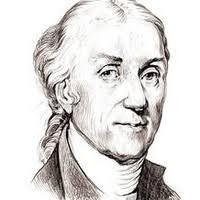
Cavendish

Henry Cavendish was a British natural philosopher, scientist, and an important experimental and theoretical chemist and physicist. Cavendish is noted for his discovery of hydrogen or what he called “inflammable air”.

BIOGRAPHICAL NARRATIVE

IF ever a person were to fit the stereotypical image of a wacky, eccentric scientist, Henry Cavendish would be that man. Born of the English aristocracy and inheritor of a huge sum of money mid-way through his life, Cavendish used his wealth to indulge his unusual behaviour. He built private staircases and entrances to his homes in London so he would not have to interact with his servants, and only communicated with them through written notes. He never spoke to women, doing all he could to avoid having to look at them, and only usually appeared in public for the purposes of attending scientific meetings. His love of solitude did, however, offer him plenty of time to work on the experiments which would advance science, despite his equally eccentric approach to the publication of his work.

Prompted by curiosity

Cavendish’s main motivation was not scientific acclaim, but curiosity, and it is because of this that he failed to put many of his discoveries into print. He conducted meticulous experiments in both physics and chemistry, but it is largely for his work in chemistry that he is best remembered, since he did publish several papers in this field.

Of the most famous were his 1766 Three papers Containing Experiments on Factitious Airs (gases made from reactions between liquids and solids). In these he demonstrated how hydrogen (inflammable air) and carbon dioxide (fixed air) were gases distinct from “atmospheric air”.

Joseph Black is credited with making similar discoveries with fixed air, but it is Cavendish who is acknowledged as being a pioneer in distinguishing and understanding inflammable air. He managed to develop reliable techniques for weighing gases and, in further experiments undertaken around 1781, he discovered that inflammable air, mixed with what we know as oxygen (from atmospheric air) in quantities of two to one respectively, formed water. In other words, water was not a distinct element, but a compound made from two parts hydrogen to one part oxygen (as now famously expressed as H₂O).

Due to his typical tardiness in publication – he did not declare his findings until 1784 – his claim to this discovery became confused with similar observations subsequently made by Antoine Lavoisier (1743–94) and James Watt (1736–1819). The important point is that water was proved not be a distinct element – a view held since the time of Aristotle.

In the same paper, Cavendish also explained his discovery that air (whose composition remained constant from wherever it was sampled in the atmosphere) was composed of approximately one part oxygen to four parts nitrogen. In these experiments – performed to decompose air by “exploding” it with electrical sparks – he also found that there was always a residue of about one per cent of the original mass which could not be broken down further. This “inert” gas would not be studied again for a century, when it was named argon. In the same series of experiments, Cavendish also discovered nitric acid, by dissolving nitrogen oxide in water.

Ahead of his time

Potentially, Cavendish could have been remembered as a great physicist as well, since some of his experiments and discoveries were considered to be more than half a century ahead of their time. Almost all his work in this arena remained unpublished until the late nineteenth century however, when his notes were found.

The scientist James Clerk Maxwell (1831–79) dedicated himself to publishing Cavendish’s work, a task he completed in 1879. But by then, Cavendish’s potential breakthroughs, significant at the time, had been surpassed by history. Cavendish had undertaken significant work with electricity, anticipating laws later named after their “discoverers” Charles Coulomb (1736–1806) and Georg Ohm (1749–1854), as well as some of Michael Faraday’s (1791–1867) later conclusions. In the absence of any other appropriate device and in keeping with his eccentric tendencies, he even resorted to measuring electrical current by grabbing electrodes and estimating the degree of pain it caused him!

The density of the earth

One physical experiment for which Cavendish was acclaimed in his time (and which is now named after him) was working out the density of the earth. The experiments involved a torsion balance and the application of Newton’s theories of gravity. In 1798 he concluded that the earth’s density was 5.5 times that of water, a figure almost identical to modern estimates.

Timeline

1731 – Cavendish is born in Nice, France, to an English aristocratic family

1753 – Leaves Cambridge University without taking a degree

1798 – Publishes his estimate of the density of the earth, an estimate almost precisely what it is now believed to be

1871 – The endowment of the famous Cavendish Laboratory was made to Cambridge University, by Cavendish legatees.

Standard
Books, Science

Books: The Best of Science

BRIEF SUMMARIES

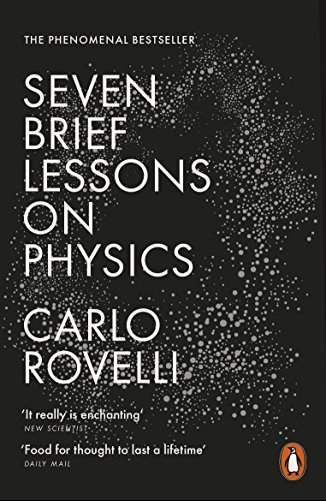
. Seven Brief Lessons On Physics by Carlo Rovelli

Carlo Rovelli

TIME is an illusion and has no real existence. Sub-atomic particles interact instantly with one another over vast distances. Black holes are places in space where gravity is so strong, not even light can escape them.

The theories of modern physics undermine our notions of common sense. In his 2014 bestseller, Carlo Rovelli provides non-scientists with an elegant exposition of the most mind-bending ideas about the universe from the last 100 years.

A short book, but with some of the most exhilarating and thought-provoking concepts you will ever encounter.

. The Gene: An Intimate History by Siddhartha Mukherjee

The Gene

AN OBSCURE 19th-century monk undertakes a series of ground-breaking experiments with peas in his monastery garden. Two young scientists burst into a Cambridge pub and announce to the startled drinkers assembled there that they have discovered “the secret of life”. Nazi doctors inflict the horrors of eugenic experiments on subject peoples.

In his 2016 book, Siddhartha Mukherjee chronicles what he calls “one of the most powerful and dangerous ideas in the history of science”. Genetics has transformed our understanding of what it is to be human. Mukherjee examines its past, present and potential future in an enlightening work.

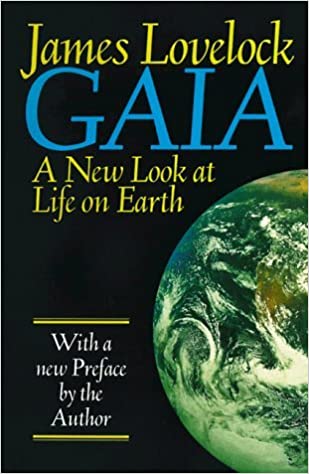
. Gaia by James Lovelock

Gaia

DOES the entire Earth function as a single organism? Can it self-regulate to ensure that life on it is sustained? James Lovelock’s “Gaia” hypothesis, first brought to public attention in this trailblazing book of 1979, suggests that the answer to both these questions is “yes”.

Professor Lovelock, who turned 100 last year, has never been afraid of thinking the unthinkable. Naming his theory after the Greek goddess of the earth, he put forward ideas that have remained controversial.

His daring model of the world provides powerful support for anyone appalled by our more reckless assaults on the planet and the environment.

. A Brief History Of Time by Stephen Hawking

Stephen Hawking

MILLIONS of people bought it. But how many succeeded in finishing it?

A Brief History Of Time, first published in 1988, has an unfair-reputation as being impossibly difficult to understand. In truth, it takes readers on a comprehensive but comprehensible journey from the tiniest particles of the quantum world to the vastness of the universe in just 200 pages.

Before his death in 2018, Hawking became the most famous scientist since Einstein. His body was twisted and confined to a wheelchair, but his imagination roamed free. His book is a fascinating account of our search, in Hawking’s own metaphor, “to know the mind of God”.

. Silent Spring by Rachel Carson

Rachel Carson

“THOSE who contemplate the beauty of the earth,” Rachel Carson wrote in 1962, “find reserves of strength that will endure as long as life lasts.”

As she looked at the world around her, she saw that beauty under threat. Her particular target in Silent Spring was the irresponsible, indiscriminate use of pesticides.

Many of these she attacked, such as DDT, are now banned. But her general point about Man’s impact on the natural world remains only too valid.

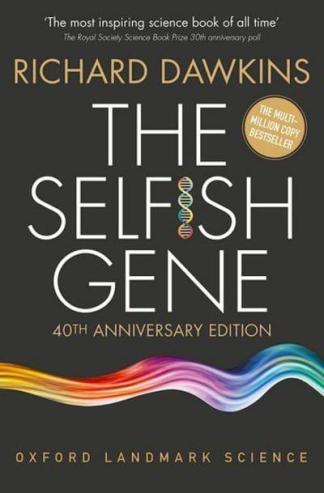
. The Selfish Gene by Richard Dawkins

Richard Dawkins

“WE ARE survival machines,” Richard Dawkins wrote in this 1976 book, “…blindly programmed to preserve the selfish molecules known as genes.”

Today, Dawkins is most famous as a militant atheist, but his lasting legacy is likely to be his work as an evolutionist.

Genes, he argued, are on a quest for immortality and, like all other living creatures, we are the vehicles they are using for the journey.

In the past 40 years, genetics has taken remarkable leaps, such as the completion of the Human Genome Project. Yet Dawkins’s book remains a landmark work and one which first introduced the word “meme”.

md_logo

Standard