Arts, Books, History, Literature

Book Review: The Turning Point

LITERARY REVIEW

Intro: A tale of one city . . . and the year that changed not just Charles Dickens but London, too

IN 1851, London was a city of dense and persistent fog, of foul acrid smells and, for a large swathe of the population, of extreme poverty and deprivation.

The capital was also a place of vibrant energy and opportunity and a growing sense of its own importance.

One topic dominated conversation that year: the opening of the Great Exhibition, masterminded by Prince Albert to highlight Britain’s dominant position in the industrial world.

Through this pulsing, crowded and malodorous city strode Charles Dickens, the most famous writer in the English-speaking world. By the age of 38, he had already written eight hugely successful novels including The Pickwick Papers, Oliver Twist and Nicholas Nickleby, and yet, for all his professional success, his private life was about to enter choppy waters.

This engrossing book subtitled The Year That Changed Dickens And The World, shows how, by 1851, Dickens was more than just a novelist. He was also “one of the busiest men in London… playwright, actor, social campaigner, journalist, editor, philanthropist.”

Much of Dickens’s boundless energy was inspired by the city. Although he called it “vile” and would sometimes go to quieter places like Broadstairs in Kent to write, he couldn’t bear to be away too long either, saying: “A day in London sets me up again and starts me.”

TWO

DICKENS was a father of nine in 1851, apparently a rather semi-detached one. His relationship with his shy and sweet-natured wife, Kate, was increasingly shaky. After giving birth to so many children in the space of 13 years she was, hardly surprisingly, permanently exhausted, and often depressed.

That spring, the family suffered a double blow. Two weeks after the death of Dickens’s father John, their youngest child, eight-month-old Dora, died suddenly after suffering convulsions. Dickens was overwhelmed with grief and deeply anxious about breaking the news to his fragile wife, who was undergoing a rest cure in Malvern.

Whilst he wrote sympathetically and lovingly to Kate, he remarked to a friend that this shock might even do her good: a chilling foreshadowing of his later attempt, when their marriage broke down, to have Kate sent to a mental asylum.

The death of Dora did nothing to slow down Dickens’s prodigious work output and, like most Londoners, he was intrigued by the “Great Exhibition of the Works of Industry of All Nations” which opened in May in Hyde Park. The huge glass building itself was a source of wonder, the brainchild of Joseph Paxton.

The atmosphere before the opening of the Great Exhibition sounds like that of London before the 2012 Olympics – intense excitement, and dread that it would go horribly wrong.

When it was finally opened by Queen Victoria, the Crystal Palace was revealed to be crammed with 133,000 exhibits including the enormous Koh-i-Noor diamond, a steam-powered envelope-making machine, collapsible pianos, and a can of boiled mutton, designed to be taken on a polar exhibition.

Dickens’s work was also represented, with statues of two of his most famous characters: Oliver Twist and Little Nell from The Old Curiosity Shop. However, they couldn’t compete with the popularity of the exciting new flushing toilets in the “retiring rooms”. Eager visitors paid a penny to use them, giving rise to the adage “to spend a penny”.

Not everyone was entranced by it, including Dickens. He grumbled that “I don’t say ‘there’s nothing in it’ – there’s too much.” The future textile designer, 17-year-old William Morris, was so appalled by the vulgarity of it all that he staggered from the building and was sick in the bushes.

But the Great Exhibition was a triumph and crowds poured in from all over Britain. The profits from it went towards the purchase of 87 acres of land in South Kensington. It was here where the Victoria and Albert, the Natural History and Science Museums, Imperial College and the Royal Albert Hall were built. Above all, it was the event that cemented Britain’s position as the world’s leading industrial economy.

THREE

AS IT wound down, Dickens was edging towards writing a new book, Bleak House.

With its twisty plot, pointed social commentary and not one but two unreliable narrators, Bleak House was, says Douglas-Fairhurst, “the greatest fictional experiment of his career.” It was one of the earliest examples of a detective story.

The book is full of nuggets. 1851 was the first-time young women were recorded wearing trousers (or “bloomers”) – in Harrogate of all places. It was also the first-time terms such as “carbohydrate”, “police state” and “science fiction” were widely used.

Although the author focuses on just one year of the writer’s life, Charles Dickens comes over as a deeply complex character: warm, generous, and compassionate yet also overbearing, pompous and selfish. His life was so crammed with incident that you could argue that almost any year was some sort of turning point for him. But that is a very minor quibble about a splendidly enjoyable book.

– The Turning Point by Robert Douglas-Fairhurst is published by Cape, 368pp

. Appendage

Robert Douglas-Fairhurst’s title begs several questions, for there were many turning points in Dickens’s life. The first came in 1824 when his father was incarcerated in the Marshalsea debtors’ prison. Dickens’s mother and younger siblings moved in with his father, but Dickens, aged 12, was sent to work among, as he recalled, “common labouring boys” in Warren’s blacking warehouse. It was a humiliation he never forgot or forgave, and the dilapidated, rat-infested warehouse came back to him in nightmares all his life. As a junior clerk in a law firm he was crazy about the theatre and yearned to be an actor.
Standard
Arts, Books, History

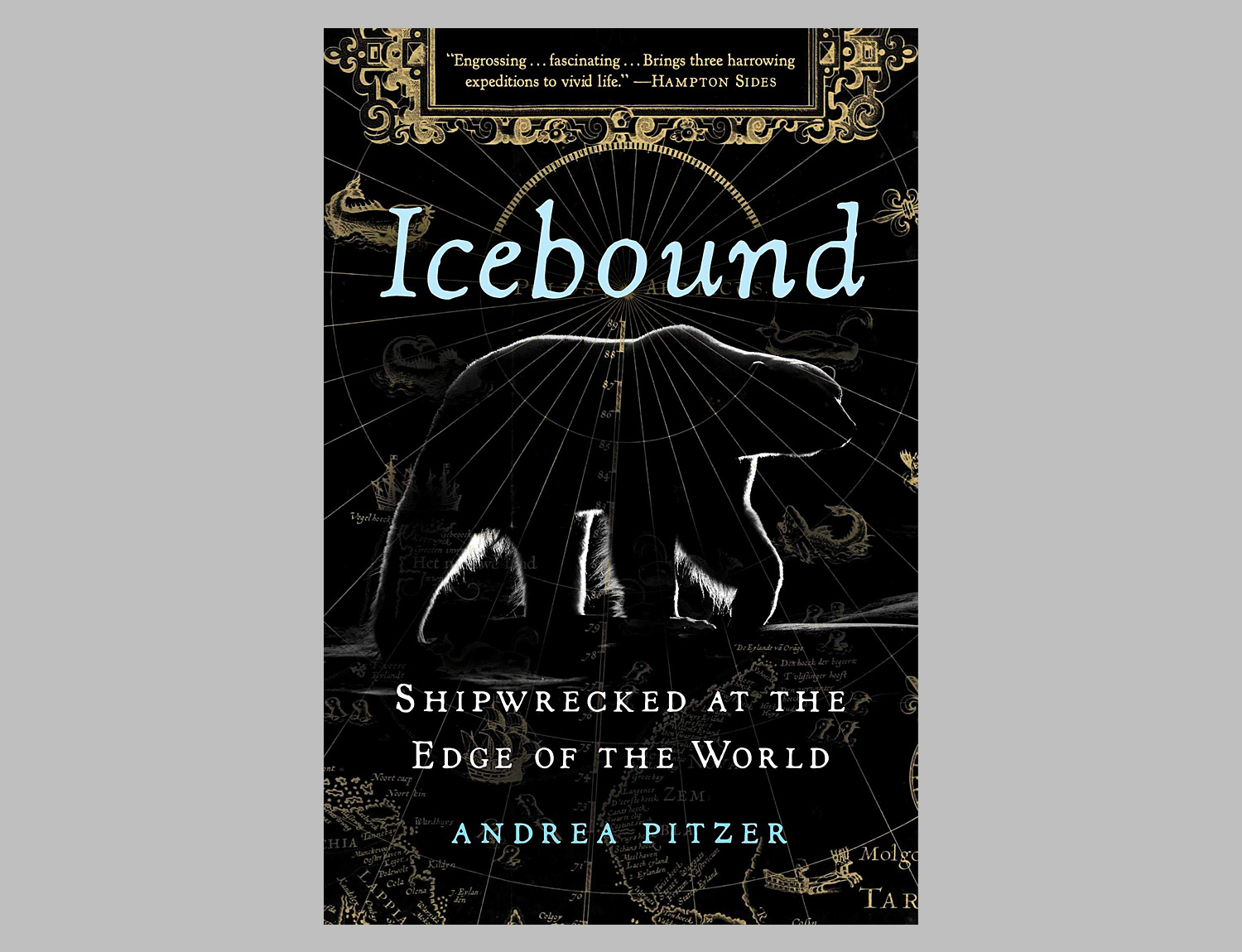
Book Review – Icebound: Shipwrecked At The Edge Of The World

LITERARY REVIEW

Intro: Thought your lockdown was tough? William Barents and his crew were stranded in the Arctic for nine agonising months, with barely any food and at the mercy of ravenous polar bears. Ice-olation as opposed to isolation

THE name of William Barents isn’t that familiar to us these days beyond perhaps a line of type on your atlas, marking a patch of blue north of Norway and Russia – the Barents Sea.

But this enthralling, elemental and (literally) spine-chilling epic of courage and endurance certainly deserves to change all that.

Barents was an energetic businessman and seafarer in the early days of the new-born Dutch republic at the end of the 16th century, a tiny country that would soon become the world’s leading economic and naval power.

It was an age of adventure and exploration, of burgeoning science and medicine, and of great art – Vermeer and Rembrandt would soon be along. It was also an era of limitless promise, as the undiscovered parts of the world opened-up their great and vast treasures.

Barents was the outstanding navigator of his age, and when the traders and merchants of the thriving port city of Amsterdam saw the chance to make a pile of money in the new world to the east, it was to him that they turned.

Barents hatched a plan to sail north to Nova Zembla (“New Land” in Dutch), an unmapped and infinitely desolate finger of rock and ice stretching hundreds of miles into the Arctic seas north of Russia.

If his little fleet could round that finger of rock, then maybe he could confirm the long-held (and very mistaken) view that there was a warm sea at the North Pole.

TWO

REACHING China would then be achieved much faster, and safer, than across the southern oceans and so bring untold wealth to the prosperous burghers of the fledgling Dutch republic.

It was, in today’s language, a no-brainer. And in William Barents, then in his 40s, the investors had just the man. An inveterate explorer, he had sailed all the shores of Western Europe and pioneered map-making and cartography in the region. This voyage was a chance to remake the geography of the world. It was too good to resist.

At the heart of this magnificent story – using two contemporary accounts from crewmen – is Barents’s third voyage, after a couple of early recces.

His ship was 60-odd feet long, about the length of a cricket pitch, and the crew numbered just 17.

In August 1597, they rounded the tip of Nova Zembla hoping to reach open seas, but they found themselves surrounded by icebergs – vast frozen cliffs moving dangerously around the boat, while the winds grew stronger, and the currents drove them into shore.

The icebergs began to tilt the vessel backwards and smashed parts of the stern. As the huge ice floes surged and withdrew like the ebbing of the tide, Barents realised the ship was finished and they would have to winter on dry land until the spring.

What an extraordinary decision it was: these bold, resourceful Dutchmen towed the contents of the ship by sled across the ice on to Nova Zembla, where they used driftwood to build a log cabin.

As the blizzards raged and the temperature dropped to -30C, it wasn’t just the devastating cold the men had to contend with. Food from the ship was limited so they hunted and cooked the marauding foxes. These were fortuitously a limited source of Vitamin C, but still the men fell ill with scurvy, which wrecked their bodies and loosened their teeth.

Besides the weather, their main enemy was the countless polar bears which were far from the loveable creatures to which they are often portrayed.

We might think of them floating, anxious and hungry, on a passing ice floe; for Barents and his men they were vast, cunning and savage enemies always ready to attack.

They were also a source of fuel: that is, if the sailors could kill the bears before they were killed themselves.

For the long winter, it was a matter of survival, with life on the very edge of mortality. These boundless and courageous Dutchmen did, however, find a way to celebrate Twelfth Night in January 1597, with the last of the wine from the boat, fox meat and ship’s biscuit. The blubber from a slaughtered polar bear fuelled their lights as they caroused.

When, after nine months imprisoned in their makeshift hut, the weather changed, the crew set sail in the little boats they had saved from the ship.

They went south in an epic of physical stamina, battling ice and foul weather before being rescued by Dutch traders near the Russian coast. On the way, even Barents’s endurance gave out and he could last no longer. His body may have been left to float away on a piece of ice, before he finally slipped below the freezing oceans that he had tried to conquer.

THREE

BACK in Amsterdam, the crew’s exploits were wildly celebrated, and chronicles of their ordeal were translated all over Europe. The voyage became a symbol of suffering: Shakespeare, writing about another Twelfth Night, has Sir Andrew Aguecheek dismissed thus: “You are now sailed into the north of my lady’s opinion, where you will hang like an icicle on a Dutchman’s beard.”

More than 400 years later, the remains of Barents’s little hut that kept his men alive through the long, frozen days can still be seen on Nova Zembla, as Ms Pitzer, a Washington-based journalist and historian who sailed Barents’s route, describes in a moving epilogue.

In exploration voyages today, every step of the journey becomes part of a daily Twitter blog or an Instagram update. But back then there was nothing; and after a while Barents and his band of crewmen were to all intents and purposes presumed dead.

As Ms Pitzer writes, he set the scale for a new kind of hero, based on knowledge, immense skill and endless endurance.

Barents may have been wrong about the warm Polar Sea, and his dream of an open trading route across the roof of the world wouldn’t arrive for centuries, but his heroism and the endurance of his small band of sailors became a shining example at that point in time. Perhaps it should be even now, especially at a time when many people are bellyaching about not being able to do exactly as they please.

. Appendage

– Long before Bering or Amundsen, long before Franklin or Shackleton, there was William Barents, in many ways the greatest polar explorer of them all. In this engrossing narrative of the Far North, enriched by her own adventurous sojourns in the Arctic, Andrea Pitzer brings Barents’ three harrowing expeditions to vivid life, while giving us fascinating insights into one of history’s most intrepid navigators.

Standard
Arts, Books, Environment, Research

Book Review: Elegy For A River

LITERARY REVIEW

The water vole inspired one of the best loved characters of Wind In The Willows, but in real life they are as vicious as they are cunning. They’re also in danger of vanishing for ever.

IN Evelyn Waugh’s novel Scoop, William Boot is the hapless hero, who famously observed in his nature notes column for the fictional Daily Beast: “Feather footed through the plashy fen passes the questing vole.”

Such sentiments show how little Mr Boot really knew about voles. They are not feather footed and they do not quest but move with a sort of rapid waddle, says Tom Moorhouse, who knows a great deal more about the behaviour of the water vole.

Mr Moorhouse, a researcher at Oxford University’s zoology department, was offered the chance to study voles for a doctorate in 1999. His first discovery was that catching voles from a rowing boat is nobody’s idea of having a good time.

Motorboats sped past and threatened to overturn him; he was heckled by jeering champagne drinkers idling on narrow boats; and was bitten by voles in their fury at being caught.

On one trip he was rowing home through torrents of rain when one of his rowlocks snapped so that he had to punt, using his oar as a makeshift pole. It was at this moment that he passed a tourist, sitting on the embankment under an umbrella. His recollection: “I was sodden, chilled, late, tired, aggravated, filthy and smelt strongly of vole urine. The tourist took a photograph.”

Despite this, he writes very affectionately – even wittily – about voles and their nature, a model even for the sensible, kindly Ratty of Wind In The Willows. They have been living on our riverbanks for at least 14,800 years, although numbers dropped by an astonishing 99 per cent in the years between 1939 and 1998. And all because of the demand and fashion for fur coats.

In the 1920s, American mink were imported into Britain. Some of these minks, understandably reluctant to be turned into fashionable items, escaped.

For a while, their numbers were kept down by otters, who not only kill mink but are known to chew off certain parts of their anatomy to teach these incomers a lesson they won’t forget. But when otters were killed off in turn by farm pesticides washing into rivers, the mink had a free hand.

It was the author’s job to breed voles in captivity and then introduce them to 12 rivers in Oxfordshire. He did this with some success, not that everything ran entirely smoothly.

To keep track of the voles, researchers fitted the little creatures with tiny radio collars. This had an extraordinary consequence – the number of female babies dropped by half.

It seems that the collars were causing stress in the mothers, and a natural hormonal mechanism kicked in which raised the male birth rate. Female voles occupy distinct territories, while male voles roam widely in search of a good time. In times of crisis – a food shortage or, as we now know, when a zoologist fits a radio collar – it makes sense to give birth to more males, who will spread far and wide without amassing or building territory. Such is the wonder and cleverness of nature.

After such a discovery, Mr Moorhouse found himself lambasted in the media. “Scientists studying the causes of the water vole’s decline are to blame,” said one accusing newspaper headline.

Moorhouse concluded that the vole population will never truly recover until American mink are largely eradicated.

He then turns his attention to another weedy British native under threat from a brash American rival.

The white-clawed crayfish has been almost wiped out by the burly and aggressive signal crayfish, imported in 1976 for a scheme to harvest home-grown crayfish.

This idea could not have been more damaging. According to Moorhouse, there are now probably billions of signal crayfish in our rivers and streams, and they have ferocious appetites.

They eat small invertebrates, fish eggs, frog and toad spawn. They churn-up river beds, which is why rivers are not as clear as they used to be. “Signal crayfish have made rivers emptier of everything except signal crayfish,” he says.

And, yet, was this all for nothing? There is no thriving trade in British crayfish. We actually import crayfish from China, where it is cheaper to prepare them for sale in supermarkets.

What’s particularly enjoyable about this book is its upbeat tone. The author clearly enjoyed his research work, even when he was being bitten, jeered at, and sunburned.

Up to his waders in the rivers of Oxfordshire and beyond, it’s only towards the end of his cheerful journey that he strikes a gloomy note. What, he wonders, has all the effort been for?

“For all the real-world, on-the-ground, species-saving impact that my research has had, I could pretty much have just spent my time bumbling amiably around the British countryside,” he says. “My research achieved almost nothing of practical value.”

The problem is money. As it always is. He estimates that adequate conservation measures would cost around £71.2billion ($100 billion) a year worldwide. It sounds a lot, but he claims that America spends double that annually on fizzy drinks.

Moorhouse suggest that, if insurance agencies invested £7.1billion a year on coastal habitats, it would save them an annual bill of £37billion in claims for flood damage. If the seafood industry invested a similar amount, their profits would rise by £37.8billion.

Expressed in such terms the case is very convincing, but will government and big business really be persuaded in the current economic (Covid-19 pandemic) circumstances?

Standard