History, Military, Politics, Second World War

Chamberlain had courage. Does Starmer?

POLITICAL HISTORY

Intro: Trump’s comparison between the pair misses the point. Despite what the critics say, whilst Chamberlain did make some grave errors he did have courage. What will Starmer’s legacy leave on the pages of history?  

Just a few days ago Donald Trump delighted in comparing our Prime Minister, Sir Keir Starmer, to Neville Chamberlain. Winston Churchill’s predecessor is blamed for the failed policy of trying to appease Hitler rather than confront German expansionism across Europe in the years before the Second World War.

Chamberlain is the most vilified of British prime ministers, “the guilty man” who, it is argued, failed to deter Hitler and left us almost defenceless when he resigned in May 1940.

Had Donald Trump studied history a little more carefully, he would not have made the comparison, however. Far from failing in his duties, Chamberlain was the author of the rearmament policy from the mid-1930s that made it possible for Britain to stand firm in 1940.

To compare our current prime minister to him does a grave disservice to Chamberlain, while some might say it greatly inflates Starmer’s political courage and grasp of strategy, neither of which is in evidence in his policies or speeches. Despite frequent public denigration today, Chamberlain’s reputation among historians is higher than might be expected.

As Chancellor from 1931-1937, and then as Prime Minister, he stuck to a double strategy: try to ease tensions with Germany through diplomacy, while at the same time rearming. Rearmament would not only prepare Britain for any future conflict, but would also deter German aggression by showing that we had the means and commitment to fight.

No one looking at Britain today, with its naval ships and fleet under constant repair, its tanks numbering at only a few dozen, and its Army unable to field anything larger than a brigade – about 5,000 men – for about a month of fighting, would be deterred by the readiness of our Armed Forces.

Chamberlain was the principal author of defence plans from 1936 that committed £1.5bn – then a vast sum – over five years to rearmament. He recognised that Britain’s defence would depend on airpower and set a target of nearly 2,000 front-line planes for the RAF. Were it not for this far-sightedness we would not have had the Spitfire and Hurricane and would likely have been invaded in 1940. New warships were commissioned for the Navy; older ships were modernised.

After Hitler’s invasion of the Czech provinces of Moravia and Bohemia in March 1939, this programme was rapidly accelerated. The Ministry of Supply was established to oversee the production of military equipment, and peacetime conscription began. The Territorial Army was doubled in size. Just as war began in September 1939, the famous chain of radar stations around Britain’s coastline became operational.

Revealingly, Chamberlain had been attacked during the 1935 election campaign by the deputy leader of the Labour Party, Arthur Greenwood, for the “disgraceful” suggestion “that more millions of money needed to be spent on armaments”.

Chamberlain understood something else about war readiness: the need for strong finances. Any war would likely be a long one, and a strong economy with reserves to spend would play a vital part in any struggle. He planned for what is now called headroom, fiscal surpluses that could be used in time of national emergency. In 1937, he put up income tax to 5s in the pound.

Today, our peacetime taxes are at the highest levels since the end of the Second World War and yet we have no headroom at all. Everything points to cuts in expenditure, above all to pay for a ballooning welfare bill. Starmer, though, does not have the courage or political capital to tell his backbenchers, as the former Labour prime minister, Jim Callaghan, told the Labour Party conference during the 1976 International Monetary Fund (IMF) crisis, “the party’s over”: the spending on benefits has to stop.

Chamberlain is rightly blamed and held accountable for giving Germany the Sudetenland, then part of Czechoslovakia, at the 1938 Munich Conference, and for taking Hitler at his word by believing his protestations of peace. These were crucial failures of judgment. Then, when war came and Britain’s position looked increasingly hopeless, Chamberlain lacked the resolve to fight.

It was in this context, in May 1940, that the Conservative MP Leo Amery, speaking in the House of Commons, and using words attributed to Oliver Cromwell, demanded of Chamberlain: “In the name of God, go!”. If the upcoming local elections in May don’t finish off Starmer, it is quite likely that someone will say these words to our current prime minister.

For military campaigners and those on the political right will surely argue it would be excellent if Starmer could behave with Churchillian resilience and bravery by living up to our responsibilities to NATO and the free world. Failing that, it would be enough if he could follow Chamberlain’s example and at least lay a basis for having a stronger military and economy that we now require.

If Starmer really did behave like Chamberlain he would leave a better legacy, and also do something that would save his future reputation among historians. Time is short and running out for Starmer politically, but he still has time to act.

Standard
Arts, Books, Philosophy, Politics

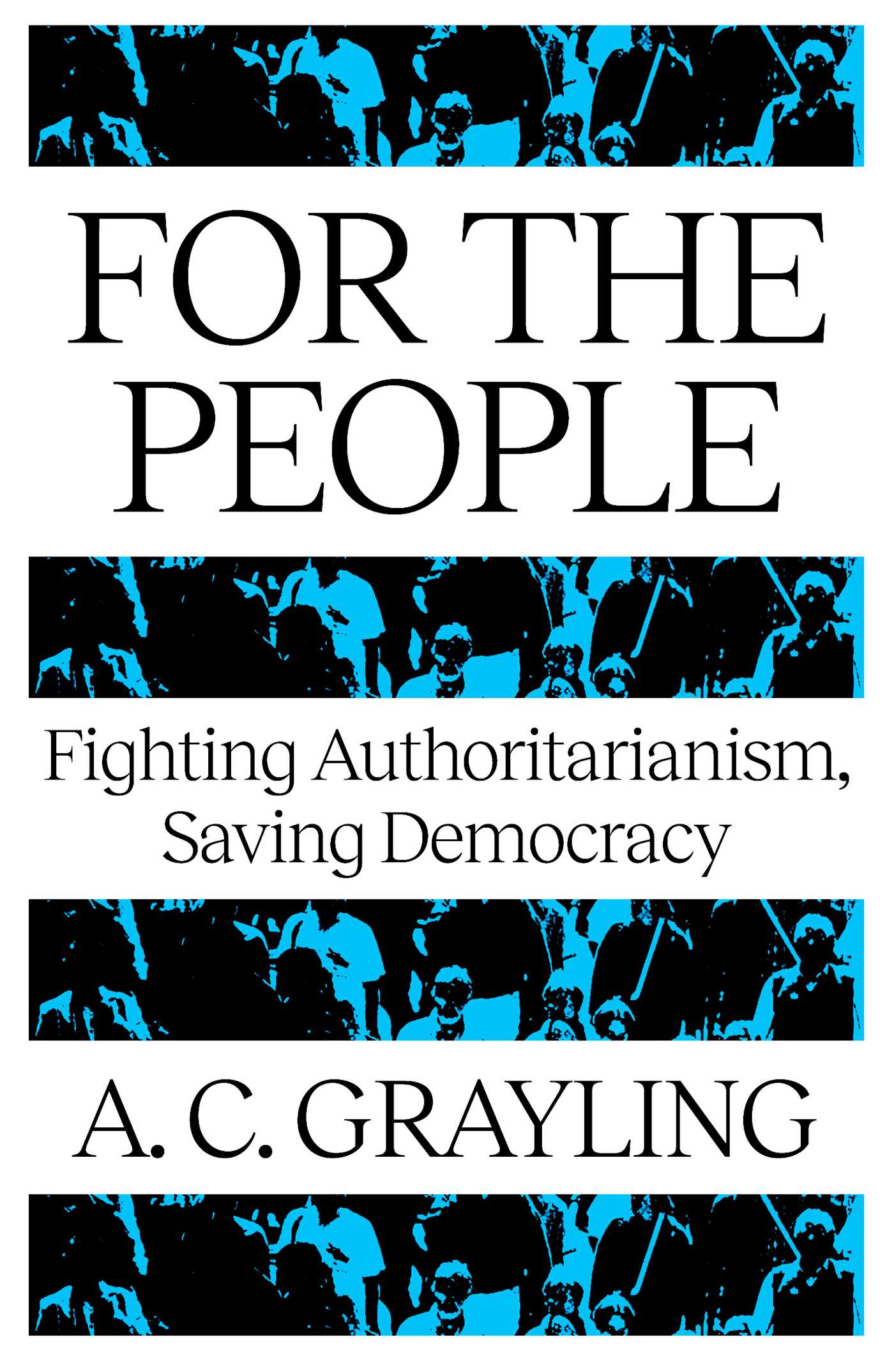
Book Review: For the People

LITERARY REVIEW

Intro: Democracy is in crisis – no thanks to arrogant liberals like AC Grayling. From Brexit to religion, this pompous and insulting philosopher has made a career out of telling the public why they’re wrong. His latest polemic’s a case in point

AC Grayling, a former professor of philosophy at Birkbeck, University of London, is a warhorse of progressive liberalism. He has campaigned for many years in favour of human rights, drug legislation, voting reform, euthanasia, and against war crimes. He is staunchly anti-Brexit and a militant atheist.

Like many people, Grayling is unhappy with the state of the world. Everywhere he looks, there are perils: war, inequality, democratic backsliding, Donald Trump. Things just aren’t going as he would like with authoritarians on the march and liberals in retreat. “Humanity is still at an infantile stage,” he laments. No one respects university professors anymore.

His latest book, For the People, sees Grayling writing in defence of liberal democracy, and in defiance of Vladimir Putin, Chinese communism, and even the populace of Clacton-on-Sea.

His basic contention is that democracy is under threat around the world. It’s losing ground at home to a cocktail of indifference and hostility, and overseas to actual authoritarianism. There are four basic issues: democracy is bleeding moral authority among its own citizens (by repeatedly disappointing voters); it’s too hospitable to big business and oligarchy (allowing “big companies and wealthy individuals… to have a vote equal to millions of other people’s votes”); it’s confronted by the rise of authoritarians in China and Russia (who make it seem like a loser’s doctrine); and it’s assailed from within by a wilfully anti-democratic new kind of politics (“populism”, which floods the minds of voters with fear and propaganda). The reader is left to contemplate the possibility of “the end of the democratic moment in history”.

There’s nothing immediately objectionable here. Grayling is correct that global democracy is in retreat and decline, and correct that this should concern all of us – and deeply. His own remedies, however, have serious flaws. The most immediate is that the publication is incredibly boring. The vision of liberal democracy that Grayling proffers is colourless and tedious. His ideal seems both to involve interminably hard work – “The price of liberty is eternal engagement,” he pens in his best schoolmasterly voice – and narrow in what it offers us. If one describable vision of a democratic commons is that of a boisterous public square full of dissent and babble, For the People proposes something more like a seminar of legal academics to which the voting public have been grudgingly invited in a non-speaking capacity.

Not coincidentally, the same is true of Grayling’s style: figureless, monochrome, and almost baroque in its repetition. One of the book’s two (rather odd) appendices comprises a report from the human rights group Council of Europe on the threat posed by the far-Right that runs to nearly 40 pages. Readers who enjoy this kind of ponderous document will find themselves very much at home among Grayling’s prose.

This brings us to the second major problem with Grayling’s book. The thrust of his title promises to save democracy, but it is with liberalism that he is truly concerned. For Grayling, the two are all but congruent; liberal democracy, we are told, is “a pleonasm: the two words in the phrase are practically synonyms”. This view is by no means the self-evident one Grayling pretends it is. There have been liberal states which were not really democracies – Britain before the Great Reform Act, for instance – and contemporary scholars often describe the rise of figures such as Trump as marking an abandonment of liberal norms via democratic mechanisms.

– Grayling argues that the current political systems in many Western nations have been hallowed out, leaving them vulnerable to populism, elite capture, and the ‘tyranny of the majority’

Where this book goes really off the rails, however, is in its insistence that rule of law, and thus liberalism, essentially exists on a higher plane than that of mere politics. The rule of law, for Grayling, is the “ethical” aspect of the state: it gives character to politics (voting, lawmaking), rather than politics giving character to law. What this means is not just that political actors shouldn’t break the law, but that the basic shape of that law is sacrosanct (and is not to be changed even by majority will). To make such a change, Grayling thinks, would be to fall for the “majoritarian fallacy”. It would injure both the minority who disagree and the majority who want the change; the law is what’s best for everyone, whether they like it or not.

There are shades here of Jean-Jacques Rousseau’s concept of the “general will”, described in The Social Contract of 1762. Rousseau’s general will is not the majority view of a state’s citizens; it is “not so much the number of voices, as it is the common interest which unites them”. If an individual has “a particular will contrary to or different from the general will”, Rousseau writes, the latter will overrule the former: “He will be forced to be free.”

Grayling makes much of this “common” or “best” interest, in contrast to majority opinion, by which he means the interests of those he considers stupid. “Too many,” he writes, “have a vote that can be manipulated by orchestrated misinformation and misdirection to make choices that are not in their best interests.” The public, alas, are still in that “infantile stage”. Grayling is no doubt thinking here of the Brexit referendum, the outcome of which he bitterly opposed and continues to insist should have been ignored. Yet, he campaigned enthusiastically for a “People’s Vote”, and presumably would have accepted any majority opting to rejoin the EU. The intellectual arrogance of this is ludicrous.

And it is here we have the third and greatest problem with Grayling’s position. Only a very strange form of democracy would insist that it can tell you your business, or that your own sense of your interests is wrong. When we read, then, that “the purpose of democratic government is to serve the best interests of all”, it sounds pleasant enough, until you ask the author: who will decide what my interests are? Grayling’s answer to this question is simple: AC Grayling. “The interests of the people are not hard to identify,” he declaims. But here’s the thing: they are. This is why politics exists.

At the same time, Grayling is suspiciously vague as to how your “best interests” and mine become known. There’s an appeal to JS Mill’s “harm principle” hidden away in an endnote, and a suggestion that Britain, just like Bhutan, should replace GDP with GNH (Gross National Happiness) when assessing social wellbeing; both actions suggest some utilitarian arithmetic. Suffice to say that this is not a new debate. Moral philosophers have for centuries sustained an endless back-and-forth argument about utilitarianism, the “hedonic calculus” – Jeremy Bentham’s 18th-century formula for working out how much happiness an action creates – and the plausibility of gauging happiness at the collective level and whether that is possible at all.

Grayling has an utterly blasé indifference to the fact that, for most people, most of the time, their “best interests” are not their only ones. They might not even be that important. Interests in love, in adventure, in faith, in simple curiosity: these may not reliably make us happy, but they’re central to the creatures we are. For the People dissolves this vitality into a tepid brew of committee-approved “best interests”, a safetyism of the soul. Grayling’s democracy is relentlessly boring. It lacks imagination.

Of course, liberal democracy needs defenders; but it needs better defenders than this. Grayling’s world would be a drab, antiseptic thing, where everyone gets just what the doctor ordered and your freedom would be so perfectly calibrated that you couldn’t really do anything with it. There’s no place here for despair or desire, for rebellion, ambivalence, or intrigue. Those things aren’t good for you, and Grayling has told you so. But what if the people want something else? Maybe some people just don’t want to be happy.

For the People is published by Oneworld, 288pp

Standard
Britain, Economic, Government, Politics

The Government must allow markets to do their job

ECONOMIC

Intro: Fallout from the Iran war and the energy crisis that has followed is the ultimate test of the UK Government’s economic acumen

A famous story which used to be known by every schoolchild in the land, King Canute famously sat on his throne at the edge of sea during the early 11th century, and ordered the tide to stop coming in.

Needless to say, the tide did not obey. Some modern interpretations suggest that he wasn’t crazy or mad but was rather trying to demonstrate to his courtiers the limits of regal power. Even the King could not stop the tide.

Governments today need to recognise what little power they have in relation to the current energy crisis.

Although there isn’t a lot they can do, unlike King Canute and the tide governments are not completely powerless. But first comes the need for understanding. The energy crisis is a supply shock which changes the terms of trade, acting as a sort of tax that transfers money from net energy-consuming countries to net energy-producing ones. We are a net energy consumer. This crisis, then, makes us worse off, whatever we do.

And there are two major knock-on effects. First, the economy can be sent into recession as people react to the loss of income by spending less. Second, this “tax” takes the form of a rise in the price of energy that delivers an initial upward spike to the general price level, thereby increasing inflation in the short term, and carrying the danger of embedding higher inflation.

Although there is nothing that governments can do to stop the loss of net national income, there are things they can do to try to mitigate these two knock-on effects.

There could be a case for loosening fiscal policy to reduce the hit to consumer incomes and consumer spending and hence aggregate demand. The parlous state of the public finances, however, means that the scope to do that now is restricted. One way they could seek to limit both the hit to real incomes and the upward pressure on the price level is through granting subsidies and imposing caps on prices.

But this isn’t a free lunch because, unless the Government can justifiably and safely borrow more, which it really can’t at the moment, such things have to be paid for by the taxpayer. It is a case of robbing Peter to pay Paul or, most of the time, robbing Peter to pay Peter.

This is actually still the case if the money for such subsidies is found by more borrowing rather than through new tax rises. This simply defers when Peter and Paul have to cough up.

Most importantly, the Government needs to let market forces do their job. The increase in energy prices acts as a signal to consumers to minimise their use of energy and simultaneously sends a signal to producers to boost the output of energy.

If the help to consumers takes the form of artificially keeping energy prices down, then the signal to economise on energy usage is smothered. More importantly, in our case the signal to producers is cancelled by the Government’s net zero policy, which is preventing the new extraction of North Sea oil and gas.

The best that governments can do in these circumstances is to manage the economy and their own finances most efficiently. Of course, they should have been doing this anyway, but in these difficult and turbulent times the importance of doing the right thing increases significantly. In the UK’s case, the fundamental error in the Government’s economic policy has been to preside over huge increases in government spending, while passing on a good deal of the burden to employers in the form of higher National Insurance payments.

One thing the Government could do to mitigate the consequences of the current energy crisis is to reverse this policy and bring in substantial cuts to government spending. This is not to tighten fiscal policy. Rather, the money saved should be redistributed to the economy.

The best use of it would be a reduction in employers’ NIC, which would reduce their costs and thereby lead to lower prices. It would also encourage firms to retain their workers.

This, too, would make a contribution to staving off the inflation danger. Over and above this, the principle responsibility lies with the Bank of England and its monetary policy.

History provides an illustration of how different responses to the same adverse shock can produce quite different results. In the 1973-74 oil crisis, all the oil-consuming countries of the West – including the UK – suffered an adverse terms of trade shock. They were all made worse off.

But different countries responded differently to the spike in the general price level. In the UK, inflation peaked t almost 25pc. In Germany, by contrast, inflation peaked at just under 8pc.

It has become clear that this UK Labour Government doesn’t really understand or believe in markets. You can see this everywhere, from the wish to control rents in the belief that this will somehow make tenants better off to the recent blaming of price rises on retailers.

This Government cannot avoid the adverse economic shock that higher energy prices imply but it can limit its consequences by letting markets perform their function.

It should abandon at once the headlong pursuit of net zero and allow new production from the North Sea, while cutting government spending and reducing business costs.

We should understand the political forces standing against such action; it is unlikely that the Government will do anything like this. But that doesn’t mean that there is not an alternative course of action available, if only the Government had the insight and the courage to pursue it.

Standard