History, Military, Politics, Second World War

Chamberlain had courage. Does Starmer?

POLITICAL HISTORY

Intro: Trump’s comparison between the pair misses the point. Despite what the critics say, whilst Chamberlain did make some grave errors he did have courage. What will Starmer’s legacy leave on the pages of history?  

Just a few days ago Donald Trump delighted in comparing our Prime Minister, Sir Keir Starmer, to Neville Chamberlain. Winston Churchill’s predecessor is blamed for the failed policy of trying to appease Hitler rather than confront German expansionism across Europe in the years before the Second World War.

Chamberlain is the most vilified of British prime ministers, “the guilty man” who, it is argued, failed to deter Hitler and left us almost defenceless when he resigned in May 1940.

Had Donald Trump studied history a little more carefully, he would not have made the comparison, however. Far from failing in his duties, Chamberlain was the author of the rearmament policy from the mid-1930s that made it possible for Britain to stand firm in 1940.

To compare our current prime minister to him does a grave disservice to Chamberlain, while some might say it greatly inflates Starmer’s political courage and grasp of strategy, neither of which is in evidence in his policies or speeches. Despite frequent public denigration today, Chamberlain’s reputation among historians is higher than might be expected.

As Chancellor from 1931-1937, and then as Prime Minister, he stuck to a double strategy: try to ease tensions with Germany through diplomacy, while at the same time rearming. Rearmament would not only prepare Britain for any future conflict, but would also deter German aggression by showing that we had the means and commitment to fight.

No one looking at Britain today, with its naval ships and fleet under constant repair, its tanks numbering at only a few dozen, and its Army unable to field anything larger than a brigade – about 5,000 men – for about a month of fighting, would be deterred by the readiness of our Armed Forces.

Chamberlain was the principal author of defence plans from 1936 that committed £1.5bn – then a vast sum – over five years to rearmament. He recognised that Britain’s defence would depend on airpower and set a target of nearly 2,000 front-line planes for the RAF. Were it not for this far-sightedness we would not have had the Spitfire and Hurricane and would likely have been invaded in 1940. New warships were commissioned for the Navy; older ships were modernised.

After Hitler’s invasion of the Czech provinces of Moravia and Bohemia in March 1939, this programme was rapidly accelerated. The Ministry of Supply was established to oversee the production of military equipment, and peacetime conscription began. The Territorial Army was doubled in size. Just as war began in September 1939, the famous chain of radar stations around Britain’s coastline became operational.

Revealingly, Chamberlain had been attacked during the 1935 election campaign by the deputy leader of the Labour Party, Arthur Greenwood, for the “disgraceful” suggestion “that more millions of money needed to be spent on armaments”.

Chamberlain understood something else about war readiness: the need for strong finances. Any war would likely be a long one, and a strong economy with reserves to spend would play a vital part in any struggle. He planned for what is now called headroom, fiscal surpluses that could be used in time of national emergency. In 1937, he put up income tax to 5s in the pound.

Today, our peacetime taxes are at the highest levels since the end of the Second World War and yet we have no headroom at all. Everything points to cuts in expenditure, above all to pay for a ballooning welfare bill. Starmer, though, does not have the courage or political capital to tell his backbenchers, as the former Labour prime minister, Jim Callaghan, told the Labour Party conference during the 1976 International Monetary Fund (IMF) crisis, “the party’s over”: the spending on benefits has to stop.

Chamberlain is rightly blamed and held accountable for giving Germany the Sudetenland, then part of Czechoslovakia, at the 1938 Munich Conference, and for taking Hitler at his word by believing his protestations of peace. These were crucial failures of judgment. Then, when war came and Britain’s position looked increasingly hopeless, Chamberlain lacked the resolve to fight.

It was in this context, in May 1940, that the Conservative MP Leo Amery, speaking in the House of Commons, and using words attributed to Oliver Cromwell, demanded of Chamberlain: “In the name of God, go!”. If the upcoming local elections in May don’t finish off Starmer, it is quite likely that someone will say these words to our current prime minister.

For military campaigners and those on the political right will surely argue it would be excellent if Starmer could behave with Churchillian resilience and bravery by living up to our responsibilities to NATO and the free world. Failing that, it would be enough if he could follow Chamberlain’s example and at least lay a basis for having a stronger military and economy that we now require.

If Starmer really did behave like Chamberlain he would leave a better legacy, and also do something that would save his future reputation among historians. Time is short and running out for Starmer politically, but he still has time to act.

Standard
Arts, Books, Literature, Second World War

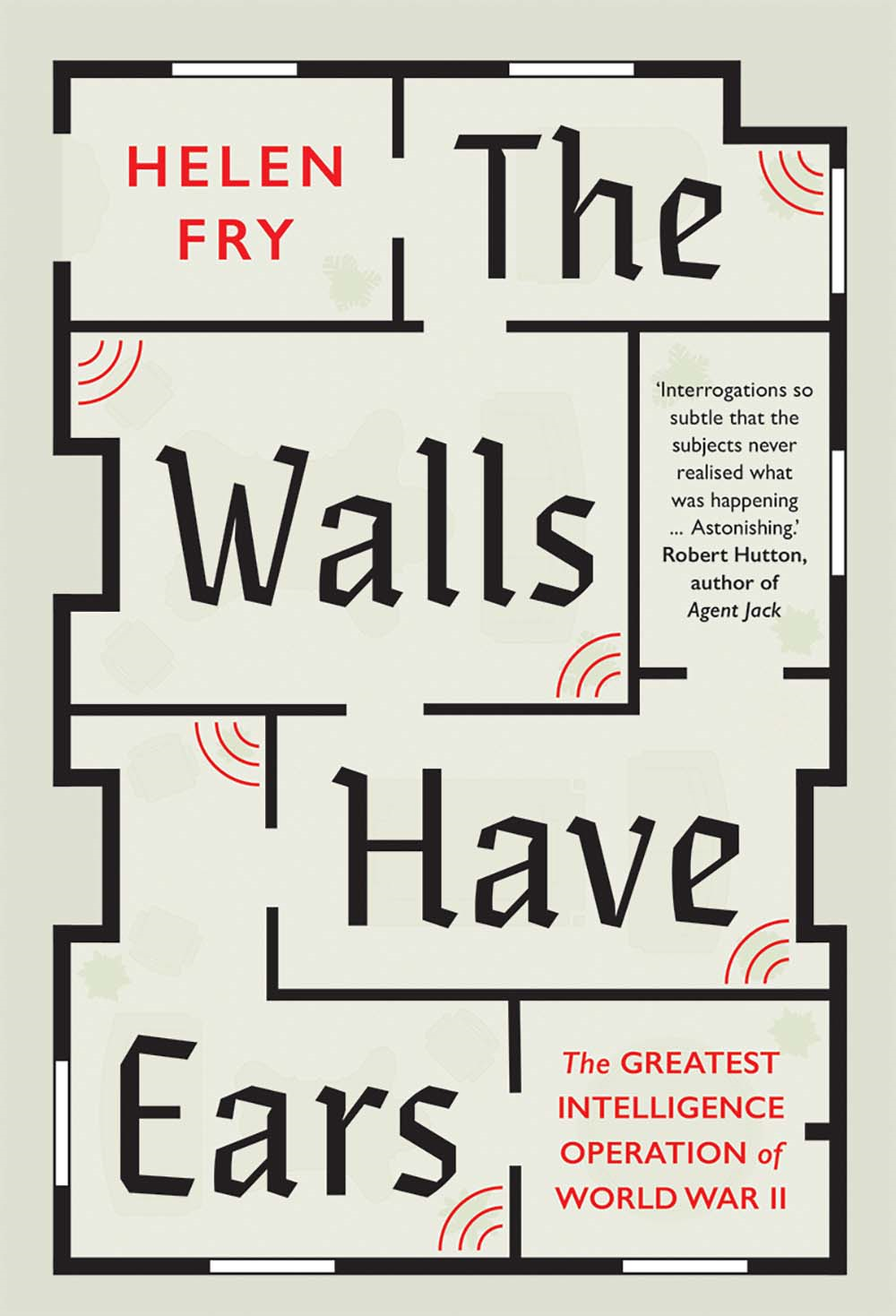
Book Club: The Walls Have Ears

LITERARY REVIEW

Fry16

Book Club16

REVIEW

DURING World War II, captured German generals and other senior officers were taken to Trent Park, a mansion house in North London.

On arrival, they were greeted by a one-legged Scottish aristocrat named Lord Aberfeldy. He was, he told them, their welfare officer and a second cousin of the king, who was very concerned that they should be treated well.

But this was all an elaborate charade. Aberfeldy was no royal relative – he was an intelligence officer called Ian Munro, who also happened to be a very good actor. So enthusiastically did he throw himself into this role that, according to a colleague, “he became too grand to talk to any of us” and “expected orderlies to address him as Your Lordship”.

His job was to butter up the generals and keep them happy. While Aberfeldy flattered them and brought them treats, they were less likely to notice what was unusual about Trent Park, which was that everything that could be bugged was.

Hidden microphones were everywhere: in the light fittings, in the fireplaces, under the floorboards in the generals’ bedrooms. There were even some hung in the trees in the grounds. The whole place was wired for sound and, in rooms hidden from view, secret listeners tuned in to everything the Germans said.

This was one of the most effective intelligence operations of the war, yet probably the least known. Its records have been declassified only over the past 20 years, and Helen Fry’s remarkable and insightful book throws new light on its workings.

It was run by Thomas Joseph Kendrick, a man with 30 years’ worth of experience in the secret services behind him.


WHILE working as a British passport officer in 1938, he became the “Oskar Schindler of Vienna”, arranging for hundreds of Jews to leave Austria after the Nazi takeover. He was arrested, interrogated by the Gestapo and expelled from the country for espionage.

Returning to London, he was the ideal commander for a new unit setting up a special bugging operation in the Tower of London. When war was declared, and the first German prisoners of war (PoWs) arrived – most Luftwaffe pilots and U-boat officers – Kendrick was ready.

Early results were promising, although, very occasionally, one of the shrewder prisoners became suspicious. Wilhelm Meyer, a pilot shot down over the Thames in November 1939, asked a cellmate: “Do you think listening apparatus are built in here?” But even Meyer finally decided he was being over-cautious.

Most were blithely unsuspecting as Kendrick’s team recorded every word they said.

As the war went on, and more and more PoWs arrived, Kendrick expanded his work. Three more sites, including Trent Park, were fitted with cutting-edge recording technology shipped over from the Radio Corporation of America in New York. With Allied victories in North Africa, more senior German officers were taken captive. (There was, of course, a huge influx of high-ranking Wehrmacht personnel after D-Day.)

As operations grew, Kendrick needed extra listeners. His interview techniques could be terrifying for candidates.

He once handed a would-be recruit a pistol across his desk. “If you ever betray anything about this work,” he said, “here is the gun with which I expect you to do the decent thing. If you don’t, I will.” His original listeners were British-born, but fluent in German. Soon, because of the variety of accents and dialects they were encountering, he needed native German-speaking emigres, most of them driven into exile by the Nazis.

They were the “King’s Most Loyal Enemy Aliens”, as one man sardonically described them.

Kendrick also used “stool pigeons” – fake fellow prisoners who joined real PoWs in their cells and subtly encouraged them to talk. One of these, a fluent German speaker, was the father of singer and actress Olivia Newton-John.

Another, whose name has never been revealed, was a former inmate of Belsen, imprisoned for his political views. After release, he had been conscripted into the German army and then captured by the British.

Unsurprisingly, his loyalty to the Nazi regime was non-existent. He was one of the first to reveal the horrors going on in the camps. But Kendrick’s greatest successes were with the generals at Trent Park. The more senior they were, the more they knew (and could unwittingly reveal) about the German war effort.

Most of them were eccentric, arrogant parodies of the Prussian officer class. One, Lieutenant-General Gotthard Frantz, wore a monocle at all times, even under sunglasses, and went to bed with all his medals on.

Another was heard to exclaim in utter bafflement, “We have the best generals and we are losing the war!”

As Fry wryly comments: “Clearly, talking too much within earshot of the hidden microphones may have had something to do with that (the loose talk).”

Others, however, more sensitive and intelligent, became severe critics of the Nazis – although toasts were still raised on Hitler’s birthday. “Pity it has to be English beer,” remarked one of the generals.


RIVALRIES developed at Trent Park between pro-Nazis and those utterly disillusioned with the progress of the war.

Kendrick’s methods of dealing with the generals was unusual, to say the least. As well as listening in on their every conversation, he took to wining and dining them. There were even lunch trips to Simpson’s on the Strand.

When Winston Churchill found out about this, he was furious and had them stopped – so Kendrick relocated the lunches to The Ritz.

Helen Fry likens the atmosphere at Trent Park to a traditional London gentlemen’s club.

Living a life of relative luxury, with their egos stroked and sense of self-importance encouraged, they relaxed – and played straight into Kendrick’s hands.

However unorthodox his operation, it worked. His listeners never set eyes on a single German PoW, but eavesdropped on more than 10,000.

They picked up enormously valuable intelligence on the secret weapons programme that produced the V1 and V2 rockets; on battle plans and troop positions; and on U-boat bases and new aircraft technology.

“You have done a Herculean task,” Kendrick was told towards the end of the war.

It was on a par with the better-known work at Bletchley Park and the cracking of the enigma code.

Helen Fry’s richly researched book, packed with surprising and fascinating detail, will bring the covert listeners of the time some of the attention they deserve.

– The Walls Have Ears: The Greatest Intelligence Operation of World War II is published by Yale, 320pp

Standard
Arts, Britain, France, History, Second World War

Normandy Memorial Statue

D-DAY MEMORIAL

Three British soldiers are depicted here charging up the beach and into the hellish unknown, their camaraderie beautifully captured in bronze.

THE dwindling band of brothers who took part in the greatest military operation of all time will, on Thursday, 6 June, have their first sight of the new monument to their 22,442 comrades who never came home. They have been waiting 75 years for this moment.

The monument has just been erected on the spot where so many young men charged ashore and gave their all. It will be formally unveiled on Thursday – the anniversary of D-Day – in front of veterans, bereaved families and world leaders including the Prime Minister and the French President.

The monument, which is beautifully captured in bronze, is a depiction of the camaraderie of three British soldiers charging up the beach and into the hellish unknown. Standing 9ft tall and weighing several tons, the three figures are not based on any individuals and deliberately carry no regimental markings or insignia. The great D-Day invasion of France on June 6, 1944 involved hundreds of thousands from all the Services and the Merchant Navy, too. The ultimate purpose of this colossal multinational endeavour, however, was to put Allied infantry on French soil and keep them there.

That is why the award-winning sculptor David Williams-Ellis has distilled the essence of D-Day into this powerful and dynamic study of that quintessential hero – the ordinary British soldier doing his duty.

“They are in standard battle dress and in my mind one is a lance corporal and the other two privates,” said Mr Williams-Ellis. He spent months researching every aspect of the invasion and talked to many veterans before embarking on this great undertaking.

“There is no rank on them, it’s just a suggestion. I wanted it to be a scene expressing camaraderie and leadership. I will leave the viewer to judge which is the lance corporal.”

Mr Williams-Ellis has also sought to represent the three main fighting components of a standard infantry section. One figure is armed with a Bren light machine gun, one has a Sten machine gun, with the other clasping the trusty Lee Enfield .303 rifle.

“He is just about to get the rifle into his shoulder and fire… I wanted to create something that really had energy.”

The statue is the first phase of a memorial that will not be completed for at least another year. Spread across a 50-acre site at Versur-Mer, overlooking a ten-mile stretch of sand codenamed “Gold Beach”, it will feature stone columns engraved with the names of every serviceman under British command who perished in the invasion and the subsequent 77-day Battle of Normandy.

Among the women honoured will be two brave nurses who were still tending to the wounded when their hospital ship, the Amsterdam, was sunk off Juno Beach.

Every other allied country involved in the landings has long had a national memorial on French soil. Not so Britain – until now. The omission has been a source of disappointment to the veterans who are still raising funds. For them, Thursday’s inauguration ceremony will be a very happy milestone.

Lord Dannatt, the former Chief of the General Staff and a trustee of the Normandy Memorial Trust, said: “Anyone who talks to the veterans and to the loved ones of those who fell can be under no illusion about how much this memorial means to them. Now it’s really happening.”

The project has been made possible thanks to a £20million grant from the Treasury’s Libor Fund (of penalty fines from errant banks) plus donations from the philanthropist Michael Spencer. Thousands have also been donated by readers of a British national newspaper. However, a further £7.5million is still urgently needed to complete it.

TO understand how the events of 1944, resonate to this day, just listen to some of the heartbreaking messages and testimonies on the memorial’s website. They include the stories of men like Squadron Leader Jack Collins DFC and Bar, from Newcastle, a Typhoon pilot who was killed leading 245 Squadron over Caen in 1944.

His son Mike Collins was four when he died. He talks movingly of his excitement, as a toddler, on seeing his father’s picture in the paper, not realising it was a report of his death. Like all the relatives of those who fell, Mike now cannot wait to see the memorial take shape and to see his gallant father finally included on the Roll of Honour.

Standard