
Britain, Government, India, Society

Britain could send ventilators to virus-stricken India

COVID SURGE

BRITAIN has pledged to support India in its battle against the devastating Covid surge which has brought the country to its knees.

The UK Government said it is “looking at what we can do to help” after India recorded 332,000 new cases in a single day.

Hospitals across the nation are buckling under the strain of a ferocious second wave, with some running out of oxygen and turning away patients due to overcrowding.

Reports have indicated that 2,263 deaths were recorded in India yesterday, although limited testing capacity means this is likely to significantly underestimate the total.

The Prime Minister, Boris Johnson, said: “We’re looking at what we can do to help and support the people of India, possibly with ventilators. Thanks to the ventilator challenge, the huge efforts of British manufacturers, we’re better able now to deliver ventilators to other countries. But also possibly with therapeutics, Dexamethasone, other things, we’ll look at what we can do to help.”

Yesterday, India recorded 332,730 new infections – the highest one-day tally of any country since the beginning of the pandemic. It was the second day running the country of around 1.4billion people broke the record.

India is now recording one in three of all worldwide Covid 19 cases. Ministers declared victory against the virus two months ago when there were around 11,000 cases a day.

The surge has been fuelled by a “double mutant” variant, thought to be more infectious.

So far 132 cases of the Indian variant have been detected in Britain, around half of which are in London. The variant contains two mutations in the virus’s spike protein, which could help it spread more easily and evade vaccines. India has been added to the UK’s travel “red list”, prompting a last minute scramble for flights to Heathrow. The Prime Minister has also cancelled a trip to Delhi which was scheduled to go ahead this weekend where he had hoped to secure millions of vaccine doses.

Government scientists have said that the current border measures in place are not enough to prevent the spread of new variants, but they can delay it. One senior scientist said there were likely to be “many more” cases of the Indian variant in the UK than the 132 detected so far. It is acknowledged that the Indian variant is more transmissible than the base virus although it isn’t known if it’s more transmissible than the Kent variant due to lack of data on vaccine efficacy.

Desperate families in India have been begging for oxygen or medical help on social media, and crowds have gathered outside hospitals with some dying on stretchers as they wait.

Three days ago, 22 patients died at a hospital in Maharashtra when their oxygen supply ran out after a leak in the tank. Yesterday, 13 Covid patients died when a fire broke out at a Mumbai hospital.

Dr Atul Gogia, who works at a hospital in Delhi, said: “We do have oxygen but it’s now on a day-to-day basis. We got some oxygen last night, so we have some oxygen now.” He also added: “We do not have enough oxygen points, patients are coming in with their own oxygen, others without, we want to help them but there are not enough beds or oxygen points, and not enough oxygen to supply them.”

Max Healthcare, which runs hospitals in northern and western India, has appealed on Twitter for oxygen at its facility in Delhi. The company said, “We regret to inform that we are suspending any new patient admissions in all our hospitals in Delhi until oxygen supplies stabilise.”

The government has started shuttling trains containing tanks of oxygen across the country to hotspots. Crematoriums are also overwhelmed, with one in Delhi resorting to building pyres in its car park.
Standard
Arts, Books, Economic, History, Society

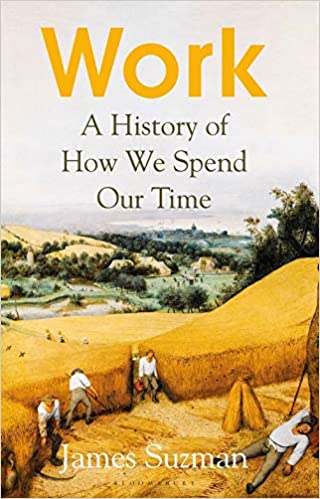
Book Review – ‘Work: A History of How We Spend Our Time’

REVIEW

IN 1776, Economist Adam Smith predicted that one day machines would “abridge labour”. We were meant to be able “to lie on the grass under trees on a summer’s day . . . watching the clouds float by”.

John Maynard Keynes, in the 1930s, thought that by now robots would be doing the donkey work, and food, water, warmth and safety would be “universal… and experienced equally by everyone”.

To which the only reasonable rejoinder or retort is: pig’s bottom. In 2020, owing to what James Suzman, a Cambridge professor, calls “cyber-physical systems animated by machine-learning algorithms”, i.e., computers, people are spending much longer staring at screens. In Britain in 2018, there were 600,000 work-related mental health issues reported to doctors.

In Professor Suzman’s reading of human history, nothing ever runs smoothly for long. For primitive peoples, life was “a constant battle”. When agriculture was developed, there were always droughts, floods and frost. What characterised us, however, was persistence. With the herding of animals came settlements and barns for grain, thence the need for carpenters, blacksmiths, merchants, stonemasons – eventually doctors, teachers and lawyers. Literacy enabled the keeping of accounts and the creation of banks.

The fatal paradox, though, is that gains in productivity are cancelled by population growth – more mouths to feed. Britain’s population in 1750 was 5.7 million, in 1851 21.1 million. Today it is nearly 70 million.

The Industrial Revolution behind the boom had little to recommend it: in the mines, children toiled like slaves. Women worked 14-hour shifts in mills. The working class were nothing but “a pin in a big machine”. Creativity was not wanted, only “target-driven, repetitive work”.

It has not been the proletariat, however, who benefit. Suzman quotes the alarming statistic that between 1978 and 2016, while the average pay increases were 11.7 per cent, the remuneration of CEOs went up by a staggering 937 per cent.

Clearly, we are victims of our ingenuity: we clear rainforests and generate greenhouse gases in the name of cheap food. Each year, 66 billion chickens are reared – triple the number of all wild birds.

Greed is the key to modern problems, what Suzman calls “the malady of infinite aspiration” – more microwave ovens, cars, phones. Nor is there a proportional correspondence between human labour and reward. What really counts if you want good prospects, are family connections, inheritance and “getting lucky”.

When order is under threat from human folly, Suzman says famines, wars and pandemics are the usual “imminent and severe correction” – so coronavirus should not be a surprise.

‘Work: A History of How We Spend Our time’ is published by Bloomsbury, 447pp

Standard
Arts, Books, Culture, Society

The Life of John le Carré

John le Carré, one of the greatest spy novelists, died at the end of last week following a short illness. He was 89.

The Tinker, Tailor, Soldier, Spy author – whose real name was David Cornwell – has been described as an “undisputed giant of English literature” who “defined the Cold War era and fearlessly spoke truth to power”.

Le Carré – who had been in the intelligence services himself – rallied against the idea of spies being glamorous characters like James Bond.

His self-effacing spymaster George Smiley was created as a deliberate contrast to Ian Fleming’s OO7, who he felt inaccurately portrayed the life of a spy.

The writer worked for both MI5 and MI6 during the height of the Cold War in the 1950s and 1960s, before leaving the service in 1964 to become a full-time writer.

Many of his novels were adapted into successful films and TV shows starring a wide array of Hollywood talent including Sean Connery, Pierce Brosnan and Ralph Fiennes. His 1974 Tinker, Tailor, Soldier, Spy was first turned in to a TV miniseries in 1979 starring Alec Guinness. The book was then adopted for a second time 32 years later into a successful film starring Gary Oldman, Colin Firth and Kathy Burke.

In 2016 his first post-Cold War novel The Night Manager was serialised in six parts on the BBC starring Tom Hiddleston, Hugh Laurie and Olivia Colman.

The show was widely praised and won two Emmy Awards and three Golden Globes.

Despite his international success – the wife of the Russian leader, Raisa Gorbachev, was said to be a fan – the author once said he did not want his books considered for literary prizes.

He reportedly turned down an honour from the Queen but accepted Germany’s Goethe Medal in 2011.

Le Carré was born in Poole, Dorset on October 19, 1931. After attending Sherborne School he spent a year studying German literature at the University of Bern, before enlisting for compulsory military service in Austria, where his tasks involved interrogating Eastern Bloc defectors.

Upon his return to England he earned a degree in modern languages at Oxford University, then taught at Eton before joining the Foreign Service.

It was during his time at MI5 and MI6 that Le Carré began to write down ideas for spy stories, often on trips between work and home.

His first novel, Call For The Dead, was published in 1961 under his pen name, to get around a ban on Foreign Office employees publishing books under their own name.

George Smiley featured in nine of Le Carré’s books and played the central character in his Karla Trilogy, made up of Tinker, Tailor, Soldier, Spy, The Honourable Schoolboy and Smiley’s People.

Le Carré said the character was based on John Bingham, an MI5 agent who wrote spy thrillers and encouraged Le Carré’s literary career and the ecclesiastical historian Vivian Green, the chaplain of his school and later his Oxford College who he said became his “confessor and godfather”.

Le Carré married Alison Sharp in 1954, with whom he had three sons before the couple divorced in 1971. In 1972, he married Valerie Jane Eustace, with whom he had a son, the novelist Nick Harkaway.

Fellow writer Robert Harris said: “I think he will be one of those writers who will be read a century from now.”

Le Carré is survived by second wife of almost 50 years, Valerie Jane and his sons Nicholas, Timothy, Stephen and Simon. A family statement thanked the NHS team at the Royal Cornwall Hospital in Truro for the care and compassion that he was shown. His illness from pneumonia was not Covid-related the statement said.

Standard