THE French writer and philosopher Voltaire told how Saladin, “the Conqueror of the East”, bequeathed his fortune to the poor, regardless of whether they be Muslim, Christian or otherwise.
His thinking was that we should care less about what people believe and more about what people feel.
Our expectations of the next life might differ. But while we are here, we all feel hunger, satisfaction, fear, comfort, loss, love and so on.
If you want to know whether you should treat a stranger as a brother or sister, ask if they miss anyone, if they love anyone.
If they ever cried at night; if joy makes them laugh.
Then, in sympathy with all the feelings we have in common, understand that we are not so very different after all.
COMEBACKS have rarely been as brutally quick as the Taliban’s dramatic surge across Afghanistan since the start of July.
Eleven regional capitals have fallen to the insurgents in six days and hundreds of thousands of Afghans have fled their homes, fearing life under Islamic fundamentalism.
Funded by an annual budget believed to be in the region of $1.5bn, cash comes direct from drug-running, extortion, and the imposition of local taxes in areas and regions the Taliban control. Their forces include up to 85,000 fighters and their weaponry include AK-47 assault rifles, rocket-propelled grenades, mortars, other small rockets, anti-aircraft and anti-tank weapons, suicide bombers, Improvised Explosive Devices (IEDs), plus weapons captured from the Afghan army.
It is time to ask how a group reviled as savage religious extremists and sponsors of international terrorism could recover from utter defeat two decades ago to become Afghanistan’s rulers-in-waiting.
Does the Taliban’s apparent impending victory mean that the country is destined to hurtle back to the brutal medieval regime that ruled there in 2001?
Day by day, the plight of Afghanistan and its people grows ever more desperate.
Emboldened by the withdrawal of Western troops, the resurgent Taliban is sweeping through the country with alarming speed.
Nearly a third of the 35 provinces are under their control, with insurgents in striking distance of Kabul. The fact that 600 British troops – mostly from the Parachute Regiment – are being sent to oversee the immediate evacuation of all our nationals suggests the fall of the capital is just days away.
There are already reports of atrocities – summary executions, torture and mutilation. If the Taliban take the whole country, this wicked and hideous persecution will again become the norm.
This is not a problem the West can brush aside. American invaded after 9/11 to oust the Taliban and stop Afghanistan being a sanctuary for terror groups. Following their withdrawal, how long before the jihadis are plotting mayhem in the West?
Meanwhile, with up to 100,000 refugees fleeing each month, many will soon begin arriving in Europe seeking asylum. This is the world’s problem. Who will help Afghanistan’s fragile Government fight off the barbarians at their gate?
President Biden’s woefully nonchalant remarks that Afghans “need to fight for themselves” suggests America has shamefully washed its hands of its responsibilities.
To his credit, UK Defence Secretary Ben Wallace, a former soldier, tried to put together a British-led coalition. But without US engagement, it was never likely to happen. The lily-livered UN stands impotently by. The Islamic world is troublingly muted.
Afghanistan’s plight will be distressing to British soldiers who lost 455 colleagues trying to keep the Taliban out. Not for the first time, brave men and women who gave so much for our safety are left to rue the cost of politicians’ foreign misadventures. A tragedy that shames the world.
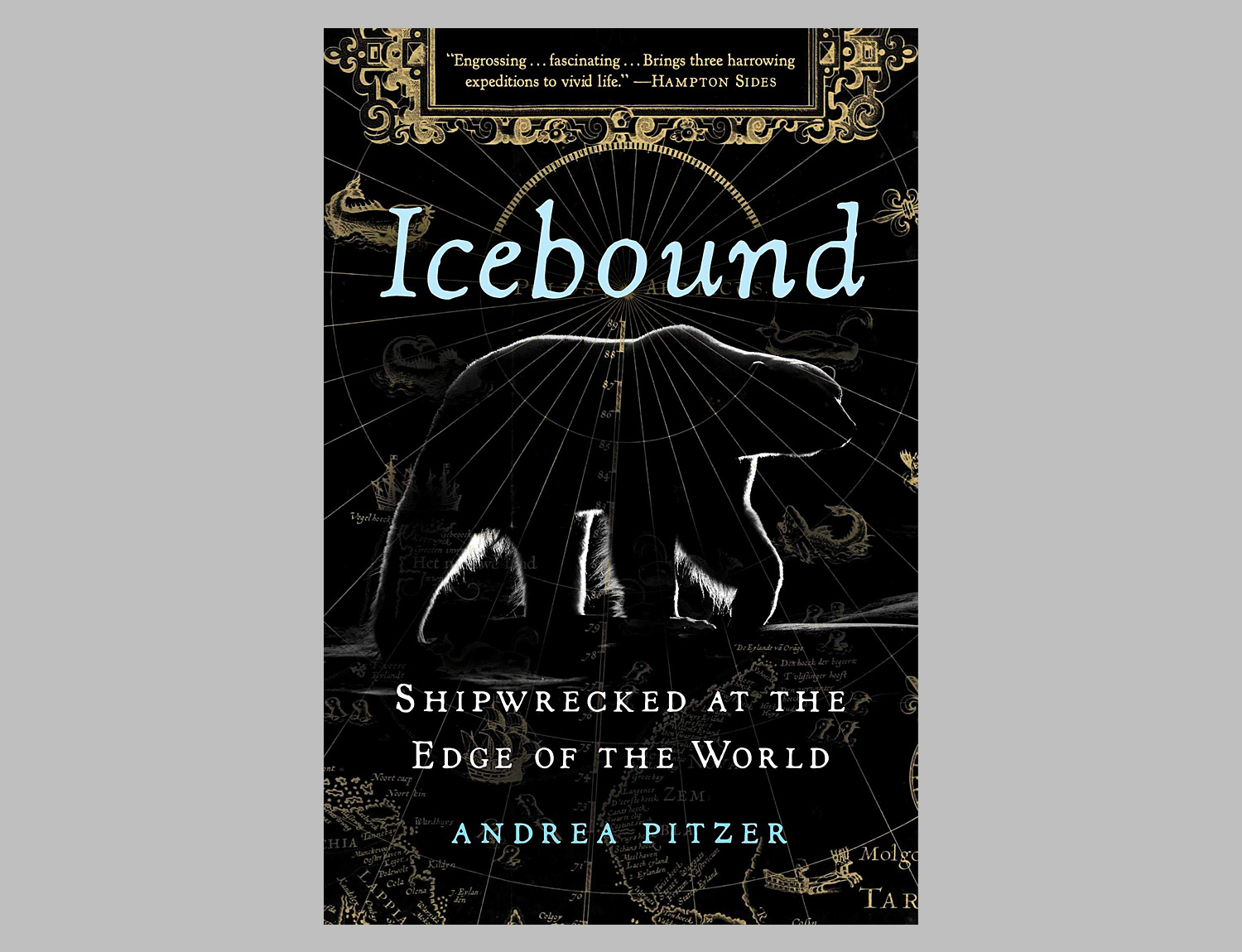
Intro: Thought your lockdown was tough? William Barents and his crew were stranded in the Arctic for nine agonising months, with barely any food and at the mercy of ravenous polar bears. Ice-olation as opposed to isolation
THE name of William Barents isn’t that familiar to us these days beyond perhaps a line of type on your atlas, marking a patch of blue north of Norway and Russia – the Barents Sea.
But this enthralling, elemental and (literally) spine-chilling epic of courage and endurance certainly deserves to change all that.
Barents was an energetic businessman and seafarer in the early days of the new-born Dutch republic at the end of the 16th century, a tiny country that would soon become the world’s leading economic and naval power.
It was an age of adventure and exploration, of burgeoning science and medicine, and of great art – Vermeer and Rembrandt would soon be along. It was also an era of limitless promise, as the undiscovered parts of the world opened-up their great and vast treasures.
Barents was the outstanding navigator of his age, and when the traders and merchants of the thriving port city of Amsterdam saw the chance to make a pile of money in the new world to the east, it was to him that they turned.
Barents hatched a plan to sail north to Nova Zembla (“New Land” in Dutch), an unmapped and infinitely desolate finger of rock and ice stretching hundreds of miles into the Arctic seas north of Russia.
If his little fleet could round that finger of rock, then maybe he could confirm the long-held (and very mistaken) view that there was a warm sea at the North Pole.
TWO
REACHING China would then be achieved much faster, and safer, than across the southern oceans and so bring untold wealth to the prosperous burghers of the fledgling Dutch republic.
It was, in today’s language, a no-brainer. And in William Barents, then in his 40s, the investors had just the man. An inveterate explorer, he had sailed all the shores of Western Europe and pioneered map-making and cartography in the region. This voyage was a chance to remake the geography of the world. It was too good to resist.
At the heart of this magnificent story – using two contemporary accounts from crewmen – is Barents’s third voyage, after a couple of early recces.
His ship was 60-odd feet long, about the length of a cricket pitch, and the crew numbered just 17.
In August 1597, they rounded the tip of Nova Zembla hoping to reach open seas, but they found themselves surrounded by icebergs – vast frozen cliffs moving dangerously around the boat, while the winds grew stronger, and the currents drove them into shore.
The icebergs began to tilt the vessel backwards and smashed parts of the stern. As the huge ice floes surged and withdrew like the ebbing of the tide, Barents realised the ship was finished and they would have to winter on dry land until the spring.
What an extraordinary decision it was: these bold, resourceful Dutchmen towed the contents of the ship by sled across the ice on to Nova Zembla, where they used driftwood to build a log cabin.
As the blizzards raged and the temperature dropped to -30C, it wasn’t just the devastating cold the men had to contend with. Food from the ship was limited so they hunted and cooked the marauding foxes. These were fortuitously a limited source of Vitamin C, but still the men fell ill with scurvy, which wrecked their bodies and loosened their teeth.
Besides the weather, their main enemy was the countless polar bears which were far from the loveable creatures to which they are often portrayed.
We might think of them floating, anxious and hungry, on a passing ice floe; for Barents and his men they were vast, cunning and savage enemies always ready to attack.
They were also a source of fuel: that is, if the sailors could kill the bears before they were killed themselves.
For the long winter, it was a matter of survival, with life on the very edge of mortality. These boundless and courageous Dutchmen did, however, find a way to celebrate Twelfth Night in January 1597, with the last of the wine from the boat, fox meat and ship’s biscuit. The blubber from a slaughtered polar bear fuelled their lights as they caroused.
When, after nine months imprisoned in their makeshift hut, the weather changed, the crew set sail in the little boats they had saved from the ship.
They went south in an epic of physical stamina, battling ice and foul weather before being rescued by Dutch traders near the Russian coast. On the way, even Barents’s endurance gave out and he could last no longer. His body may have been left to float away on a piece of ice, before he finally slipped below the freezing oceans that he had tried to conquer.
THREE
BACK in Amsterdam, the crew’s exploits were wildly celebrated, and chronicles of their ordeal were translated all over Europe. The voyage became a symbol of suffering: Shakespeare, writing about another Twelfth Night, has Sir Andrew Aguecheek dismissed thus: “You are now sailed into the north of my lady’s opinion, where you will hang like an icicle on a Dutchman’s beard.”
More than 400 years later, the remains of Barents’s little hut that kept his men alive through the long, frozen days can still be seen on Nova Zembla, as Ms Pitzer, a Washington-based journalist and historian who sailed Barents’s route, describes in a moving epilogue.
In exploration voyages today, every step of the journey becomes part of a daily Twitter blog or an Instagram update. But back then there was nothing; and after a while Barents and his band of crewmen were to all intents and purposes presumed dead.
As Ms Pitzer writes, he set the scale for a new kind of hero, based on knowledge, immense skill and endless endurance.
Barents may have been wrong about the warm Polar Sea, and his dream of an open trading route across the roof of the world wouldn’t arrive for centuries, but his heroism and the endurance of his small band of sailors became a shining example at that point in time. Perhaps it should be even now, especially at a time when many people are bellyaching about not being able to do exactly as they please.
. Appendage
– Long before Bering or Amundsen, long before Franklin or Shackleton, there was William Barents, in many ways the greatest polar explorer of them all. In this engrossing narrative of the Far North, enriched by her own adventurous sojourns in the Arctic, Andrea Pitzer brings Barents’ three harrowing expeditions to vivid life, while giving us fascinating insights into one of history’s most intrepid navigators.

 Arts, reviews & current affairs