
Arts, Britain, Broadcasting, History, Society, United States

The Beginning of Radio Broadcasting

SHORT ESSAY

THE FIRST EXPERIMENTAL radio broadcasts were made in Britain in 1921. They led to the formation a few months later of the British Broadcasting Company (later Corporation). This was at the instigation of the General Post Office (GPO), who wanted to see the formation of a single consortium of wireless equipment manufacturers and broadcasters, specifically to avoid the major confusion that had arisen in America, where there were 500 rival stations. The new Company worked under John Reith, an engineer from Aberdeen who was the company’s general manager for its first 16 years. Under Reith’s leadership, the BBC became a major national institution. The broadcasts were entirely live, and Reith insisted on a high level of formality, in spoken English, behaviour and dress, traditions which have unfortunately been thrown to the four winds in recent years.

The London broadcasting station, known as 2LO, went on the air on 14 November 1922 as the British Broadcasting Company. A news bulletin was read by Arthur Burrows of the Marconi Company. The initial broadcasts were fairly short, but soon lengthened to four hours a day of news, talks and concerts.

The BBC was supported financially by licence fees paid for by the users. They had to pay ten shillings a year (50 pence) for the privilege of operating a receiver. The same system was used when television was introduced, also by the BBC.

At the same time in America, the first commercial radio was being broadcast. The New York Station, WEAF, broadcast the first radio commercials. This different approach to broadcasting was to become the set pattern in America – private control of the airwaves and programmes dominated by sponsors. The radio pioneer Lee Dee Forest asked, “What have you done with my child? You have sent him out on the street in rags of ragtime to collect money from all and sundry. You have made of him a laughing stock of intelligence, surely a stench in the nostrils of the gods of the ionosphere.”

In 1923, the BBC began publishing its magazine, the Radio Times, so that listeners would know in advance what programmes were to be broadcast; this too became a long-continuing practice.

By 1926, radio ownership in the United States reached 3 million; most of these radios required listeners to wear earphones. In 1926, NBC (the National Broadcasting Company) was founded by David Sarnoff; this ambitious project had nine stations.
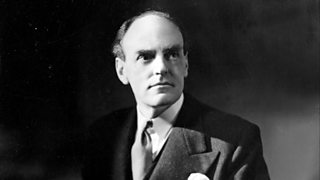
John Reith

Sir John Reith, Lord Reith of Stonehaven (1889-1971) was General Manager/ Managing Director, British Broadcasting Company 1922-1927 and then the first Director-General of the newly-incorporated British Broadcasting Corporation.

The first experiments with television followed hard on the heels of radio. It was in 1926 that John Logie Baird gave his first public demonstration of television, but the system he used was based on the rotating disc invented by van Nipkov in 1886 and had serious limitations. Television had its first American demonstration in 1927 in the auditorium of New York’s Bell Telephone Laboratories. Walter Gifford showed a large audience commerce secretary Herbert Hoover while at work in his Washington office while Hoover’s voice was transmitted over telephone wires. The development of television was seriously inhibited by the fact that it needed a frequency band of 4 million cycles compared with only 400 for a radio. This was because of the need to transmit 250,000 elements required to build a clear picture on the screen.

The first regularly scheduled TV programmes started on 11 May 1928. General Electric’s station in New York broadcast the first programmes.

Another contributing development was the invention of the first tape recorder. The Blattnerphone designed by the German film producer Louis Blattner used magnetised steel tape. Blattner himself used his invention to supply synchronised soundtracks to the films he was making at Elstree Studios. The BBC saw straight away that the tape recorder was going to be invaluable to them, not least for making recorded programmes, and acquired the first commercially produced Blattnerphone in 1931.

Both radio and television continued to develop. In America, 75,000 radio sets were sold in 1921; by the end of the decade sales had increased to over 13 million. It had become a major communicator. It had also become big business. US advertisers were spending an incredible 60 million dollars on radio commercials alone.

Standard
Arts, Education, History

(Short Essay) The Agricultural Revolution

1730

ALONGSIDE the Industrial Revolution came a revolution in agriculture. When agriculture first began, selected grass seeds were sown so that gradually improved varieties with larger ears were produced; in this way wheat and barley were developed from grasses. In the same way livestock rearing used selection. The principle of selection and selective breeding was long established. It was only in the eighteenth century that they became scientific in approach, and then development became rapid. The first step in this new agricultural revolution was the invention of a seed drill by Jethro Tull in 1701. This simple device, which pioneered sowing in rows and facilitated weeding, was improved eighty years later by the addition of gears to ensure the even distribution of seed.

Charles Townshend resigned from the British government in May 1730, at the age of 56, to begin a new career as an agricultural improver. Townshend, who became known as “Turnip” Townshend, observed the progress that the Dutch farmers were making by using scientific methods, and applied what he learnt on his own estates. He found that he could keep livestock through the winter by feeding them on turnips. By reserving a field or two for growing turnips as a fodder crop, he eliminated the need to slaughter most of his flocks and herds each autumn. The animals could be kept alive through the winter and slaughtered as and when there was a demand. This development meant that for the first time within the British Isles fresh meat became available all the year round. It also reduced the need to use expensive spices to disguise the taste of rotting meat, improved the safety of food, and allowed the cattle to grow bigger. By 1732 the average bullock sold at Smithfield cattle market in London weighed 550 pounds, compared with 370 pounds in 1710. There were many gains from just one change in practice.

Selective breeding by Leicestershire farmer Robert Bakewell led to the creation of a new breed of sheep, the Leicester, in 1755. Five years later Bakewell started experimenting with selective breeding of beef cattle, and by 1770 he had produced animals with deeper, wider bodies on shorter legs, animals that carried much more meat. He worked on the simple idea that “like produces like”, each year only breeding from the most suitable stock.

Crop rotation was developed in a more scientific way, to ensure that each farm produced the maximum amount of food. This intensification of agriculture led to a marked increase in food production in Britain and other European countries following similar paths. By 1770, the UK was producing a surplus of potatoes for the first time. The potato had until that time been grown exclusively as a subsistence crop; now there was a surplus that was available for sale at markets and in shops.

In 1772 Thomas Coke started a programme of selective animal husbandry that would result in the creation of Devon Cattle, Suffolk pigs and Southdown sheep. By 1780 the agrarian revolution was well under way, with higher quality seed in general use, more scientific crop rotation (pioneered by Jethro Tull in 1720), more efficiently designed tools and generally increased productivity. Thomas Jefferson wrote rather apologetically in his Notes on Virginia about the extensive nature of agriculture in America at that time. “The indifferent state of agriculture among us does not proceed from a want of knowledge merely. It is from our having such quantities of land to waste as we please. In Europe the object is to make the most of their land, labour being abundant; here it is to make the most of our labour, land being abundant.”

In other words, it was the pressure of a high population density that produced the revolution, the intensification of agriculture in Europe. But the need to produce more food throughout the world would eventually come, as population levels rose.

Standard
Arts, Culture, History, Literature

Short Essay: Shakespeare’s Plays

(1590–1612)

IT WAS VERY soon after the beginning of his acting career that William Shakespeare started writing plays of his own. Shakespeare was remarkable in many ways, but perhaps the most remarkable is that he was immediately successful. There is no surviving sign of any “apprentice work” that is substandard or unworthy of performance, which is really quite extraordinary. He wrote historical plays that were from the start finely written, immensely popular and commercially successful, the three parts of Henry VI (1592). The theatre impresario Philip Henslowe wrote in his diary that “Harey the vj” played to packed houses at the Rose Theatre between March and June 1592.

The young Shakespeare’s triumphant debut on the London stage was not universally applauded, and there must have been many who were envious of his ability. In September 1592, a frustrated writer called Robert Greene wrote a pamphlet called Greene’s Groatsworth of Wit, Bought with a Million of Repentance. This included a ranting attack on an “upstart crow”, a “Shakescene”. It must have been audaciously galling for Greene to see Shakespeare make an immediate hit with his very first play – rather like the composers Igor Stravinsky and William Walton being extremely irritated by the success of Benjamin Britten.

His first seven years in the theatre included several other successes too. He completed two more history plays, King John and Richard III, a revenge tragedy, Titus Andronicus, and three comedies, The Comedy of Errors, The Taming of the Shrew and The Two Gentlemen of Verona. So, by 1592, William Shakespeare had attempted to write in each of the three most popular forms of drama of his day – and succeeded. Not only that, he had extended their range, and made his own highly original contribution to each genre. The play-goers in London must have been very aware that a dazzling new talent was at work, eclipsing even Christopher Marlowe, then generally thought to be the best playwright of the era.

For two years in 1592, the London theatres were shut because of plaque. While the theatres were shut, Shakespeare turned his hand to narrative poetry, writing the long and extensive poems Venus and Adonis and The Rape of Lucrece (a dedicated letter to his patron, the Earl of Southampton, in which he promised to compose a “graver labour”. The play has a serious tone throughout). These poems were highly praised for their eloquent treatment of classical subjects. He wrote many sonnets too at this time when plays were banned, and these were in private circulation by 1598.

When the theatres re-opened in 1594, Shakespeare joined the acting company The Lord Chamberlain’s Men, and soon became its joint manager. The company had made quite a clever and shrewd choice by inviting Shakespeare in as a “sharer”. Up to this point he had been a freelance, and any theatre company could perform his plays; now, though, the Lord Chamberlain’s Men had his exclusive services. Shakespeare had his financial security; the company had his plays.

There then followed a torrent of great plays: a tragedy (Romeo and Juliet), three more histories and five more comedies.

When James I came to the throne in 1603, Shakespeare’s company became The King’s Men, and this change in status brought great benefits to the company. His later plays included tragedies such as Hamlet and Macbeth, plays that rank among the darkest ever written. Shakespeare crafted his later plays so that they could be performed in open-air theatres like The Globe, but now also indoors in the great halls of great houses, where artificial lighting and more elaborate stage effects were possible. Shakespeare was always an intensely practical man, well able to adjust to changing technical conditions – and changing fashion. Tragi-comedy (or romantics) was a form of drama now much in trend, so Shakespeare supplied it. These “last plays”, as they are known, included Pericles, Cymbeline, The Winter’s Tale and The Tempest.

Shakespeare’s prolific play writing have seen 37 of his plays surviving (while several more have not). The Tempest shows a thinly disguised Shakespeare taking his leave of the stage. He formally handed over the role of The King’s Men dramatist to John Fletcher and retired in 1612 to Stratford, where he died four years later, on 23 April 1616. In 1623, two of his closet friends in the King’s Men – John Hemminge and Henry Condell – assembled all the plays and published them in what is referred to as the First Folio. It was not just a tribute to the greatest playwright of the age, but it saved the plays from extinction. Without that timely publication, many of the surviving plays would have been lost.

Shakespeare was the outstanding playwright of the Renaissance, outshining all his contemporaries and setting new standards for all subsequent dramatists. His plays range widely in subject and tone – challenging histories loaded with political agenda, atmospheric and romantic comedies and the darkest of tragedies. His work is astonishing for the richness and beauty of its language, showing the full potential of the English language for the expression of thought and feeling, building on the weight and majesty that William Tyndale had brought to it a few decades earlier. It also shows great insight into a wide range of human predicaments. Shakespeare’s plays exemplify the questioning humanism of the Renaissance.

Standard