
Britain, Economic, Government, International trade, Politics, Society, Technology

Wresting opportunity from this geopolitical crisis

GEOPOLITICS

Intro: If Britain is nimble and responsive to this global crisis it can be a winner in an era beset by conflict. Confident governments that circumvent risk will benefit handsomely

Amid the geopolitical storms and instability emanating from Ukraine to the Strait of Hormuz, flickers of light are piercing the gloom. To paraphrase Charles Darwin, it is not the strongest that survive, but those most responsive to change. So too, with nation states. Mid-ranking powers are navigating independent paths to mitigate risks and grasping opportunities lacing the chaos. There are lessons here for Britain.

In Ukraine, necessity has proved the mother of invention. Since Russia’s invasion, Ukraine has revolutionised its industrial-defence base, changing the face of global warfare. In 2024, Ukraine conducted the first fully autonomous drone strikes on Russian targets. The scale of innovation is equally dramatic. Ukraine has reduced its reliance on foreign-supplied military hardware, from 54 per cent to 18 per cent, in three years. Now, Gulf states are queuing up to buy its drones to defend themselves against Iran.

Such rugged self-reliance and determination persuaded the United Arab Emirates (UAE) to leave OPEC, the 12-country cartel that fixes oil prices and supply. “Opexit” will enable the UAE to increase its oil production by around 40 per cent, and help to ease global shortages. In doing so, the UAE has derided regional rivals, deepened ties with the US and Israel, and signed a defence pact with Ukraine. These moves are highly controversial for a mid-sized power under lethal fire – responding with vision and self-confidence.

The trend is not limited to those facing military pressure. When China responded to Australian criticism over Covid in 2020 by imposing tariffs, the government in Canberra reduced its dependency on China. It expanded trade with South-East Asia, and signed Aukus, the defence co-operation pact with Britain and the US.

In the wake of US tariffs, Canada signed a dozen new free trade deals, and launched a sovereign wealth fund to boost critical mineral supply chains with allies. It has ramped up defence spending, and is partnering with innovators in defence tech. 

The emerging trend undermines lazy assumptions that mid-sized nations must choose between or bow to larger powers. Confident governments that manoeuvre nimbly can circumvent risk. By co-operating in clusters with like-minded partners, they can seize the opportunities accompanying geopolitical ructions.

There are clear lessons for Britain. Since 2019, UK trade has increased – measured by volume or as a proportion of GDP. The latest United Nations statistics show that, since its departure from the EU, Britain rose from seventh to fourth place in the global trade rankings, spurred on by trade deals with Australia, India, and the 11 countries of the Comprehensive and Progressive Agreement for Trans-Pacific Partnership. As a services-oriented economy, the UK should strike further deals from the Gulf to South America.

UK trade objectives, however, must play to our comparative advantages. London remains the second-largest financial centre in the world, contributing 20 per cent more to the UK economy than it did in 2016. We can build on this by securing greater market access abroad. Reform at home would help, too. With public finances strained, state support should focus on sectors where the UK offers global leadership from life sciences to AI, for example, to make it easier for large funds to invest in data centres and defence procurement.

As the conflict in Iran shows, the global economy is still acutely reliant on traditional maritime supply chains. Britain has a long history as a leading maritime nation, and UK firms – like GB Global – are looking to high-tech logistics and modular methods of shipbuilding to mitigate these risks. The Government can do more to support this strategic sector, in ways that would boost tax revenue.

If Britain aims to lead in innovation, we need a reliable supply of critical minerals. Similarly, Europe-wide efforts to rebuild defence capabilities will fail without a stable supply of heavy rare earths.

While the West lags behind China by around 20 years in the race to mine and refine these commodities, Europeans have been slower to respond than the US, Canada, Japan, and Australia. The UK has some natural resource and refining capacity, but is yet to translate strategic objectives into operational delivery. One option is to help finance projects abroad in return for the off-take needed to service industry.

Likewise, in defence tech there is a UK hub emerging in Swindon, but it needs a technical college to provide the skills, faster procurement decision-making, and a revamp of the electricity grid to attract businesses.

The splintering of the post-1945 international order has sent waves of uncertainty around the world. Yet mid-sized countries can navigate turbulent geopolitical waters, but only if they face the new realities and play to their strengths.
Standard
Arts, Books, China, Communism, Education, History, Society

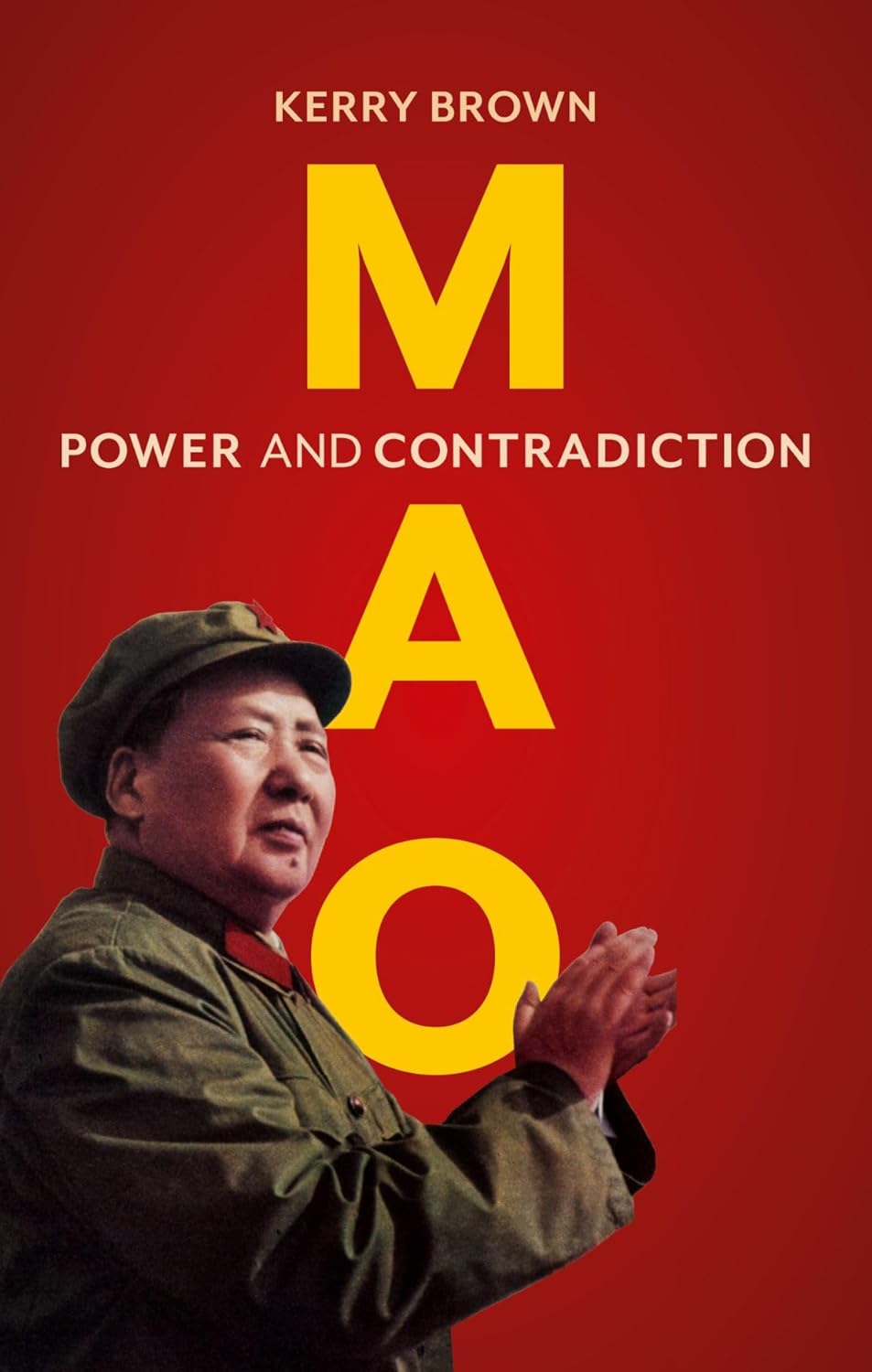
Book Review: Mao

LITERARY REVIEW

Intro: The central argument of Brown’s thesis is that Mao was a ‘moderniser through destruction’. He believed that for a new China to be born, the old one had to be violently uprooted. The book suggests that while Mao’s methods were often catastrophic, the unified, assertive China we see today is an inescapable result of his reign

Kerry Brown writes that “Mao’s provocations… would have suited the world of social media and Twitter/X”. That’s a fertile observation. One could well imagine an @Mao account, or a podcast – The Chairman Mao Experience – attracting a huge and hungry following.

Mao Zedong was, after all, a famed dispenser of earthy aphorisms. He told an astonished hall in 1959: “Comrades… if you have to s—, s—! If you have to fart, fart! You will feel much better for it.” He was obsessed not so much with state-building as with the more intimate endeavour of moulding minds. “Simple slogans, cartoons, and speeches”, he wrote, “have produced… a widespread and speedy effect among the peasants.” Social media would have been a central platform for his rhetoric.

Even in death, Mao trips us up. In the half a century since his passing in 1976, biographers and historians of China have failed to reach consensus on what drove him, what degree of responsibility he bears for the tragedies of the early People’s Republic, and what his contributions were to the wealthy and successful China of 2026. He ran the country for 27 years, yet remained an enigma – associated, at various times in his life, with violence and mercy, Confucianism, and techno-utopianism. In his new biography Mao, Brown, professor of Chinese studies at King’s College, London, all but emits a sigh, surveying the task ahead: “Getting a clear sight of who Mao was… presents a massive challenge.”

Some early signs provide pointers. Young Mao, born in imperial China in 1893, was fiercely opposed to the ruling “Simple slogans, cartoons, and speeches”; yet, he was schooled in the Confucian classics, and was impressed by the importance of self-cultivation. It was a short hop from self-cultivation to the cultivation of others’ selves – in particular those of the vast mass of China’s peasantry, whose loyalty and labour were required for revolution.

Mao came to believe that Marxism offered the best blueprint for achieving this. Russia’s Bolsheviks had shown that what Brown calls “an enlightened vanguard of activists” armed with a simple critique of present injustices could rally the masses to their cause. The people of Hunan province, where Mao built his early political base, possessed, in his estimation, “no brains, no ideals, and no basic plan”. Changing that required, in Brown’s words, “the framing of social relations in elemental terms as a struggle between… two great forces”. One only had to exchange Marxism’s “capitalists” with “landlords” for China’s peasants to raise their gaze beyond their own fields and throw themselves into collective action. Mao deployed night-schools and propaganda to this end, providing just enough education to create a biddable mass that would “rise like a mighty storm, like a hurricane, a force so swift and violent that no power… [would] be able to hold it back”.

Compromise was not in Mao’s DNA. In 1921, while still a marginal figure in the party, he attended the fabled first meeting of the Chinese Communist Party in Shanghai. The location, then in the city’s French concession, is today regarded in China as sacred ground, festooned (the author tells us) with TV screens and interactive guides. And yet: so disillusioned was Mao by the CCP’s pragmatic decision to forge a temporary alliance with the Chinese Nationalists that he boycotted its second congress in 1922. (In later years, he would pretend he’d done no such thing, and only failed to locate the address where the meeting was being held.)

Mao once declared that revolution is “not a dinner party, or writing an essay, or painting a picture, or doing embroidery . . . a revolution is an insurrection, an act of violence where one class overthrows another”. Brown takes the reader on the wild ride that was Mao’s life in the 1930s and 1940s: his quick return to the fold, the rise of the CCP, its fight against Japanese invaders, then all-out civil war with Chiang Kai-shek’s Nationalists – whom Mao had driven out of China and into Taiwan by the end of 1949, thus establishing Communist rule.

Then comes the perplexing mix of success and tragic failure that were the early years of the People’s Republic of China. Greatest of all disasters was the Great Leap Forward of 1958–62, during which a staggering 50 million people may have died (reliable statistics are impossible to come by). How to explain the gargantuan folly of setting up backyard steel furnaces in villages across the country, producing shoddy tools and utensils, while people were left eating tree bark and raw wheat?

Prof. Brown points us towards “Mao Zedong Thought”, the “philosophy” that seems to have turned on a terrifying sense of China’s population as an expendable means towards utopian ends. Those village furnaces might have claimed untold lives – consuming farmers’ tools and time when they should have been tending their fields – but for Mao they were a symbol of Chinese modernity. A nuclear exchange would be regrettable, but China had so many people that no enemy could possibly kill them all. Food aid was offered to China’s neighbours during the height of the famine, because you can’t put a price on projecting an air of progress. Brown wonders whether Mao understood economics at all – whether “capitalism” was, to him, little more than “a term of abuse or criticism for those he regarded as… enemies, rather than something [of which] he had a clear understanding”.

Brown is like a trustworthy tour guide, knowledgeable and clear, but not always sure which sights we most need to see. Digressions into the lives and thinking of other figures occasionally takes up space that might have been better used in rounding out our sense of the chairman himself. Writing about a figure like Mao isn’t easy; but readers may still find themselves hankering after a more vivid personal portrait, alongside answers to some of the questions thrown up by Mao and Maoism.

For instance, important aspects of Mao’s private life are passed over rather quickly. He was often consumed by what might now be described as anxiety and low mood, over fears of his rivals plotting and scheming against him. He withdrew from public life for long periods at a time before returning with fresh and deadly energy – most famously at the time of The Cultural Revolution of 1966-76. And while we must be wary of sensationalism, it seems clear that Mao had a fondness for young women, especially during his later life. All these things might be mined for insights about one of the pivotal figures of the 20th century.

Similarly, we read about the extraordinary violence of the Cultural Revolution without being helped to understand what could make people do such things. So-called “sent-down-youth” from urban China were forced out into the countryside “to seek lived experiences of the revolution”. The results extended to forced marriage, rape, and even murder at the hands of rural Chinese who were fearful that their food and resources were under threat. Mao was the prime instigator and orchestrator of this infamous episode in Chinese history, alluding at the outset to the utopian potential of “disorder” under heaven.

Were Mao’s pathologies poisoning a nation, or coaxing to the surface its darkest inclinations? Brown is surely correct when he says that “it is hard to work out the psychology of a man who was almost constantly calculating and balancing different forces around him”. Still, a tighter curating of key moments and insights plus some judicious speculation might have helped the analysis in this book be more cohesive and compelling. As it is – and in fairness, perhaps this is true to the nature of the chairman – Mao Zedong risks once again slipping through our fingers.

– Mao by Kerry Brown is published by Reaktion, 272pp

Standard
Economic, Government, Politics, Society, United States

With or without tariffs, Trump has reshaped the world

GLOBAL ECONOMY

When the US Supreme Court ruled that Donald Trump’s tariffs were illegal, he reacted with characteristic fury saying the decision is a “disgrace” and that the judges have been swayed by “foreign interests”. Trump then asserted that he has a back-up plan ready to go.

Over the next few days, he may well use all the power of his office to find a way of reimposing additional levies on everything America imports (on top of the 10pc he has already announced).

And yet, despite all of the drama of the decision, it may not make a great deal of difference. Tariffs have already fundamentally reshaped the global economy – and there will be no return to the old order now.

The decision of the Court was split by six votes to three, but was still clear enough. By relying on a 1977 law meant for national emergencies to impose sweeping tariffs on everything from cars to toys to microchips, Trump exceeded the power of his office.

In peacetime, it is the role of Congress to decide on import levies. Trump can try to find another legal route if he wants to; but for now, his original tariffs are dead in the water.

So, does that mean we can all go back to the global trading system that has reigned for the last half-century? One in which the rules-based order is back, where free and open trade is restored, and where globalised supply chains can operate without any barriers? Well, not exactly.

As much as the European Union, the World Trade Organisation, and the gatherings of Davos might want it to, there is no going back to the old system. The world has changed too much since “liberation day” last April for that to happen.

To start, Trump has already said he will impose an additional 10pc global tariff, on top of the levies he has already forced through. Is that legal? At this stage, no one really knows.

The president is planning to use a section of the 1974 Trade Act which allows him to set import restrictions for 150 days, and it will probably be another year or more before the Court delivers a verdict on that decision.

By then, he may well be using another obscure piece of legislation, and then another. Trump is determined to impose tariffs, and will use all the power of the White House to make them stick. He doesn’t care how often the Court rules against him.

More significantly, just look at some of the ways that the global trading system has changed over the 10 months since the tariffs were first imposed.

Europe has already decoupled from the US as much as it can, and, where that hasn’t been possible, made concessions to hold the fort.

Japan has opened up its market to American rice, and will feel nervous of putting up barriers again simply because the Supreme Court ruling might mean it can do so.

China has started to build its own computing and chip industry, replacing the American hardware that it used to depend on.

Global conglomerates, such as Britain’s AstraZeneca for example, have already committed billions of dollars to building factories in the US to make sure their products are on the right side of the tariff wall, and, with those contracts already signed, there will be no movement to scrap those plans now. The list goes on.

The supply chains that span the world have already been reconfigured, and it is too late now for a complete reversal, even if some wanted to do it.  

Many of the senior figures around Trump probably suspected all along that the tariffs were illegal, but decided to go ahead anyway. They knew they would never get Congress to agree to them, and figured that a year would be enough time for the levies to change the global trading system.

In that judgement, then, they were correct. Surreptitiously, or maybe with some good fortune, they may even end up with the best of all possible worlds. The global trading system will have been reordered, and largely in America’s favour, with the tariffs as the battering ram.

But the levies themselves, with all the price rises for ordinary consumers that they triggered, will have to be ditched. The result will be falling inflation, and the Federal Reserve will be able to cut interest rates. That will help going into difficult mid-term elections later this year.

It will be messy over the next few weeks. The Trump presidency is a chaotic wild ride, and no policy has proved more disorderly than tariffs. We still don’t know if the White House’s new legal tricks will work? Or whether the president will try to persuade Congress to impose tariffs for him?

We don’t even know yet whether the billions of dollars in revenue collected from the tariffs will have to be repaid by the American government, and if so whether it is the manufacturers, the retailer, or even the consumer who will get the refund? Even by Trump’s standards everything is up in the air.

One point, however, is surely cast in stone. We are not about to return to the old trading system any time soon.

Trump has already reshaped the way goods move around the world. The huge trade imbalances between the US and the rest of the world will keep on being reduced. Manufacturing will move closer to the consumer. Trade flow will reduce, and barriers will remain in place.

Whether that will be better or worse than the old system is open for debate. Prices may well be higher, but against that there may well be better paid blue-collar jobs, and countries will rely more on their own resources.

Either way, that is the new reality, and one that Trump has created – and whether we like it or not, it will take more than six Supreme Court justices to stop that process now.

Standard